Watch 60-Second Lecture: Women’s Liberation: An Economic Perspective
03 May 2020 Leave a comment
in discrimination, economic history, economics of love and marriage, gender, health and safety, human capital, labour economics, labour supply, law and economics, occupational choice Tags: gender wage gap
It had to be a pub in Ireland
03 May 2020 Leave a comment
in economic history, industrial organisation, survivor principle

What Happened After The Great Fire Of London In 1666
02 May 2020 Leave a comment
in economic history, economics of natural disasters Tags: London

Thomas Sargent 2013 MACROECONOMIC THEORY AND THE CRISIS
01 May 2020 Leave a comment
in budget deficits, business cycles, economic growth, economic history, Euro crisis, financial economics, fiscal policy, global financial crisis (GFC), great depression, great recession, macroeconomics, Milton Friedman, monetarism, monetary economics, Robert E. Lucas Tags: sovereign debt crises, sovereign defaults


Great depression unemployment rates
30 Apr 2020 Leave a comment
in business cycles, economic growth, economic history, fiscal policy, great depression, labour economics, labour supply, macroeconomics, monetary economics, public economics, unemployment Tags: Keynesian macroeconomics
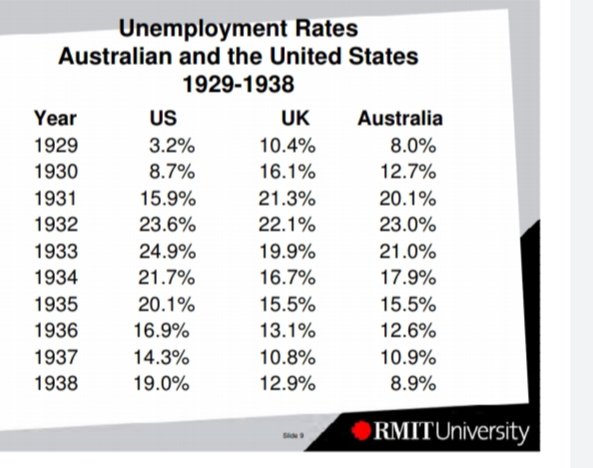
Source Sinclair Davidson

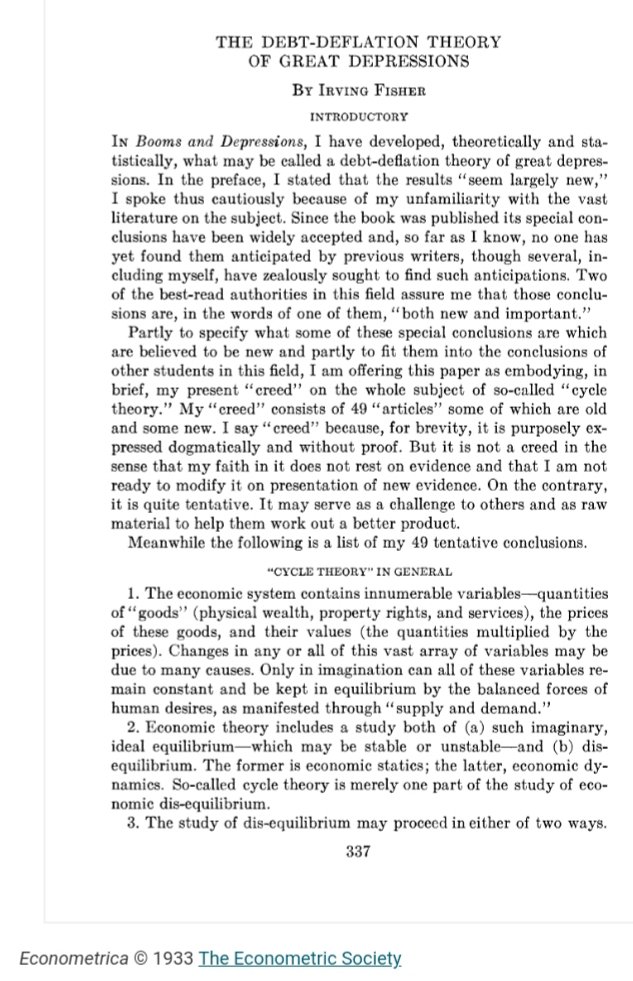
Do economists ignore the impact of debt on the business cycle?
29 Apr 2020 Leave a comment
in business cycles, economic history, financial economics, global financial crisis (GFC), great depression, great recession, history of economic thought, macroeconomics, monetarism, monetary economics Tags: Keynesian macroeconomics, New Keynesian macroeconomics
Edward Prescott on the unimportance of monetary policy
29 Apr 2020 Leave a comment
in business cycles, economic history, Edward Prescott, financial economics, fiscal policy, global financial crisis (GFC), great depression, great recession, history of economic thought, macroeconomics, monetary economics
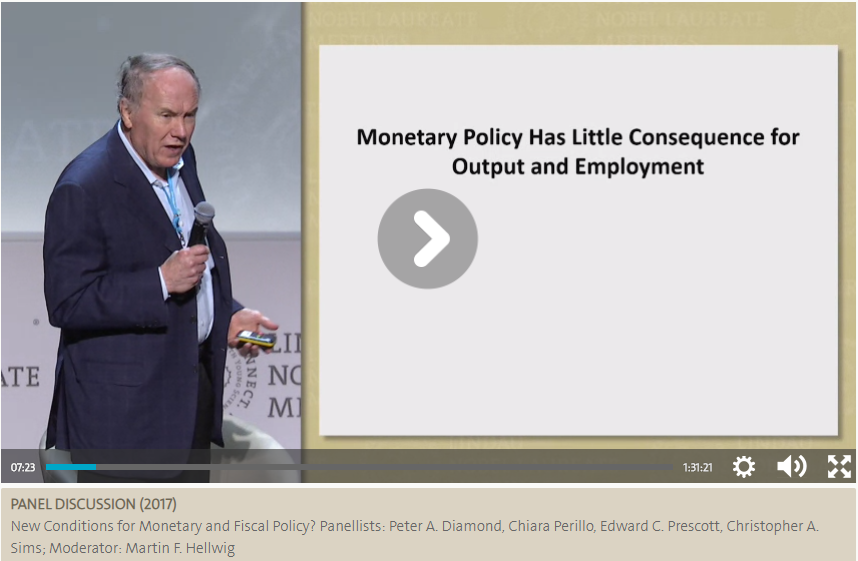
See lecture at https://www.mediatheque.lindau-nobel.org/videos/37267/panel-conditions-monetary-fiscal-policy/laureate-prescott
Edward Prescott, co-recipient of the Nobel Prize in 2004, took a different view in a presentation with the title ‘The Unimportance of Monetary Policy and Financial Crises on Output and Unemployment’. He cited financial crises that saw countries experiencing contrasting outcomes at the same time: the US and Asia in the 2008 crisis; Chile and Mexico in 1980; and Scandinavia and Japan in 1992.
‘Financial crises do not impede development,’ he claimed. While the 2008 financial crisis was localised in North America and the euro area, there was a short recession and quick recovery in Japan, Taiwan and South Korea and no recession in Scandinavia and Australia. ‘Countries where fiscal policy was irresponsible had problems’, he maintained. ‘Fiscal responsibility is crucial: to spend is to tax and to tax is to depress. That’s what happens every time.’
Edward C. Prescott on monetary policy
28 Apr 2020 Leave a comment
in business cycles, econometerics, economic history, Edward Prescott, financial economics, global financial crisis (GFC), great depression, great recession, inflation targeting, macroeconomics, monetary economics, Robert E. Lucas Tags: monetary policy


Recent Comments