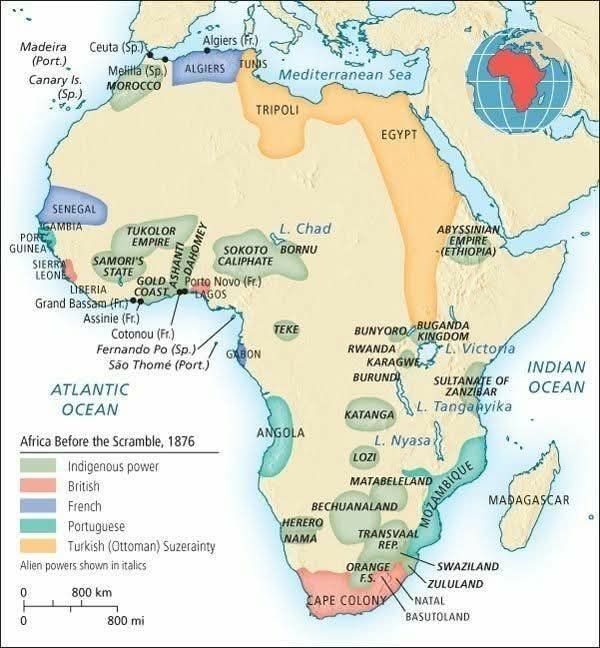
Before the scramble (1876)
08 Jan 2025 Leave a comment
in defence economics, economic history, war and peace Tags: Africa, age of empires, economics of colonialism
Justin Trudeau Had an Epiphany and Endorsed My Doctrine on Prorogation
07 Jan 2025 1 Comment
in comparative institutional analysis, constitutional political economy, economic history, law and economics, politics, Public Choice Tags: Canada, constitutional law
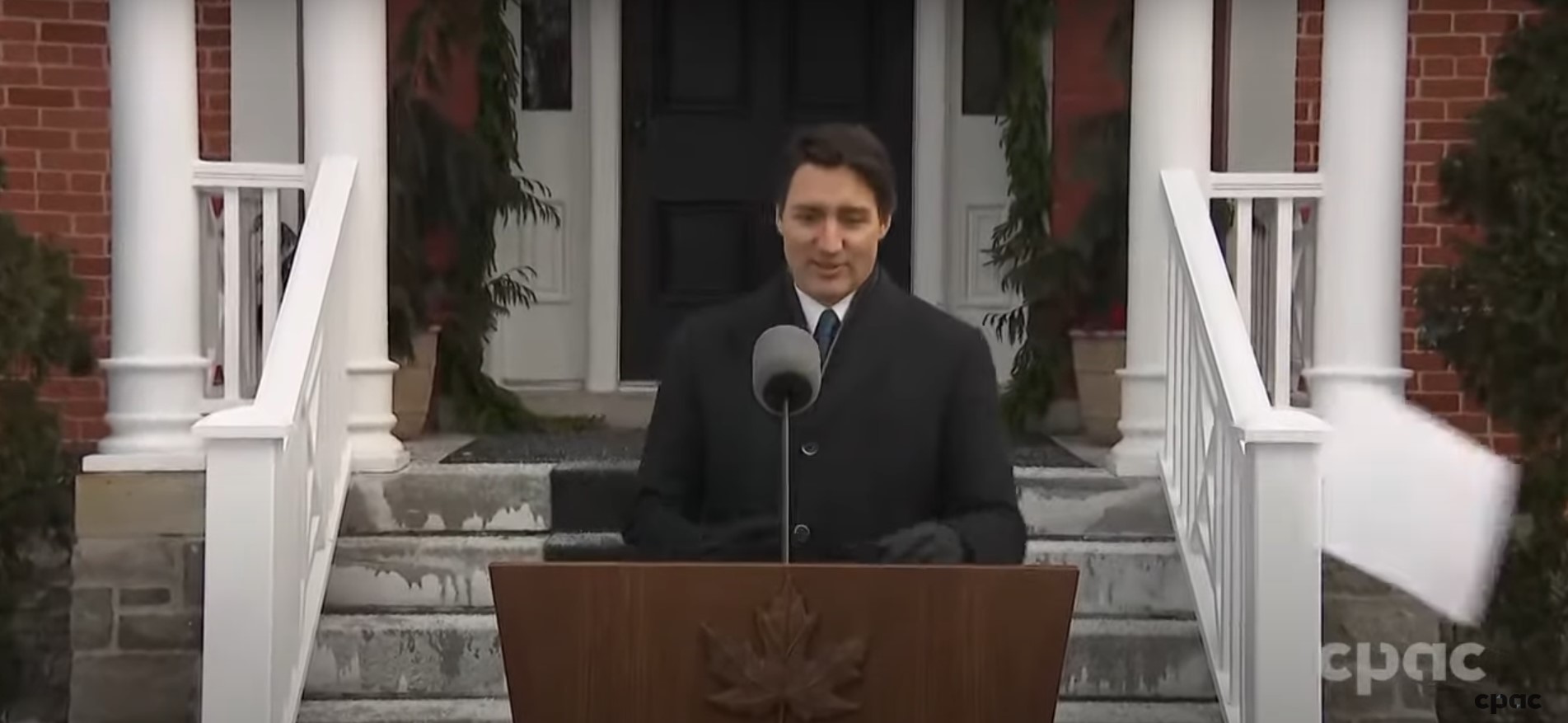
On the Twelfth Day of Christmas, the Prime Minister gave to me his second tactical prorogation and endorsed what I had written in 2011. Introduction At around 10:45 on the morning of 6 January 2025 – the Feast of Epiphany and the Day of the Three Kings – Prime Minister Justin Trudeau revealed that he […]
Justin Trudeau Had an Epiphany and Endorsed My Doctrine on Prorogation
JOHN MENDZELA: Submission on the Treaty Principles Bill
07 Jan 2025 1 Comment
in comparative institutional analysis, constitutional political economy, development economics, discrimination, economic history, income redistribution, law and economics, liberalism, Marxist economics, politics - New Zealand, Public Choice, rentseeking Tags: constitutional law, racial discrimination

4 January, 2025 Justice Committee Parliament of New Zealand Dear Committee Members, I wish to make a submission on the Principles of the Treaty of Waitangi Bill that you will be considering in the near future. As the map below demonstrates, I have independently consulted on governance and management in dozens of diverse nations. Many…
JOHN MENDZELA: Submission on the Treaty Principles Bill
Submission on the Principles of the Treaty of Waitangi Bill
07 Jan 2025 Leave a comment
in comparative institutional analysis, constitutional political economy, economic history, economics of bureaucracy, law and economics, liberalism, Marxist economics, politics - New Zealand, property rights, Public Choice Tags: constitutional law
By Dr Peter Winsley I support the Bill, despite its weaknesses. For expositional clarity, in my submission I use the term “te Tiriti” rather than “the Treaty.” This acknowledges that about 540 rangatira signed te Tiriti versus about 39 who signed the English language document.to a Context is important. Te Tiriti was an international treaty […]
Submission on the Principles of the Treaty of Waitangi Bill
Ruth Richardson on the Treaty Principles Bill
07 Jan 2025 Leave a comment
in comparative institutional analysis, constitutional political economy, discrimination, economic history, income redistribution, law and economics, politics - New Zealand, property rights, Public Choice, rentseeking Tags: constitutional law
Ruth Richardson’s submission on the Treaty Principles Bill is excellent. I’ve copied it below.
Ruth Richardson on the Treaty Principles Bill
Polio
05 Jan 2025 Leave a comment
in economic history, health economics Tags: anti-vaccination movement, The Great Escape, vaccines
DON BRASH: TIME TO SUBMIT ON THE TREATY PRINCIPLES BILL FAST RUNNING OUT
03 Jan 2025 Leave a comment
in economic history, income redistribution, law and economics, liberalism, Marxist economics, politics - New Zealand, property rights, Public Choice, rentseeking Tags: constitutional law
This Parliament is being asked to pass a significant number of important Bills during the course of its three-year life – Bills related to resource management planning, to infrastructure, to education and to health. But few Bills are of greater significance than the Treaty Principles Bill which David Seymour has sponsored. Why? Because it goes…
DON BRASH: TIME TO SUBMIT ON THE TREATY PRINCIPLES BILL FAST RUNNING OUT
Some Links
03 Jan 2025 1 Comment
in applied price theory, comparative institutional analysis, constitutional political economy, defence economics, economic history, economics of crime, economics of regulation, industrial organisation, international economics, International law, law and economics, politics - USA, war and peace
TweetArnold Kling ponders producers versus parasites. A slice: What I notice is that the elites on the Republican side tend to earn a living as producers. They make things that other people want or need. In contrast, elites on the Democratic side include many people one may think of as parasites. They depend on producers…
Some Links
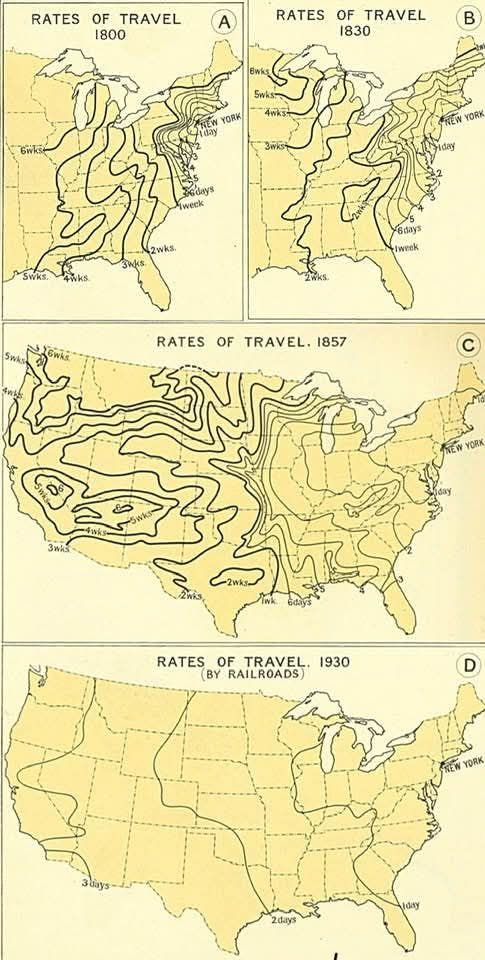
Some Jimmy Carter observations from the 1970s
01 Jan 2025 Leave a comment
in business cycles, defence economics, economic history, economics of regulation, energy economics, macroeconomics, monetary economics, politics - USA, war and peace Tags: Middle-East politics
Usually I am reluctant to criticize or even write about the recently departed, but perhaps for former Presidents there is greater latitude to do so. I never loved Jimmy Carter, and I saw plenty of him on TV and read about his administration on a daily basis in The New York Times. I fully appreciate […]
Some Jimmy Carter observations from the 1970s
Nordhaus on the Perils of Long-Term Forecasting
01 Jan 2025 Leave a comment
in applied price theory, econometerics, economic history Tags: The Great Enrichment
When people try to think about the long-term future, by which I mean here looking a half-century or a century ahead, they often suffer a lack of imagination. As a common example, they take today’s problems and just multiply them by a factor of ten. Or they assume that improved central planning, in one form…
Nordhaus on the Perils of Long-Term Forecasting
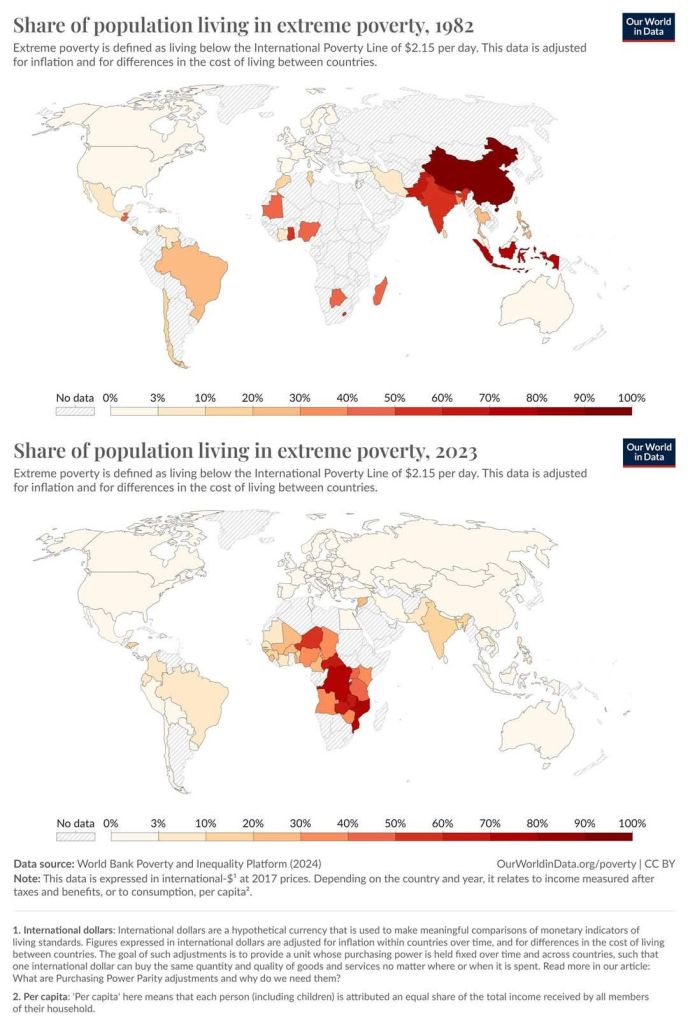
The Great Enrichment
01 Jan 2025 Leave a comment
in development economics, economic history, growth disasters, growth miracles Tags: The Great Enrichment
James E. Carter (1924-2024)
30 Dec 2024 Leave a comment
in economic history, politics - USA
Jimmy Carter, the 39th president of the United States, died today at the age of 100. He was the oldest-ever former president of the United States. It is also worth noting that he was married to Rosalynn Carter for an impressive 77 years. George H.W. Bush was the second-oldest former president, passing at the age […]
James E. Carter (1924-2024)
On the Great F.A. Hayek
30 Dec 2024 Leave a comment
in applied price theory, applied welfare economics, economic history, F.A. Hayek, history of economic thought
TweetJonathan Fortier and his colleagues at Libertarianism.org produced this truly splendid 21-minute-long video to commemorate the 50th anniversary of Hayek’s receipt of the Nobel Prize in economics. The post On the Great F.A. Hayek appeared first on Cafe Hayek.
On the Great F.A. Hayek

 Utopia, you are standing in it!
Recent Comments