by Javier Vinos We have been fortunate to witness the largest climate event to occur on the planet since the advent of global satellite records, and possibly the largest event since the eruption of Mount Tambora in 1815. It is … Continue reading → The post The 2023 climate event revealed the greatest failure of…
US economic growth can be divided into two parts: more hours worked, or more productivity per hour worked. In the past, the US labor force has been rising over time: the US labor force totaled 107 million people in 1980, 142 million in 2000, and was up to 171 million this year. However, after several…
I think 2021 will be remembered where people lost the sense of perspective. So many people are saying how kids nowadays have it more difficult then ever before. The picture above A starving child in Sudan, 1993. Terezka, a girl who grew up in a concentration camp, draws a picture of her Poland “home”, December […]
The Congo Free State was a corporate state in Central Africa privately owned by King Leopold II of Belgium founded and recognized by the Berlin Conference of 1885. In the 23 years (1885-1908) Leopold II ruled the Congo he massacred 10 million Africans by cutting off their hands and genitals, flogging them to death, starving […]
In amongst my collection of books, I have assembled a number of classics, including some reasonably rare editions. One of those is Economics of the New Zealand Maori [*] by Raymond Firth. This book was originally published from Firth’s PhD thesis in 1929 (the thesis was approved in 1927 at the University of London). The edition…
Tweet… is from page 298 of William Easterly’s brilliant 2025 book, Violent Saviors: The West’s Conquest of the Rest [footnote deleted; link added]: The Friedman’s [Milton and Rose] liked markets because they could make individual self-determination possible for all groups. Markets allowed “the freedom of individuals to pursue their own objective.” Markets made this possible…
During the last half-century or so, one of the biggest changes in how humans live is the greater share of people around the world who live in cities. The UN Department of Economic and Social Affairs describes some pattern in its report on World Urbanization Prospects 2025: Summary of Results (November 2025). The report defines…
Adam Lehodey writing at City Journal: In New York City, making a profit on real estate has become increasingly difficult. Rent-stabilization laws built on the mantra that “housing is a human right,” a dysfunctional housing court, and myriad other interventions have driven thousands of units off the market, giving rise to the phenomenon of New York’s “ghost…
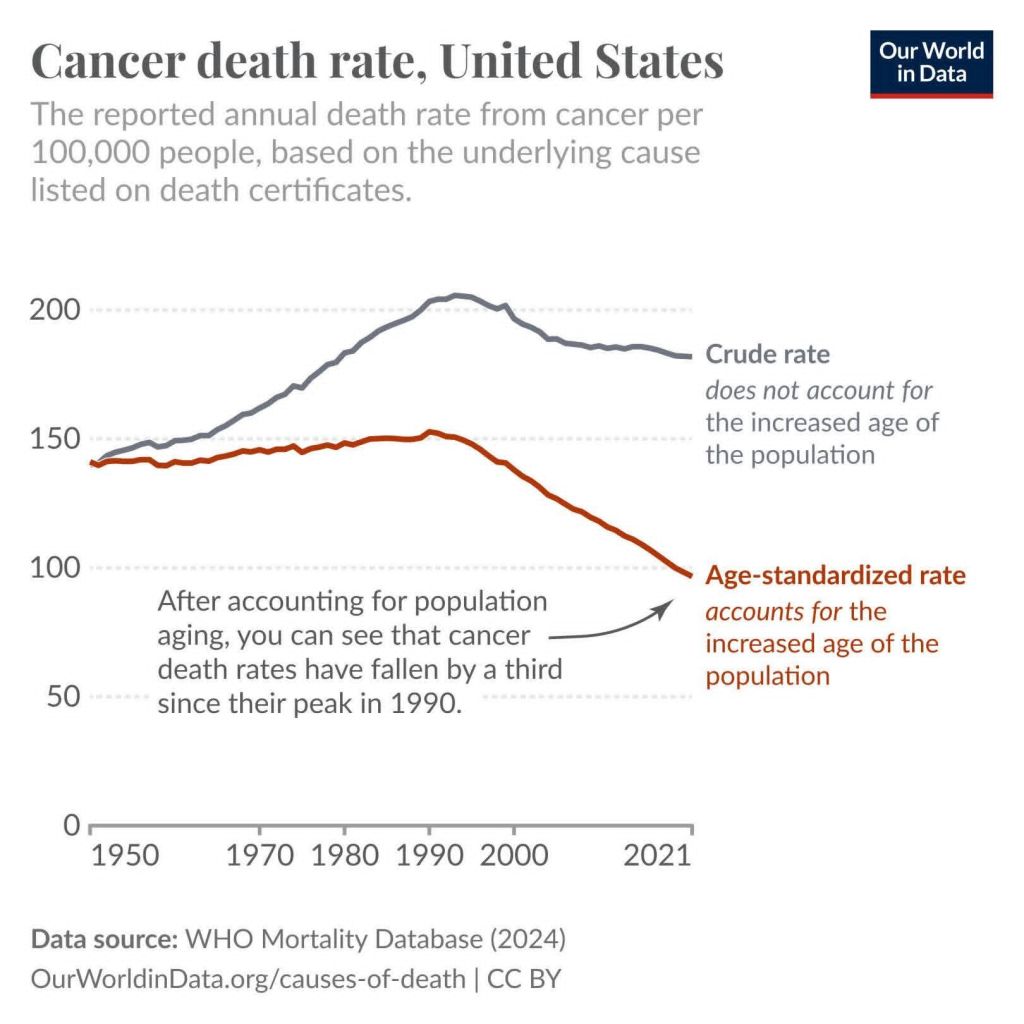
From Natalia Emanuel, Valentin Bolotnyy, and Pim Welle: The involuntary hospitalization of people experiencing a mental health crisis is a widespread practice, as common in the US as incarceration in state and federal prisons and 2.4 times as common as death from cancer. The intent of involuntary hospitalization is to prevent individuals from harming themselves…
These people are saying it is there too. Though I am not quite sure what they (or anyone, for that matter) mean by AI: First, we argue that AI can already be seen in productivity statistics for the United States. The production and use effects of software and software R&D (alone) contributed (a) 50 percent…
His advice for policymaking is simple: Prioritize realism and resilience. This means adapting infrastructure, strengthening flood protection, investing in technology, and most importantly, exercising humility before the complexity of nature.
(Mass grave of Polish officers in Katyn Forest, exhumed by Germany in 1943) The Katyn forest massacre committed by the Soviet Union occurred between April and May 1940. Though killings took place in Kalinin and Kharkiv prisons operated by the NKVD and elsewhere, the massacre is named after the Katyn forest where mass graves were […]
The Challenge of Opening Closed Minds The media and many politicians worldwide continue to push a narrative of impending climate catastrophe. Whether or not you are a climate change pessimist, we live on a gradually warming planet and will need to adapt to this. As global temperature rise continues, alarmists will continue to ascribe much…
Steven Pinker’s claim that human beings are now better off than at any time since the beginning of recorded history has provoked fierce resistance. Critics often regard it as complacent, technocratic, or morally obtuse in the face of ongoing suffering. Yet when the claim is properly understood—not as a denial of present evils, but as […]
Why Evolution is True is a blog written by Jerry Coyne, centered on evolution and biology but also dealing with diverse topics like politics, culture, and cats.
In Hume’s spirit, I will attempt to serve as an ambassador from my world of economics, and help in “finding topics of conversation fit for the entertainment of rational creatures.”







Recent Comments