It is all the more remarkable, then, that within six years Britain’s agricultural output had transformed, more profoundly and at a faster pace than any time since the start of the Industrial Revolution. The most urgent need was to provide a substitute for all that previously imported foreign wheat. In 1939, Britain only had 11.8…
Sectoral shifts in supply, wartime agriculture edition
Sectoral shifts in supply, wartime agriculture edition
26 Jan 2026 Leave a comment
in defence economics, economic history, industrial organisation, war and peace Tags: British history, World War II
The economics of currency values
25 Jan 2026 1 Comment
in applied price theory, economic history, financial economics, international economics, macroeconomics, monetary economics Tags: Japan
That is the topic of my latest Free Press column, here is one excerpt: What else are currency values telling us today? The Japanese yen continues a very weak run, now coming in at about 158 to the U.S. dollar. I can recall when it was common for the yen to stand at about 100…
The economics of currency values
Climate Change Economics, Skip the Hysteria (Lomborg)
25 Jan 2026 Leave a comment
in development economics, economic history, economics of climate change, economics of regulation, energy economics, environmental economics, environmentalism, global warming, resource economics Tags: climate activists, climate alarmism, pessimism bias

For those who prefer reading, below is an excerpted transcript lightly edited from the interview, including my bolds and added images. Hey everyone, it’s Andrew Klavan with this week’s interview with Bjorn Lomborg. I met Bjorn, he probably doesn’t remember this, but I met him many, many years ago at Andrew Breitbart’s house. Andrew brought […]
Climate Change Economics, Skip the Hysteria (Lomborg)
Americans Are Getting Richer, Part IV
24 Jan 2026 Leave a comment
in applied price theory, economic growth, economic history, income redistribution, labour economics, macroeconomics, politics - USA, poverty and inequality

In 2016, here’s some of what I wrote about the economic outlook in Illinois. And I shared the same observation when writing about California in 2018. There’s a somewhat famous quote from Adam Smith (“there is a great deal of ruin in a nation“) about the ability of a country to survive and withstand lots of […]
Americans Are Getting Richer, Part IV
When the Left and the Right start behaving in the same way, there’s nothing left of the Left
23 Jan 2026 Leave a comment
in defence economics, discrimination, economic history, economics of education, gender, International law, liberalism, Marxist economics, politics - New Zealand, war and peace Tags: regressive left

I HAVE BEEN RESISTING the conclusion that New Zealand no longer possesses a “left-wing” movement. What the news media persists in referring to as “the Left” or “progressives” are no such thing. By any reasonable definition, the movements identified – or identifying themselves – as left-wing fail to measure up. What they truly are we […]
When the Left and the Right start behaving in the same way, there’s nothing left of the Left
Part II: Oxfam Is a Leftist Joke, not a Real Charity
20 Jan 2026 1 Comment
in applied price theory, development economics, economic growth, economic history, growth miracles, income redistribution, labour economics, liberalism, macroeconomics, Marxist economics, poverty and inequality, Public Choice, technological progress Tags: regressive left, The Great Enrichment

As I wrote nine years ago, Oxfam is a pathetic organization. Originally created to help the poor, it has been captured by activists who peddle class warfare. But they play that role in an incredibly sloppy fashion. In all the debates I’ve been part of over the years, no left-leaning academic has been willing to […]
Part II: Oxfam Is a Leftist Joke, not a Real Charity
Is there a British productivity comeback?
20 Jan 2026 Leave a comment
in applied price theory, econometerics, economic growth, economic history, industrial organisation, macroeconomics Tags: British disease
Let us hope: Britain is seeing early signs of a long-awaited turnaround of its productivity woes, according to an alternative measure that suggests output per hour worked has risen at a pace not seen since before the financial crisis. The Resolution Foundation said a “blistering” productivity surge has been masked by problems with official statistics and pointed…
Is there a British productivity comeback?
We’re still better off than ever before
18 Jan 2026 Leave a comment
in economic history, liberalism Tags: The Great Enrichment
Steven Pinker wrote at the Free Press: Human progress continues, with some backsliding. Since publishing two books on human progress (The Better Angels of Our Nature, 2011, and Enlightenment Now, 2018), every year I update my graphs on the major dimensions of human well-being. Most people think everything’s gotten worse, but that can be a misleading…
We’re still better off than ever before
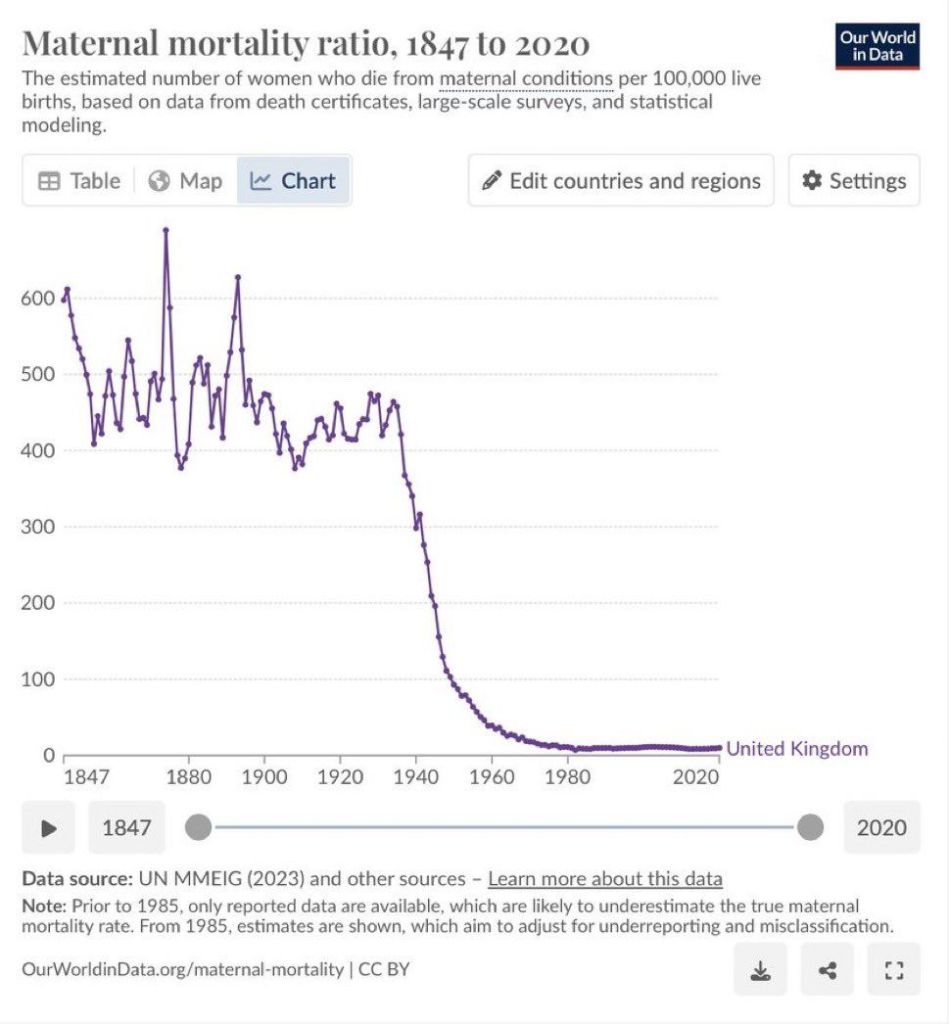
The Great Escape
07 Jan 2026 Leave a comment
in economic history, health economics Tags: maternal mortality
The Red Apple: Mamdani Pledges to Introduce “the Warmth of Collectivism”
07 Jan 2026 Leave a comment
in economic history, Marxist economics, politics - USA

Below is my column in The Hill on Mamdani’s full-throated pledge to introduce New Yorkers to “the warmth of collectivism.”…
The Red Apple: Mamdani Pledges to Introduce “the Warmth of Collectivism”
Why Care About Debt-to-GDP?
06 Jan 2026 Leave a comment
in econometerics, economic history, international economics, macroeconomics
Here is another piece for “contrarian Tuesday,” like it or not: We construct an international panel data set comprising three distinct yet plausible measures of government indebtedness: the debt-to-GDP, the interest-to-GDP, and the debt-to-equity ratios. Our analysis reveals that these measures yield differing conclusions about recent trends in government indebtedness. While the debt-to-GDP ratio has…
Why Care About Debt-to-GDP?
Think tank IREF: ‘Against All Rationality, the EU Persists in its Net-Zero Delusion’
04 Jan 2026 1 Comment
in economic history, economics of climate change, economics of regulation, energy economics, environmental economics, environmentalism, global warming Tags: European Union
Simple arithmetic already raises red flags. EU emissions fell by 37% over the 33 years from 1990 to today. Achieving an additional 68% reduction in just 17 years would require nearly tripling the pace of decarbonization.
Think tank IREF: ‘Against All Rationality, the EU Persists in its Net-Zero Delusion’
Keynes: Free Trade and the Nationalist Impulse
04 Jan 2026 1 Comment
in applied price theory, economic history, history of economic thought, international economics
In 1933, John Maynard Keynes gave the first Finlay Lecture delivered at University College, Dublin, on the subject of “National Self-Sufficiency” (Studies: An Irish Quarterly Review,” June 1933, 22: 86, pp. 177-193). The Irish Free State of 1933 was a transition phase: after the Irish War of Independence that had ended in 1921, but before…
Keynes: Free Trade and the Nationalist Impulse
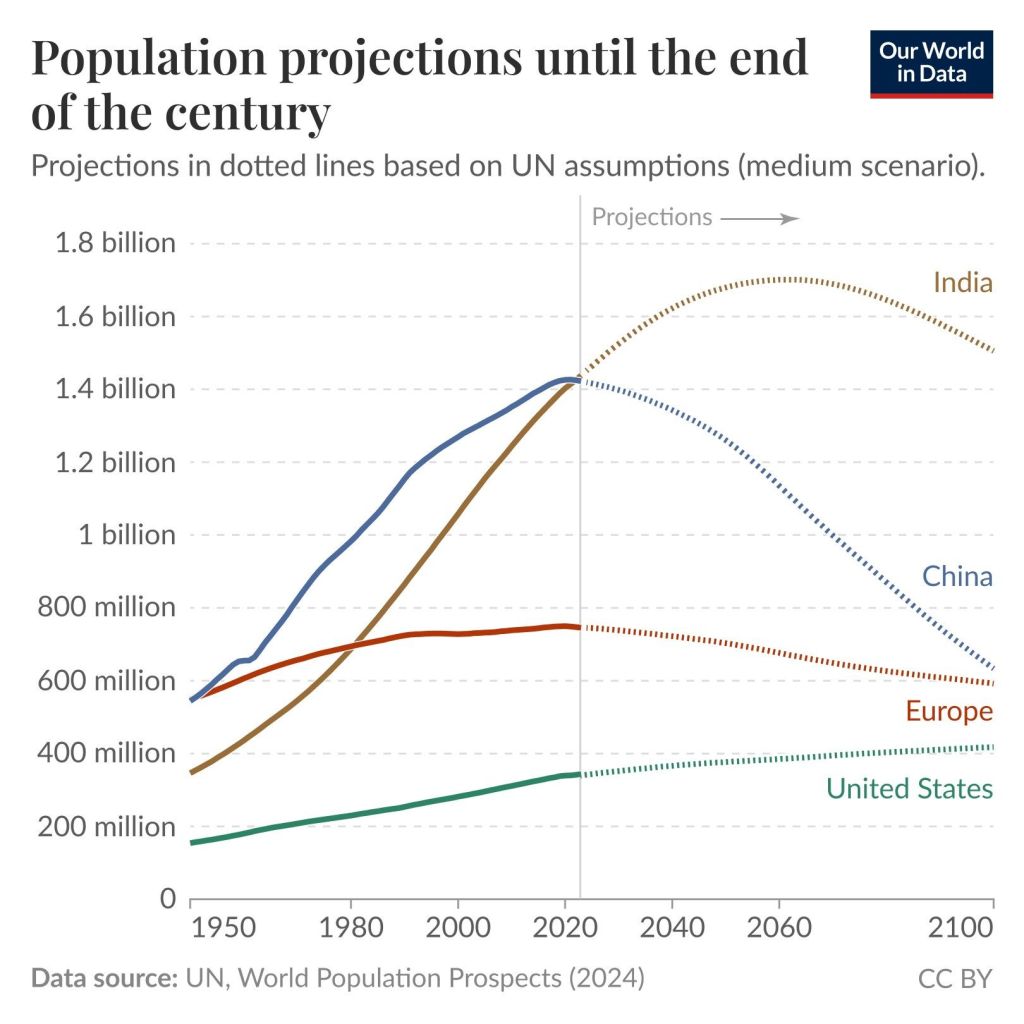
So much for overpopulation
02 Jan 2026 Leave a comment
in development economics, economic history, labour economics, labour supply, population economics Tags: ageing society, population bust
The Macroeconomic Effects of Tariffs: Evidence From U.S. Historical Data
31 Dec 2025 Leave a comment
in applied price theory, econometerics, economic history, international economics Tags: free trade, tariffs
We study the macroeconomic effects of tariff policy using U.S. historical data from 1840–2024. We construct a narrative series of plausibly exogenous tariff changes based on major legislative actions, multilateral negotiations, and temporary surcharges– and use it as an instrument to identify a structural tariff shock. Tariff increases are consistently contractionary: imports fall sharply, exports…
The Macroeconomic Effects of Tariffs: Evidence From U.S. Historical Data


Recent Comments