North West Europe, 16,000 years ago
– pic.twitter.com/XnZi4JqWtT— Amazing Maps (@Amazing_Maps) December 13, 2015
North West Europe, 16,000 years ago
26 Feb 2016 Leave a comment
in economic history Tags: Europe, maps
Will there be poverty on the Starship Enterprise?
26 Feb 2016 Leave a comment
in applied welfare economics, economic history, poverty and inequality
A Facebook photo by Mary Ruwart reminded me of the question I posed in previous blog posts about whether there will be poverty on the Star Trek enterprise. Those security officers in the red tunics get a really bad deal, especially if they beam down to the planet with Captain Kirk.
@Maori_Party New Zealanders aged 25 to 34 with NCEA level 4 or above qualifications by ethnicity
26 Feb 2016 Leave a comment
in economic history, economics of education, politics - New Zealand Tags: education premium, Maori economic development
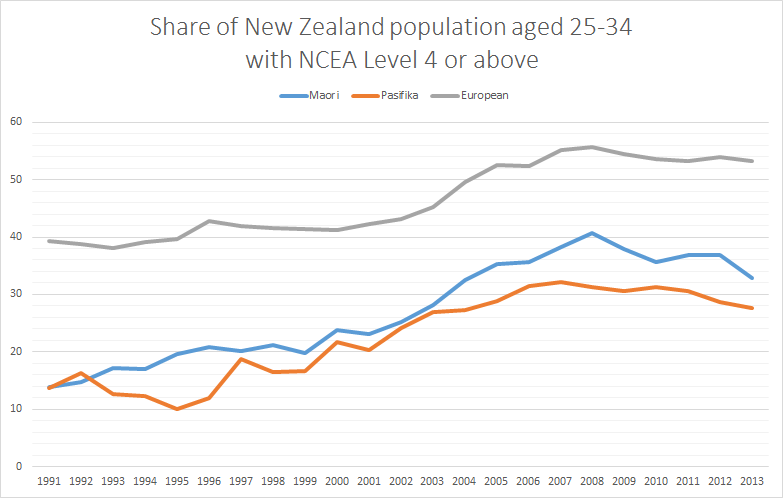
Source: OECD Economic Survey New Zealand 2015.
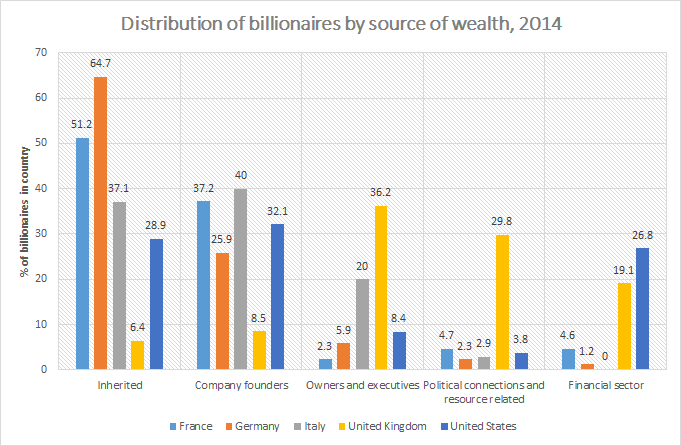
How did German, Italian, French, British and American billionaires make their money?
26 Feb 2016 Leave a comment
in economic history, economics of regulation, entrepreneurship, industrial organisation, survivor principle Tags: billionaires, British economy, entrepreneurial alertness, France, Germany, Italy, superstar wages, superstars
How much food can you buy for working 1 hour in the manufacturing sector?
26 Feb 2016 Leave a comment
in economic history Tags: The Great Enrichment
Peak coal was long ago
25 Feb 2016 Leave a comment
in economic history, energy economics Tags: coal prices, Oil prices, peak oil

@BernieSanders how did Danish, Swedish, Finnish & Norwegian billionaires make their money?
25 Feb 2016 Leave a comment
in economic history, entrepreneurship, industrial organisation, politics - USA, survivor principle Tags: 2016 presidential election, billionaires, Denmark, entrepreneurial alertness, Finland, inherited wealth, Norway, superstar wages, superstars, Sweden
OK, Nordic billionaire population sizes might be small, but plenty more billionaires make their own money in neoliberal USA than in Bernie Sanders’ Utopia

The impact of changes in behaviour on life expectancy since 1960
25 Feb 2016 Leave a comment
in economic history, health economics Tags: economics of obesity, economics of smoking, life expectancies, offsetting behaviour, The Great Escape
The role of inheritance in top incomes
25 Feb 2016 Leave a comment
in applied welfare economics, economic history, entrepreneurship, human capital, labour economics, poverty and inequality Tags: entrepreneurial alertness, superstars, top 1%
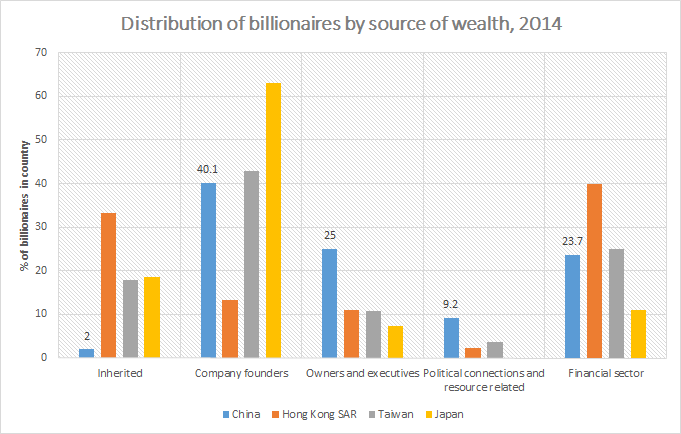
Chinese, Hong Kong, Taiwanese and Japanese billionaires by source of wealth
24 Feb 2016 Leave a comment
in development economics, economic history, entrepreneurship, financial economics, growth miracles, industrial organisation, rentseeking, survivor principle Tags: billionaires, China, entrepreneurial alertness, Hong Kong, Japan, superstar wages, superstars, Taiwan
Surprisingly few billionaires in any of the 4 countries obtained their wealth through political connections. Founding a company seems to be still the path of great wealth even in Japan these days. Hong Kong is a financial centre so the large number of billionaires in its financial sector is no surprise.
From the same starting place – US, Danish, Swedish and Norwegian general government expenditure as a % of GDP
24 Feb 2016 Leave a comment
in economic history, macroeconomics, public economics
Notice that the welfare states in Scandinavia were recent creations subsequent to post-war prosperity.
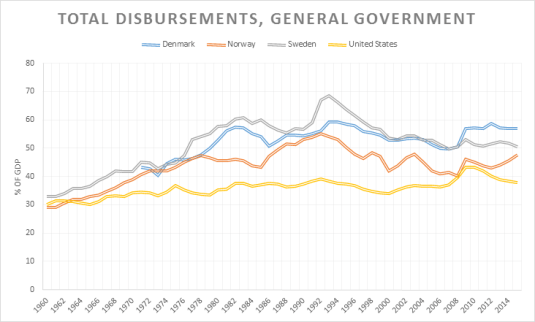
Data extracted on 23 Feb 2016 07:45 UTC (GMT) from OECD.Stat.
General government expenditure as % of Portuguese, Italian, Greek and Spanish GDP since 1960
24 Feb 2016 Leave a comment
in economic growth, economic history, Euro crisis, fiscal policy, macroeconomics, public economics Tags: Greece, growth of government, Italy, Portugal, size of government, Spain
I do not think any of these countries have governments who can really handle managing half of national income on a regular basis. The Italian, and I assume Greek GDPs at least are topped up quite considerably to take account of their underground economies. The top up for Italy is 20%.
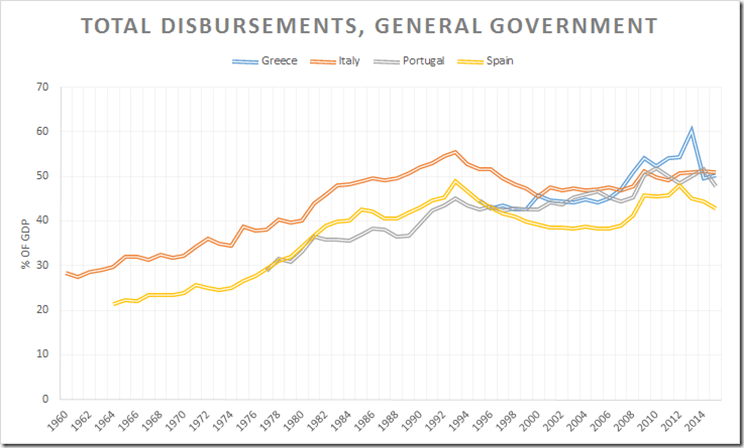
Data extracted on 23 Feb 2016 07:45 UTC (GMT) from OECD.Stat.


Recent Comments