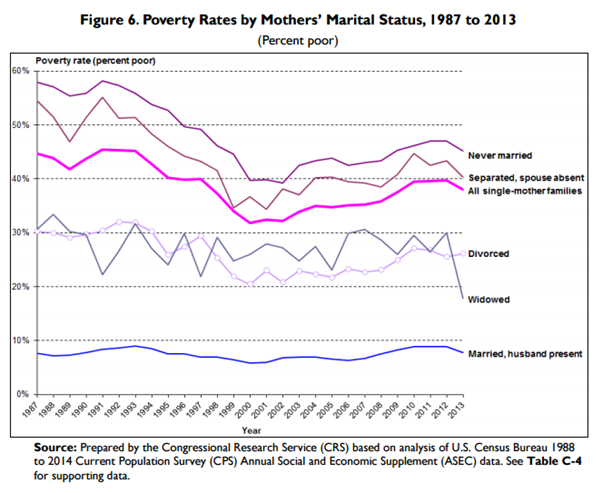
Source: Congressional Research Service.https://www.fas.org/sgp/crs/misc/R41917.pdf
Celebrating humanity's flourishing through the spread of capitalism and the rule of law
13 Jan 2016 Leave a comment
in applied welfare economics, economic history, labour economics, labour supply, politics - USA, poverty and inequality, welfare reform Tags: child poverty, family poverty, single mothers, single parents, social insurance, welfare state
Source: Congressional Research Service.https://www.fas.org/sgp/crs/misc/R41917.pdf
13 Jan 2016 Leave a comment
in economic history Tags: British empire
13 Jan 2016 Leave a comment
in economic history Tags: creative destruction, The Great Enrichment
12 Jan 2016 Leave a comment
in applied welfare economics, economic history, politics - New Zealand, poverty and inequality
After two lost decades from 1974 where there was real wage stagnation and next to no real GDP growth, following the Mother of All Budgets in 1991 under Ruth Richardson and the passage of the Employment Contracts Act in the same year, real wages growth returned after a hiatus of 20 years. These 20 years of real wage stagnation were the good old days if the Leftover Left is to be believed.

Source: Child Poverty Monitor: 2015 Technical Report, figure 39.
11 Jan 2016 Leave a comment
in economic history, politics - Australia, politics - New Zealand, politics - USA Tags: baby boomers, marijuana decriminalisation, rational irrationality, voter demographics

11 Jan 2016 Leave a comment
in economic history, politics - New Zealand, poverty and inequality

Source: Donna Wynd, Hard to Swallow Foodbank Use in New Zealand (2005).
David Armstrong claimed incorrectly that there have been no food banks in New Zealand until recently:
That’s how it used to be here not so long ago, when foodbanks didn’t exist and the number of homeless was tiny. I remember when we had few cases of “poverty” diseases such as rheumatic fever or rickets.
What else explains the increased popularity of food banks, which have been long-standing in New Zealand, it is not falling wages.
The main economic development over the last 25 years is the return of real wage growth after decades of wage stagnation in the boys own good old days of David Armstrong.
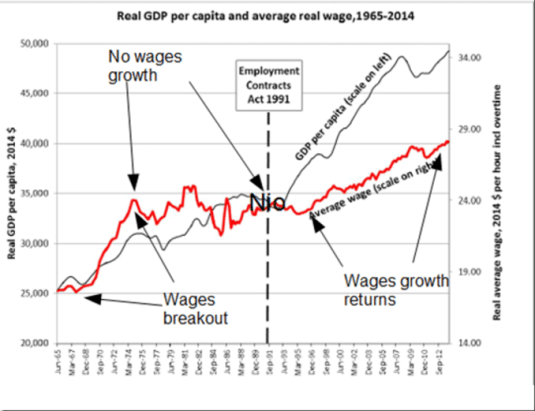
Source: Low Wage Economy | New Zealand Council of Trade Unions – Te Kauae Kaimahi.
As for the number of homeless being tiny in the good old days of New Zealand, a New Zealand Parliamentary Library 2014 paper on homeless started its historical narrative in 1850 and spent a lot of time discussing housing deprivation in the early and mid-20th century:
A 1936 national survey found nearly a third of the total urban housing stock was unsatisfactory and 15% of this only fit for demolition. [5] Māori in particular experienced poor housing conditions. The first Labour Government loaned money for private house purchases and built state housing to rent.
During the 1950s, the National Government moved to reduce the waiting list for state housing and promoted home ownership, but lengthy waits for some people were reported. Likewise, concern was expressed over severe overcrowding, especially among Māori. By the late 1950s, Wellington’s housing needs were identified as ‘particularly acute.
In the 1960s voluntary organisations recorded a gradual increase in some groups experiencing housing difficulties. The Christchurch Methodist Church night shelter found that their main users were employed people who could not afford other accommodation, unmarried women with children, and those leaving homes because of domestic violence also increasingly sought shelter
Not even a self-described liberal elitist of the left can be forgiven for forgetting some of the key achievements of the first Labour government in social housing. The idea was to improve the quality of New Zealand housing for the poor.

Source: The first state house – State housing | NZHistory, New Zealand history online.
In common with Max Rashbrooke, David Armstrong’s recollection of his boys own childhood does not include Maori as they drifted to the city. Prior to the middle of the 20th century about 85% of Maori lived in rural areas, often lacking electricity, running water and living on dirt floors as the Encyclopaedia of New Zealand explains:
Attracted by work opportunities and the ‘bright lights’ of city life, rural Māori began to move to Auckland and Wellington in the 1920s. However, many faced problems finding accommodation. The reputation Māori had among Pākehā for overcrowding and taking poor care of their homes meant few landlords were prepared to have them as tenants. As attendee James Rukutoki told a Māori leaders conference in 1939, ‘the only dwellings open to the Maori are the ramshackle discards of the Pākehā’.
11 Jan 2016 Leave a comment
in economic history, entrepreneurship, television
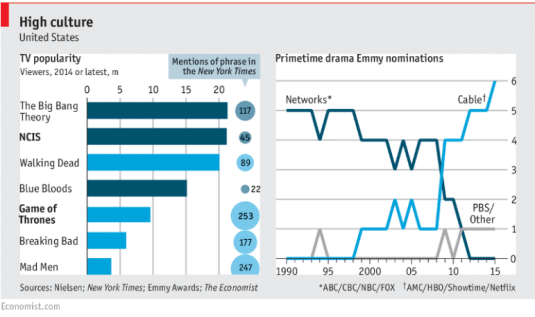
Via Peter Boettke
10 Jan 2016 Leave a comment
in applied welfare economics, economic history, entrepreneurship, financial economics Tags: France, top 1%
Unlike many other countries, French top income earners did not turn into mostly top wage earners over the post-war period.

Source: The World Wealth and Income Database.
....
10 Jan 2016 Leave a comment
in applied welfare economics, economic history, politics - New Zealand, politics - USA, poverty and inequality
The official poverty rate in the USA missed poverty falling to near zero by the eve of the Global Financial Crisis in 2007 as shown in the chart below. That is no small oversight. It calls into question whether the official poverty rate which is based on a percentage of the median income is a useful guide to the magnitude of social problems before us.
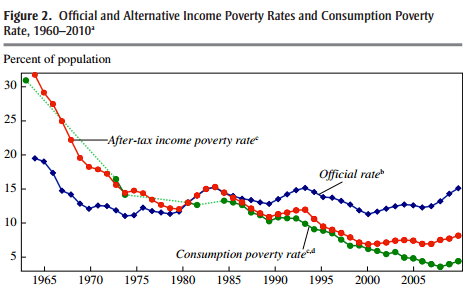
Source: Meyer and Sullivan (2012), p. 153.
Meyer and Sullivan calculated a consumption based measure of poverty and found that the poverty rate fell much faster than previously single digits.
People worry about poor not have enough, not how much income they have before taxes and social insurance. The official poverty rate is before tax and social insurance and therefore before how much the poor actually have to get by with after receiving social assistance of all types and sources.
Interestingly, the divergence between consumption-based poverty and income-based poverty started with the election of Reagan and picked up the US federal welfare reforms in 1996. The number of children in poverty in deep poverty fell immediately after those 1996 US welfare reforms. There is a lesson in that for New Zealand.
It is widely agreed that the official poverty rate is flawed. Measuring poverty as a percentage of median income, usually 60% of the median income, means that poverty may not fall despite incomes doubling every generation and more.
Indeed, increases in the median income can increase poverty without anyone being poorer. This is because the gap between the median income earners and the poor increased such as the New Zealand in 2014 without any of the poor experiencing a fall in income and social support.
The reason why the median is pulling away from the bottom – the reason why income distribution is fanning out – is more people going to university and securing the associated wage premium and the greater rewards for talent in a globalised world.
The forces behind greater educational attainment and the globalisation of markets benefit all and in particular those of bottom of the income distribution through a more prosperous, dynamic, innovative society.
10 Jan 2016 Leave a comment
in discrimination, economic history, gender, human capital, labour economics, labour supply, occupational choice, politics - USA Tags: gender wage gap, middle class stagnation, reversing gender gap, wage stagnation
09 Jan 2016 Leave a comment
in applied welfare economics, economic history, human capital, labour economics, poverty and inequality Tags: Canada, superstars, superstore wages, top 0.1%, top incomes
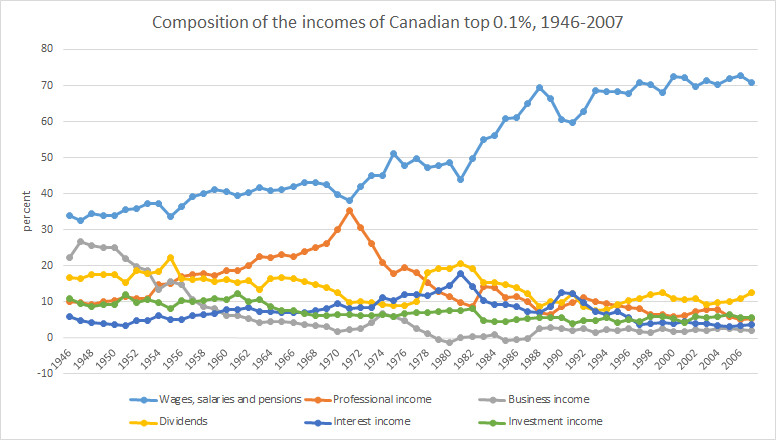
Source: The World Wealth and Income Database.
09 Jan 2016 Leave a comment
in applied welfare economics, economic history, human capital, labour economics, politics - New Zealand, poverty and inequality Tags: Leftover Left, superstar wages, superstars, top incomes
Apart from a bump in the late 80s, the top income earners in New Zealand really are not doing much better than they were in the 1950s or 1920s. The rich are not getting richer in New Zealand. They are just holding their own.
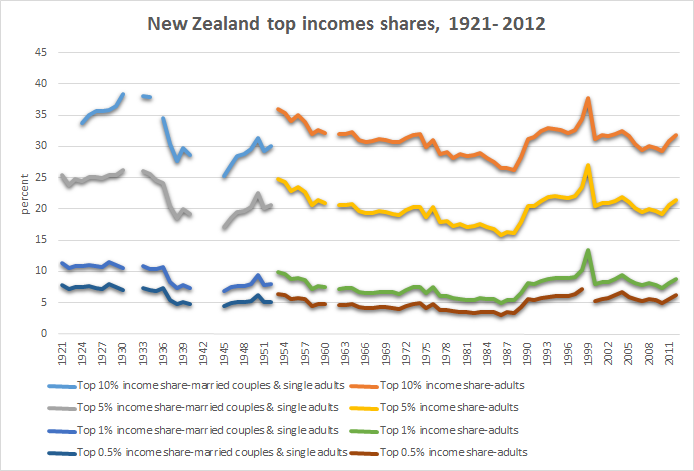
Source: The World Wealth and Income Database.
09 Jan 2016 Leave a comment
in economic history, health economics, politics - USA Tags: 2016 presidential election, Health spending
https://twitter.com/PolitiFact/status/678444166016335872/photo/1
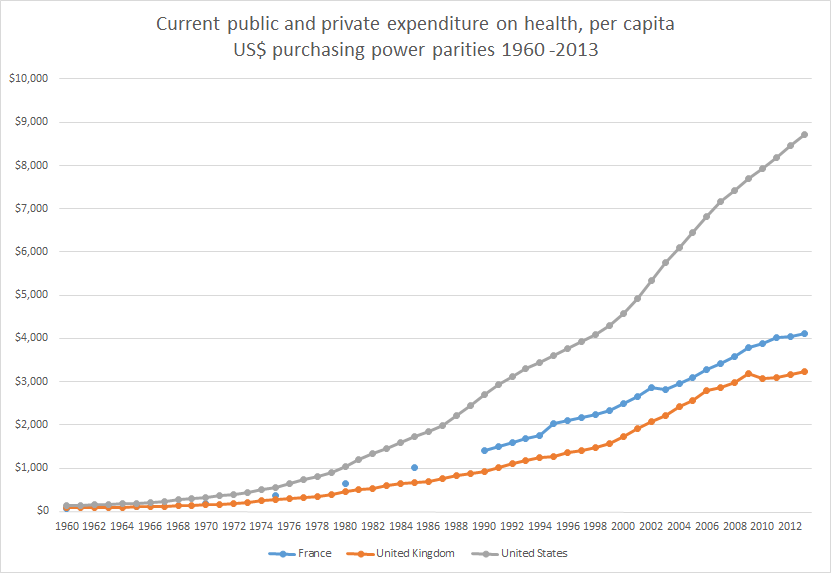
Source: OECD Health Statistics 2015.
Celebrating humanity's flourishing through the spread of capitalism and the rule of law
Celebrating humanity's flourishing through the spread of capitalism and the rule of law
Celebrating humanity's flourishing through the spread of capitalism and the rule of law
Celebrating humanity's flourishing through the spread of capitalism and the rule of law
Celebrating humanity's flourishing through the spread of capitalism and the rule of law
Celebrating humanity's flourishing through the spread of capitalism and the rule of law
A History of the Alt-Right
Econ Prof at George Mason University, Economic Historian, Québécois
Celebrating humanity's flourishing through the spread of capitalism and the rule of law
Scholarly commentary on law, economics, and more
Beatrice Cherrier's blog
Celebrating humanity's flourishing through the spread of capitalism and the rule of law
Celebrating humanity's flourishing through the spread of capitalism and the rule of law
Celebrating humanity's flourishing through the spread of capitalism and the rule of law
Why Evolution is True is a blog written by Jerry Coyne, centered on evolution and biology but also dealing with diverse topics like politics, culture, and cats.
Celebrating humanity's flourishing through the spread of capitalism and the rule of law
A rural perspective with a blue tint by Ele Ludemann
DPF's Kiwiblog - Fomenting Happy Mischief since 2003
Celebrating humanity's flourishing through the spread of capitalism and the rule of law
The world's most viewed site on global warming and climate change
Tim Harding's writings on rationality, informal logic and skepticism
A window into Doc Freiberger's library
Let's examine hard decisions!
Commentary on monetary policy in the spirit of R. G. Hawtrey
Thoughts on public policy and the media
Celebrating humanity's flourishing through the spread of capitalism and the rule of law
Politics and the economy
A blog (primarily) on Canadian and Commonwealth political history and institutions
Reading between the lines, and underneath the hype.
Economics, and such stuff as dreams are made on
"The British constitution has always been puzzling, and always will be." --Queen Elizabeth II
Celebrating humanity's flourishing through the spread of capitalism and the rule of law
Celebrating humanity's flourishing through the spread of capitalism and the rule of law
WORLD WAR II, MUSIC, HISTORY, HOLOCAUST
Undisciplined scholar, recovering academic
Celebrating humanity's flourishing through the spread of capitalism and the rule of law
Res ipsa loquitur - The thing itself speaks
In Hume’s spirit, I will attempt to serve as an ambassador from my world of economics, and help in “finding topics of conversation fit for the entertainment of rational creatures.”
Researching the House of Commons, 1832-1868
Articles and research from the History of Parliament Trust
Reflections on books and art
Posts on the History of Law, Crime, and Justice
Celebrating humanity's flourishing through the spread of capitalism and the rule of law
Exploring the Monarchs of Europe
Cutting edge science you can dice with
Small Steps Toward A Much Better World


Recent Comments