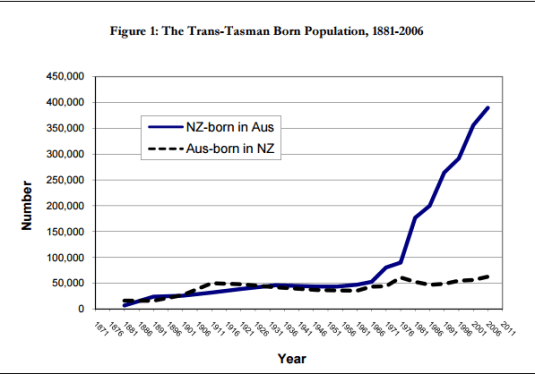
Trans-Tasman populations since 1881
03 Apr 2015 Leave a comment
in economic history, politics - Australia, politics - New Zealand, population economics

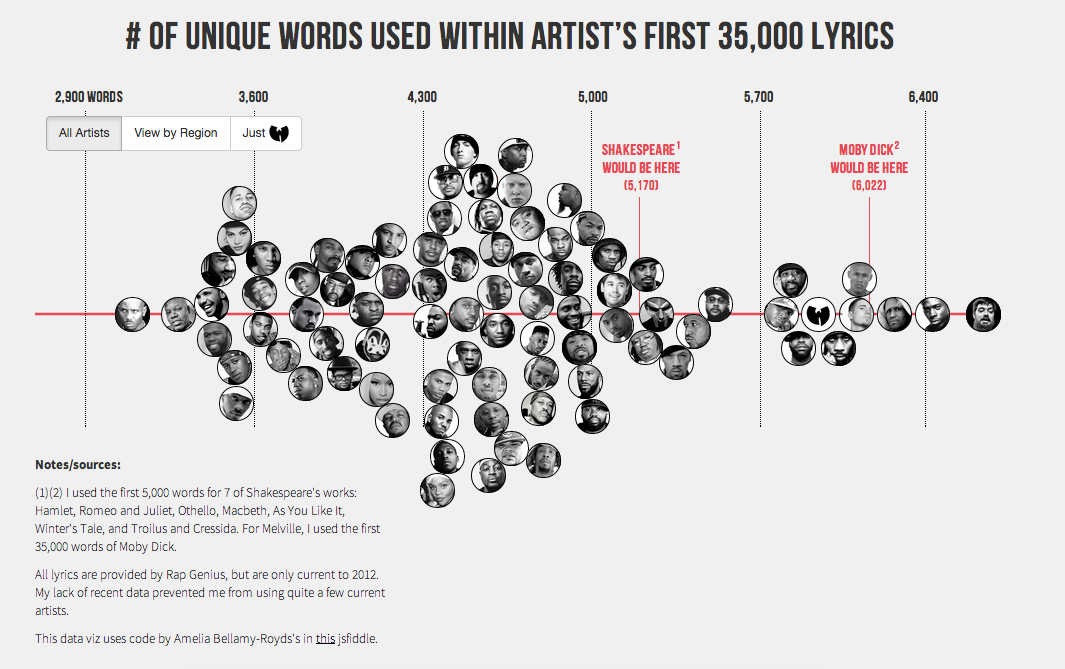
Vocabulary of Shakespeare vs. rappers
01 Apr 2015 Leave a comment
in economic history, economics of media and culture, Music Tags: economics of language, Rap music, Shakespeare

Blaming droughts on Rogernomics? Droughts and the New Zealand real business cycle
28 Mar 2015 Leave a comment
in economic growth, economic history, macroeconomics, politics - New Zealand
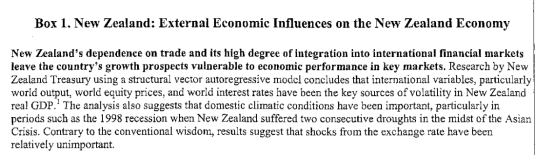
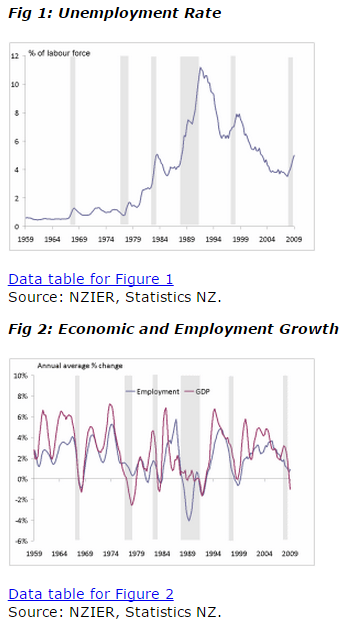
While feuding on another blog about the ups and downs of the New Zealand economy since the 1970s, I pointed out that a long economic boom followed the Ruth Richardson “Mother of all Budgets” in 1991:

My interlocutor quickly replied to blame Rogernomics, in particular, inflation targeting and its administration by Don Brash for a severe recession in New Zealand in 1998:
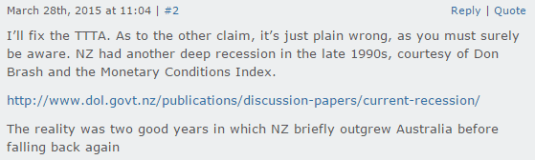
The mild recession in New Zealand in 1998 was a result of the combination of two severe droughts and the effects of the Asian financial crisis.
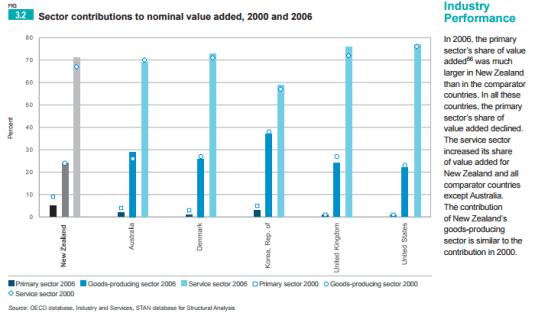
Drought is a major factor in the New Zealand business cycle because of the large size of the farming sector. Indeed, the ups and downs of a monopoly dairy exporter that accounts for 7% of GDP, Fonterra, are so central that a single dirty pipe at a milk factory that put the quality of its milk exports in question lead the Treasury to revise its economic forecasts for that year.
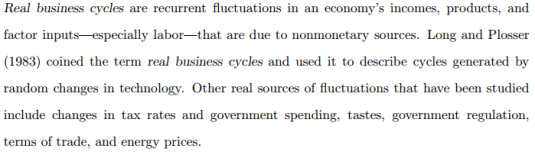
There is growing evidence that a substantial part of business cycle volatility can be explained by real business cycle theory (RBC). RBC claims that a good majority of economic volatility is caused by changes on the supply side: tax and regulatory changes, bad weather in farm economies, spikes in oil prices and technology shocks. Real business cycle models have enjoyed success in replicating most of the observed characteristics of, for example, U.S. aggregate economic activity.
Over the last 15 years, a number of papers at the Treasury and Reserve Bank of New Zealand have explored the role of droughts in the New Zealand business cycle, such as the drought in 1997.
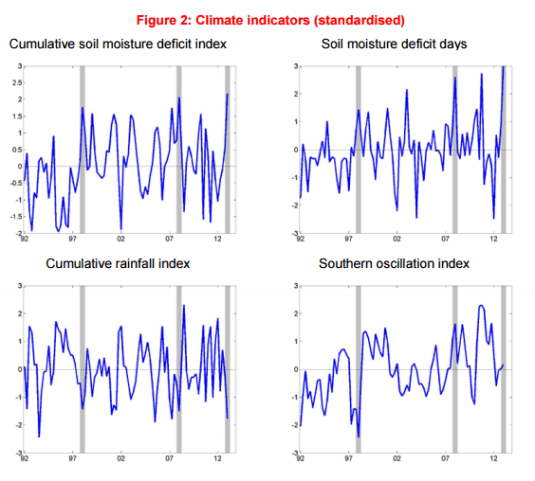
The 1998 recession was preceded by a severe drought that may have knocked a half percentage point off GDP or more. As the Treasury explained in 2008:
Given the importance of the primary sector in New Zealand, climatic conditions have always been a significant driver of GDP volatility in New Zealand. There is strong evidence that the 1998 drought triggered or precipitated the onset of the last recession in the late-90s.
In 2008, the dry conditions in New Zealand led the Treasury to revise its forecasts as follows:
current dry conditions are likely to trim GDP growth by around 0.5% for the 2008 calendar year.
In 2013, the Reserve Bank made similar pessimistic forecasts about the implications of drought for economic prospects. New Zealand was suffering its worst drought in decades:

It was simply mistaken to blame the 1998 recession in New Zealand as the spawn of Rogernomics. There was a drought, a big one, big enough drought to shake the New Zealand business cycle in a country with a large farming sector.


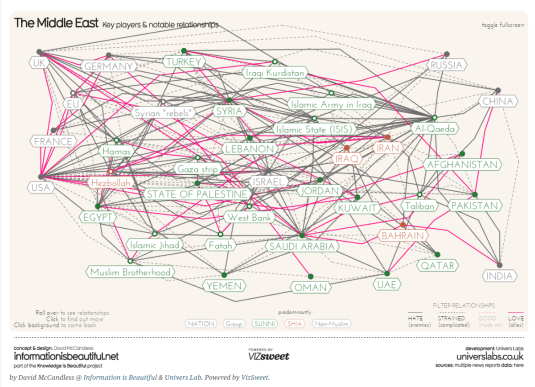
Friends and enemies in the Middle East. Who is connected to whom?
27 Mar 2015 Leave a comment
in economic history, war and peace
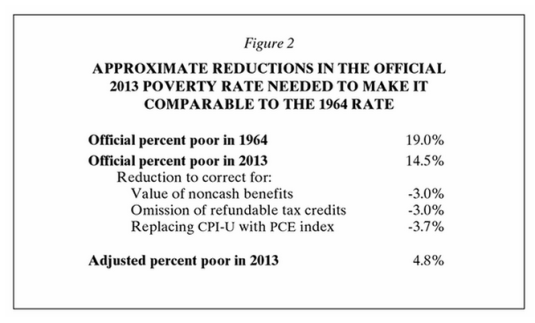
The War on Poverty was won but for a measurement error
27 Mar 2015 2 Comments
in econometerics, economic history, poverty and inequality
The Campaign To Make You Care About Climate Change Is Failing Miserably
27 Mar 2015 Leave a comment
in economic history, economics of media and culture, environmental economics, global warming, politics - USA, Public Choice Tags: climate alarmism, expressive voting, global warming, rational ignorance, rational irrationality

Since 1989, there’s been no significant change in the public’s concern level over global warming. To put this in perspective, note that the most expensive public-relations campaign in history—one that includes most governmental agencies, a long list of welfare-sucking corporations, the public school system, the universities, an infinite parade of celebrities, think tanks, well-funded environmental groups and an entire major political party—has, over the past 25 years or so, increased the number of Democrats who “worry greatly” about global warming by a mere four percentage points.


via The Campaign To Make You Care About Climate Change Is Failing Miserably, Climate Change Not a Top Worry in U.S., In U.S., Concern About Environmental Threats Eases and The number of people worried about climate change hasn’t changed since 1989 – The Washington Post.


Recent Comments