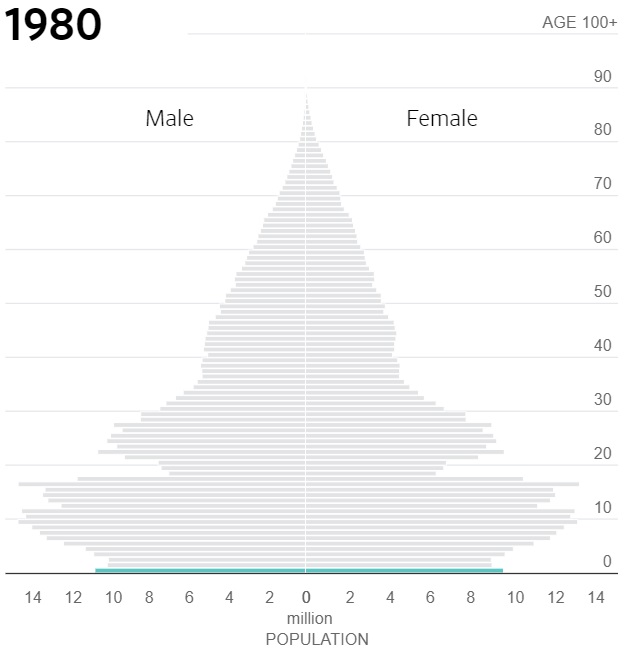
I’m in China this week, teaching about fiscal policy, convergence theory, and inequality at Northeastern University in Shenyang. So it’s a good opportunity to write about some pluses and minuses of Chinese economic policy. We’ll start this series by looking at demographics, which almost surely is the biggest long-run challenge for Chinese policymakers. How big […]
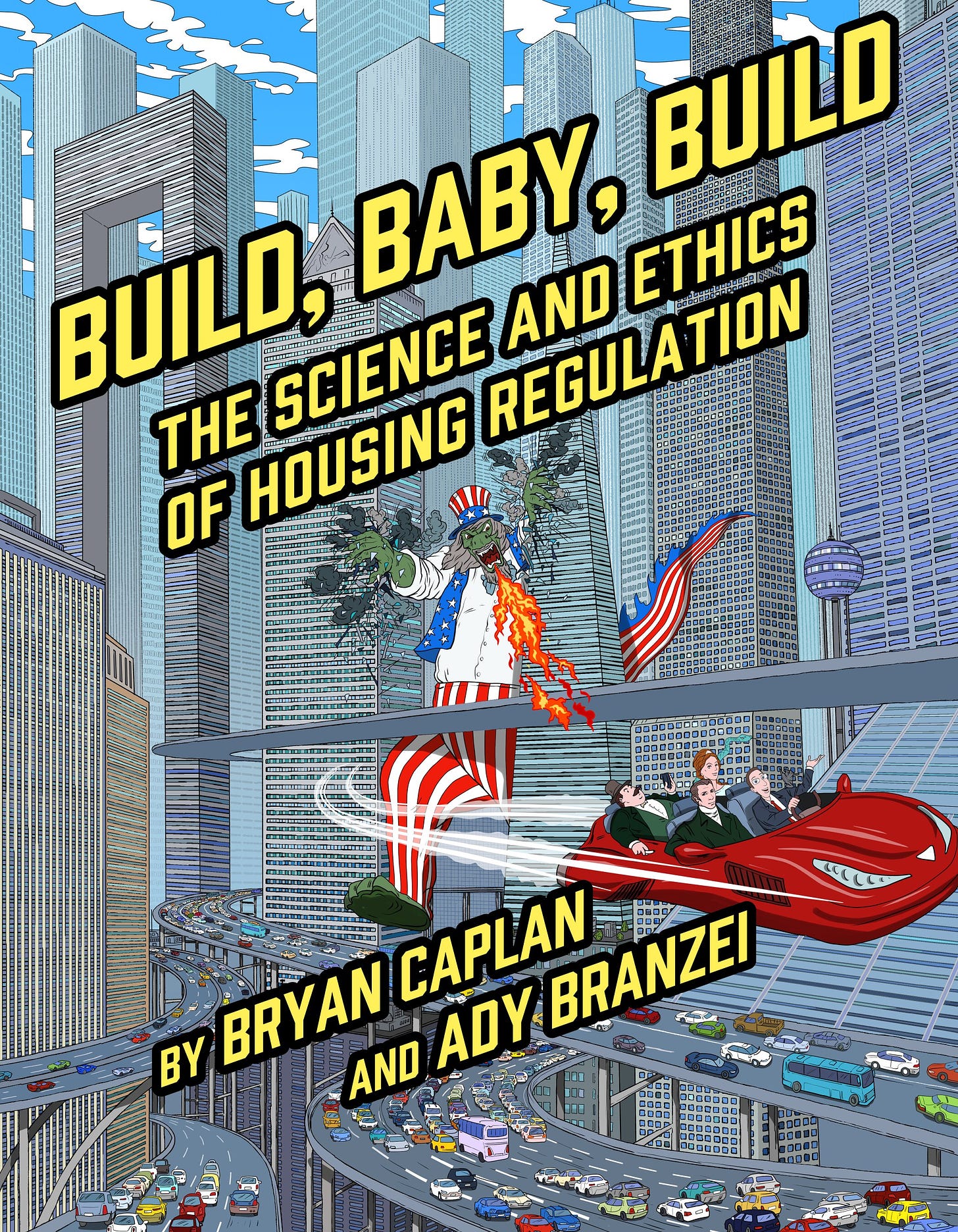
I pitch Build, Baby, Build in today’s New York Times. No illustrations, but a bunch of cool graphs cooked up by Sara Chodosh of the NYT data analytics team. The original title was “The Panacea Policy,” but now it’s “Yes in My Backyard: The Case For Housing Deregulation.” And for you, dear readers, it’s ungated!…
I’m not a political pundit, but I’m guessing that yesterday’s despicable assassination attempt on Donald Trump increases the likelihood that he reclaims the White House. That’s probably not good news for trade policy (though Biden has been just as bad), but it will be very good news for housing policy. Not because of what Trump […]
Below is my column in Fox.com on renewed attacks on free speech and the apologists for this anti-free speech movement, including most recently comedian Jon Stewart. From moves to amend the First Amendment to mocking those being targeted, the left is pushing back at polls and efforts to restore free speech values. Here is the […]
Here is one excerpt: What few appreciate is that the overregulation of housing has blocked a classic American path: moving to a higher-wage part of the country to secure a better life. A paper by the economists Peter Ganong and Daniel Shoag shows that housing costs now routinely outweigh wage gains: While janitors and waiters do indeed […]
From a new working paper “The Price of Housing in the United States, 1890-2006” by Ronan C. Lyons, Allison Shertzer, Rowena Gray & David N. Agorastos (emphasis added): “Zoning was adopted by almost every city in our sample during the 1920s. We see a slightly steeper gradient over the next two periods (coefficients of .48 […]
In 2021 the then Lord Chancellor Robert Buckland QC MP cited the principle of legality as an example of an aspect of public law that might ‘take on a life of [its] own, and lead to the courts overreaching.’ In the simplest terms, the principle of legality is a common law rule of statutory interpretation […]
Claudia Goldin’s Nobel prize lecture, “An Evolving Economic Force,” has now been published in the June 2024 issue of the American Economic Review. Or if you prefer, you can watch the watch the lecture (with more numerous slides!) from the link at the Nobel website. She writes: Women are now at the center of the…
The RN intends to move ahead with a proposed law that states as its aim “to combat Islamist ideologies”. It includes measures to make it easier to close mosques and deport imams deemed to be radicalised, and a ban on clothing that “constitute in themselves an unequivocal and ostentatious affirmation” of Islamist ideology. Bardella said […]
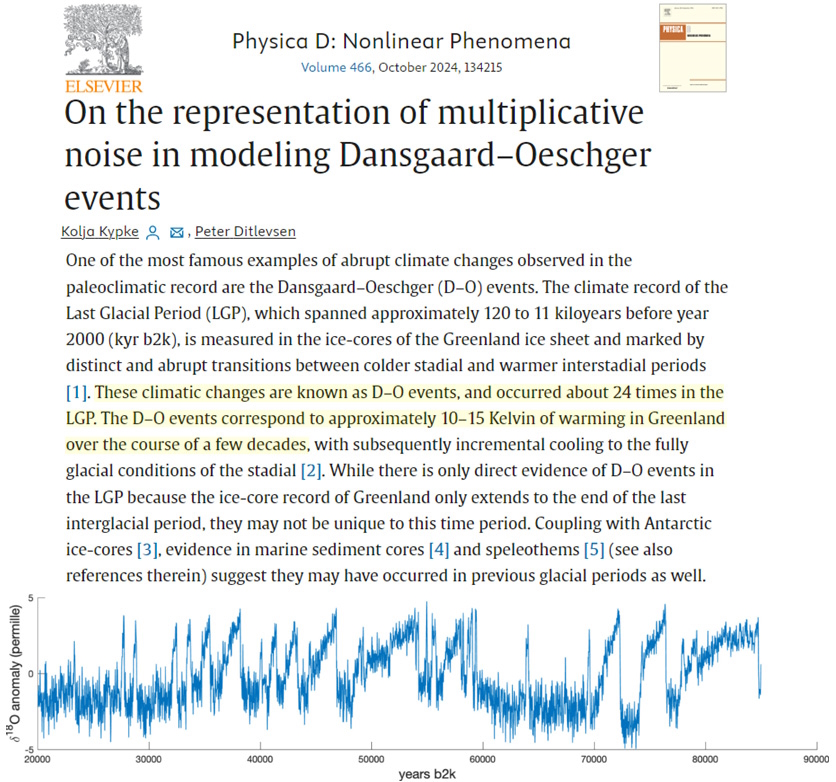
Greenland has not warmed (net) in the last 90 years. From 80,000 to 20,000 years ago Greenland warmed by 10-15 Kelvin within a span of “a few decades” 24 times (Kypke and Ditlevsen 2024). These abrupt warming periods occurred without concomitant CO2 concentration changes. And, of course, without human interference. Image Source: Kypke and Ditlevsen…
Perhaps “both” is the correct answer? The right-wing tendencies are easiest to explain. South Africa is obviously much wealthier than the rest of sub-Saharan Africa, and of course Westerners play a larger role in its history and also in its present. You can put different glosses on that, but a variety of those paths lead […]
Why Evolution is True is a blog written by Jerry Coyne, centered on evolution and biology but also dealing with diverse topics like politics, culture, and cats.
In Hume’s spirit, I will attempt to serve as an ambassador from my world of economics, and help in “finding topics of conversation fit for the entertainment of rational creatures.”
“We do not believe any group of men adequate enough or wise enough to operate without scrutiny or without criticism. We know that the only way to avoid error is to detect it, that the only way to detect it is to be free to inquire. We know that in secrecy error undetected will flourish and subvert”. - J Robert Oppenheimer.



 Utopia, you are standing in it!
Recent Comments