Jonathan Rosen writes: Thirty-seven years ago, Ayatollah Ruhollah Khomeini, Supreme Leader and founder of the Islamic Republic of Iran, sentenced Salman Rushdieto death on Valentine’s Day for writing a novel. It is hard to write that sentence without feeling it is a parody of the opening line of Franz Kafka’s The Trial: “Someone must have slandered Josef K.,…
The Rushdie fatwa
The Rushdie fatwa
30 Mar 2026 Leave a comment
in defence economics, economics of crime, economics of education, economics of religion, law and economics, liberalism Tags: free speech
Indigenous “ways of knowing” invade Canadian science classes
29 Mar 2026 Leave a comment
in economics of education, liberalism, Marxist economics Tags: Age of Enlightenment, Canada, political correctness, racial discrimination, regressive left

I’ve spent a lot of time pushed many electrons going after the fallacy in New Zealand that indigenous “ways of knowing”—in this case from the Māori—are just as valid as so-called “Western ways of knowing,” which is what Kiwi progressives call “science”. You can see my pieces here, but there are many. This sacralization of…
Indigenous “ways of knowing” invade Canadian science classes
Bet On It Book Club: For a New Liberty, Chapter 7
28 Mar 2026 Leave a comment
in applied price theory, economics of bureaucracy, economics of education, human capital, labour economics, libertarianism, Murray Rothbard, Public Choice Tags: signaling
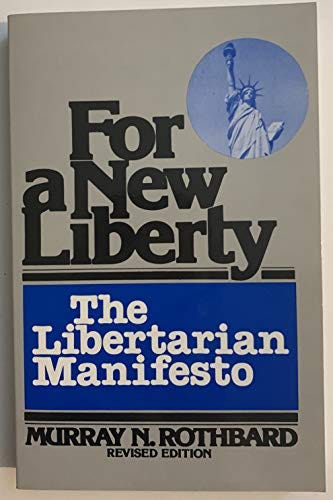
SummaryIn this chapter, Rothbard makes the case for the abolition of public schooling. While he somewhat surprisingly views Friedman’s voucher system as “a great improvement over the present system in permitting a wider range of parental choice and enabling the abolition of the public school system,” Rothbard will settle for nothing less than the separation…
Bet On It Book Club: For a New Liberty, Chapter 7
Frederick Forsyth reviews
26 Mar 2026 Leave a comment
in defence economics, economics of education
Frederick Forsyth (1938 to 2025) was an English novelist and journalist. He’s best known for the string of meticulously researched popular thrillers he wrote in a 30-year career between the early 70s and the early Noughties. He wrote 14 novels in total, none of them as good as the debut, his first and best novel […]
Frederick Forsyth reviews
Two obituaries of Robert Trivers
26 Mar 2026 Leave a comment

Although I did call attention to the death of Robert Trivers, age 83, on March 12, and I knew him slightly, I did not have the chops to summarize his many contributions, nor did I know him that well (we overlapped at Harvard). Fortunately, Steve Pinker has produced an absolutely terrific bio of Trivers at…
Two obituaries of Robert Trivers
The taboo idea you can’t discuss in academia
21 Mar 2026 Leave a comment
in labour economics, human capital, economics of education Tags: free speech, IQ, political correctness, racial discrimination, regressive left

My friend the Belgian philosopher Maarten Boudry is writing about what he calls, correctly, “the most dangerous idea in academia”—an idea that can get you banned or even fired if you even suggest it. It is, of course, the notion that different “races” differ on average in IQ or intelligence. It’s such a hot potato…
The taboo idea you can’t discuss in academia
Medical Council proposes striking off doctors who disagree with their political views
17 Mar 2026 Leave a comment
in discrimination, economics of education, economics of regulation, human capital, labour economics, labour supply, liberalism, Marxist economics, occupational choice, occupational regulation, politics, politics - New Zealand
The Medical Council has proposed a statement on cultural competence that is basically a political litmus test. It is outrageous overreach, and an example of why Parliament needs to rein in all these regulatory bodies. No one would object to a statement that doctors must be respectful of all cultures and beliefs, while undertaking their…
Medical Council proposes striking off doctors who disagree with their political views
The great diversity of charter schools
14 Mar 2026 Leave a comment
in liberalism, politics - New Zealand, economics of education
I’ve just been looking at the 19 charter schools approved to date, and am impressed with how well they cater for all types of kids, They are not about replicating state schools, but providing alternatives for those who need or desire them. The focus of the schools are: And not a single student at these…
The great diversity of charter schools
Why Most Australian Writers’ Festivals Are Pro-Palestinian
05 Mar 2026 Leave a comment
in economics of education, economics of media and culture, liberalism, Marxist economics, politics - Australia
Australian writers’ festivals are frequently accused of being “pro-Palestinian” or anti-Israeli. The charge is usually made in frustration: panels on Gaza and Palestinian literature are common; strongly pro-Israel voices are rare; and anyone who questions the imbalance is quickly told they are confusing “balance” with “morality”. Yet the more interesting question is not whether a […]
Why Most Australian Writers’ Festivals Are Pro-Palestinian
The Cult | A Net Zero Watch Short Film
02 Mar 2026 Leave a comment
in economics of climate change, economics of education, economics of regulation, energy economics, environmental economics, environmentalism, global warming, movies
The brilliant Colin Brazier returns for our second short film on the cult of Net Zero and how it protects ‘green’ policies from being questioned by stifling debate and cracking down on free speech.
The Cult | A Net Zero Watch Short Film
Jesus ‘n’ Mo ‘n’ conceptual conservatism
02 Mar 2026 Leave a comment
in economics of education Tags: cognitive psychology, political psychology, regressive left
This week’s Jesus and Mo strip, called “bells,” came with a comment: “Does she think they were born yesterday?” Wikipedia tells us that another word for “conceptual conservatism” is “belief perseverance,” and characterizes it this way: Belief perseverance (also known as conceptual conservatism) is maintenance of a belief despite new information that firmly contradicts it.[2] Since rationality involves conceptual…
Jesus ‘n’ Mo ‘n’ conceptual conservatism
Joseph Schumpeter, Capitalism and Intellectuals
01 Mar 2026 Leave a comment
in economics of education, history of economic thought Tags: creative destruction
See Socialists, Knowledge of History and Agency. These are letters to the editor of The WSJ in response to an article about socialism by Joseph Epstein. The one below reminded me of a 1992 article by Robert Samuelson in Newsweek. “Joseph Epstein’s “Socialists Don’t Know History” (op-ed, May 30, 2019) on the abysmal historical knowledge…
Joseph Schumpeter, Capitalism and Intellectuals
LINDSAY MITCHELL: HOW THE SALLIES HAVE EVOLVED TO BECOME PART OF THE PROBLEM
28 Feb 2026 Leave a comment
in discrimination, economics of crime, economics of education, labour economics, law and economics, politics - New Zealand, welfare reform Tags: Maori economic development, racial discrimination
The 2026 Salvation Army State of the Nation Report revealed their official conversion to wokeism by repeatedly finding excuses for Maori over-representation in poor social stats because of victimisation through colonisation. This caused a number of readers to ponder future contributions to the organisation. But it isn’t just this development that should concern donors. The…
LINDSAY MITCHELL: HOW THE SALLIES HAVE EVOLVED TO BECOME PART OF THE PROBLEM
Jesse Singal’s op-ed in the NYT: A turning point in “affirmative care”?
27 Feb 2026 Leave a comment
in economics of education, health economics, liberalism, Marxist economics, politics - USA Tags: sex discrimination

For two reasons I think that Jesse Singal‘s long op-ed (really a “guest essay”) in today’s NYT will mark a turning point in public and professional attitudes towards “affirmative care.” First, the NYT saw fit to publish a piece showing that many American medical associations have promoted “affirmative care” of gender-dysphoric adolescents, despite those associations…
Jesse Singal’s op-ed in the NYT: A turning point in “affirmative care”?
Seven Lies We’re Told About Climate Change | Michael Shellenberger
26 Feb 2026 Leave a comment
in economics of climate change, economics of education, economics of regulation, energy economics, environmental economics, environmentalism, global warming Tags: climate alarmism
By Paul Homewood Michael Shellenberger is one of the best communicators I have come across. Here he unpicks a lot of the myths around climate change. It is a long video – what I often do is watch 10 or 15 minute chunks Alternatively, watch the first couple of minutes and then fast forward […]
Seven Lies We’re Told About Climate Change | Michael Shellenberger
 Utopia, you are standing in it!
Recent Comments