Thanks. I apologise. I thought they were quoting you. The running of the sentences mixed up your opinions and the author's
— Jim Rose (@JimRosenz) March 26, 2017
Celebrating humanity's flourishing through the spread of capitalism and the rule of law
26 Mar 2017 Leave a comment
24 Mar 2017 Leave a comment
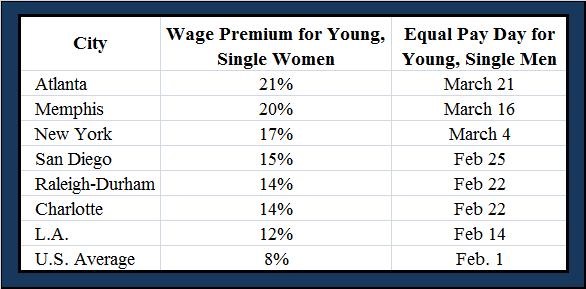
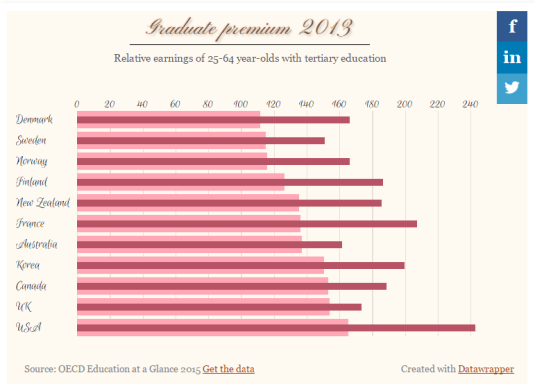
in discrimination, economics of education, gender, human capital, labour economics, labour supply, occupational choice, urban economics Tags: College premium, gender way, graduate premium, reversing gender gap, urban wage premium
28 Feb 2017 Leave a comment
in discrimination, economics of education, economics of religion, gender, liberalism, politics - New Zealand

As Catherine Delahunty MP said after visiting a fundamentalist religious community in New Zealand:
I looked at the gorgeous, yet regimented girls in their identical clothing and wondered how a physicist, an international lawyer or a plumber might blossom if the only role models she was exposed to were those in her own community. We agreed to disagree, because you can’t argue with religious certainty and a literal interpretation of a religious text. This community feels they are under attack by people like me and throughout the day the women and men I met did their best to share their vision of a safe, structured and practical world led entirely by men who consult with women.
22 Feb 2017 Leave a comment
The Green’s new policy of making Te Reo Māori a core subject forgets that not everyone is good at languages.
I got a lower pass in High School English. I never scored a single mark in a phonetics test – zip every time. I was hopeless at learning Japanese.
I was wise enough to resist the encouragement for my dear departed mother to enrol in high school French. I had no wish to be the class dunce in French too.
The only reason I went to university was Mr. Carney in the first week of grade 7 noticed that I was in the level II classes for English and social science. As my six brothers and three sisters topped the school or near enough, he suspected that I was hiding my light under a bushel. He promoted me to the level III classes, which put me in the stream to matriculation college and therefore university.
Imagine how much I would have hated study if I was required to learn a 2nd language when I was struggling terribly with English. I am still a bad speller. I leave it to the reader to judge my grammar.
Learning another language is not a priority when you consider the poor literacy rates among Māori, Pasifika and some Pākehā. 60% of Pākehā are above the minimum level of competence to meet the prose literacy requirements of a knowledge society. This contrasts with the majority of Māori and Pasifika who are below the minimum level of prose literacy competence.
Requiring children who do not have an aptitude for language or school in general to learn a 2nd language will reinforce in those who are not doing well that they are not very smart. This will give them more reasons to hate school and leave as soon as possible and never go back.
The key to helping children who do not have an aptitude to succeed at school is to find subjects where they do well so they can get a good start to life. If students are not good at academic subjects, requiring them to do more academic studies such as study a 2nd language is fool-hardy.
Learning Te Reo Māori will not help children in their other subjects. The psychology of the transfer of learning was founded 100 years ago to explore the hypothesis that learning Latin gave the student muscle to learn other subjects, both other languages and generally learn faster.
Educational psychologists found that Latin does not help much at all in studying other languages and other subjects. No significant differences were found in deductive and inductive reasoning or text comprehension among students with 4 years of Latin, 2 years of Latin or no Latin at all.
Precious school resources and class time is better spent learning the basics needed to get a good start in life.
PS. I am good at maths so I do not understand why people are not. People who are good at languages are even more arrogant about how easy it is to learn a language and even more lacking in insight about the difficulties in language acquisition.
09 Feb 2017 Leave a comment
in discrimination, economics of education, gender, human capital, labour economics Tags: behavioural genetics, educational psychology, gender gap, gender wage gap, reversing gender gap
06 Feb 2017 Leave a comment
in discrimination, economics of education, gender, labour economics, labour supply, occupational choice Tags: behavioural genetics, compensating differentials, educational psychology, gender gap, reversing gender gap
Celebrating humanity's flourishing through the spread of capitalism and the rule of law
Scholarly commentary on law, economics, and more
Beatrice Cherrier's blog
Celebrating humanity's flourishing through the spread of capitalism and the rule of law
Celebrating humanity's flourishing through the spread of capitalism and the rule of law
Celebrating humanity's flourishing through the spread of capitalism and the rule of law
Why Evolution is True is a blog written by Jerry Coyne, centered on evolution and biology but also dealing with diverse topics like politics, culture, and cats.
Celebrating humanity's flourishing through the spread of capitalism and the rule of law
Celebrating humanity's flourishing through the spread of capitalism and the rule of law
A rural perspective with a blue tint by Ele Ludemann
DPF's Kiwiblog - Fomenting Happy Mischief since 2003
Celebrating humanity's flourishing through the spread of capitalism and the rule of law
The world's most viewed site on global warming and climate change
Tim Harding's writings on rationality, informal logic and skepticism
A window into Doc Freiberger's library
Let's examine hard decisions!
Commentary on monetary policy in the spirit of R. G. Hawtrey
Thoughts on public policy and the media
Celebrating humanity's flourishing through the spread of capitalism and the rule of law
Politics and the economy
A blog (primarily) on Canadian and Commonwealth political history and institutions
Reading between the lines, and underneath the hype.
Economics, and such stuff as dreams are made on
"The British constitution has always been puzzling, and always will be." --Queen Elizabeth II
Celebrating humanity's flourishing through the spread of capitalism and the rule of law
Celebrating humanity's flourishing through the spread of capitalism and the rule of law
WORLD WAR II, MUSIC, HISTORY, HOLOCAUST
Undisciplined scholar, recovering academic
Celebrating humanity's flourishing through the spread of capitalism and the rule of law
Res ipsa loquitur - The thing itself speaks
Celebrating humanity's flourishing through the spread of capitalism and the rule of law
Researching the House of Commons, 1832-1868
Articles and research from the History of Parliament Trust
Reflections on books and art
Posts on the History of Law, Crime, and Justice
Celebrating humanity's flourishing through the spread of capitalism and the rule of law
Exploring the Monarchs of Europe
Cutting edge science you can dice with
Small Steps Toward A Much Better World
“We do not believe any group of men adequate enough or wise enough to operate without scrutiny or without criticism. We know that the only way to avoid error is to detect it, that the only way to detect it is to be free to inquire. We know that in secrecy error undetected will flourish and subvert”. - J Robert Oppenheimer.
The truth about the great wind power fraud - we're not here to debate the wind industry, we're here to destroy it.
Celebrating humanity's flourishing through the spread of capitalism and the rule of law
Celebrating humanity's flourishing through the spread of capitalism and the rule of law
Economics, public policy, monetary policy, financial regulation, with a New Zealand perspective
Celebrating humanity's flourishing through the spread of capitalism and the rule of law
Restraining Government in America and Around the World



 Utopia, you are standing in it!
Recent Comments