Friedman on Assigning Public Schools by Home Address
24 Nov 2014 Leave a comment
in economics of education, Milton Friedman, rentseeking Tags: Director's Law, Milton Friedman, School choice
Milton Friedman on Public Schools and School Choice
23 Nov 2014 Leave a comment
in economics of education, Milton Friedman Tags: Milton Friedman, School choice, The meaning of competition
Why Economists and Parents Need to Discover Behavioral Genetics | Bryan Caplan
21 Nov 2014 Leave a comment
in economics of education, human capital, labour economics Tags: behavioural genetics, Bryan Caplan, nature versus nurture

Milton Friedman on School Choice and Low-Income Families in 59 seconds
21 Nov 2014 Leave a comment
in economics of education, Milton Friedman Tags: Milton Friedman, poverty and inequality, School choice
Milton Friedman on the Risks of School Choice (in 57 seconds)
20 Nov 2014 Leave a comment
in economics of education, Milton Friedman Tags: Milton Friedman, School choice
Why schools can’t teach character – Toby Young
13 Nov 2014 Leave a comment
in economics of education, human capital, labour economics Tags: behavioural genetics, economics of personality traits, Toby Young

…character traits are inherited, not taught.
I’m not talking about moral qualities, such as honesty, compassion and altruism. It may be that these can be cultivated.
I mean performance-enhancing virtues, like stick-to-it-ness and the ability to bounce back from defeat, what exponents of character education call ‘grit’.
There’s a growing body of evidence that these traits are largely hereditable, that is, encoded in our DNA. If you exhibit any of these qualities, it’s overwhelmingly likely that your parents did, too.
And insofar as a child’s upbringing has any impact on the emergence of these qualities, it’s the peers they associate with during adolescence that matter, not their teachers.
How Not to Be Poor | NCPA
12 Nov 2014 Leave a comment
in applied welfare economics, economics of education, labour economics Tags: poverty and inequality, welfare reform


The Feed the Kids Bill still leaves their parents to go hungry!
05 Nov 2014 Leave a comment
in applied price theory, economics of education, politics - New Zealand, poverty and inequality, welfare reform Tags: Heartless Left, Leftover Left, school breakfast programmes
The Feed the Kids Bill that has been reintroduced into the new New Zealand Parliament still contains no provision to feed the parents who are too poor to make their children breakfast.

Why are these hungry parents not invited for breakfast as well? No parent would have breakfast if their children was to go hungry. Both the parent and child must have gone hungry that morning, perhaps morning after morning. There is no other charitable explanation.
The Bill aims to set up government funded breakfast and lunch programmes in all decile 1-2 schools. The cost is $100 million a year – including food, staffing, administration, monitoring and evaluation.
Lindsay Mitchell was on the money when she wrote:
Even parents reliant on a benefit are paid enough to provide some fruit and modest sandwiches daily.
An inability to do so is a symptom of a greater problem requiring scrutiny – for the sake of their child.
“The ‘income management’ regime provides a response to genuinely hungry children.
It may interest you that even Labour advocated for extended income management in its election manifesto.
Their 2014 ‘Social Development’ policy paper proposed, “…allow[ing] income management to be used as a tool by social agencies where there are known child protection issues and it is considered in the best interests of the child, especially where there are gambling, drug and alcohol issues involved.”
Hungry children is a child protection issue. Parents who fail to feed their children should come to the attention of the child protection authorities. Those on the benefit should be subject to income management because they clearly are spending their money elsewhere.
On the Left, there is a refusal to discuss the role of addiction and incompetent parenting in child poverty. The 2014 election manifesto of the Labour Party is a welcome departure from that tradition of denial.
The reversing gender gap: why women choose not to be scientists, engineers and IT professionals
05 Nov 2014 4 Comments
in discrimination, economics of education, gender, human capital, labour economics, labour supply, occupational choice Tags: do gooders, occupation choice, sex discrimination, The fatal conceit, The pretence to knowledge
Concerns about the lack of women undertaking careers in science and engineering are based on one simple false premise: that science and engineering are the most prestigious choices available to women with great ability in maths and science at high school.
We themed our roundup this week: 5 Plots on Gender You Have to See blog.plot.ly/post/976775676… @randal_olson @katy_milkman http://t.co/B5suLXIPkz—
plotly (@plotlygraphs) September 16, 2014
If relatively more prestigious career options are open to women who also happen to qualify for science and engineering, women will be underrepresented in science and engineering simply because they have better career options than the men who become scientists and engineers.
In New Zealand, just as many women as men qualify for science and engineering and the IT degrees. Not as many women who have qualified take up this option simply because they also qualify for medicine and law in greater numbers than the men who happen to qualify for science, engineering and IT degrees.
In the United States, the Association for Psychological Science found that:
Women may be less likely to pursue careers in science and math because they have more career choices, not because they have less ability, according to a new study published in Psychological Science.
Although the gender gap in mathematics has narrowed in recent decades, with more females enrolling and performing well in math classes, females are still less likely to pursue careers in science, technology, engineering, and mathematics (STEM) than their male peers.
Researchers tend to agree that differences in math ability can’t account for the underrepresentation of women in STEM fields. So what does?
Developmental psychologist Ming-Te Wang and his colleagues at the University of Pittsburgh and University of Michigan wondered whether differences in overall patterns of math and verbal ability might play a role.
The researchers examined data from 1490 college-bound US students drawn from a national longitudinal study. The students were surveyed in 12th grade and again when they were 33 years old. The survey included data on several factors, including participants’ SAT scores, various aspects of their motivational beliefs and values, and their occupations at age 33.
Looking at students who showed high math abilities, Wang and colleagues found that those students who also had high verbal abilities — a group that contained more women than men — were less likely to have chosen a STEM occupation than those who had moderate verbal abilities.
This outcome is no surprise for those familiar with the gap between men and women in verbal and reading abilities – a gap that is strongly in favour of women
The OECD PISA tests at the age of 15 find that teenage boys have a slight advantage in maths – a few percentage points – teenage girls have a serious advantage in reading.

The OECD PISA tests at the age of 15 find that this superior verbal and reading abilities of teenage girls the equivalent of six months extra schooling. One half year’s education goes a long way towards explaining many wage gaps by gender,ethnicity in race. This six-month edge in schooling is a serious advantage when qualifying for university.
Young women choose to not pursue science, engineering and IT careers because there are other career options that allow them to use their superior verbal and reading abilities – other careers is that allow them to be more successful in life than being a scientist, an engineer or an IT geek. As the Association for Psychological Science explains in the same press release cited above:
Our study shows that it’s not lack of ability or differences in ability that orients females to pursue non-STEM careers, it’s the greater likelihood that females with high math ability also have high verbal ability,” notes Wang. “Because they’re good at both, they can consider a wide range of occupations.
To put it bluntly, science, engineering and IT degrees are for young people who lack the verbal and reading abilities to get into medicine and law. Science, engineering and IT good degrees are for those who can’t get into medicine and law. They could have been contenders if they were more articulate and well-read.
There is a gender disparity in science, engineering and IT because teenage girls find these degrees to be inferior choices – inferior choices given the set of abilities they have when considering their career options.
HT: Mark J. Perry
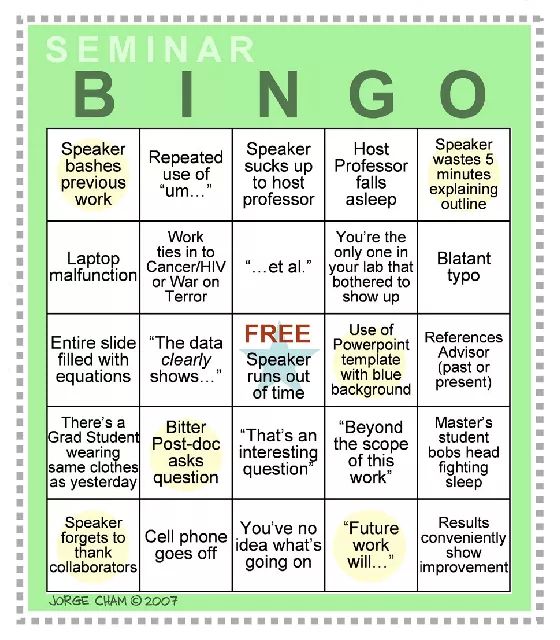
Some economics of co-authorship
10 Oct 2014 Leave a comment
in economics of education, managerial economics, organisational economics, personnel economics Tags: polymaths, rising burden of knowledge

The bad explanation of the proliferation of co-authorship is academic rent seeking and CV padding. We do live in a world, publish or perish and academic productivity does decline quite markedly when tenure is secured.
The good explanation is more co-authors is an efficient response to the rising burden of knowledge where teams of authors need to get across much larger fields than in the past. In empirical economics, one co-author might specialise in the econometrics, while the other author tells them what to do.
Ben Jones in ‘The Burden of Knowledge and the Death of the Renaissance Man: Is Innovation Getting Harder? found that as knowledge accumulates as technology advances, successive generations of innovators may face an increasing educational burden.
Innovators can compensate through lengthening their time in education and narrowing expertise, but these responses come at the cost of reducing individual innovative capacities. This has implications for the organization of innovative activity – a greater reliance on teamwork – and has negative implications for economic growth.
HT: Stan Liebowitz via andrew gelman


Recent Comments