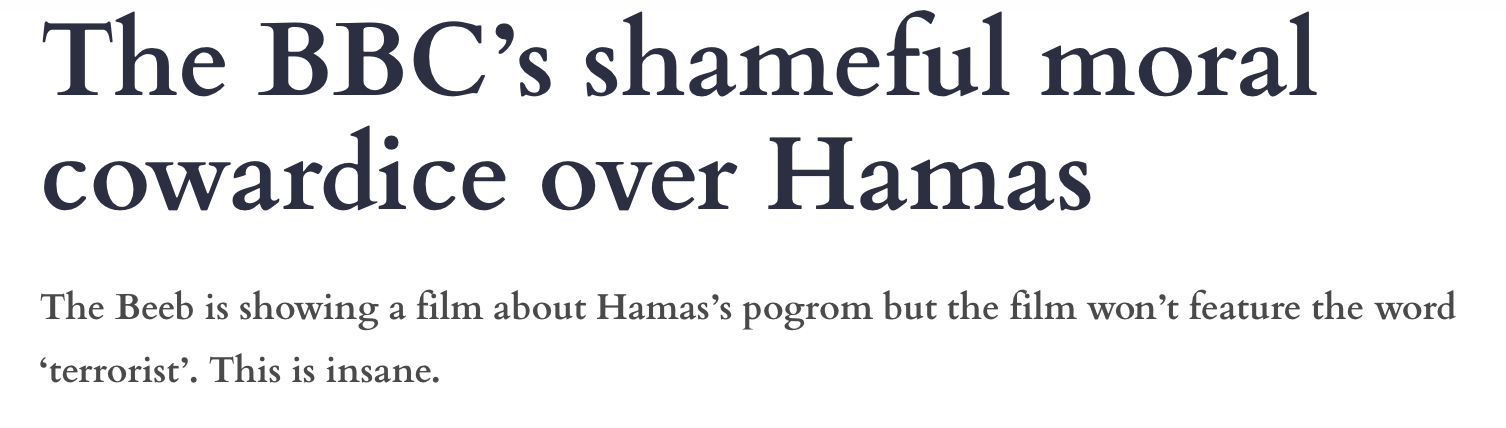
This article just appeared in Spiked (click headline below to read), but you can see a similar piece in the Times of Israel. The upshot is that the BBC, which has long bridled at using the word “terrorists” for Hamas, is now bridling again when the Beeb itself shows a documentary about the Nova Music […]
Eric Crampton writes – Government sometimes cannot stop itself from providing bailouts when risk-taking goes wrong. This kind of ‘free’ insurance policy leads to no end of bad outcomes.
Hillary Clinton has long been one of the most anti-free speech figures in American politics, including calling upon European officials to force Elon Musk to censor American citizens under the infamous Digital Services Act (DSA). She is now suggesting the arrest of Americans who spread what she considers disinformation. It is a crushingly ironic moment…
In a sane world, medicines and vaccines already approved by trustworthy overseas regulators would automatically be able to be used in New Zealand as well.New Zealand is not sane. But neither is anywhere else really on that standard. Other places are just faster than NZ in getting things approved, with more practicable pathways for expedited…
I (and Curia) have just resigned as members of the Research Association of New Zealand. It is something I never thought I would do, and do with great sadness. I have been an enthusiastic member of the industry body. I joined in 2004 when I formed Curia Market Research. It was an honour to be […]
Here is the audio, video, and transcript. Here is part of the episode summary: Together Paul and Tyler explore whether psychologists understand day-to-day human behavior any better than normal folk, how babies can tell if you’re a jerk, at what age children have the capacity to believe in God, why the trend in religion is…
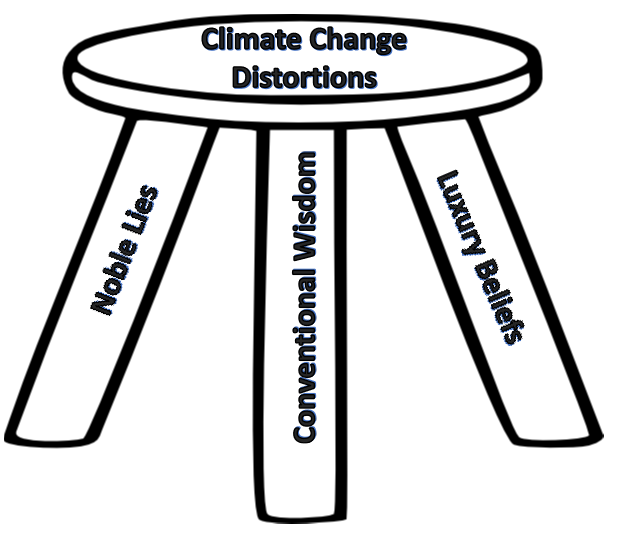
Roger Pielke Jr. explains at his blog Why Climate Misinformation Persists. Excerpts in italics with my bolds and added images. H/T John Ray Noble Lies, Conventional Wisdom, and Luxury Beliefs In 2001, I participated in a roundtable discussion hosted at the headquarters of the National Academy of Sciences (NAS) with a group of U.S. Senators, […]
The Green Party has a Member’s Bill up arguing for a consumer right of repair; Auckland University’s Alex Sims has written a few columns in support of such a thing. I’d had an email asking about that legislation; figured I’d share my response here – tidied up a bit.If it’s more expensive to produce a product…
This is a hilarious X (formerly Twitter) thread on a presentation about “messaging over climate”. Worst messages tested: electric cars, Green New Deal, frontline communities, ‘Big Oil lied’, climate pollution Talking about electric cars especially deadly for Democrats. Women in particular frightened of battery running out. (Interesting gendered spin on range anxiety I hadn’t thought […]
And it looks like it’s well on the way to being so, given these interesting stats out of the USA. I’d love to know how New Zealand compares in many of these categories One more generation should see large numbers of these well-educated female graduates rising to high levels of private and public sector power. […]
By Nick Whitaker and J. Zachary Mazlish, this is the best piece on this question so far. Excerpt, noting I will not double indent: “Rather than regulation, our explanation for the absence of widespread prediction markets is a straightforward demand-side story: there is little natural demand for prediction market contracts, as we observe in practice. […]
For those of us who have criticized the cancel culture in higher education for years, the attacks and shunning have unrelenting. The media has played a role in that culture and none more prominently than the New York Times. Recently, however, the mob came for liberal professors and media who have remained silent for years…
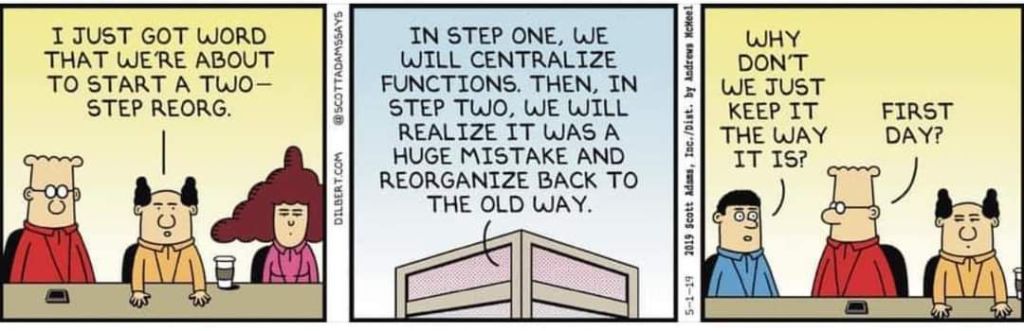
Several common measures — like employing a chief diversity officer, offering diversity training or having a diverse board — were not correlated with decreased discrimination in entry-level hiring, the researchers found. But one thing strongly predicted less discrimination: a centralized H.R. operation. The researchers recorded the voice mail messages that the fake applicants received. When a company’s […]
Why Evolution is True is a blog written by Jerry Coyne, centered on evolution and biology but also dealing with diverse topics like politics, culture, and cats.
“We do not believe any group of men adequate enough or wise enough to operate without scrutiny or without criticism. We know that the only way to avoid error is to detect it, that the only way to detect it is to be free to inquire. We know that in secrecy error undetected will flourish and subvert”. - J Robert Oppenheimer.


 Utopia, you are standing in it!
Recent Comments