After years of climate-driven experimentation – forced by deluded or dishonest politicians and business titans – the failures became too many and too consequential to be ignored. Little wonder that Larry Fink has turned his ear away from the rhetoric of alarm and toward client demands for strategic guidance.
BlackRock CEO Abandons Climate Delusion for Investor Needs
BlackRock CEO Abandons Climate Delusion for Investor Needs
28 Mar 2026 Leave a comment
in economics of climate change, economics of regulation, energy economics, environmental economics, environmentalism, financial economics, global warming Tags: active investing
Taking comfort from the 1970s
27 Mar 2026 Leave a comment
in defence economics, economics of regulation, energy economics, politics - New Zealand, war and peace Tags: Iran
When a story recently emerged about the government getting advice on carless days under the Petroleum Demand Restraint Act, older New Zealanders will have felt a warm flush of nostalgia. The 1979 restrictions brought coloured windscreen stickers announcing the weekday car owners had promised not to drive. Thursday proved the most popular choice. A thriving black market followed. Forty-three percent of vehicles secured exemptions.
Taking comfort from the 1970s
Defining Socialism
26 Mar 2026 Leave a comment
in applied price theory, comparative institutional analysis, development economics, economic history, economics of regulation, history of economic thought, liberalism, Marxist economics
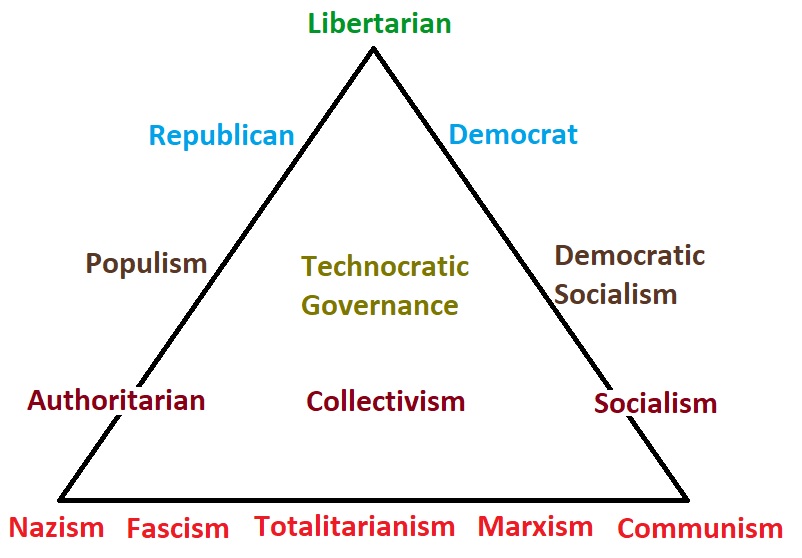
I’ve written a four-part series (here, here, here, and here) explaining why socialism is a bad idea, but let’s use today’s column to define this evil ideology. As I mentioned in the video, genuine socialism is based on three very specific concepts. Government ownership of the means of production Central planning to determine the allocation […]
Defining Socialism
A worthwhile trade off
25 Mar 2026 Leave a comment
in applied price theory, economics of regulation, human capital, labour economics, labour supply, law and economics, occupational choice, politics - New Zealand, property rights Tags: employment law, offsetting behavior, unintended consequences
Susan Hornsby-Geluk writes: Among the most controversial aspects of the recently enacted Employment Relations Amendment Act 2026 is the introduction of a high-income threshold for personal grievance claims. Under the new provisions, employees earning $200,000 or more in annual remuneration will lose the right to bring a personal grievance for unjustified dismissal, or an unjustified…
A worthwhile trade off
Javier Milei Week, Part III: Good Economic Policies, Good Economic Results
25 Mar 2026 Leave a comment
in Austrian economics, development economics, Public Choice, economics of regulation, applied price theory, economic history, growth disasters, economics of bureaucracy Tags: Argentina

Part I of this series reviewed the horrible economic conditions that plagued Argentina when Javier Milei took office. Part II looked at Milei’s spending restraint and some of the subsequent improvements in fiscal outcomes. For today’s column, let’s focus on what Milei has achieved in areas other than fiscal policy, and it will be based […]
Javier Milei Week, Part III: Good Economic Policies, Good Economic Results
Some simple spatial analytics of Cape Town
21 Mar 2026 Leave a comment
in applied price theory, development economics, economics of regulation, growth disasters, transport economics, urban economics Tags: South Africa
Rio de Janeiro let its hillsides be filled in with lower-cost dwellings. The result was a significant increase in the crime rate. On the more positive side of the ledger, upward mobility increased too. If you live in a decent favela, you can get to a downtown job with not too much difficulty, albeit with…
Some simple spatial analytics of Cape Town
Medical Council proposes striking off doctors who disagree with their political views
17 Mar 2026 Leave a comment
in discrimination, economics of education, economics of regulation, human capital, labour economics, labour supply, liberalism, Marxist economics, occupational choice, occupational regulation, politics, politics - New Zealand
The Medical Council has proposed a statement on cultural competence that is basically a political litmus test. It is outrageous overreach, and an example of why Parliament needs to rein in all these regulatory bodies. No one would object to a statement that doctors must be respectful of all cultures and beliefs, while undertaking their…
Medical Council proposes striking off doctors who disagree with their political views
COMESA, WhatsApp Business, and Antitrust in Search of a Theory
17 Mar 2026 Leave a comment
in applied price theory, economics of regulation, industrial organisation, law and economics, property rights Tags: competition law

Meta’s decision to limit third-party AI access to WhatsApp Business has quickly drawn antitrust scrutiny across multiple jurisdictions. The Common Market for Eastern and Southern Africa (COMESA) Competition and Consumer Commission (CCCC) is the latest authority to open an investigation. But before the case can answer whether Meta’s conduct harms competition, a more basic question…
COMESA, WhatsApp Business, and Antitrust in Search of a Theory
Don’t Copy Europe
14 Mar 2026 Leave a comment
in macroeconomics, economics of regulation, economic growth, applied price theory, economic history Tags: European Union

Since I’m currently in Europe as part of the Free Market Road Show, I’m going to share some more data (for other examples, see here, here, here, and here) on why the United States should not become more like Europe. As I noted a few years ago, people in the United States enjoy much higher levels […]
Don’t Copy Europe
The Covid inquiry’s verdict nobody quite wants
13 Mar 2026 Leave a comment
in economics of regulation, health economics, politics - New Zealand Tags: economics of pandemics
The final phase of the Covid inquiry is out, and almost nobody will be fully happy with what it says. The report says New Zealand got plenty right, but it also lays out a string of failures, blind spots and overreaches. It is neither the devastating indictment that opponents of the Labour government wanted, nor […]
The Covid inquiry’s verdict nobody quite wants
Covid-19 Royal Commission report released
10 Mar 2026 Leave a comment
in Alfred Marshall, comparative institutional analysis, economics of bureaucracy, economics of natural disasters, economics of regulation, health economics, politics - New Zealand, Public Choice Tags: economics of pandemics
The Royal Commission has released their second and final report. Some key aspects: Simeon Brown points out: The post Covid-19 Royal Commission report released first appeared on Kiwiblog.
Covid-19 Royal Commission report released
New results on the economic costs of climate change
09 Mar 2026 Leave a comment
in econometerics, economics of climate change, economics of natural disasters, economics of regulation, energy economics, environmental economics, environmentalism, global warming Tags: climate alarmism
I promised you I would be tracking this issue, and so here is a major development. From the QJE by Adrien Bilal and Diego R Känzig:: This paper estimates that the macroeconomic damages from climate change are an order of magnitude larger than previously thought. Exploiting natural global temperature variability, we find that 1○C warming reduces world…
New results on the economic costs of climate change
The Hidden Cost of Hard-to-Fire Labor Laws: Why European Firms Don’t Take Risks
08 Mar 2026 Leave a comment
in applied price theory, economics of bureaucracy, economics of regulation, entrepreneurship, labour economics, law and economics, managerial economics, organisational economics, personnel economics, property rights, Public Choice, theory of the firm, unemployment Tags: creative destruction, employment law, European Union, Germany
In our textbook, Modern Principles, Tyler and I write: Imagine how difficult it would be to get a date if every date required marriage? In the same way, it’s more difficult to find a job when every job requires a long-term commitment from the employer. In two new excellent pieces, Brian Albrecht and Pieter Garicano…
The Hidden Cost of Hard-to-Fire Labor Laws: Why European Firms Don’t Take Risks
Dismantling the competition myth
06 Mar 2026 Leave a comment
in Austrian economics, comparative institutional analysis, economic history, economics of regulation, entrepreneurship, history of economic thought, industrial organisation, law and economics, organisational economics, politics - Australia, technological progress, theory of the firm Tags: competition law, creative destruction
Ask anyone in Australia’s competition law community what transformed the economy, and you will hear a familiar story. Australia was once a cartelised, complacent place where businesses divided up markets and consumers paid the price. Then came the Trade Practices Act in 1974, and competition law forced firms to compete. This is not a fringe […]
Dismantling the competition myth
Germany’s “Energy Transition” Hits the Ice: LNG Crisis Exposes the Costs of Shunning Nuclear and Baseload Power
05 Mar 2026 Leave a comment
in economics of climate change, economics of regulation, energy economics, environmental economics, environmentalism, global warming Tags: wind power, solar power, Germany, celebrity technologies
Baseload power sources — whether nuclear or coal — were dismissed prematurely with pie-in-the-sky magical-thinking that a renewables-centric system could replace them quickly. But the reality of an industrialized society is that demand does not pause when the wind stops blowing or when Baltic ice slows a tanker. In that context, abandoning dispatchable power before…
Germany’s “Energy Transition” Hits the Ice: LNG Crisis Exposes the Costs of Shunning Nuclear and Baseload Power
 Utopia, you are standing in it!
Recent Comments