NZ Initiative cares more about junk-food barons’ bottom lines than it does about Kiwis getting sick @KevinHague https://t.co/8umZza6UnW
— Green Party NZ (@NZGreens) April 20, 2016
Celebrating humanity's flourishing through the spread of capitalism and the rule of law
23 Apr 2016 Leave a comment
in economics of media and culture, economics of regulation, health economics, politics - New Zealand Tags: anti-market bias, do gooders, meddlesome preferences, Morgan Foundation, nanny state, political psychology, rational rationality
23 Apr 2016 1 Comment
in applied price theory, applied welfare economics, economics of regulation, labour economics, labour supply, occupational choice, occupational regulation, Public Choice, rentseeking Tags: adverse selection, barriers to entry, moral hazard, occupational licensing, occupational regulation
The 2015 Current Population Survey in the USA added a question about whether you needed a licence or a certificate to practice your occupation. One in 4 Americans say they need a licence or certificate. 22.4% need a license and 3.1% need a certificate among employed over the age of 16 in the USA.
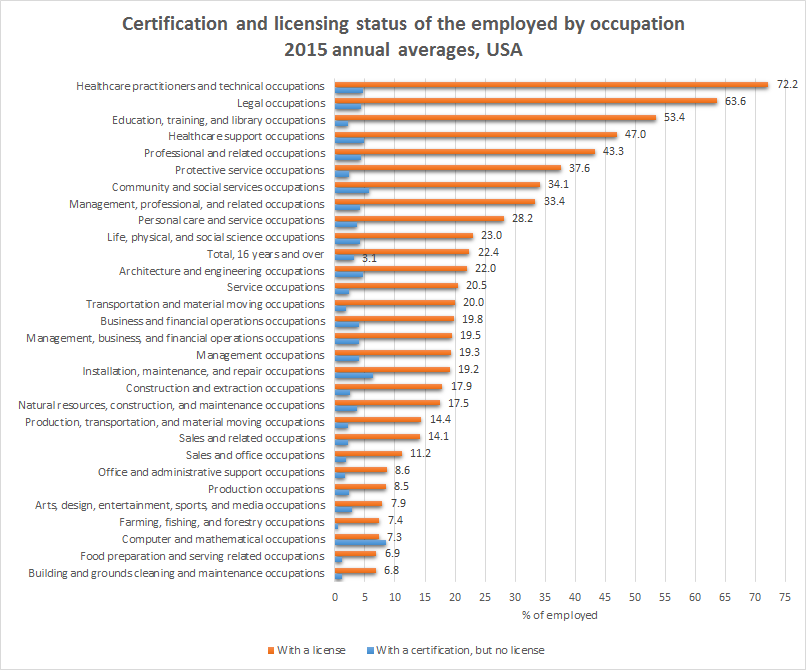
Source: Bureau of Labour Statistics, Labor Force Statistics from the Current Population Survey (2015), Certification and licensing status of the employed by occupation Table 5.
This estimate of 25% is less than the 30% estimated by Kleiner and Vorotnikov (2015) using a Harris Poll. Kleiner and Vorotnikov (2015) also found that some American states regulate twice as many occupations as others. This diversity in federalism strains any public interest explanation of occupational regulation.
Occupational regulation is more likely to be an issue for those who finished further education. It would have been better if the estimate by the Bureau of Labour Statistics was for adults and not have included teenagers.
The purpose of occupational regulation is to protect buyers from quacks and lemons – to overcome asymmetric information about the quality of the provider of the service.
The main issue with quacks in the labour market is whether there is a large cost of less than average quality service, and is there a sub-market who will buy less than average quality products in the presence of competing sellers competing on the basis of quality assurance. This demand for assurance creates opportunities for entrepreneurs to profit by providing assurance of quality.
Mostly disciplinary investigations and deregistrations under the auspices of occupational regulation are for gross misconduct and criminal convictions rather than the shading of quality.
23 Apr 2016 Leave a comment
in economics of regulation, health economics Tags: E-cigarettes, economics of obesity, economics of smoking, expressive voting, meddlesome preferences, nanny state, rational irrationality
One of the many interesting things that Maori Party MP Marama Fox said at a panel discussion for the launch of the New Zealand Initiative’s Health of the State report was that the Maori women she knew who smoked did so out of stress relief.
It is also well known that there is a weight gain after stopping smoking. If people cannot smoke because of higher taxes but still need to have an outlet for their stress, they look elsewhere and seek comfort in food.

Source: Weight Gain After Quitting Smoking – Quit Smoking Community.
This is before you consider the general pleasure seeking aspect of smoking. Some people find smoking pleasurable; I find it disgusting.
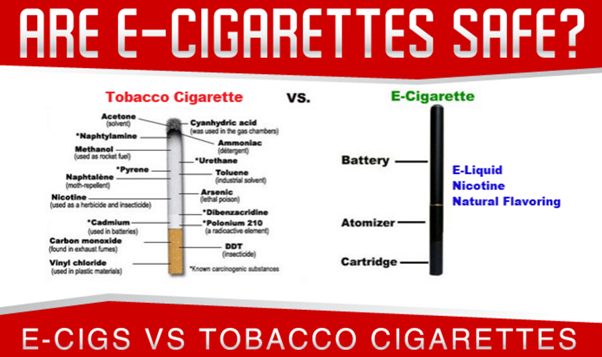
This suggests to me that the restrictions on E-cigarettes are the worst of both worlds. If people are going to smoke, you may as well let them have access to a technology that is safer.

Instead, the do-gooders prefer to put an extra bullet in the chamber as smokers play Russian roulette.
22 Apr 2016 3 Comments
in economics of information, economics of regulation, health economics, law and economics, politics - New Zealand Tags: Aaron Director, alcohol regulation, economics of obesity, economics of prohibition, economics of smoking, meddlesome preferences, Morgan Foundation, nanny state
The Greens have joined that Morgan Foundation in playing the man rather than the ball on the recently published report of the New Zealand Initiative on sin taxes. Green Party health spokesperson Kevin Hague said:
The New Zealand Initiative cares more about junk-food barons’ bottom lines than it cares about Kiwis who are getting sick and dying because of obesity-related illnesses
The Morgan Foundation was just as keen to argue that their opponents on sin taxes are both ignorant and steeped in moral turpitude as a way of avoiding substantive argument:
The New Zealand Initiative are not interested in reducing obesity, or preventing the looming diabetes crisis where 1 in 3 Kiwis will have the disease. They make no attempt to understand the causes, and don’t propose any way to deal with these issues…
Is there no room for honest disagreement and different views on the ability of further government intervention to be a net benefit? As Aaron Director said:
Laissez-faire is no more than a slogan in defence of the proposition that every extension of state activity should be examined under the presumption of error.
One of the specific claims by the Morgan Foundation that seems to be in error is:
In fact, the report seems devoid of any research outside a narrow economic focus. The food industry has funded an enormous amount of psychological research on how to influence people to eat more junk food through packaging, advertising, product placement etc, much of which is publicly available, but which the New Zealand Institute has roundly ignored. Ironic, given that they funded by the same organisations that funded this psychological research.
The Food industry’s own research shows our choices are hugely influenced by the environment that surrounds us, but the New Zealand Institute conveniently prefers to cling to the oversimplification that we are all rational economic units – known as homo economicus.
The report of the New Zealand Initiative has a nice discussion of the limitations of rationality which did not weigh as heavily as it should in the critique by the Morgan Foundation part of which is in the snapshot below:

Source: Jenesa Jeram, The Health of the State, The New Zealand Initiative ( April 2016, p.10).
22 Apr 2016 Leave a comment
in applied price theory, applied welfare economics, comparative institutional analysis, constitutional political economy, economics of media and culture, economics of regulation, energy economics, entrepreneurship, environmental economics, environmentalism, global warming, politics - USA Tags: anti-market bias, Earth Day, expressive voting, rational ignorance, rational rationality

Source: Quotation of the day for Earth Day on the ‘science of economics versus the religion of environmentalism’ … – AEI | Carpe Diem Blog » AEIdeas from Steven E. Landsburg’s book “The Armchair Economist: Economics and Everyday Life,” in his chapter titled “Why I Am Not an Environmentalist: The Science of Economics versus the Religion of Ecology“.
18 Apr 2016 Leave a comment
in economics of regulation, industrial organisation, law and economics, politics - USA, property rights Tags: barriers to entry, Belgium, British economy, Canada, Denmark, doing business, France, Germany, Greece, Italy, Portugal, Spain
These measures including the full cost of starting a business. Not only are official fees included, the opportunity cost of the waiting times for various permits are issued are added as well.
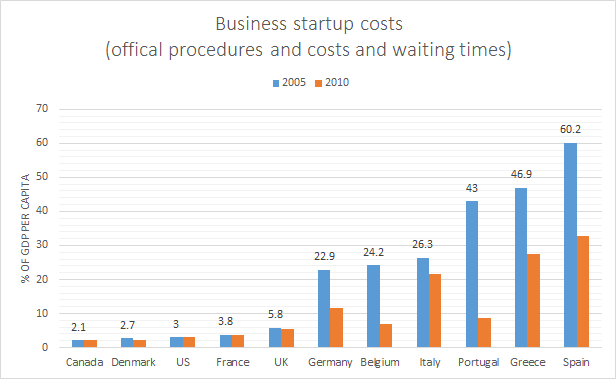
Source: Markus Poschke, Entry regulation: Still costly | VOX, CEPR’s Policy Portal (2011).
Note: The value of time is set to a business day’s output per day of waiting time at 22 business days per month.
18 Apr 2016 Leave a comment
in applied price theory, applied welfare economics, economics of regulation, international economics Tags: Brexit
18 Apr 2016 Leave a comment
in economics, economics of regulation, environmental economics, industrial organisation, law and economics, privatisation, property rights, survivor principle Tags: Economics of water
12 Apr 2016 Leave a comment
in economics of regulation, health economics Tags: economics are smoking, Left-wing hypocrisy, marijuana decriminalisation
11 Apr 2016 Leave a comment
in applied price theory, business cycles, economic history, economics, economics of regulation, global financial crisis (GFC), macroeconomics, monetary economics, Public Choice, rentseeking Tags: bank runs, banking crises, banking panics, deposit insurance, Thomas Sargent
Many of the key issues about what modern macroeconomics has to say on global financial crises and deposit insurance are discussed in a 2010 interview with Thomas Sargent
Sargent said that two polar models of bank crises and what government lender-of-last-resort and deposit insurance do to arrest or promote them were used to understand the GFC. They are polar models because:
- in the Diamond-Dybvig and Bryant model of banking runs, deposit insurance and other bailouts are purely a good thing stopping panic-induced bank runs from ever starting; and
- in the Kareken and Wallace model, deposit insurance by governments and the lender-of-last-resort function of a central bank are purely a bad thing because moral hazard encourages risk taking unless there is regulation or there is proper surveillance and accurate risk-based pricing of the deposit insurance.
In the Diamond-Dybvig and Bryant model, if there is government-supplied deposit insurance, people do not initiate bank runs because they trust their deposits to be safe. There is no cost to the government for offering the deposit insurance because there are no bank runs! A major free lunch.
Tom Sargent considers that the Bryant-Diamond-Dybvig model has been very influential, in general, and among policy makers in 2008, in particular.
Governments saw Bryant-Diamond-Dybvig bank runs everywhere. The logic of this model persuaded many governments that if they could arrest the actual or potential runs by convincing creditors that their loans were insured, that could be done at little or no eventual cost to taxpayers.
In 2008, the Australian and New Zealand governments announced emergency bank deposit insurance guarantees. In Bryant-Diamond-Dybvig style bank panics, these guarantees ward off the bank run and thus should cost nothing fiscally because the deposit insurance is not called upon. These guarantees and lender of last resort function were seen as key stabilising measures. These guarantees were called upon in NZ to the tune of $2 billion.
- 1. The Diamond-Dybvig and Bryant model makes you sensitive to runs and optimistic about the ability of deposit insurance to cure them.
- The Kareken and Wallace model’s prediction is that if a government sets up deposit insurance and doesn’t regulate bank portfolios to prevent them from taking too much risk, the government is setting the stage for a financial crisis.
- The Kareken-Wallace model makes you very cautious about lender-of-last-resort facilities and very sensitive to the risk-taking activities of banks.
Kareken and Wallace called for much higher capital reserves for banks and more regulation to avoid future crises. This is not a new idea.
Sam Peltzman in the mid-1960s found that U.S. banks in the 1930s halved their capital ratios after the introduction of federal deposit insurance. FDR was initially opposed to deposit insurance because it would encourage greater risk taking by banks.
Late on Friday afternoon, Stuff posted an op-ed piece calling for the introduction of a (funded) deposit insurance scheme in New Zealand. It was written by Geof Mortlock, a former colleague of mine at the Reserve Bank, who has spent most of his career on banking risk issues, including having been heavily involved in the handling of the failure, and resulting statutory management, of DFC.
As the IMF recently reported, all European countries (advanced or emerging) and all advanced economies have deposit insurance, with the exception of San Marino, Israel and New Zealand. An increasing number of people have been calling for our politicians to rethink New Zealand’s stance in opposition to deposit insurance. I wrote about the issue myself just a couple of months ago, in response to some new material from the Reserve Bank which continues to oppose deposit insurance.
Different people emphasise different arguments in making the case for New Zealand to…
View original post 1,963 more words
08 Apr 2016 Leave a comment
in applied price theory, applied welfare economics, climate change, economics of regulation, environmental economics, global warming
07 Apr 2016 1 Comment
in economic history, economics of information, economics of media and culture, economics of regulation, technological progress Tags: doomsday prophets, good old days
21 Mar 2016 Leave a comment
in economics of regulation, labour economics, minimum wage, politics - USA, poverty and inequality, unemployment Tags: employment law, employment protection laws, France, labour market regulation, New Zealand Labour Party, rent control, social insurance, The fatal conceit, unintended consequences
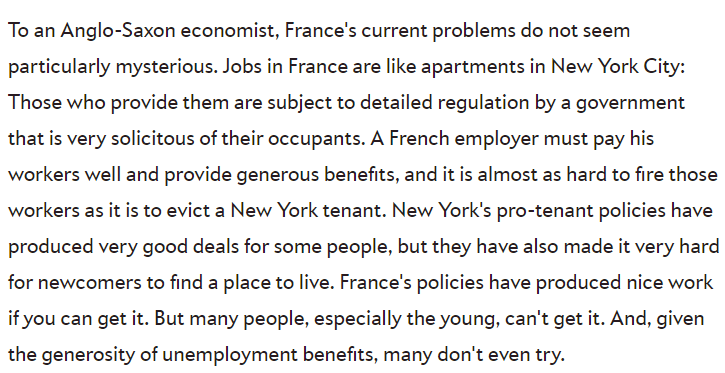
Source: Paul Krugman (1997) Unmitigated Gauls.
20 Mar 2016 Leave a comment
in economics of regulation, health economics, law and economics, politics - New Zealand, politics - USA, property rights Tags: avoiding difficult choices, drug lags, generic drugs, intellectual monopolies, invisible graveyard, patents and copyrights
18 Mar 2016 Leave a comment
in economic history, economics of regulation, population economics, urban economics Tags: land supply, land use planning, Las Vegas, zoning
The Las Vegas population doubled in the 60s doubled again between 1970 and 1990 and almost doubled again by 2000.
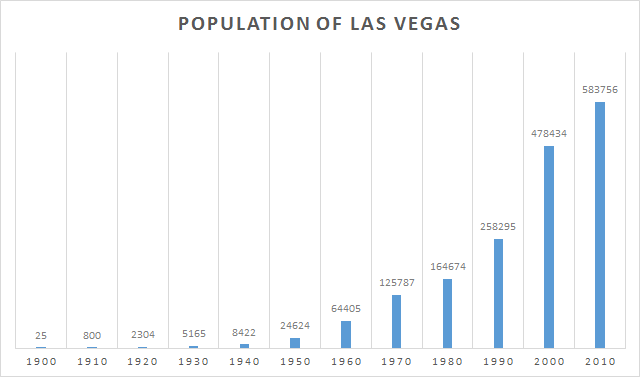
Source: Insiderviewpoint.com Las Vegas Population.
Between 1990 and 2000 despite the doubling of population, housing prices only increased by 25%.
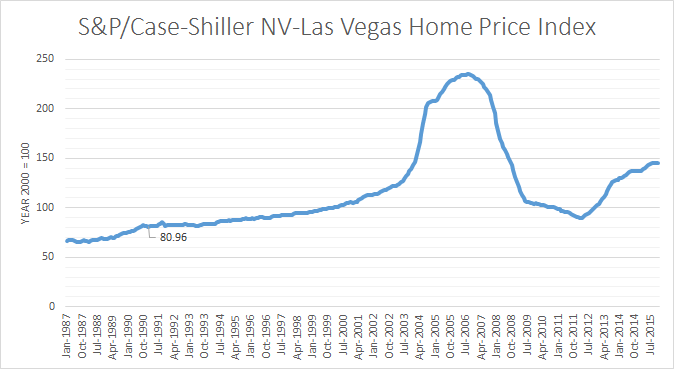
Source: Insiderviewpoint.com S&P/Case-Shiller Las Vegas Home Price Index – S&P Dow Jones Indices.
Land supply must be pretty easy in Las Vegas at least up until 2000.
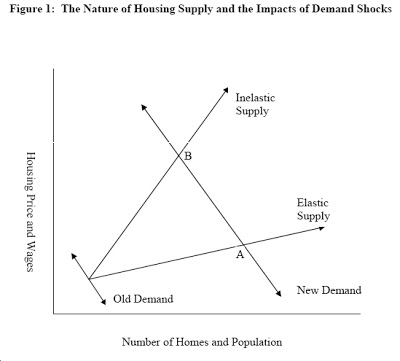
Source: Economics of Contempt: Land Use Regulations and the Housing Bubble.
Celebrating humanity's flourishing through the spread of capitalism and the rule of law
Celebrating humanity's flourishing through the spread of capitalism and the rule of law
Celebrating humanity's flourishing through the spread of capitalism and the rule of law
Celebrating humanity's flourishing through the spread of capitalism and the rule of law
Celebrating humanity's flourishing through the spread of capitalism and the rule of law
Celebrating humanity's flourishing through the spread of capitalism and the rule of law
Celebrating humanity's flourishing through the spread of capitalism and the rule of law
Celebrating humanity's flourishing through the spread of capitalism and the rule of law
A History of the Alt-Right
Econ Prof at George Mason University, Economic Historian, Québécois
Celebrating humanity's flourishing through the spread of capitalism and the rule of law
Scholarly commentary on law, economics, and more
Beatrice Cherrier's blog
Celebrating humanity's flourishing through the spread of capitalism and the rule of law
Celebrating humanity's flourishing through the spread of capitalism and the rule of law
Celebrating humanity's flourishing through the spread of capitalism and the rule of law
Why Evolution is True is a blog written by Jerry Coyne, centered on evolution and biology but also dealing with diverse topics like politics, culture, and cats.
Celebrating humanity's flourishing through the spread of capitalism and the rule of law
A rural perspective with a blue tint by Ele Ludemann
DPF's Kiwiblog - Fomenting Happy Mischief since 2003
Celebrating humanity's flourishing through the spread of capitalism and the rule of law
The world's most viewed site on global warming and climate change
Tim Harding's writings on rationality, informal logic and skepticism
A window into Doc Freiberger's library
Let's examine hard decisions!
Commentary on monetary policy in the spirit of R. G. Hawtrey
Thoughts on public policy and the media
Celebrating humanity's flourishing through the spread of capitalism and the rule of law
Politics and the economy
A blog (primarily) on Canadian and Commonwealth political history and institutions
Reading between the lines, and underneath the hype.
Economics, and such stuff as dreams are made on
"The British constitution has always been puzzling, and always will be." --Queen Elizabeth II
Celebrating humanity's flourishing through the spread of capitalism and the rule of law
Celebrating humanity's flourishing through the spread of capitalism and the rule of law
WORLD WAR II, MUSIC, HISTORY, HOLOCAUST
Undisciplined scholar, recovering academic
Celebrating humanity's flourishing through the spread of capitalism and the rule of law
Res ipsa loquitur - The thing itself speaks
In Hume’s spirit, I will attempt to serve as an ambassador from my world of economics, and help in “finding topics of conversation fit for the entertainment of rational creatures.”
Researching the House of Commons, 1832-1868
Reflections on books and art
Posts on the History of Law, Crime, and Justice
Celebrating humanity's flourishing through the spread of capitalism and the rule of law
Exploring the Monarchs of Europe
Cutting edge science you can dice with




Recent Comments