New Rule: Stuck on Stupid | Real Time with Bill Maher (HBO)
31 Mar 2024 Leave a comment
in economics of regulation, health economics, politics - USA, television, TV shows Tags: economics of pandemics
How the Carbon Cult Subverts Political Discourse
30 Mar 2024 Leave a comment
in applied price theory, applied welfare economics, comparative institutional analysis, economics of regulation, energy economics, environmental economics, global warming Tags: Canada, climate alarmism

Trudeau Turns the Carbon Tax Screws on Canadians April 1 Ross Mckitrick explains the smoke and mirrors in Trudeau’s justifications for his racheting carbon tax in a National Post article Wanted: A leader who is honest about climate policy. Excerpts in italics with my bolds and added images. Pierre Poilievre is leading anti-carbon tax rallies […]
How the Carbon Cult Subverts Political Discourse
Do Me a Personal Favor: Please Pre-Order *Build, Baby, Build* Now
22 Mar 2024 Leave a comment
in applied price theory, applied welfare economics, comparative institutional analysis, constitutional political economy, economics of bureaucracy, economics of regulation, income redistribution, law and economics, liberalism, Marxist economics, politics - USA, property rights, Public Choice, public economics, rentseeking Tags: land supply, zoning

I started writing Build, Baby, Build: The Science and Ethics of Housing Regulation, in the early weeks of Covid. Now, with the kind cooperation of the Cato Institute, my second non-fiction graphic novel releases on May 1, 2024. That’s less than six weeks away.The official coverPlease forgive my laughable arrogance, but I assure you that…
Do Me a Personal Favor: Please Pre-Order *Build, Baby, Build* Now
100 Years of Rent Control in Sweden
17 Mar 2024 Leave a comment
in applied price theory, economic history, economics of bureaucracy, economics of regulation, history of economic thought, income redistribution, law and economics, property rights, Public Choice, public economics, rentseeking, urban economics Tags: rent control, Sweden
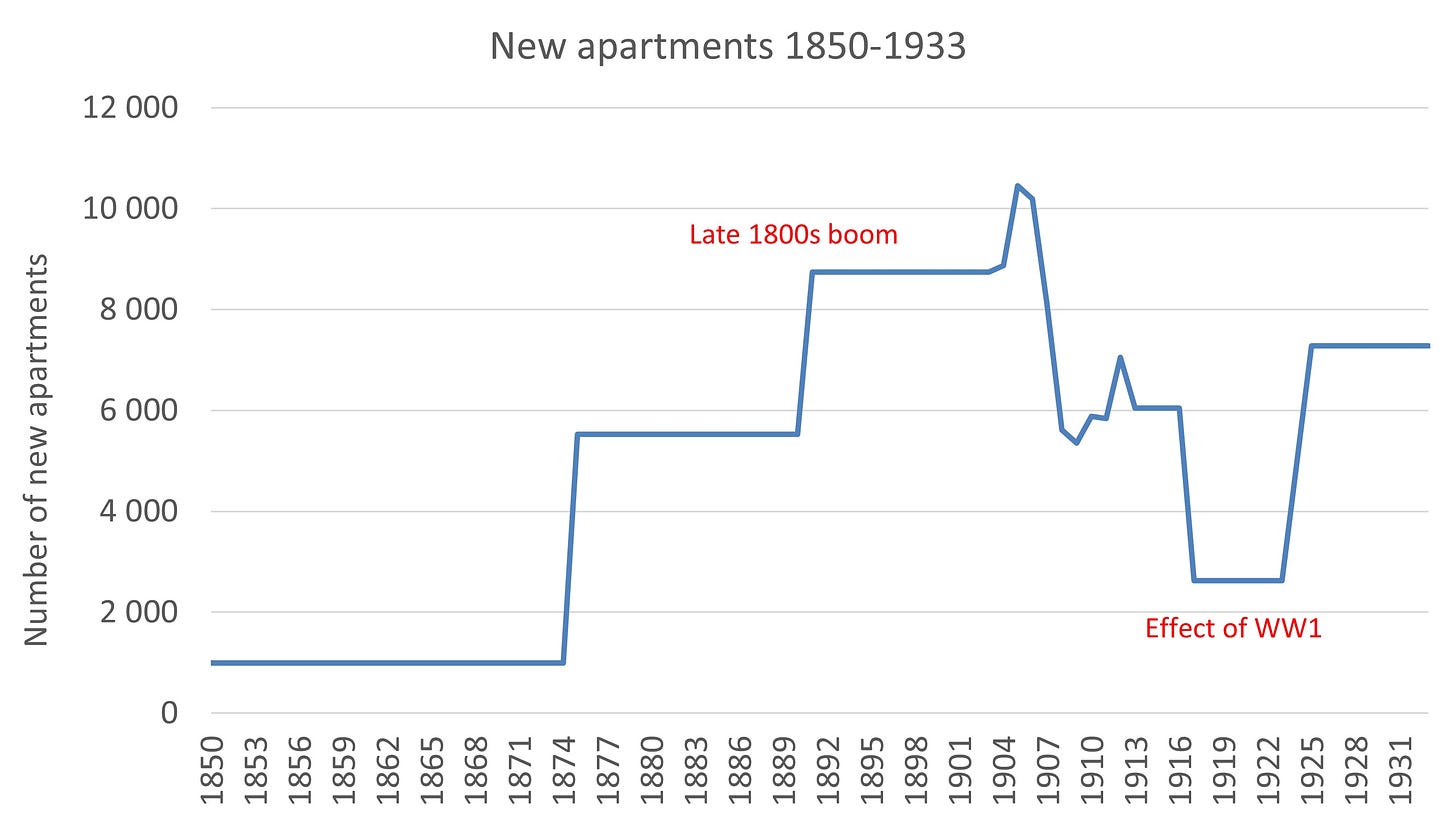
Bet On It reader Vanja Månborg knows a lot about rent control in Sweden. If you think Sweden is a country of thoughtful technocrats where government intervention works well, reading his guest post may make you think again. Here’s Vanja:Sweden has had rent control regulations since 1917 with less than two decades of pause between…
100 Years of Rent Control in Sweden
One Year Since the Meltdown at Silicon Valley Bank: Commercial Real Estate and Ongoing Threats
13 Mar 2024 Leave a comment
in applied price theory, economics of information, economics of regulation, financial economics, macroeconomics, monetary economics, politics - USA Tags: banking panics

One year ago in March 2023, Silicon Valley Bank melted down, quickly followed by similar meltdowns at Signature Bank and First Republic Bank. Measured by the nominal size of bank assets, these were three of the biggest four US bank failures in history. (The failure of Washington Mutual Bank in 2008 remains the largest.) Was…
One Year Since the Meltdown at Silicon Valley Bank: Commercial Real Estate and Ongoing Threats
The RCT Agenda
12 Mar 2024 Leave a comment
in applied price theory, applied welfare economics, comparative institutional analysis, development economics, econometerics, economic history, economics of bureaucracy, economics of education, economics of information, economics of regulation, experimental economics, growth disasters, growth miracles, history of economic thought, human capital, labour economics, labour supply, law and economics, managerial economics, market efficiency, Marxist economics, occupational choice, organisational economics, property rights, Public Choice, public economics Tags: The fatal conceit

Randomized Controlled Trials: Could you be any more scientific? The book I’m now writing, Unbeatable: The Brutally Honest Case for Free Markets, insists that the randomistas of the economics profession actually have a thinly-veiled political agenda. Namely: To get economists to humbly serve the demagogues that rule the world instead of bluntly challenging their unabated…
The RCT Agenda
TV layoffs not a threat to democracy
10 Mar 2024 Leave a comment
in applied price theory, economic history, economics of bureaucracy, economics of information, economics of media and culture, economics of regulation, entrepreneurship, income redistribution, industrial organisation, managerial economics, market efficiency, organisational economics, personnel economics, politics - New Zealand, Public Choice, public economics, rentseeking, survivor principle, theory of the firm Tags: media bias
A few weeks ago I joined some contemporaries by abandoning the near sixty year habit of watching nightly TV news. I dropped it because I felt it did not give me real information that I had not acquired from other media sources, including some I pay for – The Economist, the NZ Herald, The Atlantic […]
TV layoffs not a threat to democracy
The tohunga suppression myth that won’t die
08 Mar 2024 Leave a comment
in economic history, economics of regulation, health economics, liberalism, Marxist economics, politics - New Zealand Tags: Age of Enlightenment, cranks, free speech, political correctness, racial discrimination, regressive left
Graham Adams writes — Jonathan Swift’s observation in 1710 that “Falsehood flies, and the Truth comes limping after it” seems entirely apt for last week’s parliamentary debate on disestablishing the Māori Health Authority. No fewer than three MPs — MPs Cushla Tangaere-Manuel (Labour), Hana-Rawhiti Maipi-Clarke (Te Pāti Māori), and Steve Abel (Greens) — referred to […]
The tohunga suppression myth that won’t die
Even Lowerer Hutt
07 Mar 2024 Leave a comment
in applied price theory, comparative institutional analysis, economics of bureaucracy, economics of regulation, income redistribution, law and economics, politics - New Zealand, property rights, Public Choice, regulation, urban economics Tags: housing affordability, land supply, zoning
One annoying thing about writing a Saturday column for the Stuff papers is never knowing whether a piece will show up in print.I’d thought this one was a banger. I’ll be talking about related issues tomorrow night as part of a panel for A City for People. 🟨🟪 Our speaker line up has dropped! 🟪🟨Join us on…
Even Lowerer Hutt
Gaelic Price Control
05 Mar 2024 Leave a comment
in applied price theory, economics of regulation, Public Choice, urban economics Tags: rent control
Here is a nice video on the experience with price control in Ireland and Scotland. Hat tip: Marginal Revolution
Gaelic Price Control
The US Housing Market Is Very Quickly Becoming Unaffordable
27 Feb 2024 Leave a comment
in applied price theory, economic history, economics of regulation, politics - USA, urban economics Tags: land supply, zoning

In a post from July 2021, I discussed housing affordability and “zoning taxes” — in other words, how land use restrictions such as zoning were driving up the cost of housing in some US cities. San Francisco, Los Angeles, Seattle, and New York stood out as the clear outliers, with “zoning taxes” adding several multiples […]
The US Housing Market Is Very Quickly Becoming Unaffordable
Statewide Rent Control Being Considered in Washington
27 Feb 2024 Leave a comment
in applied price theory, applied welfare economics, economics of regulation, politics - USA, urban economics Tags: rent control
Five things to know about WA proposal to limit rent hikes | The Seattle Times Isn’t rent control one of the most studied economic experiments? And hasn’t it been shown to be, over the long term, a disaster for everyone involved? What does economic evidence tell us about the effects of rent control? | Brookings […]
Statewide Rent Control Being Considered in Washington
ROBERT MacCULLOCH: Former PM Hipkins & Profs Bloomfield & Baker should be held accountable for quoting statistics that have now been shown to be wrongly estimated
27 Feb 2024 1 Comment
in applied welfare economics, econometerics, economic history, economics of regulation, health economics, politics - New Zealand Tags: economics of pandemics
Why are we still talking about Covid when many countries – like the US – have moved on? Well the US economy is currently booming and ours is stuck in the mud. The reason has emerged over time. Although our response to the virus was to be commended in early 2020 when no-one knew what…
ROBERT MacCULLOCH: Former PM Hipkins & Profs Bloomfield & Baker should be held accountable for quoting statistics that have now been shown to be wrongly estimated
 Utopia, you are standing in it!
Recent Comments