Organic farming might work well for certain local environments on a small scale, but its farms produce far less food per unit of land and water than conventional ones.
The low yields of organic agriculture—typically 20%-50% less than conventional agriculture—impose various stresses on farmland and especially on water consumption.
A British meta-analysis published in the Journal of Environmental Management (2012) found that “ammonia emissions, nitrogen leaching and nitrous oxide emissions per product unit were higher from organic systems” than conventional farming systems, as were “land use, eutrophication potential and acidification potential per product unit.”
Here’s what’s not sustainable: organic farming » AEI
12 Nov 2014 1 Comment
in environmental economics, environmentalism, industrial organisation, occupational choice Tags: do gooders, organic farming, sustainability, sustainable development
“It is entirely possible to rapidly switch our energy systems to 100 percent renewables” – Naomi Klein
09 Nov 2014 Leave a comment
in energy economics, environmental economics, environmentalism, global warming Tags: carbon free economy, energy economics, expressive voting, green rent seeking, Leftover Left, Naomi Klein, Quacks, renewable energy
Jacobson and Delucchi think we can replace all coal, oil, natural gas, and nuclear power by 2030 with wind, solar, and hydropower while fueling a fleet of electric cars.
How? By deploying 3.8 million 5-megawatt wind turbines, 5,350 100-megawatt geothermal plants, 500,000 1-megawatt tidal turbines, 720,000 0.75-megawatt wave power generators, 1.7 billion 3-kilowatt rooftop solar panels, 40,000 300-megawatt solar panel farms, and 49,000 300-megawatt concentrated solar power plants.
| Annual global investment target | Current global stock |
| 250,000 wind turbines | 225,000 wind turbines |
| 113 million rooftop solar panel systems | 11.3 million |
Delucchi and Jacobson estimate a price tag of about $100 trillion for their program.
That entails spending about $6.6 trillion per year from now until 2030, more than 11 percent of the entire world’s 2013 output of $75 trillion.
Naomi Klein cited Jacobson and Delucchi to support her proposition that 100% renewable energy systems is possible.
Global temperature projections 1986 – 2005
09 Nov 2014 Leave a comment
in environmental economics, global warming Tags: climate alarmism, global warming
Bjørn Lomborg says that the UN climate panel’s latest report tells a story that politicians prefer to ignore
09 Nov 2014 Leave a comment
in climate change, energy economics, environmental economics, global warming Tags: Bjørn Lomborg, climate alarmism, global warming, green rent seeking, IPCC
The second IPCC installment showed that the temperature rise that we are expected to see sometime around 2055-2080 will create a net cost of 0.2-2% of GDP – the equivalent of less than one year of recession…
Again, not surprisingly, politicians tried to have this finding deleted. British officials found the peer-reviewed estimate “completely meaningless,” and, along with Belgium, Norway, Japan, and the US, wanted it rewritten or stricken. One academic speculated that governments possibly felt “a little embarrassed” that their previous exaggerated claims would be undercut by the UN.
The third installment of the IPCC report showed that strong climate policies would be more expensive than claimed as well – costing upwards of 4% of GDP in 2030, 6% in 2050, and 11% by 2100.
And the real cost will likely be much higher, because these numbers assume smart policies, instantly enacted, with key technologies magically available.
Why Middle-Class Americans Can’t Afford to Live in Liberal Cities – The Atlantic
07 Nov 2014 Leave a comment
in applied welfare economics, economics of regulation, environmental economics, income redistribution, Public Choice, rentseeking, urban economics Tags: Director's Law, green rent seeking, land use regulation, zoning


Yet another IPCC back down on the climate crisis
03 Nov 2014 Leave a comment
in environmental economics, global warming Tags: climate alarmism, global warming
How urgent is ‘urgent’?
03 Nov 2014 Leave a comment
in economics of climate change, energy economics, environmental economics, environmentalism Tags: climate alarmism, global warming

by Judith Curry
I think we have a very brief window of opportunity to deal with climate change . . . no longer than a decade at most. – James Hansen 2006
We have only four more years to act on climate change. – James Hansen 2009
View original post 980 more words
UN Grants The Planet A Century Long Reprieve
03 Nov 2014 Leave a comment
in climate change, economics of climate change, energy economics, environmental economics Tags: climate alarmism, global warming

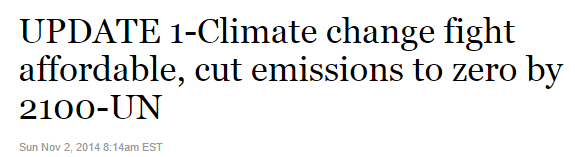
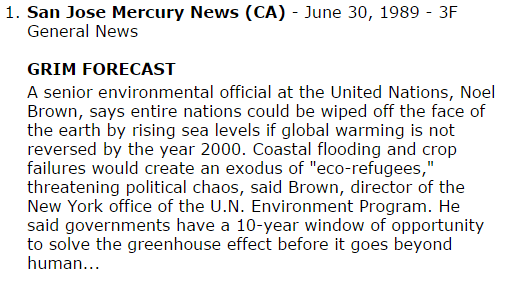
Celebrate! The UN has granted Earth a 100 year reprieve from global warming.
In 1989, the UN said we had until the end of the 20th century to save the planet from global warming – but now they say we have until the end of the 21st century.
UPDATE 1-Climate change fight affordable, cut emissions to zero by 2100-UN
Mainstream media is finally catching up with the sceptics
01 Nov 2014 Leave a comment
in applied welfare economics, energy economics, environmental economics, environmentalism Tags: global warming, green rent seeking

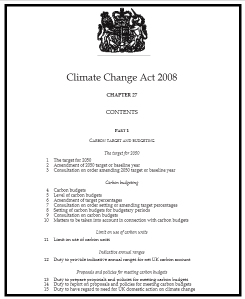 A hard hitting article appears in the Mail which slams the climate change act.
Six years ago today, an ambitious Labour politician, newly appointed climate change secretary, set Britain on a ruinous path that threatens our energy-dependent civilisation with collapse.
Such is the devastating conclusion of Owen Paterson, the Tory former Environment Secretary, who yesterday joined Lord Lawson among the highest-profile critics of the political consensus on energy policy.
For it was on October 16, 2008, that the new secretary of state – Ed Miliband, by name – set us the legally binding goal of meeting the EU’s wildly ambitious target to cut carbon emissions by 80 per cent before 2050 (and how significant that no other country has followed his lead).
View original post 89 more words
IPCC report: six graphs that show how we’re changing the world’s climate
01 Nov 2014 Leave a comment
in environmental economics, global warming Tags: IPCC


How to sell a toxic pesticide the smart way–call it organic | Genetic Literacy Project
29 Oct 2014 Leave a comment
in economics of regulation, environmental economics, health economics Tags: food safety, food snobs, Quacks

If you are a pesticide company wondering how you can sell a product without being caught in a cultural crossfire, I have good news.
There is a template for marketing success you can use free of charge, courtesy ofMcLaughlin Gormley King Company (MGK) and Valent, which recently announced a sales partnership: Make a toxic chemical cocktail that meets National Organic Program standards and then have the product sold by a subsidiary to foster the perception that it’s a family-run organic companies and not part of the same multinational chemical conglomerate.
via How to sell a toxic pesticide the smart way–call it organic | Genetic Literacy Project.
 Utopia, you are standing in it!
Recent Comments