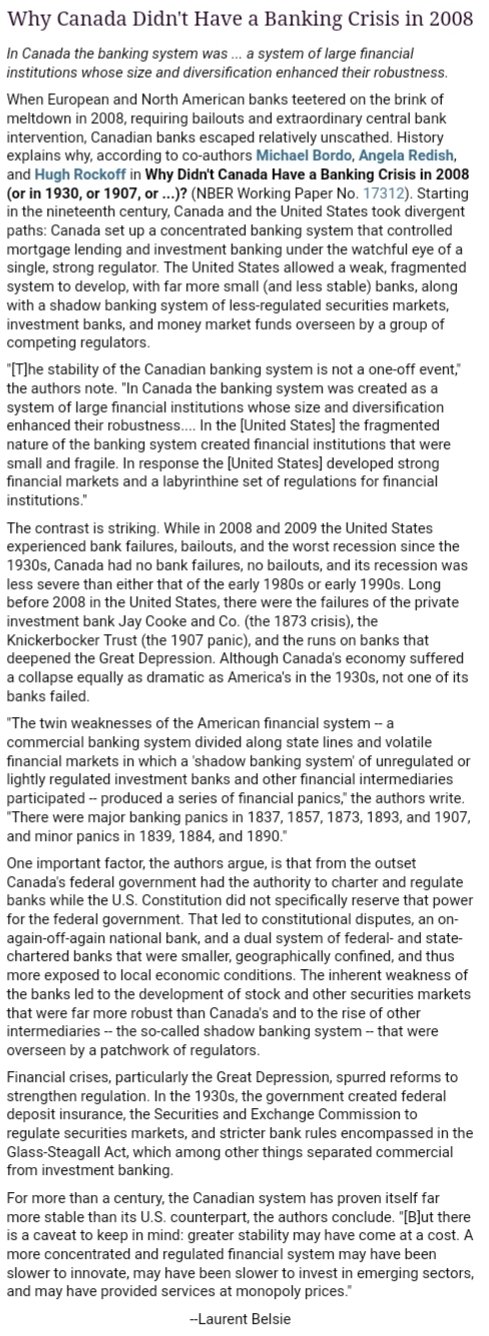
The day Minsky macroeconomics died! Instability can’t be fixed so easily?
23 Nov 2019 Leave a comment
in budget deficits, business cycles, economic history, Euro crisis, financial economics, global financial crisis (GFC), great depression, great recession, macroeconomics, monetarism, monetary economics, Public Choice Tags: asymmetric information, bank runs, banking panics, deposit insurance, economics of central banking, Keynesian macroeconomics, moral hazard, Post-Keynesian macroeconomics
David Levine on efficient inefficiency in the efficient markets hypothesis
23 Nov 2019 Leave a comment
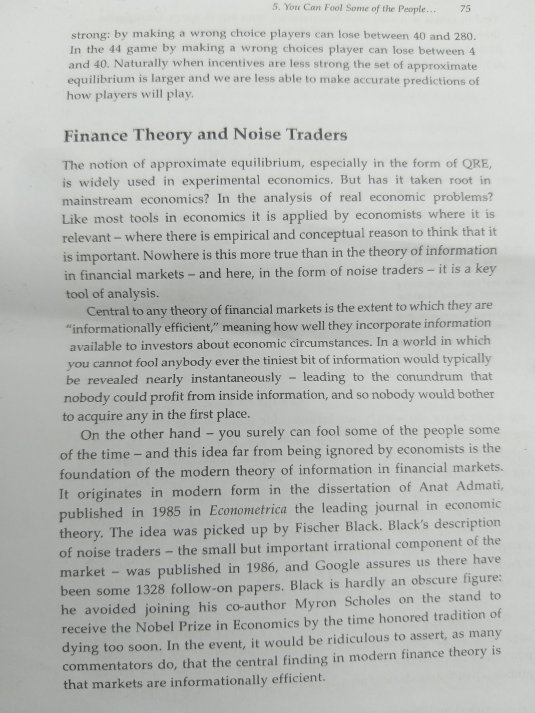
Champ and Freeman on banks inflating the economy
22 Nov 2019 Leave a comment
in applied price theory, business cycles, economics of information, financial economics, macroeconomics, monetary economics Tags: fractional reserve banking

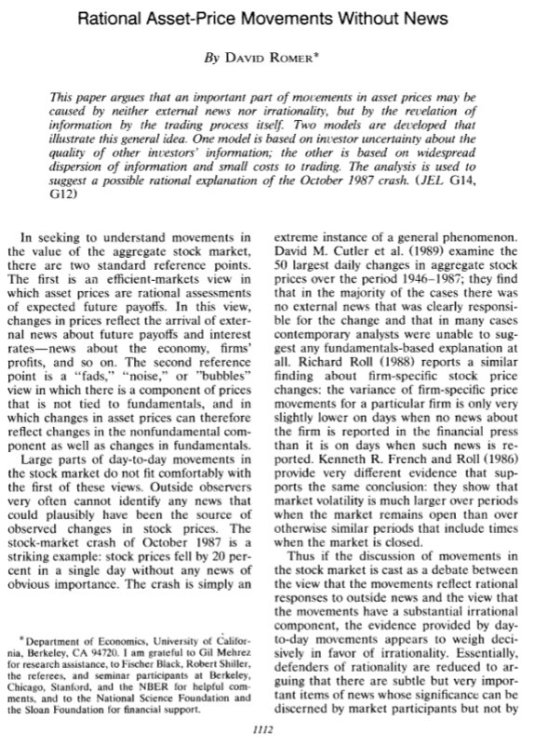
Bubbles and crash without news
17 Nov 2019 Leave a comment
in applied price theory, economic history, entrepreneurship, financial economics, industrial organisation, survivor principle Tags: efficient markets hypothesis, rational expectations
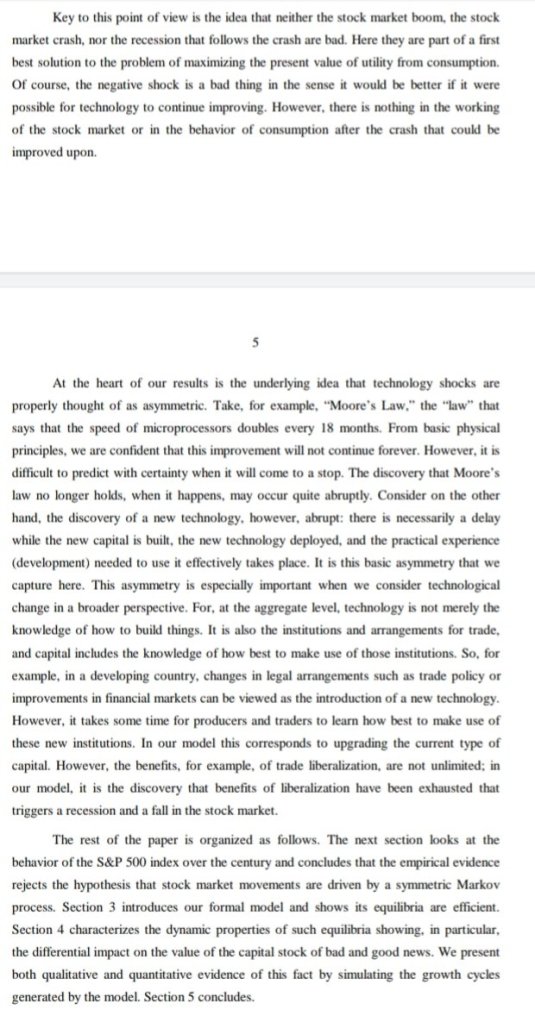
Innovation and Growth Cycles David Levine
15 Nov 2019 Leave a comment
in applied price theory, comparative institutional analysis, development economics, econometerics, economic history, economics of bureaucracy, economics of regulation, Federalism, financial economics, growth disasters, growth miracles, history of economic thought, income redistribution, industrial organisation, law and economics, Public Choice, rentseeking, survivor principle
Market crashes are efficient – Boldrin and Levine
14 Nov 2019 Leave a comment
in business cycles, economic growth, financial economics, macroeconomics, market efficiency Tags: creative destruction, real business cycles

Is Corporate Law Still a Race to the Top? Frank Easterbrook
07 Nov 2019 Leave a comment
in economics of regulation, financial economics, law and economics, market efficiency, organisational economics, property rights, Public Choice Tags: corporate law
SNL destroys @SenWarren’s Medicare-for-all
03 Nov 2019 Leave a comment
in entrepreneurship, financial economics, health economics, human capital, income redistribution, industrial organisation, labour economics, labour supply, Marxist economics, occupational choice, politics - USA, poverty and inequality, Public Choice, public economics, survivor principle Tags: 2020 presidential election, envy, The fatal conceit, top 1%, wealth tax

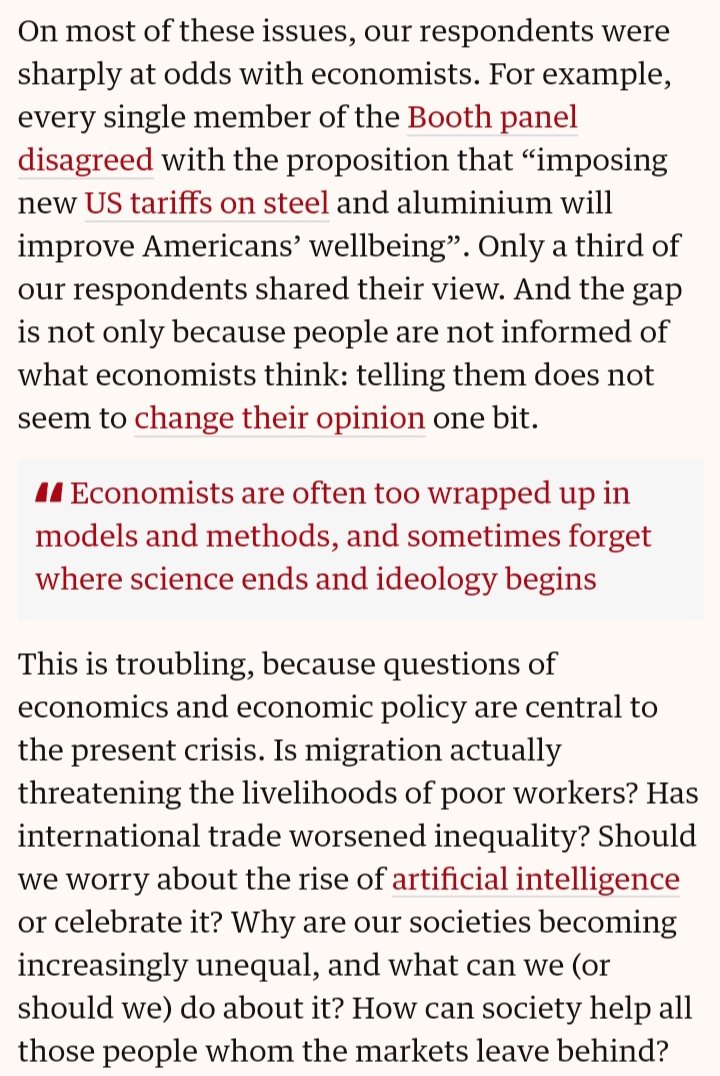
Duflo and Banerje are a cross between Trump and crazy Bernie on economic populism
31 Oct 2019 Leave a comment
in development economics, economic history, economics of regulation, entrepreneurship, financial economics, history of economic thought, industrial organisation, international economics, labour economics, labour supply, Marxist economics, politics - USA, poverty and inequality Tags: anti-foreign bias, economics of immigration, free trade
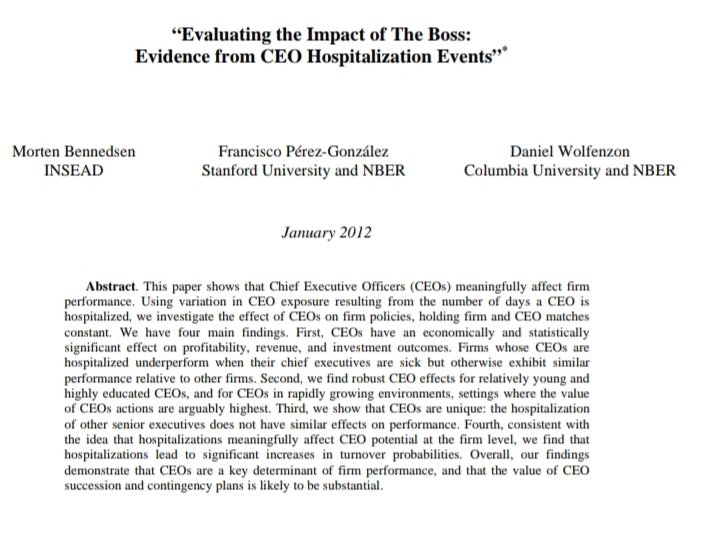
The Danes are awash in data. Shed a tear for your own job security if there is a death in the CEO’s family.
23 Oct 2019 Leave a comment

Would a “Wealth Tax” Help Combat Inequality? A Debate with Saez, Summers, and Mankiw
20 Oct 2019 Leave a comment
in applied price theory, applied welfare economics, comparative institutional analysis, economics of education, entrepreneurship, financial economics, human capital, income redistribution, industrial organisation, labour economics, labour supply, Marxist economics, occupational choice, politics - USA, poverty and inequality, Public Choice, public economics, rentseeking, survivor principle Tags: envy, superstar wages, superstars, taxation and entrepreneurship, taxation and investment, taxation and labour supply, top 1%, wealth taxes
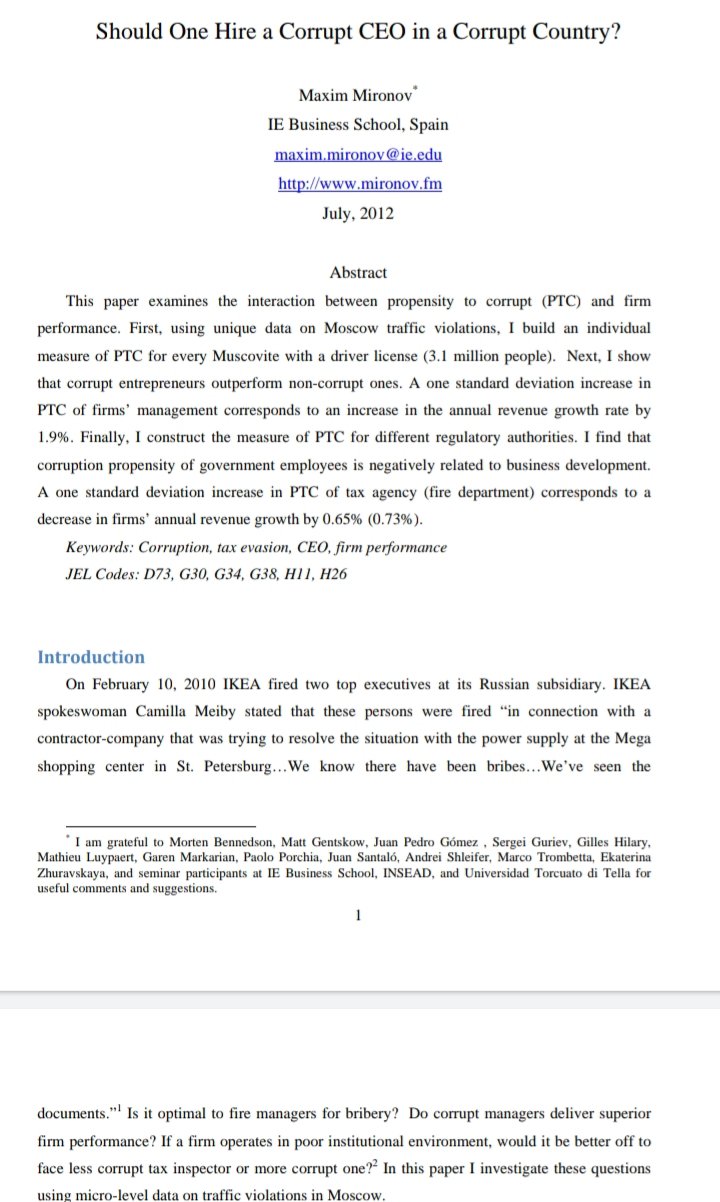
A chinese millionaire went broke after he got religion. Business partners, suppliers and customers didn’t trust him anymore.
19 Oct 2019 Leave a comment
in applied price theory, development economics, economics of bureaucracy, economics of crime, entrepreneurship, financial economics, growth disasters, growth miracles, industrial organisation, law and economics, managerial economics, organisational economics, personnel economics, property rights, Public Choice, survivor principle Tags: bribery and corruption
Do bosses take your labour surplus with them when they die? More on the rise of a working rich @AOC @BernieSanders
19 Oct 2019 Leave a comment
in applied price theory, entrepreneurship, financial economics, human capital, income redistribution, industrial organisation, labour economics, labour supply, law and economics, Marxist economics, occupational choice, poverty and inequality, property rights, Public Choice, survivor principle Tags: labour theory of value, top 1%
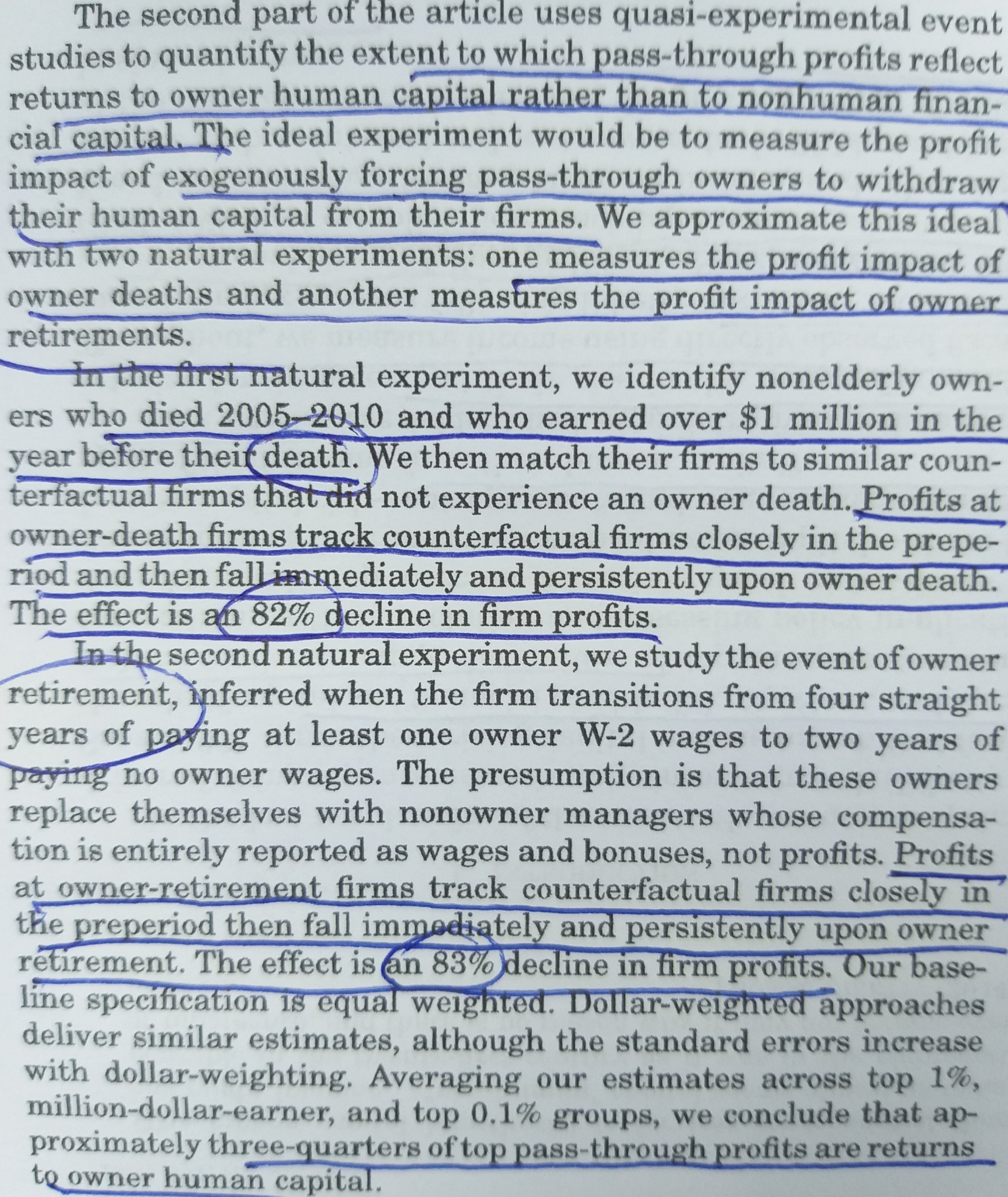
from http://www.ericzwick.com/capitalists/capitalists.pdf
Matthew Smith, Danny Yagan, Owen Zidar, Eric Zwick, Capitalists in the Twenty-First Century, The Quarterly Journal of Economics, Volume 134, Issue 4, November 2019, Pages 1675–1745,
 Utopia, you are standing in it!
Recent Comments