Rivers in India
14 Jun 2024 Leave a comment
in development economics, growth disasters, growth miracles, health economics Tags: India, water pollution
What Evolution Reveals About Human Behavior
11 Jun 2024 Leave a comment
in economics of education, economics of media and culture, health economics, population economics Tags: cognitive psychology, evolutionary biology, evolutionary psychology
Where did the Government get the law right and wrong with the Covid-19 response?
10 Jun 2024 Leave a comment
in economics of bureaucracy, economics of natural disasters, economics of regulation, health economics, law and economics, politics - New Zealand, Public Choice Tags: economics of pandemics
For those who are interested in public law, a very interesting paper by Dean Knight summarising the various court cases over the Covid-19 response. It details in which areas the Government won judicial reviews, and in which areas they lost. The TLDR version is: Hopefully we will not go through another pandemic anytime soon.
Where did the Government get the law right and wrong with the Covid-19 response?
Fauci Didn’t Test
09 Jun 2024 Leave a comment
in applied welfare economics, economics of regulation, health economics, politics - USA Tags: economics of pandemics, The fatal conceit, unintended consequences
I am not a Fauci hater but I think this criticism of Facui from epidemiologist and oncologist Vinay Prasad hits the mark: Lockdown was specifically advocated for by Anthony Fauci (‘15 days to stop the spread’/ ‘hunker down’/ ‘shelter in place’), and Fauci would go on to make hundreds of other specific policy recommendations. Although he initially […]
Fauci Didn’t Test
Drug Shortages in America Reach a Record High
06 Jun 2024 Leave a comment
in applied price theory, health economics, industrial organisation
Among the hundreds of medicines now in short supply are popular drugs used for weight loss such as OzempicBy Liz Essley Whyte and Peter Loftus of The WSJ. I liked that this article mentions that price increases are part of the solution, something that usually does get mentioned. A shortage means that current price is below…
Drug Shortages in America Reach a Record High
*Best Things First*
01 Jun 2024 Leave a comment
in applied price theory, applied welfare economics, development economics, growth disasters, health economics Tags: The Great Escape
The author is Bjorn Lomborg, and the subtitle is The 12 most efficient solutions for the world’s poorest and our global SDG promises. I missed this book when it first came out last year. Here is what Lomborg presents as the twelve best global investments, in no particular order: Tuberculosis Maternal and newborn health Malaria […]
*Best Things First*
There is still reason to hope despite the fact that more than three-quarters of Americans say the United States is headed in the wrong direction
21 May 2024 Leave a comment
in development economics, economic growth, economic history, growth disasters, growth miracles, health economics, liberalism, macroeconomics Tags: The Great Enrichment
See The Case for Hope by Nicholas Kristof of The NY Times. Excerpts:”whenever I hear that America has never been such a mess or so divided, I think not just of the Civil War but of my own childhood: the assassinations of the 1960s; the riots; the murders of civil rights workers; the curses directed at…
There is still reason to hope despite the fact that more than three-quarters of Americans say the United States is headed in the wrong direction
Nanny state
16 May 2024 Leave a comment
in economics of regulation, health economics, public economics Tags: economics of smoking

Wind Industry Always Knew That Wind Turbine Noise Exposure Causes Adverse Health Effects
15 May 2024 Leave a comment
in energy economics, environmental economics, global warming, health economics Tags: wind power

The wind industry has worked very hard to cover up sleep deprivation and other adverse health effects caused by turbine-generated low-frequency noise and infrasound. It started with the woefully inadequate, indeed, utterly irrelevant noise standards written by the wind industry; and the institutional corruption that: a) allowed those standards to become the “benchmarks” in the first […]
Wind Industry Always Knew That Wind Turbine Noise Exposure Causes Adverse Health Effects
The Disgusting Truth About Mao Zedong’s Personal Hygiene
08 May 2024 Leave a comment
in economic history, health economics, Marxist economics Tags: China
Tying the Knot
01 May 2024 Leave a comment
in health economics, politics - USA Tags: abortion law reform
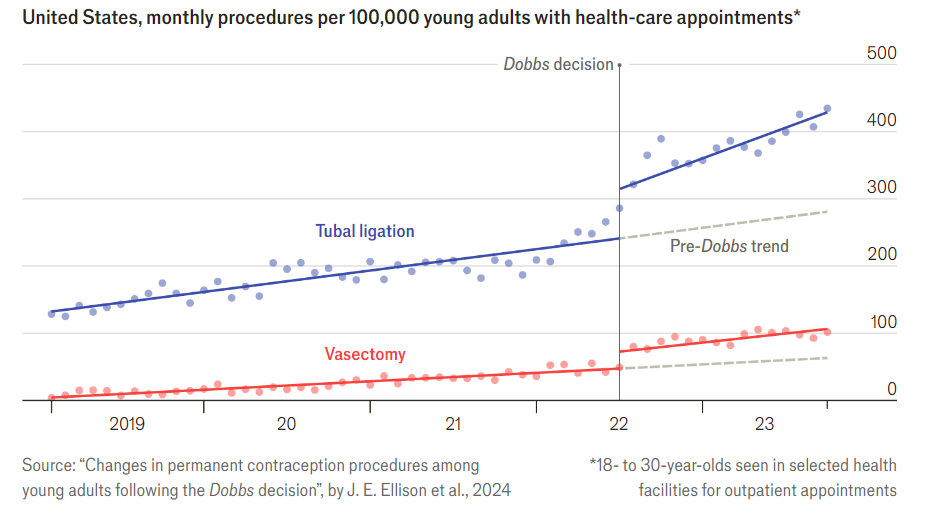
Dobbs, of course, was the Supreme Court decision saying that the constitution does not provide a right to abortion, thus leading to restrictions on abortion in many states. The pictures is from The Economist, the original paper is here.
Tying the Knot
Claim: Global Warming is Spreading Malaria and Dengue to Europe
27 Apr 2024 Leave a comment
in economic history, environmental economics, global warming, health economics Tags: climate alarmism
Famous British playwright William Shakespeare wrote about endemic Malaria in Britain in the 1500s. Malaria was the scourge of Scandinavia and Russia right up until the 20th century. But this has not stopped greens falsely claiming Malaria is a disease of warm climates.
Claim: Global Warming is Spreading Malaria and Dengue to Europe
Why the Global Free Market Will Save the World
23 Apr 2024 Leave a comment
in applied price theory, applied welfare economics, comparative institutional analysis, constitutional political economy, development economics, economic growth, economic history, energy economics, environmental economics, global warming, growth disasters, growth miracles, health economics, history of economic thought, income redistribution, labour economics, law and economics, liberalism, macroeconomics, Marxist economics, politics - Australia, politics - New Zealand, politics - USA, poverty and inequality, property rights, Public Choice, public economics, rentseeking Tags: anticapitalist mentality, capitalism and freedom
The Pandemic and Swedish Fiscal Policy
21 Apr 2024 Leave a comment
in budget deficits, fiscal policy, health economics, macroeconomics, public economics Tags: economics of pandemics, Sweden
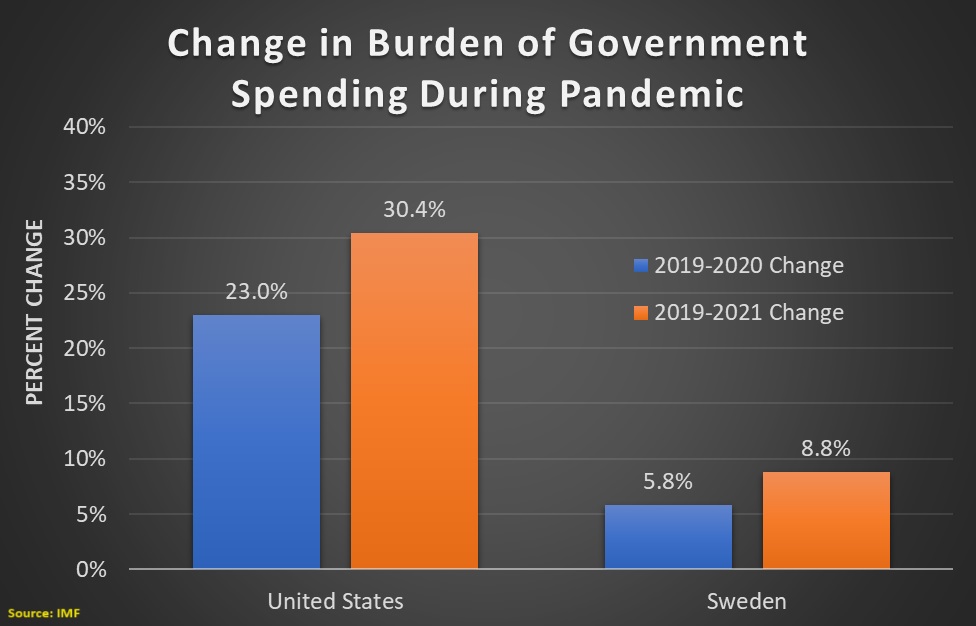
When I wrote about long-run policy lessons from the pandemic, I mostly focused on the incompetence of the bureaucrats at the FDA and CDC. I also wrote that Sweden had a very sensible approach. Politicians did not panic. They advised prudence, but kept schools open and did not mandate lockdowns. Interestingly, Sweden also had better […]
The Pandemic and Swedish Fiscal Policy


Recent Comments