John Tyler (sworn in as POTUS tomorrow 1841) has two living grandsons in 2015: #LOC pic.twitter.com/KDqGPPlH0E
— Michael Beschloss (@BeschlossDC) April 5, 2015
John Tyler (sworn in as president 1841) had two living grandsons in 2015
26 Apr 2015 Leave a comment
in health economics Tags: John Tyler, life expectancy, The Great Escape
A fantastic redeeming feature of homeopathy
26 Apr 2015 Leave a comment
in economics of information, health economics Tags: brand names, fisheries economics, homeopathy, organic agriculture, organic farming, product certification, quackery, Quacks
Organic certification is currently an issue in New Zealand at the behest of the Green Party:
Green Party spokesman for agriculture Steffan Browning has called on the Government to safeguard the value of the term "organic". For him, waiting until 2017 to look at the issue was "simply unacceptable".
Companies can become "certified organic", and by doing this it means they meet an agreed international standard during production, processing, and selling their products.
A certified organic company’s food is free of additives, and has not relied on chemicals during growth.
But certification isn’t compulsory – and there is no legal requirement for claims of uncertified organic produce to be genuine, Browning said.
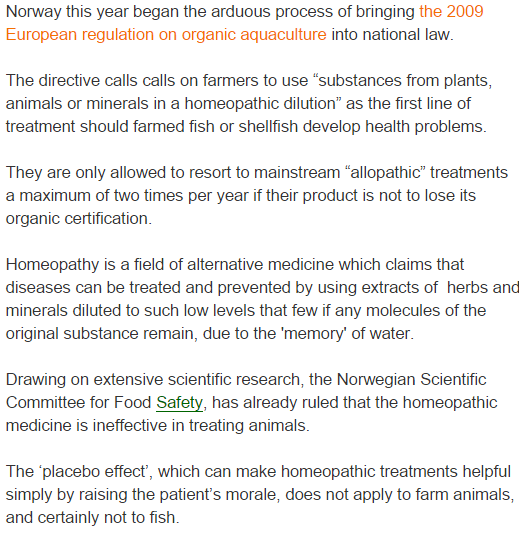
via EU’s crazy homeopathy cure for Norway fish – The Local.
The one and the same Green Party spokesman Steffan Browning last year called for homeopathic remedies to be used against Ebola!

I wonder which manifestation of quackery will win out: Organic farming or homeopathy? It’ll be fun to watch with glee.

Moral panic compared: allergies versus vaccination
26 Apr 2015 Leave a comment
in economics of regulation, environmental economics, health economics, law and economics Tags: Allergies, Anti-Science left, anti-vaccination movement, cranks, Left-wing hypocrisy, meddlesome preferences, quackery, Quacks
On the relative effectiveness of public and private R&D in pharmaceuticals
24 Apr 2015 Leave a comment
in entrepreneurship, health economics
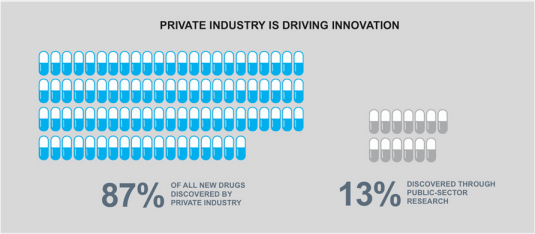
Via Pharmaphobia – AEI.
An ode to the anti-vaccination movement
23 Apr 2015 Leave a comment
in health economics, transport economics Tags: anti-vaccination movement, seat belts
Herd immunity pie-charted
22 Apr 2015 Leave a comment
in health economics Tags: anti-vaccination movement, economics of networks, vaccinations, vaccines
Deliriously hot @guardian sim shows why anti-measles jabs help protect your whole community gu.com/p/45f7e/stw http://t.co/H31ZKbXkqg—
Info=Beautiful (@infobeautiful) February 05, 2015
High school seniors are drinking less, smoking less, and barely using cocaine
22 Apr 2015 Leave a comment

The FDA is holding a public hearing today on regulating homeopathic remedies
21 Apr 2015 Leave a comment
in economics of information, economics of regulation, health economics Tags: homoeopathy, quackery
The world is vastly better and more equal in terms of health
21 Apr 2015 Leave a comment
in development economics, growth miracles, health economics Tags: The Great Escape, The Great Fact
Do vaccines work?
20 Apr 2015 Leave a comment
How can anyone dispute benefits of vaccines? Number of cases & deaths from infectious diseases pre & post #vaccines http://t.co/Os3yPaCTx0—
Sunny Chan (@DrWaiSun) March 30, 2015
Helicopter parents alert: There’s never been a safer time to be a kid
20 Apr 2015 Leave a comment
in applied welfare economics, economic history, economics of crime, economics of media and culture, health and safety, health economics Tags: accident rates, capitalism and freedom, child rearing, economics of the family, health and safety, Helicopter parents, moral panic, The Great Escape


Changes in life expectancy by income
18 Apr 2015 Leave a comment
in economic history, health economics Tags: life expectancy, The Great Escape


Are natural foods better if you are a anti-GM over activist?
16 Apr 2015 Leave a comment
in environmental economics, health economics Tags: activists, GMOs, Left-wing hypocrisy, rational ignorance, rational irrationality
The reasons of supporters & opponents of marijuana legalisation
15 Apr 2015 1 Comment
in economics of crime, health economics, law and economics, liberalism Tags: expressive voting, marijuana decriminalisation, meddlesome preferences, medical marijuana decriminalisation, rational ignorance, rational irrationality, voter demographics
Here are top reasons supporters & opponents of marijuana legalization give for their views pewrsr.ch/1PIaYUC http://t.co/hoPaMMQBXr—
Pew Research Center (@pewresearch) April 15, 2015
These rationales of thoroughly utilitarian and can actually be resolved by appeals to evidence. But the real reasons are the meddlesome preferences of the opponents of legalisation and the desire of the supporters of legalisation to smoke dope.
#Anti-Prohibition #demonstration in #Newark, #NewJersey, #1932 buff.ly/1GAEIOX #wewantbeer #beer #prohibition http://t.co/7Yr2ZjzHeN—
(@Pixxcell) April 06, 2015
 Utopia, you are standing in it!

Recent Comments