Healthier, living longer but many more workers on disability benefits
07 Jul 2014 Leave a comment
in health and safety, health economics, labour economics, labour supply, welfare reform Tags: disability benefits, moral hazard

In the past three decades, the number of people who are on disability benefit has skyrocketed.
There is no compelling evidence that the incidence of disabling health conditions among the working age population is rising. Autor (2006) found that disability rolls in the USA expanded because:
- congressional reforms to disability screening in 1984 that enabled workers with low mortality disorders such as back pain, arthritis and mental illness to more readily qualify for benefits;
- a rise in the after-tax income replacement rate, which strengthened the incentives for lower-skilled workers to seek benefits; (3) and
- a rapid increase in female labour force participation that expanded the pool of insured workers.
Autor found that the aging of the baby boom generation has contributed little to the growth of disability benefit numbers to date.

David Autor and Mark Duggan (2003) found that low-skills and a poor education is predictor of disability: in the USA in 2004, nearly one in five male high school dropouts between ages 55 and 64 were in the disability program; that was more than double that of high school graduates of the same age and more than five times higher than the 3.7 % of college graduates of that age who collect disability. Unemployment is another driver of disability.

The proportion of working-age people receiving a Sickness Benefit, an Invalid’s Benefit or Accident Compensation weekly compensation in New Zealand rose from around 1% in the 1970s to 5% in June 2002.
Figure 1 The Number of People Receiving Benefit as a Primary Recipient, All Age Groups, 1975–2005

Source: DSW Annual Reports or Statistical Information Reports and MSD SWIFFT data from Dwyer and McLeod (2006).
Most other OECD countries also experienced a rise in the proportion of the working-age population claiming incapacity benefits over this period. By the late 1990s and early 2000s, it was common for around 4–6.5% of the working-age population to receive such benefits. Some European countries have up to 10% of their working age population on disability or sickness benefit!

When the UK undertook reassessments of those on its disability and sickness benefit, fewer than one in 10 people assessed for the new sickness benefit has been deemed too ill to carry out any work.
More than a third of the 1.3million people who applied for Employment and Support Allowance were found to be fully capable of working; a similar proportion abandoned their claims while they were still being processed. Moral hazard seems to be the main explanation of the rise in disability roles.
Before 15 July 1980, a victim of a workplace accident in the state of Kentucky received a payment proportional to his or her wage with an upper limit of $131 per week. On 15 July 1980, the limit was raised to $217 per week. This increase made a considerable difference to the best-paid workers: their periods of convalescence grew 20% longer (Cahuc and Zylberberg 2006).
The value of a statistical life through time in the USA
06 Jul 2014 Leave a comment
in economics of regulation, environmental economics, health economics, technological progress, Thomas Schelling, transport economics Tags: Thomas Schelling, value of life

Thomas Schelling’s crucial contribution in 1968 at RAND was the notion of statistical lives—mortality risks—in contrast to valuing the lives of specific, identified individuals. His insight was that economists could evade the moral thicket of valuing life and instead focus on people’s willingness to trade-off money for small reductions in the risks they face.


Stories without fools – the economics of cancer sticks
18 Jun 2014 Leave a comment
in health economics Tags: health and safety, Kip Viscusi, smoking

When I was a kid, we used to call cigarettes cancer sticks. Some people with a straight face claim that people still don’t know smoking is risky. The message has got through. Smoking is been in a long-term decline since the mid-1960s.
Along with my brothers and sisters, I remember pestering my mother to give up smoking. When she did, no one noticed at 11 weeks until she drew our attention to it. Children have short attention spans.
My father gave up smoking because, as a doctor, he could not be recommending to his patients to give up smoking while having a working ashtray at his desk. He used to suck on lollies to get rid of the craving. He first brought home a bag of lollies, but when his kids started asking for a lolly, he had to buy two bags of lollies before he came home.
Most of the evidence in perception risks by smokers show that they actually greatly overstate the risk of smoking rather than don’t know that it is dangerous as it is as Kip Viscusi found:
…smokers are not isolated from the considerable public information about the hazards of cigarettes.
They are very much aware of the risks. Indeed, they overestimate the smoking-related risks of lung cancer, life expectancy loss, and total mortality loss. Perception of these hazards affects the decision to ever smoke, to be a current smoker, and to become a former smoker in the expected manner.
Moreover, there is evidence of consistent risk-taking behaviour, as people who use seatbelts or exercise care in their diets make risk-reducing choices in the smoking domain as well. People who forego health insurance and place their well-being substantially at risk by doing so are especially likely to smoke and not to quit once they have begun.
Cigarette smoking is a large risk that is highly correlated with other risk-taking activities among the current smoking population
In the 1950s,cigarette companies would market particular cigarettes as having lower tar and other factors that made them less likely to cause health problems.
I think smoking is a dirty and disgusting habit, but people do plenty of things that are dirty and disgusting or risky or unhealthy. Perhaps we should ban the sports and holiday activities of the fit and healthy: ban mountain climbing, bushwalking, skiing and tourism to dangerous and unhealthy places in the Third World.
Smokers smoke for the same reason people engage in other risky activities. They really like smoking and are willing to take their chances. Smoking is hard to give up because most people find it hard to give up anything they really like to do. Few people are addicted to things they don’t like to do.
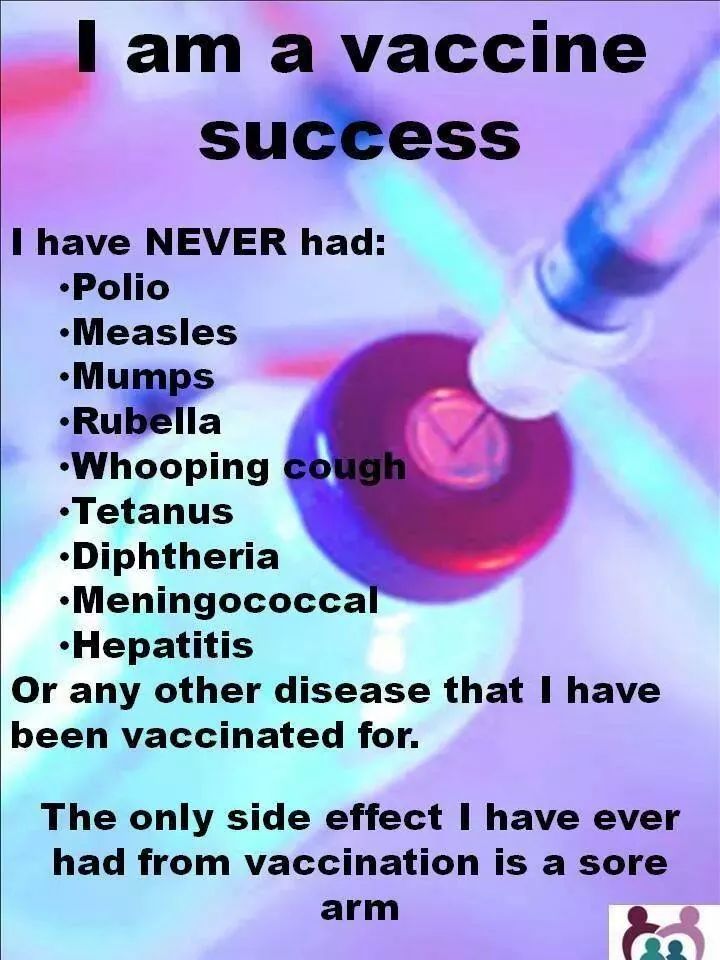
Vaccines save countless lives
16 Jun 2014 Leave a comment
in health economics Tags: anti-vaccination. The Great Escape, vaccination

HT: The Skeptics’ Guide to the Universe
The unintended consequences of dogooder laws
12 Jun 2014 Leave a comment
in economics of regulation, health economics Tags: nanny state, The fatal conceit, unintended consequences

The 1972 Limits To Growth book predicted that industrialization would increase air pollution until civilization collapsed and a few other things
12 Jun 2014 Leave a comment
in environmental economics, environmentalism, health economics Tags: Bjørn Lomborg, pollution, The Club of Rome, The Great Escape, The Great Fact, The Limits of Growth


Billy Connolly on his Prostate Examination
02 Jun 2014 Leave a comment
in health economics Tags: Billy Connolly
I fell of my chair laughing while watching this.
Picketing puppies
26 May 2014 Leave a comment
in environmental economics, environmentalism, health economics Tags: animal rights
Stirling University in the UK cancelled plans for a petting zoo after protests from PETA.

A petting zoo is set up outside the university library where stress-out students can have time out with puppies, kittens and other cute animals.
Basing policy on a scientific consensus is a new development for environmentalists
06 May 2014 Leave a comment
in economics of regulation, environmental economics, environmentalism, health economics, law and economics Tags: Cass Sunstein, GMOs, killer green technologies, Paul Nurse, precautionary principle
Previously the precautionary principle was used to introduce doubt when there was no doubt. But when climate science turned in their favour, environmentalists wanted public policy to be based on the latest science.
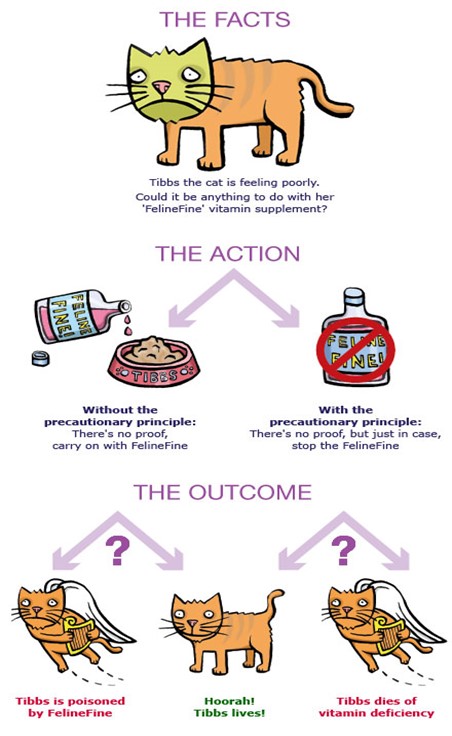
The precautionary principle is deeply incoherent. We should take precautions but there are always risks on both sides of a decision; inaction can bring danger, but so can action. Precautions themselves create risks so the precautionary principle bans what it simultaneously requires.
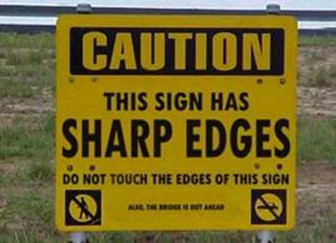
There is never perfect certainty about the nature and causes of health and environmental threats, so environmental and health regulations are almost always adopted despite some residual uncertainty.
We live in a Schumpeterian world where new risks replace old risks.
The obvious question is it safer or more precautionary to focus on the potential harms of new activities or technologies without reference to the activities or technologies they might displace? Jonathan Alder explains
In any policy decision, policy makers can make two potential errors regarding risk.
On the one hand, policy makers may err by failing to adopt measures to address a health or environmental risk that exists.
On the other hand, policy makers may adopt regulatory measures to control a health or environmental risk that does not exist.
Both types of error can increase risks to public health.
Consider the overwhelming consensus among researchers that biotech crops are safe for humans and the environment
This is a conclusion that is rejected by the very environmentalist organisations that loudly insist on the policy relevance of the scientific consensus on global warming.
In his 2012 Dimbleby lecture, Sir Paul Nurse calls for a re-opening the debate about GM crops based on scientific facts and analysis:
We need to consider what the science has to say about risks and benefits, uncoloured by commercial interests and ideological opinion. It is not acceptable if we deny the world’s poorest access to ways that could help their food security, if that denial is based on fashion and ill-informed opinion rather than good science.
Cass Sunstein wrote that in its strongest and most distinctive forms, the precautionary principle imposes a burden of proof on those who create potential risks, and requires regulation of activities even if it cannot be shown that those activities are likely to produce significant harms:
…apparently sensible questions have culminated in an influential doctrine, known as the precautionary principle.
The central idea is simple: Avoid steps that will create a risk of harm.
Until safety is established, be cautious; do not require unambiguous evidence.
Yet the precautionary principle, for all its rhetorical appeal, is deeply incoherent.
It is of course true that we should take precautions against some speculative dangers.
But there are always risks on both sides of a decision; inaction can bring danger, but so can action.
Precautions, in other words, themselves create risks – and hence the principle bans what it simultaneously requires.
Sunstein is a Democrat whose White House appointment to the head the White House Office of Information and Regulatory Affairs under Obama was opposed by the Left of the Democrat Party because of his views on the precautionary principle and his support of cost-benefit analysis as a primary tool for assessing regulations. Sunstein again:
The simplest problem with the precautionary principle is that regulation might well deprive society of significant benefits, and even produce a large number of deaths that would otherwise not occur.
Genetic modification holds out the promise of producing food that is both cheaper and healthier – resulting, for example, in products that might have large benefits in developing countries.
The point is not that genetic modification will definitely have those benefits, or that the benefits of genetic modification outweigh the risks.
The point is that the precautionary principle provides no guidance
The epitome of anti-science is support for the precautionary principle and opposition to cost-benefit analysis in assessing regulations. Which side of politics is guilty of this?
Environmentalists accept the views of scientists when its suits their anti-progress agenda. In other cases, the precautionary principle is used to delay judgment, reject science such as on GMOs and demand ever more evidence.
Environmentalists are all for the precautionary principle except when applied to natural medicines, organic food and marijuana.


Recent Comments