TC: Let’s say you were Peter Boettke, and looking to pen a critique of Kirzner’s theory of entrepreneurship. You come from a slightly different branch of the Austrian school. How would you use that differential background to express your differences with the Kirznerian theory, which emphasizes alertness above all else as an entrepreneurial characteristic? “If […]
Claude 3 Opus does Austrian economics
Claude 3 Opus does Austrian economics
20 Mar 2024 Leave a comment
in applied price theory, Austrian economics, comparative institutional analysis, entrepreneurship, history of economic thought Tags: entrepreneurial alertness
100 Years of Rent Control in Sweden
17 Mar 2024 Leave a comment
in applied price theory, economic history, economics of bureaucracy, economics of regulation, history of economic thought, income redistribution, law and economics, property rights, Public Choice, public economics, rentseeking, urban economics Tags: rent control, Sweden
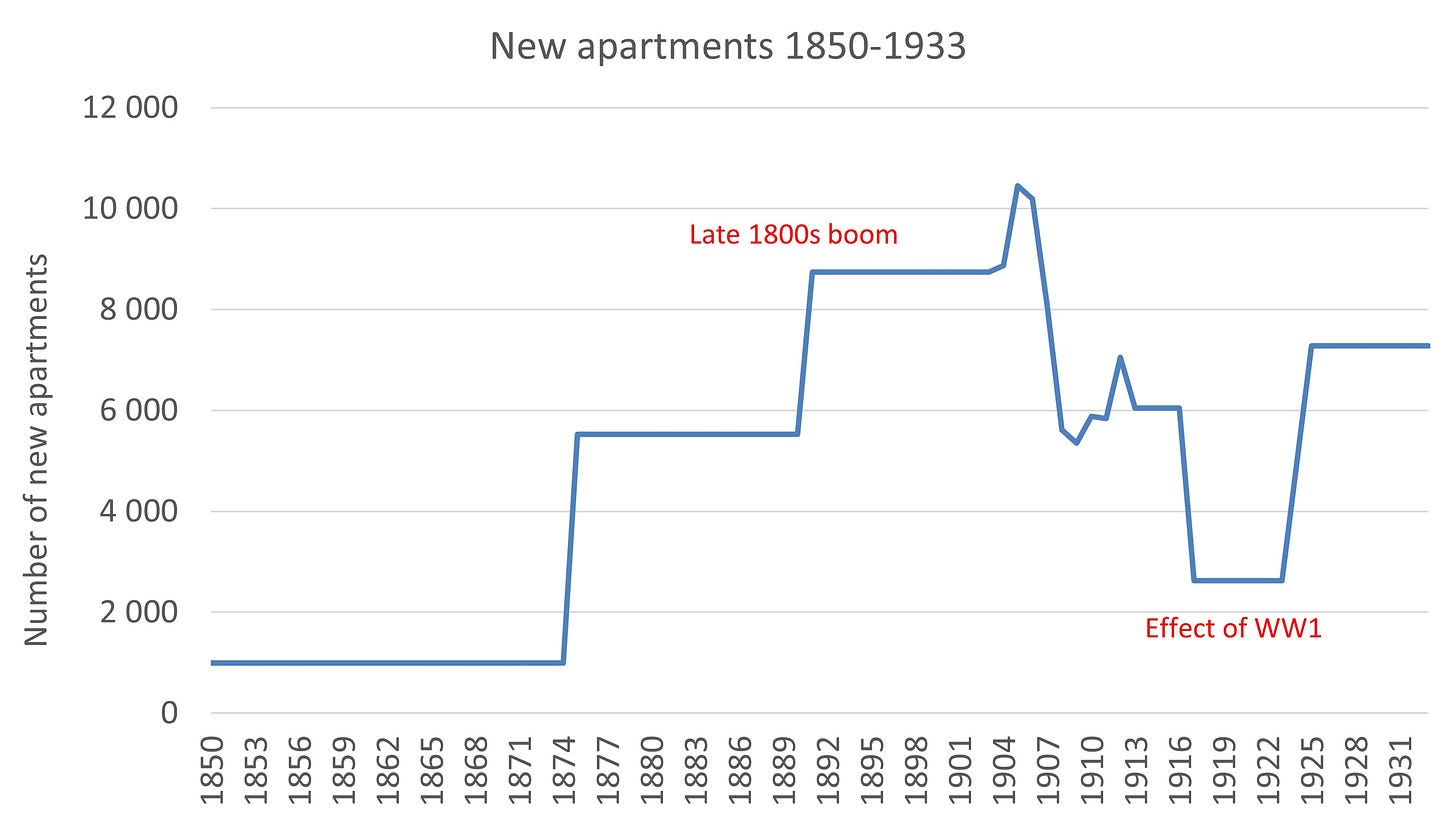
Bet On It reader Vanja Månborg knows a lot about rent control in Sweden. If you think Sweden is a country of thoughtful technocrats where government intervention works well, reading his guest post may make you think again. Here’s Vanja:Sweden has had rent control regulations since 1917 with less than two decades of pause between…
100 Years of Rent Control in Sweden
An Open Letter to Nobel-laureate Economist Angus Deaton
13 Mar 2024 Leave a comment
in applied price theory, applied welfare economics, Austrian economics, comparative institutional analysis, economic history, entrepreneurship, history of economic thought, income redistribution, international economics, labour economics, labour supply, poverty and inequality, Public Choice, rentseeking, survivor principle, unemployment Tags: creative destruction, free trade, tariffs
TweetProf. Angus Deaton Princeton University Prof. Deaton: Over the years I’ve learned much from your writings, and I regard your 2013 The Great Escape as one of the most important books published in the past 15 years. So I was quite surprised and disappointed to read that you, as you say, are now “much more…
An Open Letter to Nobel-laureate Economist Angus Deaton
Claude 3 Opus Also Fails Steve Landsburg’s Economics Exam
13 Mar 2024 Leave a comment
in applied price theory, history of economic thought, industrial organisation
Almost one year ago, Steve Landsburg tried GPT-4 on one of his exams. It failed, badly. I tried out some of the same questions on Claude 3 Opus, by many accounts now the leading AI. It failed, badly. Steve’s exams are very clever. They aren’t technically difficult but they are tricky in the sense that […]
Claude 3 Opus Also Fails Steve Landsburg’s Economics Exam
The RCT Agenda
12 Mar 2024 Leave a comment
in applied price theory, applied welfare economics, comparative institutional analysis, development economics, econometerics, economic history, economics of bureaucracy, economics of education, economics of information, economics of regulation, experimental economics, growth disasters, growth miracles, history of economic thought, human capital, labour economics, labour supply, law and economics, managerial economics, market efficiency, Marxist economics, occupational choice, organisational economics, property rights, Public Choice, public economics Tags: The fatal conceit

Randomized Controlled Trials: Could you be any more scientific? The book I’m now writing, Unbeatable: The Brutally Honest Case for Free Markets, insists that the randomistas of the economics profession actually have a thinly-veiled political agenda. Namely: To get economists to humbly serve the demagogues that rule the world instead of bluntly challenging their unabated…
The RCT Agenda
‘Swiftonomics’ and the optimal number of Taylor Swift examples
11 Mar 2024 Leave a comment
in applied price theory, economics of information, economics of media and culture, history of economic thought, industrial organisation
I was interested to read this recent article on Inside Higher Education, about ‘Swiftonomics’:Paul Krugman, a New York Times columnist, Nobel Prize winner and Distinguished Professor of economics at the CUNY Graduate Center, began working on the curriculum for the course last summer. Swift’s massive Eras Tour had just kicked off, creating such a frenzy…
‘Swiftonomics’ and the optimal number of Taylor Swift examples
This kind of macro theory is underrated
01 Mar 2024 Leave a comment
in applied price theory, business cycles, fiscal policy, history of economic thought, job search and matching, macroeconomics, monetary economics Tags: real business cycle theory
Demand shocks as technology shocks: We provide a macroeconomic theory where demand for goods has a productive role. A search friction prevents perfect matching between producers and potential customers. Larger demand induces more search, which in turn increases GDP and measured TFP. We embed the product-market friction in a standard neoclassical model and estimate it […]
This kind of macro theory is underrated
Four Myths about Price Discrimination
26 Feb 2024 Leave a comment
in applied price theory, history of economic thought, industrial organisation Tags: competition and monopoly

In an earlier post, Soda Prices are Too Low for the FTC, the Biden Administration seems to be trying to turn back the clock to a time when price discrimination was viewed as bad. Lest we repeat the mistakes of the past, it is worthwhile to remember its lessons. See this 2003 talk by some middling FTC…
Four Myths about Price Discrimination
How good was Paul Samuelson’s macroeconomics?
25 Feb 2024 Leave a comment
in business cycles, economic history, history of economic thought, macroeconomics, Milton Friedman, monetary economics Tags: monetary policy, wage and price controls
Reading the new Nicholas Wapshott book and also Krugman’s review (NYT) of it, it all seemed a little too rosy to me. So I went back and took a look at Paul Samuelson the macroeconomist. I regret that I cannot report any good news, in fact Samuelson was downright poor — you might say awful […]
How good was Paul Samuelson’s macroeconomics?
T. C. Koopmans Demolishes the Phillips Curve as a Guide to Policy
12 Feb 2024 Leave a comment
in business cycles, econometerics, economic history, history of economic thought, macroeconomics, monetary economics
Nobel Laureate T. C. Koopmans wrote one of the most famous economics articles of the twentieth century, “Measurement Without Theory,” a devastating review of an important, and in many ways useful and meritorious, study of business cycles by two of the fathers of empirical business-cycles research, Arthur F. Burns and Wesley C. Mitchell, Measuring Business […]
T. C. Koopmans Demolishes the Phillips Curve as a Guide to Policy
Some Links
06 Feb 2024 Leave a comment
in applied price theory, applied welfare economics, comparative institutional analysis, constitutional political economy, development economics, economic history, economics of regulation, health economics, history of economic thought, labour economics, law and economics, macroeconomics
TweetWriting in the Wall Street Journal, David Henderson and Charley Hooper explain why we should be thankful for high drug prices. Two slices: For Americans, paying for the discovery and development of new drugs rests on our shoulders. If we pay, we get new lifesaving medicines. If we don’t, we don’t. Almost all new drugs…
Some Links
The Rise of Human Capital
28 Jan 2024 Leave a comment
in Gary Becker, history of economic thought, human capital, labour economics, labour supply
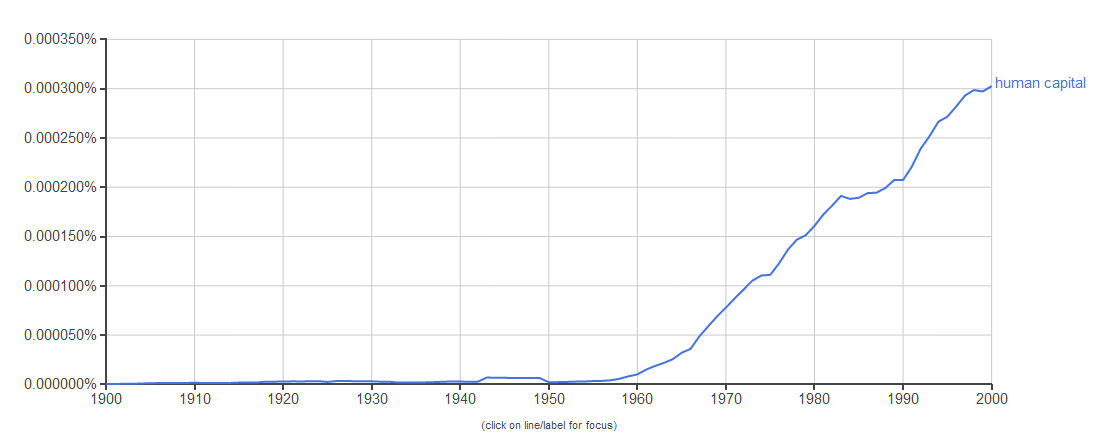
No economist was more responsible for the appreciation, understanding and analysis of the fact that people invest in improving their productivity than was Gary Becker.
The Rise of Human Capital
Quotation of the Day…
24 Jan 2024 Leave a comment
in applied price theory, applied welfare economics, history of economic thought, international economics
Tweet… is from page 4 of the 1976 second edition of my late, great teacher Leland Yeager’s magisterial International Monetary Relations: Theory, History, and Policy (original emphases; footnote deleted): Our opportunity for gain is genuine regardless of why foreigners sell so cheaply. Perhaps the foreign widgets are cheap because the climate is ideal for their…
Quotation of the Day…
Milei Speaks Truth to WEF Elite Power
19 Jan 2024 Leave a comment
in applied price theory, Austrian economics, comparative institutional analysis, constitutional political economy, development economics, economic growth, economic history, entrepreneurship, growth disasters, growth miracles, history of economic thought, labour economics, law and economics, macroeconomics, property rights Tags: Argentina

Argentina’s President Javier Milei had a warning for those attending the annual WEF meeting in Davos, Switzerland; ‘the Western world is in danger’ from ‘collectivist experiments’ such as Diversity, Equity and Inclusion (DEI), and has called on the world to reject socialism and instead embrace “free enterprise capitalism” to end global poverty. H/T zerohedge “Today, […]
Milei Speaks Truth to WEF Elite Power
Unfettered: Fishback 25 Years Later
17 Jan 2024 Leave a comment
in applied price theory, discrimination, economic history, economics of information, economics of regulation, health and safety, history of economic thought, human capital, industrial organisation, international economics, labour economics, labour supply, liberalism, macroeconomics, Marxist economics, minimum wage, occupational choice, occupational regulation, poverty and inequality, unemployment, unions
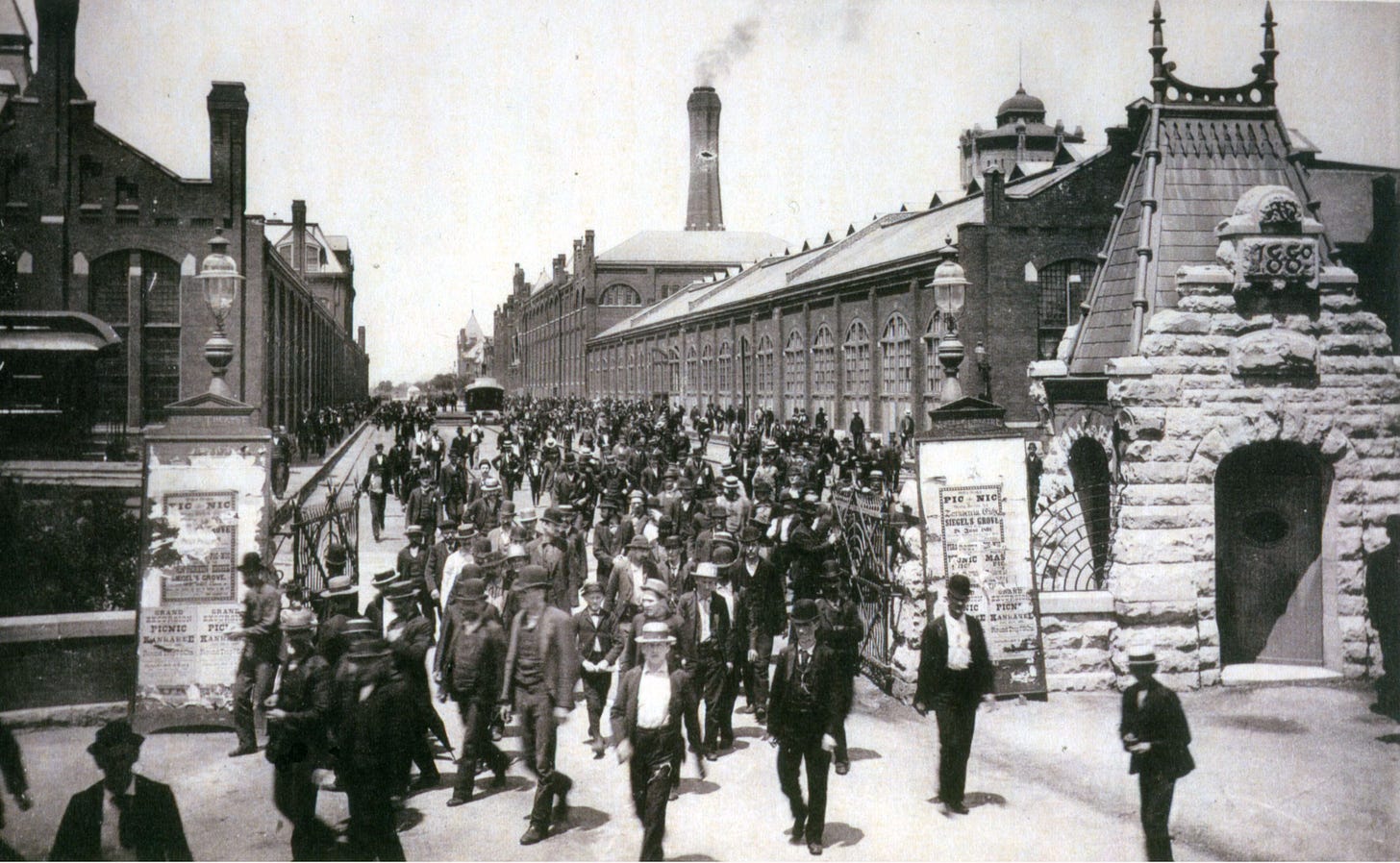
A quarter century ago, economist Price Fishback published “Operations of ‘Unfettered’ Labor Markets: Exit and Voice in American Labor Markets at the Turn of the Century” in the prestigious Journal of Economic Literature. Fishback’s article is packed with insight… and understatement. But let’s back up. Virtually every standard history textbook describes U.S. labor markets before…
Unfettered: Fishback 25 Years Later


Recent Comments