The Premiers’ Plan versus the New Deal. Do Keynesian macroeconomists ever study 1930s Australia
30 May 2020 Leave a comment
in budget deficits, business cycles, economic history, fiscal policy, great depression, history of economic thought, job search and matching, labour economics, labour supply, macroeconomics, Milton Friedman, monetarism, monetary economics, politics - Australia, politics - USA, public economics, unemployment Tags: Keynesian macroeconomics, new classical macroeconomics, New Keynesian macroeconomics
The Keynesian Approach to #COVID19 Budget Deficits
30 May 2020 Leave a comment
in budget deficits, economic growth, fiscal policy, history of economic thought, macroeconomics, politics - Australia, politics - New Zealand, politics - USA, public economics Tags: economics of pandemics, Keynesian macroeconomics
McCloskey on The New Economic History at Chicago in the 1970s
26 May 2020 Leave a comment
in economic history, economics of education, history of economic thought
Free To Choose in Under 2 Minutes Episode 1 – The Power of the Market
21 May 2020 Leave a comment
in applied price theory, applied welfare economics, comparative institutional analysis, constitutional political economy, development economics, economic history, economics of regulation, entrepreneurship, financial economics, growth miracles, history of economic thought, industrial organisation, international economics, labour economics, labour supply, law and economics, Milton Friedman, occupational choice, poverty and inequality, property rights, Public Choice, public economics, survivor principle, television Tags: capitalism and freedom

Doing Bad by Doing Good by Chris Coyne
18 May 2020 Leave a comment
in applied price theory, applied welfare economics, Austrian economics, comparative institutional analysis, constitutional political economy, economics of bureaucracy, economics of information, economics of natural disasters, economics of regulation, entrepreneurship, F.A. Hayek, health economics, history of economic thought, industrial organisation, international economics, labour economics, law and economics, property rights, Public Choice, public economics Tags: offsetting behaviour, The fatal conceit, unintended consequences
Richard Epstein, “A History of Public Utility Regulation in the Supreme Court”
17 May 2020 Leave a comment
in applied price theory, applied welfare economics, Austrian economics, comparative institutional analysis, economic history, economics of information, economics of regulation, history of economic thought, industrial organisation, law and economics, Public Choice, Richard Epstein Tags: competition law, network industries
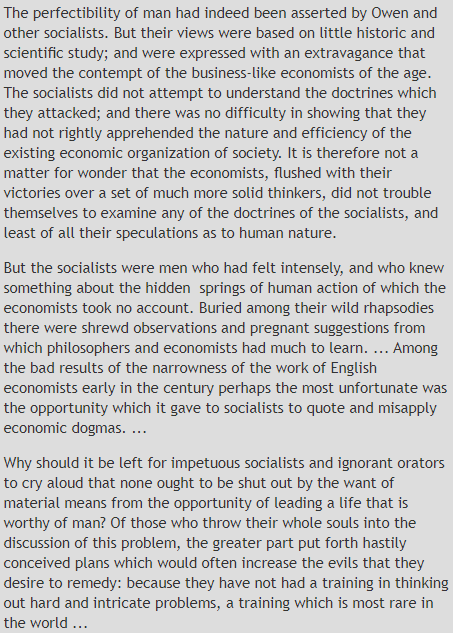
Alfred Marshall (1885) on the socialists of his time
16 May 2020 Leave a comment
in Alfred Marshall, history of economic thought, Marxist economics
Marshall’s Laws and The Grapes of Wrath – Chicago Price Theory
16 May 2020 Leave a comment
in Alfred Marshall, applied price theory, health and safety, history of economic thought, labour economics, labour supply, occupational choice Tags: compensating differences
Myth of the Rational Voter
02 May 2020 Leave a comment
in applied price theory, economics of bureaucracy, economics of crime, economics of education, economics of information, economics of regulation, election campaigns, energy economics, environmental economics, history of economic thought, income redistribution, industrial organisation, international economics, labour economics, labour supply, law and economics, managerial economics, market efficiency, Marxist economics, minimum wage, organisational economics, personnel economics, politics - USA, population economics, property rights, Public Choice, public economics, rentseeking, resource economics, theory of the firm, transport economics, urban economics, welfare reform Tags: anti-foreign bias, anti-market bias, make-work bias, pessimism bias, rational ignorance, rational irrationality, regressive left
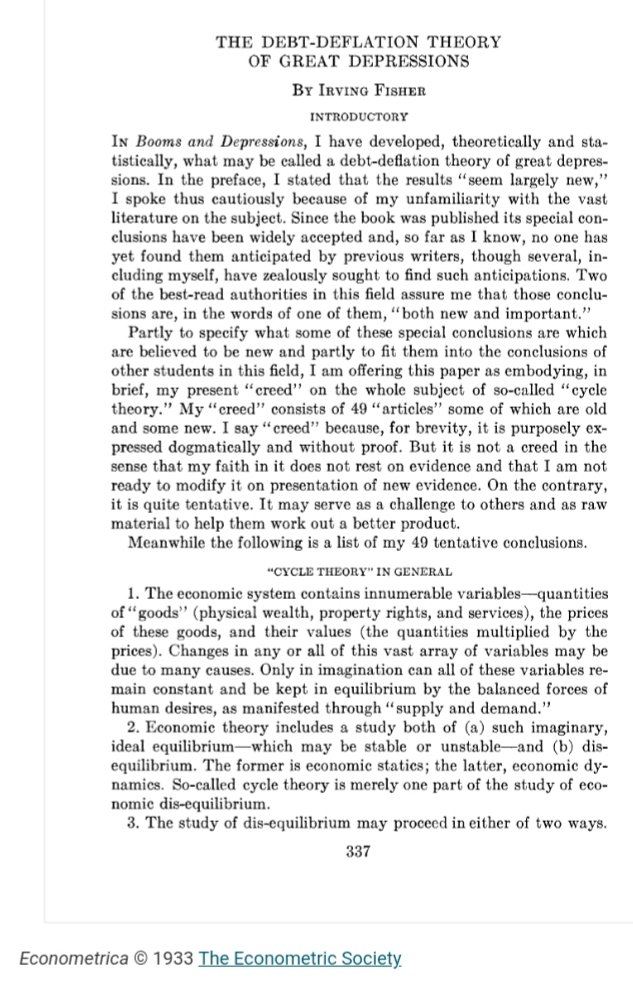
Do economists ignore the impact of debt on the business cycle?
29 Apr 2020 Leave a comment
in business cycles, economic history, financial economics, global financial crisis (GFC), great depression, great recession, history of economic thought, macroeconomics, monetarism, monetary economics Tags: Keynesian macroeconomics, New Keynesian macroeconomics
Edward Prescott on the unimportance of monetary policy
29 Apr 2020 Leave a comment
in business cycles, economic history, Edward Prescott, financial economics, fiscal policy, global financial crisis (GFC), great depression, great recession, history of economic thought, macroeconomics, monetary economics
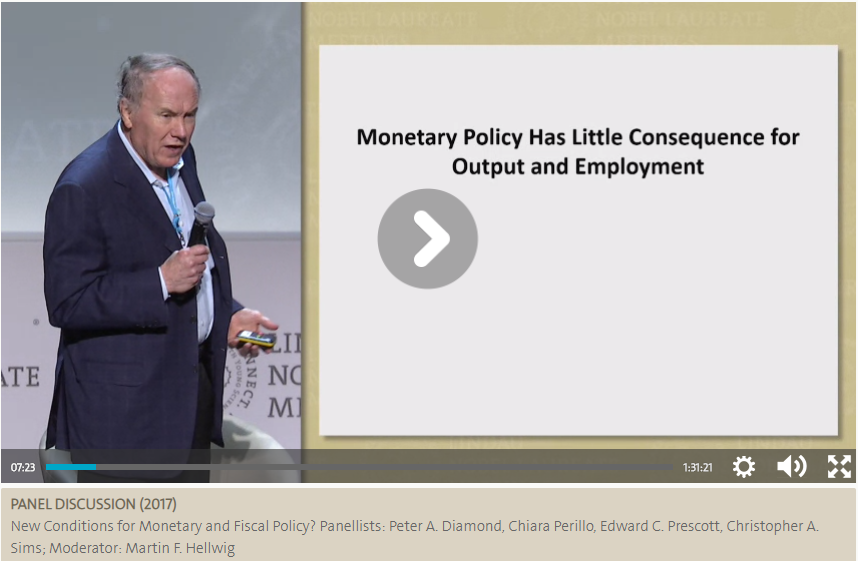
See lecture at https://www.mediatheque.lindau-nobel.org/videos/37267/panel-conditions-monetary-fiscal-policy/laureate-prescott
Edward Prescott, co-recipient of the Nobel Prize in 2004, took a different view in a presentation with the title ‘The Unimportance of Monetary Policy and Financial Crises on Output and Unemployment’. He cited financial crises that saw countries experiencing contrasting outcomes at the same time: the US and Asia in the 2008 crisis; Chile and Mexico in 1980; and Scandinavia and Japan in 1992.
‘Financial crises do not impede development,’ he claimed. While the 2008 financial crisis was localised in North America and the euro area, there was a short recession and quick recovery in Japan, Taiwan and South Korea and no recession in Scandinavia and Australia. ‘Countries where fiscal policy was irresponsible had problems’, he maintained. ‘Fiscal responsibility is crucial: to spend is to tax and to tax is to depress. That’s what happens every time.’
Friedman (1966) channels Alchian and Allen on how inflation might return
27 Apr 2020 Leave a comment
in history of economic thought, macroeconomics, Milton Friedman, monetarism, monetary economics
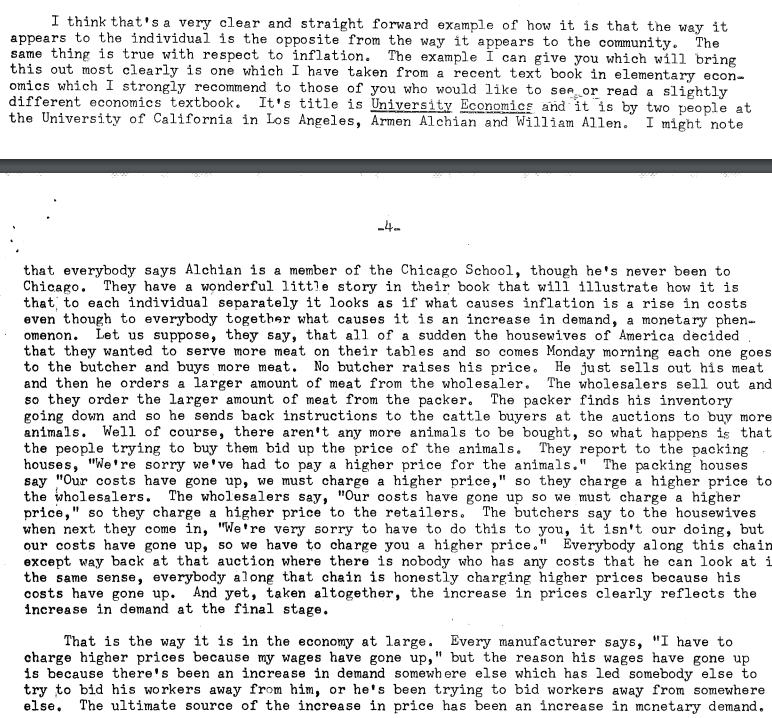
From https://www.richmondfed.us/-/media/richmondfedorg/publications/research/econ_focus/2005/summer/pdf/friedman_inflation_speech.pdf via https://www.richmondfed.org/publications/research/econ_focus/2005/summer/~/media/06AE15D96C75465B97C4E981664E31A2.ashx
 Utopia, you are standing in it!
Recent Comments