“Cultural Marxism” is a controversial term originally referring to the application of Marxist theory to culture, society, and institutions, but today often used critically to describe a perceived ideological influence on modern Western culture and institutions. Historical Context and Origin: Originally, Marxism focused on economics, class struggle, and capitalism. However, some Marxist theorists (notably Antonio […]
Cultural Marxism and AntiSemitism
Cultural Marxism and AntiSemitism
12 Jul 2025 1 Comment
in discrimination, history of economic thought, Marxist economics Tags: political correctness, racial discrimination, regressive left
The Supply And Demand Game
11 Jul 2025 1 Comment
in applied price theory, Austrian economics, economics of education, history of economic thought
I played it in each class I taught. A former colleague taught it to me many years ago. As far as I know, I use the game invented by Edward Chamberlin and refined by Vernon Smith. Click here to see the Lessons From the Supply and Demand Game. Or just read it all here. Part…
The Supply And Demand Game
Victor Davis Hanson Continues to Write Foolishly About Economics
07 Jul 2025 Leave a comment
in applied price theory, history of economic thought, industrial organisation, international economics, politics - USA, Public Choice, rentseeking Tags: tarrifs
TweetEvery time Victor Davis Hanson comments on the economics of international trade he displays his utter ignorance of the most basic facts and theories of that topic. Editor, Real Clear Politics Editor: Victor Davis Hanson’s declaration of victory for Trump’s tariffs is premature and confused (“The Decline and Fall of Our So-Called Degreed Experts,” July…
Victor Davis Hanson Continues to Write Foolishly About Economics
Bad Economic History Fuels Bad Present-Day Economic Policies
28 Jun 2025 1 Comment
in applied price theory, Austrian economics, comparative institutional analysis, development economics, economic history, history of economic thought, income redistribution, industrial organisation, international economics, liberalism, politics - USA, Public Choice
TweetAt CapX, I explain what motivated Phil Gramm and me to write our book, The Triumph of Economic Freedom: Debunking the Seven Great Myths of American Capitalism. A slice: Likewise with America’s own industrial revolution, the ‘Gilded Age’. American schoolchildren are taught that the final third of the 19th century witnessed John D. Rockefeller and…
Bad Economic History Fuels Bad Present-Day Economic Policies
Weaker incentives in unionized plants make them more likely to close
27 Jun 2025 1 Comment
in applied price theory, econometerics, history of economic thought, labour economics, unions Tags: union power
Unionized plants have worse incentive alignment: 26% less likely to offer performance-based bonuses. 11% less likely to promote based on performance 13% less likely to dismiss workers for poor performance. Consequently, unionized plants have: Higher rates of business closures, lower investment slower employment growth BOTTOM LINE: right-to-work states (no unions) have higher employment and better outcomes. CITE:Maksimovic, Vojislav and…
Weaker incentives in unionized plants make them more likely to close
Unfettered: Fishback 25 Years Later
25 Jun 2025 Leave a comment
in applied price theory, economic history, history of economic thought, human capital, labour economics, labour supply, politics - USA, poverty and inequality Tags: economics of immigration, employment law, monopsony
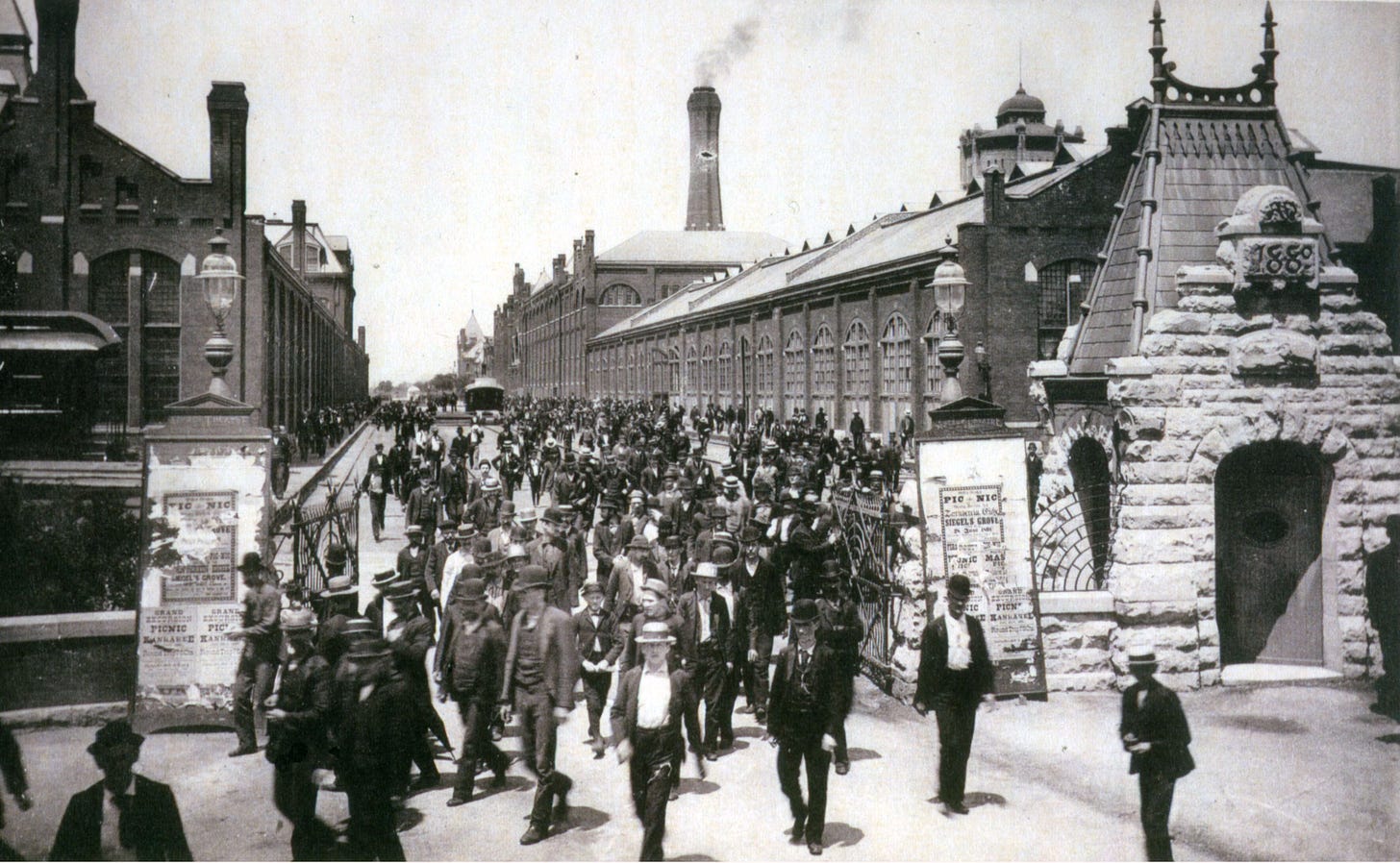
A quarter century ago, economist Price Fishback published “Operations of ‘Unfettered’ Labor Markets: Exit and Voice in American Labor Markets at the Turn of the Century” 1,762 more words
Unfettered: Fishback 25 Years Later
World’s Best Tweet about Communism and Capitalism
25 Jun 2025 Leave a comment
in development economics, economics of bureaucracy, growth disasters, history of economic thought, liberalism, Marxist economics, Public Choice Tags: capitalism and freedom, capitalism and socialism, economics of central planning

I shared a very clever tweet back in 2018 that highlighted the huge gap between “almost capitalism” and “almost socialism.” That column was entitled the “World’s Best Tweet about Socialism and Capitalism.” And capitalism won the comparison (needless to say). Let’s do the same thing today, but we’ll replace socialism with communism. And our “Best […]
World’s Best Tweet about Communism and Capitalism
Predatory Pricing Is A Foolish Strategy
20 Jun 2025 1 Comment
in applied price theory, economic history, history of economic thought, industrial organisation Tags: competition law
TweetI’m proud to have paired up with the Cato Institute’s Marian Tupy to pen this new piece at National Review on so-called ‘predatory pricing.’ A slice: Competition drives innovation, improves quality, and most importantly, lowers prices for consumers. Yet when foreign companies — particularly Chinese firms — successfully compete on price, accusations of “predatory pricing”…
Predatory Pricing Is A Foolish Strategy
How New Zealand invented inflation targeting
13 Jun 2025 1 Comment
in business cycles, history of economic thought, inflation targeting, labour economics, macroeconomics, monetary economics, politics - New Zealand, unemployment Tags: monetary policy
…the very next day, [Roger] Douglas appeared on TV declaring his intention to reduce inflation to ‘around 0 or 0 to 1 percent’ over the next couple of years, and then went on to make several similar comments in the following days. Douglas would soften his stance on specific timelines but ask the Reserve Bank and […]
How New Zealand invented inflation targeting
An American Enterprise Institute Discussion of “The Triumph of Economic Freedom”
05 Jun 2025 Leave a comment
in applied price theory, comparative institutional analysis, constitutional political economy, development economics, economic growth, economic history, growth disasters, growth miracles, history of economic thought, macroeconomics Tags: anticapitalist mentality, capitalism and freedom
Tweet The post An American Enterprise Institute Discussion of “The Triumph of Economic Freedom” appeared first on Cafe Hayek.
An American Enterprise Institute Discussion of “The Triumph of Economic Freedom”
*Crisis Cycle*
02 Jun 2025 Leave a comment
in budget deficits, business cycles, currency unions, Euro crisis, fiscal policy, global financial crisis (GFC), great recession, history of economic thought, international economic law, international economics, macroeconomics, monetarism, monetary economics, Public Choice Tags: European Union
That is the new book by John H. Cochrane, Luis Garicano, and Klaus Masuch, and the subtitle is Challenges, Evolution, and Future of the Euro. Excerpt: Our main theme is not actions taken in crises, but that member states and EU institutions did not clean up between crises. They did not reestablish a sustainable framework […]
*Crisis Cycle*
Against Sociology
31 May 2025 1 Comment
in applied price theory, history of economic thought
An individualistic argument can be made that sociology is a “useless” subject, though such a claim is controversial and widely disputed. Here is how such an argument might be constructed from an individualistic or methodological individualist perspective: Individualistic Argument Against the Usefulness of Sociology Thesis:Sociology is a largely useless discipline because it focuses on abstract […]
Against Sociology
Irrationality As the Fountainhead of Market Failure
28 May 2025 Leave a comment
in applied price theory, applied welfare economics, comparative institutional analysis, economics of information, history of economic thought
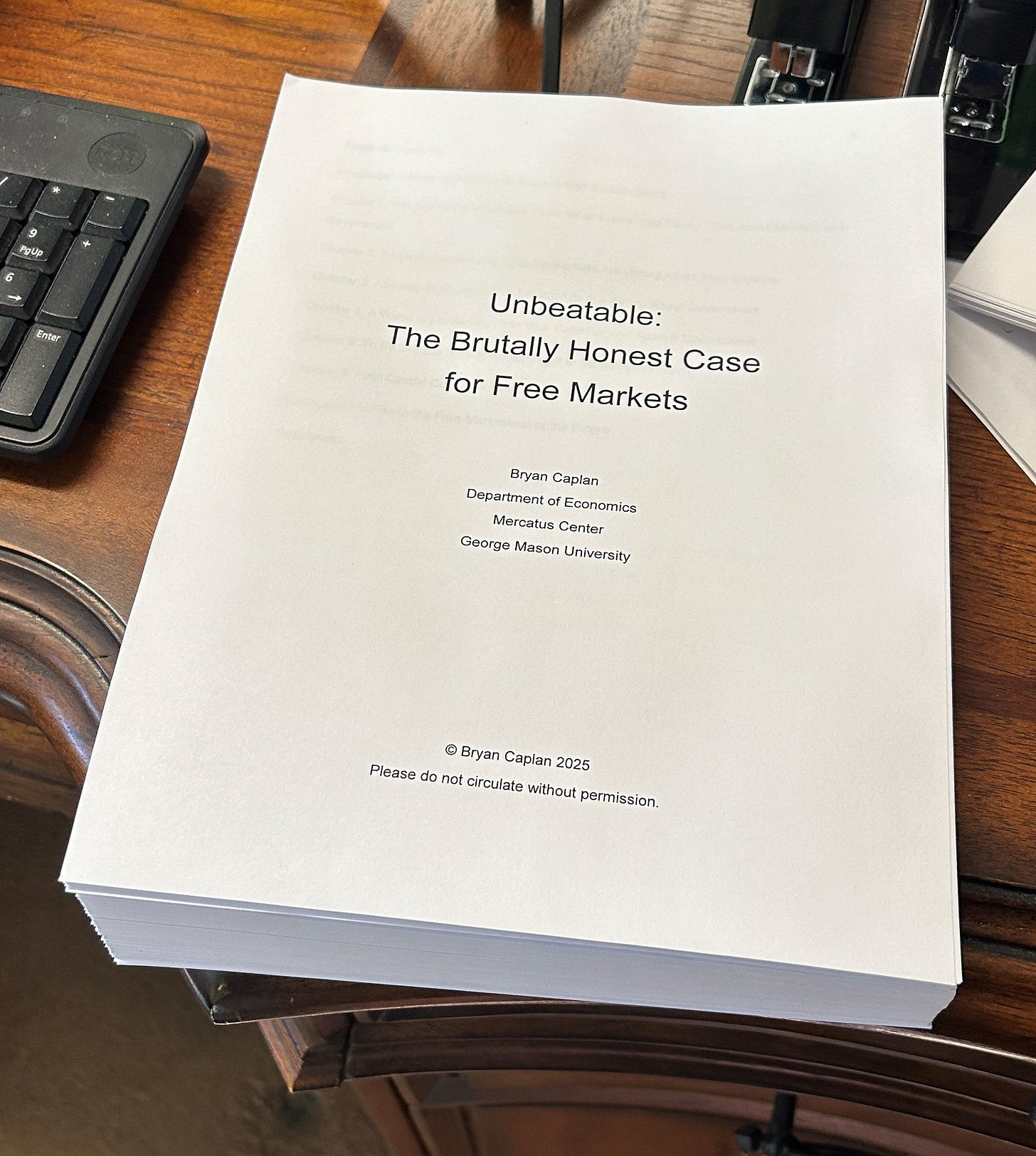
An excerpt from Chapter 4 of *Unbeatable*
Irrationality As the Fountainhead of Market Failure
THE TRUTH ABOUT WHY DEMOCRATS EMBRACE SOCIALISM – Here’s Why | Thomas S…
26 May 2025 Leave a comment
in history of economic thought, Thomas Sowell
An interesting paper about the first 50 years of Nobel Prize winners in economics
23 May 2025 1 Comment
in economics of education, history of economic thought
The first Nobel Prize in economics was awarded in 1969, to Ragnar Frisch and Jan Tinbergen. The fiftieth prize was awarded in 2018, to William Nordhaus and Paul Romer. In total up to that point, there had been 91 Nobel laureates in economics. This 2019 article by Allen Sanderson (University of Chicago) and John Siegfried (Vanderbilt…
An interesting paper about the first 50 years of Nobel Prize winners in economics
 Utopia, you are standing in it!
Recent Comments