TweetHere’s a letter to the Wall Street Journal. Editor: Greg Ip’s argument that cryptocurrencies, being privately issued, will fail as money relies heavily on his historical claim that privately issued bank notes in the 19th-century United States failed as money (“Stablecoins Are Private Money. That’s Why They’re a Risk to the Economy.” May 25). Mr.…
On Private Money
On Private Money
28 May 2026 Leave a comment
in applied price theory, economic history, financial economics, history of economic thought, macroeconomics, monetary economics
Trade Deficit Illiteracy, Part III
28 May 2026 Leave a comment
in applied price theory, budget deficits, economic growth, fiscal policy, history of economic thought, international economics, macroeconomics, politics - USA
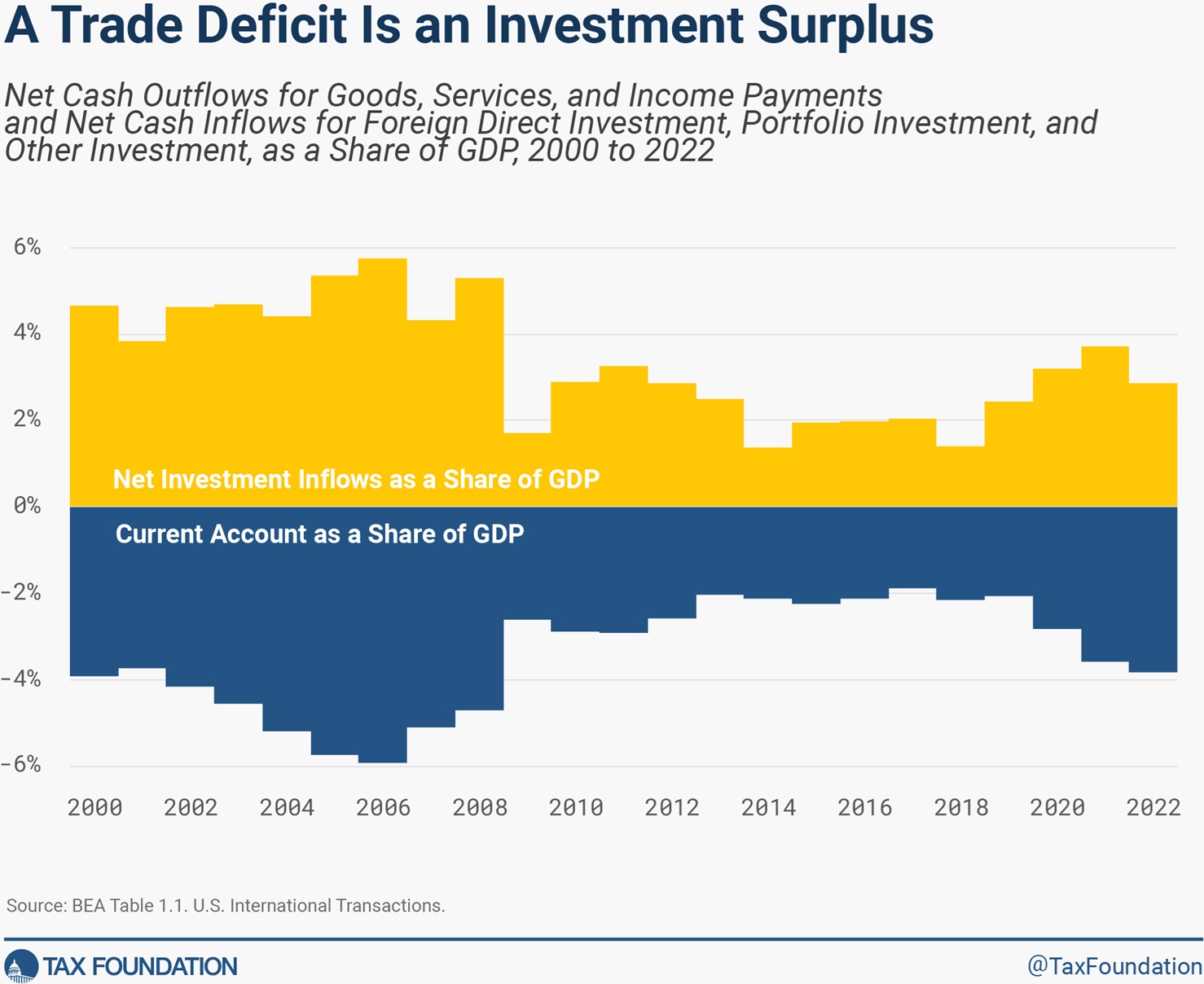
Looking at Part I and Part II, and considering the focus of today’s column, this series should actually be entitled “Trade Deficit Literacy.” That’s because the material I cite explains that a trade deficit is merely the flip side of an investment surplus. And it is good that the United States is a magnet for […]
Trade Deficit Illiteracy, Part III
Edmund Phelps, 1933-2026
28 May 2026 Leave a comment
in business cycles, history of economic thought, labour economics, macroeconomics, monetary economics, unemployment
Economics has recently lost another of the greats, Nobel Prize-winning economist Edmund Phelps, who passed away last week. Phelps was a macroeconomist, and among his many contributions he helped to formalise the concept of the natural rate of unemployment. Phelps won the Nobel Prize in 2006 for “his analysis of intertemporal tradeoffs in macroeconomic policy”.Surprisingly,…
Edmund Phelps, 1933-2026
Blame Washington for the Great Depression, Part III
27 May 2026 Leave a comment
in budget deficits, business cycles, economic growth, economic history, fiscal policy, great depression, history of economic thought, macroeconomics
To follow up on Part I and Part II in this series, let’s start with this Stossel video featuring Professor Don Boudreaux of George Mason University. The message is simple and accurate. Starting nearly 100 years ago, we got terrible statist policy from Herbert Hoover, followed by terrible statist policy from Franklin Roosevelt. No wonder […]
Blame Washington for the Great Depression, Part III
Quotation of the Day…
26 May 2026 Leave a comment
in applied price theory, history of economic thought, international economics

Tweet… is from pages 171-172 of Menzie Chinn’s and Douglas Irwin’s excellent 2025 textbook, International Economics: The Lerner Equivalence Theorem – that an import tariff is equivalent to an export tax – carries a powerful message: a country that tries to protect import competing industries from foreign competition may be able to help those industries…
Quotation of the Day…
Repugnant Economics
24 May 2026 Leave a comment
in applied price theory, history of economic thought
I spoke on a panel at AEI with Nobelist Al Roth about his new book, Moral Economics, which covers “repugnant markets,” from prostitution to surrogacy to kidney exchange. A fun book! My case study was acting. Acting was considered repugnant for over 2,000 years. In Rome, actors could not vote, hold office, or be trusted…
Repugnant Economics
Bet On It Book Club: For a New Liberty, Chapter 13
24 May 2026 Leave a comment
in applied price theory, Austrian economics, comparative institutional analysis, economics of regulation, environmental economics, environmentalism, history of economic thought, law and economics, Murray Rothbard, property rights, Public Choice
SummaryThis chapter, on “Conservation, Ecology, and Growth,” is an early statement of free-market environmentalism. It begins by ridiculing leftists’ decades of contradictory complaints about capitalism: “Stagnation; deficient growth; overaffluence; overpoverty; the intellectual fashions changed like ladies’ hemlines,” and quoting one of Schumpeter’s best lines:Capitalism stands its trial before judges who have the sentence of death…
Bet On It Book Club: For a New Liberty, Chapter 13
‘Uncertainty, Evolution, and Economic Theory,’ by Armen Alchian
23 May 2026 Leave a comment
in applied price theory, Armen Alchian, entrepreneurship, history of economic thought, industrial organisation, survivor principle, theory of the firm

One of the most persistent criticisms of law & economics is that it rests on unrealistic assumptions. Economic models often assume firms maximize profits, investors respond rationally to incentives, and market participants systematically adjust their behavior in predictable ways. Critics frequently point to these assumptions as evidence that economic analysis is detached from reality. Real…
‘Uncertainty, Evolution, and Economic Theory,’ by Armen Alchian
Celebrating 250 Years of Adam Smith’s Wealth of Nations
16 May 2026 Leave a comment
in Adam Smith, applied price theory, economic history, history of economic thought

March 9 was the 250th anniversary of the publication of Adam Smith’s Wealth of Nations. I wanted to celebrate that occasion yesterday, but decided acknowledging Argentina’s rapid improvement in the Index of Economic Freedom was more timely. So let’s pay tribute today to Smith, starting with this video from the Fraser Institute (part of a […]
Celebrating 250 Years of Adam Smith’s Wealth of Nations
Libertarians and Holocaust Denial
13 May 2026 Leave a comment
in history of economic thought, liberalism, libertarianism, Murray Rothbard Tags: The Holocaust

Libertarians were important actors in American Holocaust denial in the decades following World War II.
Libertarians and Holocaust Denial
Bonus Quotation of the Day…
13 May 2026 Leave a comment
in applied price theory, economic history, entrepreneurship, history of economic thought, industrial organisation, survivor principle Tags: industry policy

Tweet… is from page 8 of Scott Lincicome’s and Huan Zhu’s superb September 2021 paper, “Questioning Industrial Policy: Why Government Manufacturing Plans Are Ineffective and Unnecessary”: A core part of industrial policy’s knowledge problem is timing: because markets and personal preferences are constantly evolving, the facts (products, investments, supply and demand, etc.) on which an…
Bonus Quotation of the Day…
Jon Hartley Talks With Phil Gramm…
12 May 2026 Leave a comment
in applied price theory, history of economic thought
Tweet… about economic history and freedom. The post Jon Hartley Talks With Phil Gramm… appeared first on Cafe Hayek.
Jon Hartley Talks With Phil Gramm…
Bet On It Book Club: For a New Liberty, Chapter 11
10 May 2026 Leave a comment
in applied price theory, history of economic thought, libertarianism, Murray Rothbard, transport economics, urban economics
SummaryIn this chapter, Rothbard advocates the abolition of publicly-owned streets and roads:Abolition of the public sector means, of course, that all pieces of land, all land areas, including streets and roads, would be owned privately, by individuals, corporations, cooperatives, or any other voluntary group ings of individuals and capital.He begins by explaining that in a…
Bet On It Book Club: For a New Liberty, Chapter 11
Grow the Pie, Skip the Sermon
08 May 2026 Leave a comment
in Adam Smith, applied price theory, comparative institutional analysis, economic history, health economics, history of economic thought, liberalism, Marxist economics

In a recent Substack essay, “The progress movement needs a better theory of progress,” Brink Lindsey argues that the progress movement has settled for too thin a vision. It focuses on wealth creation and technological advance, he says, when it should adopt a “fuller conception of progress”—one that promotes “spiritual welfare” and thicker accounts of…
Grow the Pie, Skip the Sermon
Do Market Reforms Cause Growth?
08 May 2026 Leave a comment
in applied price theory, development economics, econometerics, economic growth, economic history, history of economic thought, labour economics, macroeconomics, unemployment
Do market-oriented reforms cause economic growth? This paper revisits this question using a cross-country panel of reform episodes identified from various changes in well-known economic freedom and structural reform indices. We exploit the timing of reforms using distributed-lag and event-study frameworks that trace the dynamic response of per-capita GDP. We find little evidence of immediate…
Do Market Reforms Cause Growth?


Recent Comments