
“… we’ve given dealers who are not aligned with Buick’s future to exit voluntarily in a respectful and structured way …”
Buick Dealers Fleeing the Net Zero EV Revolution
Celebrating humanity's flourishing through the spread of capitalism and the rule of law
31 Dec 2023 Leave a comment
in energy economics, entrepreneurship, environmental economics, global warming, industrial organisation, survivor principle
“… we’ve given dealers who are not aligned with Buick’s future to exit voluntarily in a respectful and structured way …”
Buick Dealers Fleeing the Net Zero EV Revolution
31 Dec 2023 Leave a comment
in economic history, entrepreneurship, industrial organisation, sports economics, survivor principle Tags: entrepreneurship

📸 Look at this post on Facebook
https://www.facebook.com/share/oodJT3KzFfpEQd4n/?mibextid=RXn8sy
24 Dec 2023 Leave a comment
in economics of media and culture, entrepreneurship, industrial organisation, movies, survivor principle, television Tags: creative destruction
17 Dec 2023 Leave a comment
in economics of media and culture, industrial organisation, survivor principle Tags: political correctness, regressive left
Economist: The new New York Times was the product of two shocks – sudden collapse, and then sudden success. The paper almost went bankrupt during the financial crisis, and the ensuing panic provoked a crisis of confidence among its leaders. Digital competitors like the HuffPost were gaining readers and winning plaudits within the media industry as innovative. They were the…
The strategy that saved the NY Times
13 Dec 2023 Leave a comment
in development economics, economic history, growth miracles, industrial organisation Tags: creative destruction
11 Dec 2023 Leave a comment
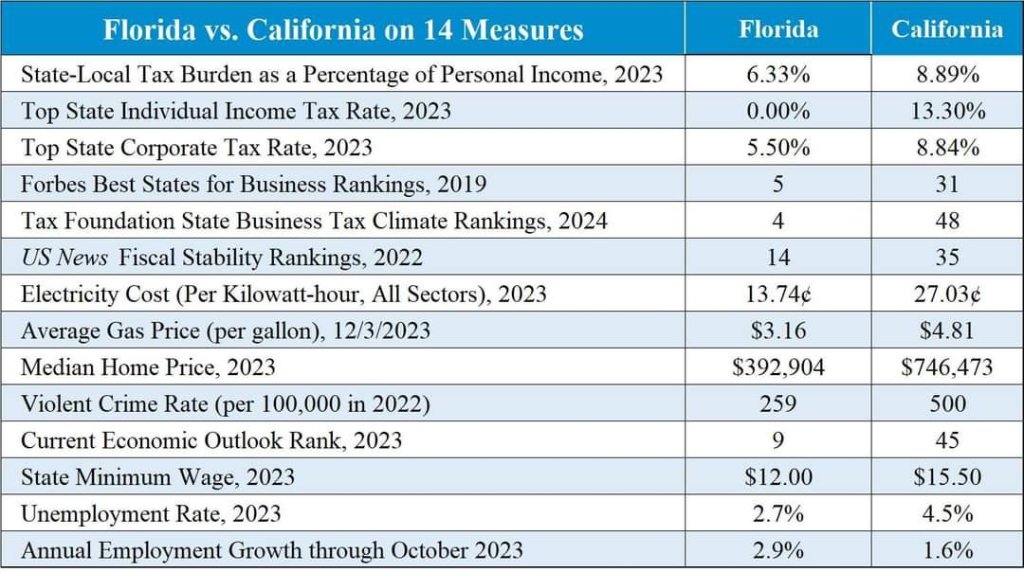
in applied price theory, comparative institutional analysis, economic growth, entrepreneurship, income redistribution, industrial organisation, labour economics, minimum wage, Public Choice, public economics Tags: California, Florida
13 Nov 2023 Leave a comment
in energy economics, environmental economics, global warming, industrial organisation, survivor principle Tags: celebrity technologies, wind power

By Paul Homewood h/t Joe Public More bad news for the wind industry:. https://twitter.com/IntermittentNRG/status/1723692080801710475 What is different about this one is that the PPA forces the wind farm to buy power on the spot market, when the wind does not provide enough:
Europe’s Largest Wind Farm Facing Bankruptcy
08 Nov 2023 Leave a comment
in applied price theory, applied welfare economics, comparative institutional analysis, constitutional political economy, development economics, economic growth, economic history, economics of bureaucracy, growth disasters, growth miracles, income redistribution, industrial organisation, labour economics, law and economics, liberalism, libertarianism, Marxist economics, poverty and inequality, privatisation, property rights, Public Choice, public economics Tags: economics of socialism, Sweden

Two days ago at Texas Christian University, I debated Scott Sehon, chair of Bowdoin College’s Philosophy Department, on Capitalism versus Socialism. (Video forthcoming eventually). My opening statement was a slight variation on the one I wrote for an earlier debate on the same topic with Elizabeth Bruenig. Sehon’s opening statement was adapted from his Socialism:…
Reflections on the TCU Capitalism versus Socialism Debate
04 Nov 2023 Leave a comment
in development economics, economic history, economics of crime, energy economics, entrepreneurship, growth disasters, growth miracles, human capital, income redistribution, industrial organisation, labour economics, labour supply, law and economics, poverty and inequality, Public Choice, public economics, urban economics Tags: South Africa
29 Oct 2023 Leave a comment
in economic history, entrepreneurship, industrial organisation, survivor principle
Tweet… is from page 163 of the 1983 Third Edition of Douglass C. North’s, Terry L. Anderson’s, and Peter J. Hill’s Growth & Welfare in the American Past: A New Economic History: In both England and the United States, wood was one of the more important raw materials in the nineteenth century, providing a major…
Quotation of the Day…
12 Oct 2023 Leave a comment
in applied price theory, comparative institutional analysis, economics of regulation, history of economic thought, industrial organisation, law and economics, property rights, Ronald Coase, Ronald Coase, theory of the firm
07 Oct 2023 Leave a comment
in applied price theory, economic history, history of economic thought, industrial organisation Tags: competition and monopoly, competition law
Tweet… is from page 5 of Gabriel Kolko’s 1963 book, The Triumph of Conservatism: Contrary to the consensus of historians, it was not the existence of monopoly that caused the federal government to intervene in the economy [in the late 19th and early 20th centuries], but the lack of it. DBx: Market competition is astonishingly…
Quotation of the Day…
04 Oct 2023 Leave a comment
in economic growth, economic history, economics of regulation, history of economic thought, industrial organisation, labour economics, macroeconomics, welfare reform Tags: Sweden
When I meet Americans who self-identify as “socialists,” it is quite uncommon for them to advocate the abolition of private property and the “collective or governmental ownership and administration of the means of production and distribution of goods”–which is the dictionary definition of socialism. Instead most of the American “socialists” I meet favor a more…
Why Sweden Isn’t an Example of Socialism
28 Sep 2023 Leave a comment
in industrial organisation, law and economics Tags: competition and monopoly, competition law
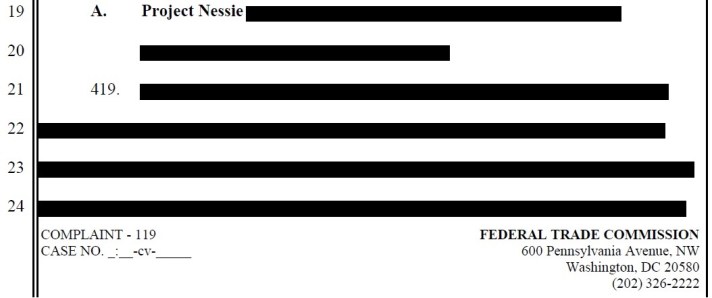
The Federal Trade Commission and 17 state attorneys general have sued Amazon.com, as the FTC press release says, “alleging that the online retail and technology company is a monopolist that uses a set of interlocking anticompetitive and unfair strategies to illegally maintain its monopoly power.” The FTC complaint filed with the US District Court for…
Initial Reactions to the Amazon Antitrust Case
Celebrating humanity's flourishing through the spread of capitalism and the rule of law
Celebrating humanity's flourishing through the spread of capitalism and the rule of law
Celebrating humanity's flourishing through the spread of capitalism and the rule of law
Celebrating humanity's flourishing through the spread of capitalism and the rule of law
Celebrating humanity's flourishing through the spread of capitalism and the rule of law
Celebrating humanity's flourishing through the spread of capitalism and the rule of law
Celebrating humanity's flourishing through the spread of capitalism and the rule of law
A History of the Alt-Right
Econ Prof at George Mason University, Economic Historian, Québécois
Celebrating humanity's flourishing through the spread of capitalism and the rule of law
Scholarly commentary on law, economics, and more
Beatrice Cherrier's blog
Celebrating humanity's flourishing through the spread of capitalism and the rule of law
Celebrating humanity's flourishing through the spread of capitalism and the rule of law
Celebrating humanity's flourishing through the spread of capitalism and the rule of law
Why Evolution is True is a blog written by Jerry Coyne, centered on evolution and biology but also dealing with diverse topics like politics, culture, and cats.
Celebrating humanity's flourishing through the spread of capitalism and the rule of law
A rural perspective with a blue tint by Ele Ludemann
DPF's Kiwiblog - Fomenting Happy Mischief since 2003
Celebrating humanity's flourishing through the spread of capitalism and the rule of law
The world's most viewed site on global warming and climate change
Tim Harding's writings on rationality, informal logic and skepticism
A window into Doc Freiberger's library
Let's examine hard decisions!
Commentary on monetary policy in the spirit of R. G. Hawtrey
Thoughts on public policy and the media
Celebrating humanity's flourishing through the spread of capitalism and the rule of law
Politics and the economy
A blog (primarily) on Canadian and Commonwealth political history and institutions
Reading between the lines, and underneath the hype.
Economics, and such stuff as dreams are made on
"The British constitution has always been puzzling, and always will be." --Queen Elizabeth II
Celebrating humanity's flourishing through the spread of capitalism and the rule of law
Celebrating humanity's flourishing through the spread of capitalism and the rule of law
WORLD WAR II, MUSIC, HISTORY, HOLOCAUST
Undisciplined scholar, recovering academic
Celebrating humanity's flourishing through the spread of capitalism and the rule of law
Res ipsa loquitur - The thing itself speaks
In Hume’s spirit, I will attempt to serve as an ambassador from my world of economics, and help in “finding topics of conversation fit for the entertainment of rational creatures.”
Researching the House of Commons, 1832-1868
Articles and research from the History of Parliament Trust
Reflections on books and art
Posts on the History of Law, Crime, and Justice
Celebrating humanity's flourishing through the spread of capitalism and the rule of law
Exploring the Monarchs of Europe
Cutting edge science you can dice with




Recent Comments