In this 12-second video, Margaret Thatcher is talking about the Labour Party in the United Kingdom, but her warning has universal application. And when I say her warning has universal application, I’m not joking. Politicians generally can’t resist the temptation to buy votes. And I fear that this can and will happen at all levels […]
Margaret Thatcher, Michael Curley, and the 19th Theorem of Government
Margaret Thatcher, Michael Curley, and the 19th Theorem of Government
16 Jan 2025 Leave a comment
in applied price theory, applied welfare economics, Austrian economics, comparative institutional analysis, constitutional political economy, economic growth, economic history, economics of regulation, energy economics, environmental economics, financial economics, fiscal policy, human capital, income redistribution, international economics, labour economics, labour supply, law and economics, liberalism, libertarianism, macroeconomics, Marxist economics, politics - USA, poverty and inequality, property rights, Public Choice, public economics, regulation, rentseeking
The Acemoglu arguments against high-skilled immigration
13 Jan 2025 Leave a comment
in applied price theory, economics of education, entrepreneurship, human capital, international economics, labour economics, labour supply, occupational choice, politics - USA, poverty and inequality Tags: economics of immigration
Here is Daron Acemoglu’s Project Syndicate piece, mostly critical on high-skilled immigration. Here is the first argument from Acemoglu: …one would expect corporate America’s growing need for skilled STEM workers to translate into advocacy for, and investments in, STEM education. But an overreliance on the H-1B program may have broken this link and made American […]
The Acemoglu arguments against high-skilled immigration
Some Links
12 Jan 2025 Leave a comment
in applied price theory, budget deficits, development economics, economic growth, economic history, economics of regulation, entrepreneurship, fiscal policy, global financial crisis (GFC), great recession, growth disasters, growth miracles, human capital, income redistribution, industrial organisation, international economics, job search and matching, labour economics, labour supply, macroeconomics, monetary economics, poverty and inequality, Public Choice, rentseeking, survivor principle, unemployment
TweetGMU Econ alum Holly Jean Soto busts the myth of “greedflation.” Scott Lincicome identifies an interesting contrast between the facts and opinion about China. George Will decries the spinelessness of the modern U.S. Congress. A slice: The incoming president will be able, on a whim, to unilaterally discombobulate international commerce — and the domestic economy…
Some Links
Left-Wing Economists Were Wildly Wrong about Javier Milei and his Libertarian Agenda for Argentina
10 Jan 2025 Leave a comment
in applied price theory, Austrian economics, budget deficits, business cycles, comparative institutional analysis, constitutional political economy, development economics, economic growth, economics of regulation, financial economics, fiscal policy, growth disasters, growth miracles, history of economic thought, income redistribution, international economics, labour economics, law and economics, liberalism, libertarianism, macroeconomics, Marxist economics, monetarism, monetary economics, political change, politics - USA, property rights, Public Choice, public economics, rentseeking, unemployment Tags: Argentina
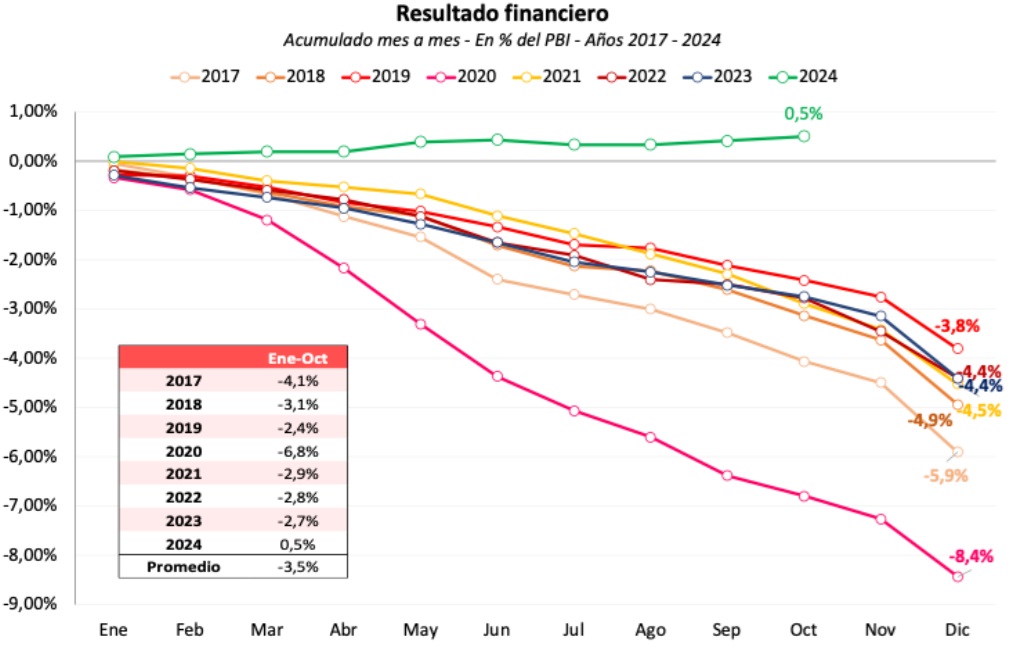
It’s easy to mock economists. Consider the supposedly prestigious left-leaning academics who asserted in 2021 that Biden’s agenda was not inflationary. At the risk of understatement, they wound up with egg on their faces.* Today, we’re going to look at another example of leftist economists making fools of themselves. It involves Argentina, where President Javier […]
Left-Wing Economists Were Wildly Wrong about Javier Milei and his Libertarian Agenda for Argentina
Some Links
03 Jan 2025 1 Comment
in applied price theory, comparative institutional analysis, constitutional political economy, defence economics, economic history, economics of crime, economics of regulation, industrial organisation, international economics, International law, law and economics, politics - USA, war and peace
TweetArnold Kling ponders producers versus parasites. A slice: What I notice is that the elites on the Republican side tend to earn a living as producers. They make things that other people want or need. In contrast, elites on the Democratic side include many people one may think of as parasites. They depend on producers…
Some Links
Top MR Posts of 2024!
30 Dec 2024 Leave a comment
in applied price theory, discrimination, gender, health and safety, human capital, international economics, labour economics, labour supply, occupational choice, politics - USA, poverty and inequality Tags: economics of immigration, gender wage gap, Internet, political correctness, regressive left
The number one post this year was Tyler’s The changes in vibes — why did they happen? A prescient post and worth a re-read. Lots of quotable content that has become conventional wisdom after the election: The ongoing feminization of society has driven more and more men, including black and Latino men, into the Republican […]
Top MR Posts of 2024!
Argentina facts of the day
29 Dec 2024 Leave a comment
in budget deficits, comparative institutional analysis, development economics, economic growth, economics of bureaucracy, economics of regulation, F.A. Hayek, financial economics, fiscal policy, growth disasters, income redistribution, international economics, labour economics, law and economics, liberalism, libertarianism, macroeconomics, Milton Friedman, monetarism, monetary economics, property rights, Public Choice, rentseeking, unemployment Tags: Argentina
Argentina’s bonds have already rallied dramatically. One gauge of the nation’s hard-currency debt, the ICE BofA US Dollar Argentina Sovereign Index, has generated a total return of about 90% this year. Meanwhile, the S&P Merval Index has risen more than 160% this year through Monday, far outpacing stock benchmarks in developed, emerging and frontier markets […]
Argentina facts of the day
On Trump On Panama Canal Fees
29 Dec 2024 Leave a comment
in applied price theory, international economics, International law, politics - USA Tags: 2024 presidential election, tarrifs
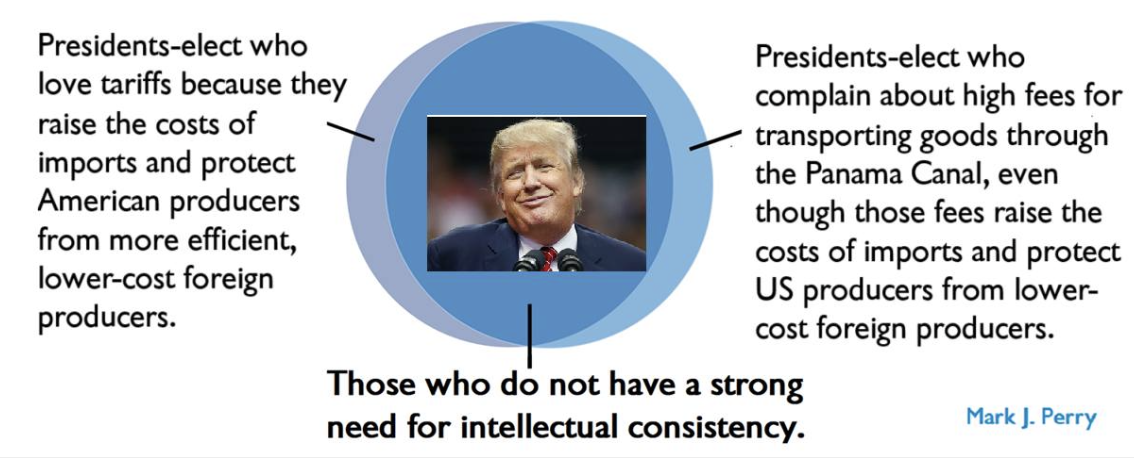
TweetThis letter of mine appears in today’s New York Times: To the Editor: Donald Trump complains that the fees Panama charges for ships to use its canal are a “complete ‘rip-off.’” How mysterious. Given Mr. Trump’s belief that “the most beautiful word in the dictionary is ‘tariff,’” he should be pleased that these fees are…
On Trump On Panama Canal Fees
How is the Russian war economy doing?
08 Dec 2024 1 Comment
in applied price theory, defence economics, development economics, economic growth, economics of regulation, entrepreneurship, fiscal policy, growth disasters, income redistribution, industrial organisation, international economics, law and economics, macroeconomics, monetary economics, property rights, Public Choice, war and peace Tags: Russia, Ukraine
Here is a gloomy account from Vladimir Mirov: Ruble depreciation will contribute to inflation even further, as Russia is continued to be heavily reliant on imports – this is a kind of self-sustaining spiral. I also strongly disagree with those who say that cheaper ruble is “good” for exporters and the budget. Exporters have yet […]
How is the Russian war economy doing?
Paul Krugman Is Right…albeit Selectively and Hypocritically
04 Dec 2024 Leave a comment
in applied price theory, comparative institutional analysis, economic history, economics of bureaucracy, economics of regulation, entrepreneurship, income redistribution, industrial organisation, international economics, law and economics, politics - USA, property rights, Public Choice, public economics, rentseeking Tags: tarrifs
I like profits. But let me qualify that statement. I like profits that are the result of businesses providing goods and services that consumers value. Those profits are earned. By contrast, I don’t like it when businesses get in bed with government and get money via cronyism, bailouts, subsidies, protectionism, or industrial policy. Those profits […]
Paul Krugman Is Right…albeit Selectively and Hypocritically
Trump’s victory: Golden age or fiscal reckoning?
14 Nov 2024 Leave a comment
in business cycles, economic growth, fiscal policy, industrial organisation, international economics, labour economics, law and economics, macroeconomics, monetary economics, politics - USA, property rights, public economics Tags: 2024 presidential election
Oliver Hartwich writes – In his victory speech, Donald Trump promised Americans a new “golden age”. While he had the numbers to win the election, the economic realities he faces will make delivering on his promise challenging. Trump’s victory reflects many Americans’ frustrations with living standards and inflation during the Biden-Harris administration. Vice President Kamala […]
Trump’s victory: Golden age or fiscal reckoning?
DON BRASH: HOW ARE THEY GOING?
01 Nov 2024 Leave a comment
in defence economics, development economics, growth miracles, international economics, politics - New Zealand Tags: China
It is just over a year since last year’s general election, and nearly a year since the new coalition Government was formed. How are they going? When I speak to Rotary Club audiences and similar, I talk about the five big challenges facing New Zealand: 1) Our long-standing under-performance compared with other developed countries (and…
DON BRASH: HOW ARE THEY GOING?
WSJ Video on Trump-Biden-Trump Tariffs
22 Oct 2024 Leave a comment
in applied price theory, applied welfare economics, economic history, industrial organisation, international economics, politics - USA, survivor principle Tags: 2024 presidential election, tarrifs
TweetI can pick a few nits with this eight-minute-long video from the Wall Street Journal on tariffs – for example, for all of their many problems, tariffs do not (contrary to what’s reported in the video) cause any net, economy-wide loss of jobs. Nevertheless, this video is quite good, not least because it features the…
WSJ Video on Trump-Biden-Trump Tariffs
Was WW1 Pointless? – War Goals Of Every Major Nation
18 Oct 2024 Leave a comment
in defence economics, economic history, international economics, International law, laws of war, war and peace Tags: World War I
Historian Anthony Comegna reviews Marc-William Palen’s book Pax Economica: Left-Wing Visions of a Free Trade World
23 Sep 2024 Leave a comment
in applied price theory, development economics, history of economic thought, international economics Tags: economics of colonialism, free trade, tariffs
See When Leftists Were Free Traders: In Pax Economica, historian Marc-William Palen chronicles the left-wing history of free trade. From Reason magazine.Dr. Marc-William Palen is a historian at the University of Exeter. His Ph. D. is from The University of Texas.The review is very good. Here is the Amazon link for the book: Pax Economica:…
Historian Anthony Comegna reviews Marc-William Palen’s book Pax Economica: Left-Wing Visions of a Free Trade World
 Utopia, you are standing in it!
Recent Comments