07 Jun 2015
by Jim Rose
in discrimination, gender, human capital, labour economics, labour supply, occupational choice
Tags: compensating differences, gender wage gap
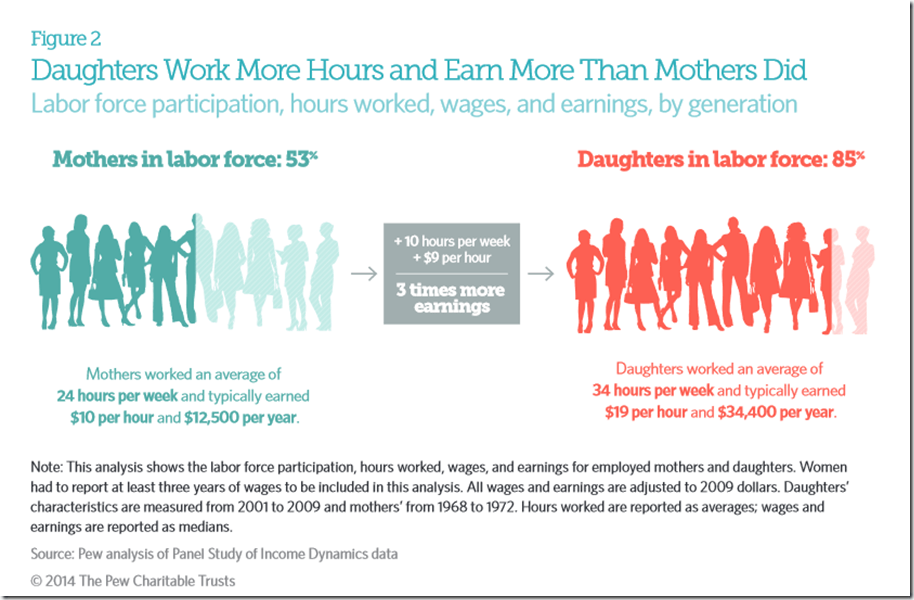
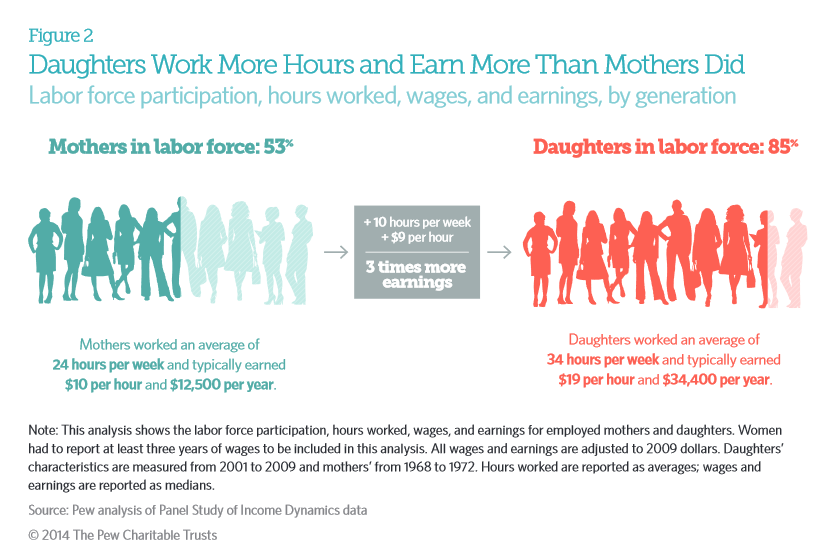
In the late 1960s and early 1970s, slightly more than half of all mothers were in the labour force. These women worked, on average, 24 hours per week for a little more than $10 per hour.
Today, 85 percent of all daughters are employed, and they work 10 additional hours per week and earn $9 more per hour.
via Women’s Work: The Economic Mobility of Women Across a Generation.
06 Jun 2015
by Jim Rose
in discrimination, gender, human capital, labour economics, labour supply, unions
Tags: gender wage gap, middle class stagnation, reversing gender gap, superstar wages, superstars, top 1%, wage stagnation
27 May 2015
by Jim Rose
in discrimination, economics of regulation, gender, labour economics, occupational choice
Tags: gender wage gap, maternity leave, offsetting behaviour, The fatal conceit, The pretence to knowledge, unintended consequences
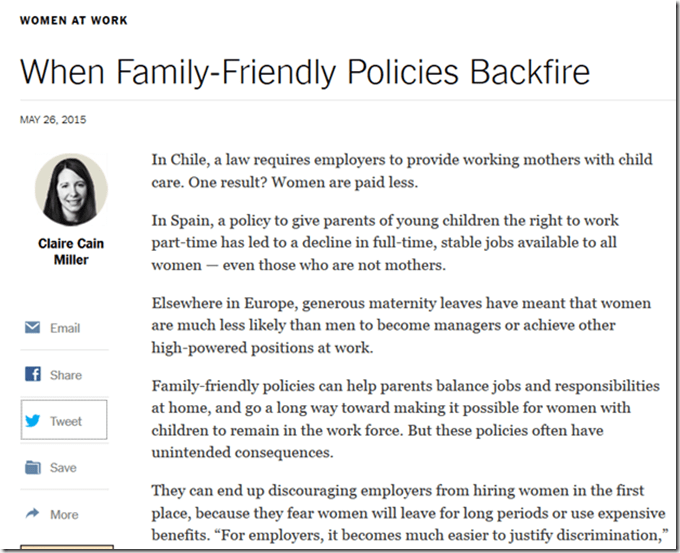
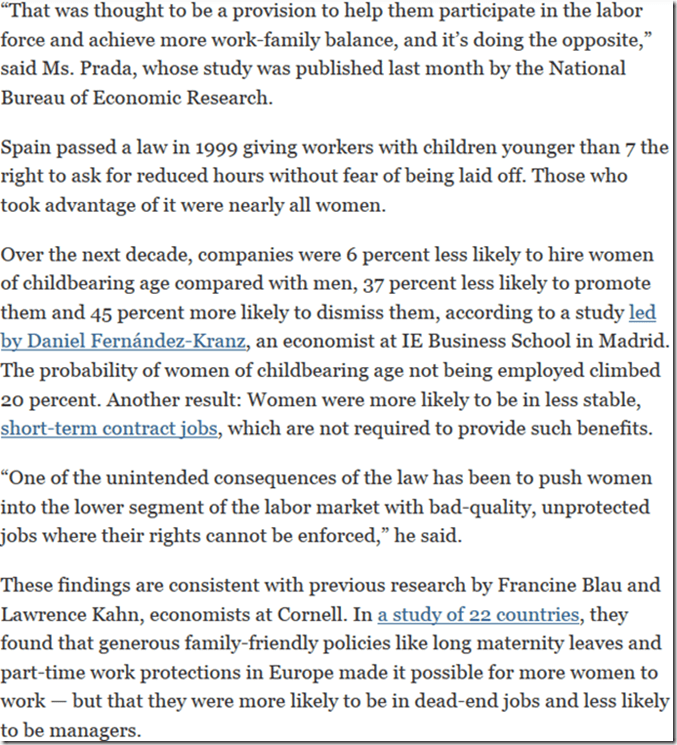
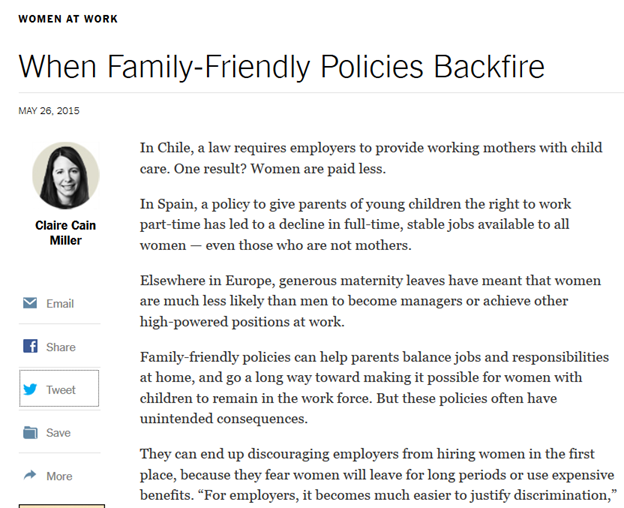
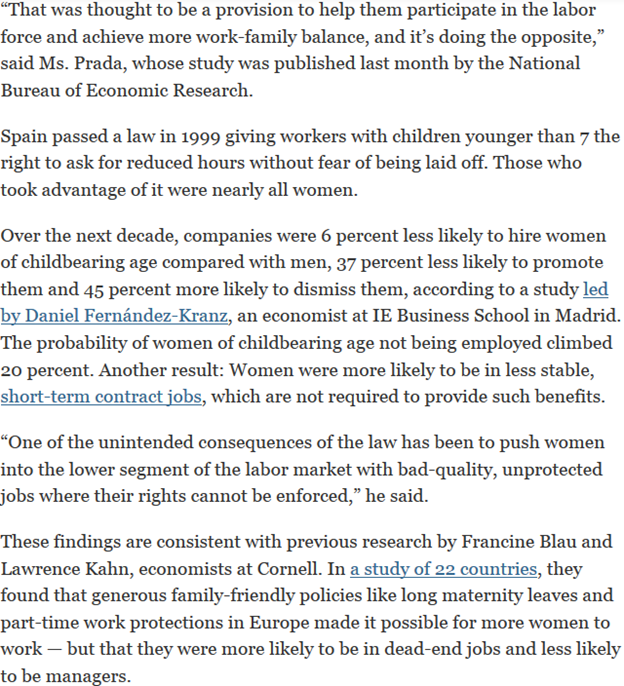
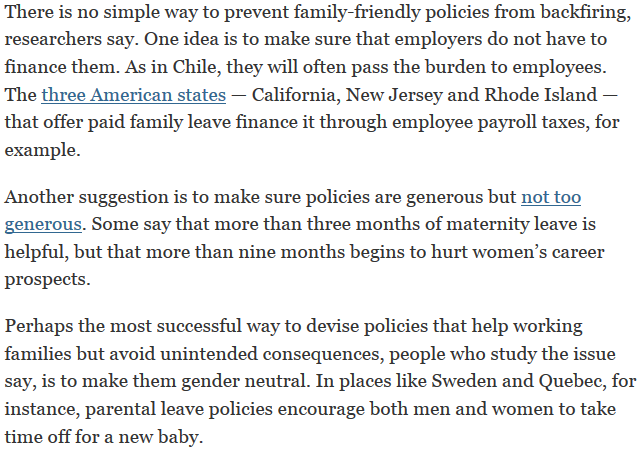
The best part of the article is its frank admission about how bare the cupboard is in dealing with the impact of generous maternity leave on the gender gap. Maternity leave should not be too generous, should not be paid by employers but by taxpayers, and should extend to both men and women.
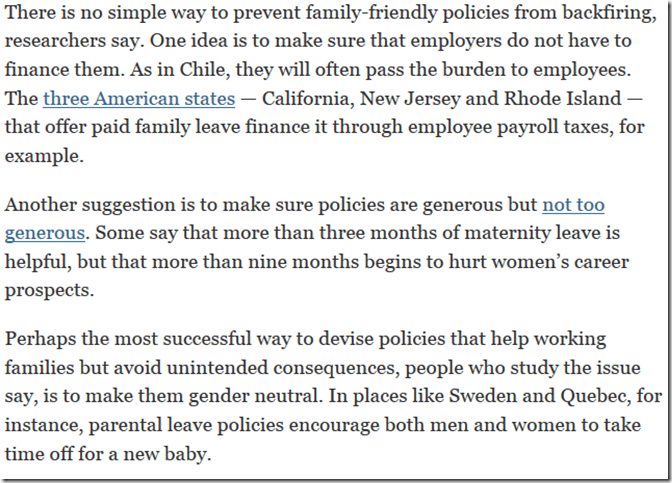
via When Family-Friendly Policies Backfire – NYTimes.com.
25 May 2015
by Jim Rose
in discrimination, economics of love and marriage, gender, human capital, labour economics, labour supply, occupational choice, poverty and inequality, welfare reform
Tags: assortative mating, child poverty, economics of family, family poverty, marriage and divorce, single parents, social mobility, welfare reform
14 May 2015
by Jim Rose
in discrimination, economics of love and marriage, gender, human capital, labour economics, occupational choice, politics - USA
Tags: asymmetric marriage premium, do gooders, economics of families, gender wage gap, maternity leave, Sweden, The fatal conceit, unintended consequences
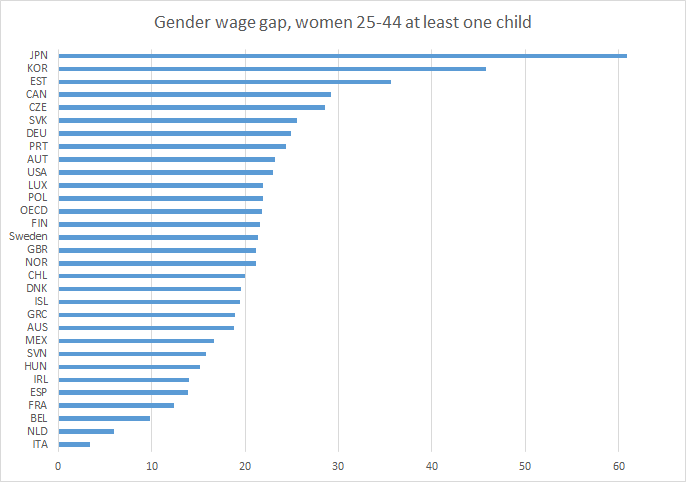
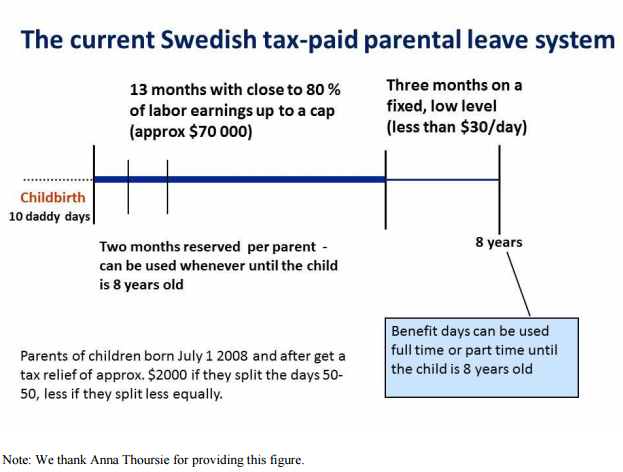
The gender wage gap is no better than the OECD average, despite generous maternity and paternity leave. What gives?
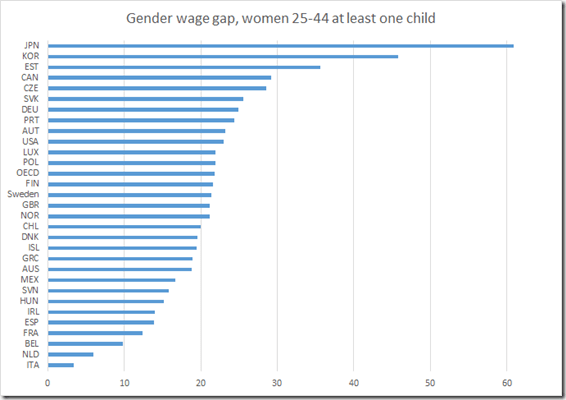
Source: Closing the gender gap: Act now – http://dx.doi.org/10.1787/9789264179370-en
One important question is whether government policies are effective in reducing the gap. One such policy is family leave legislation designed to subsidize parents to stay home with new-born or newly adopted children.
One of the RLE articles shows that for high earners in Sweden there is a large difference between the wages earned by men and women (the so-called “glass ceiling”), which is present even before the first child is born. It increases after having children, even more so if parental leave taking is spread out.
These findings suggest that the availability of very long parental leave in Sweden may be responsible for the glass ceiling because of lower levels of human capital investment among women and employers’ responses by placing relatively few women in fast-track career positions. Thus, while this policy makes holding a job easier and more family-friendly, it may not be as effective as some might think in eradicating the gender gap.
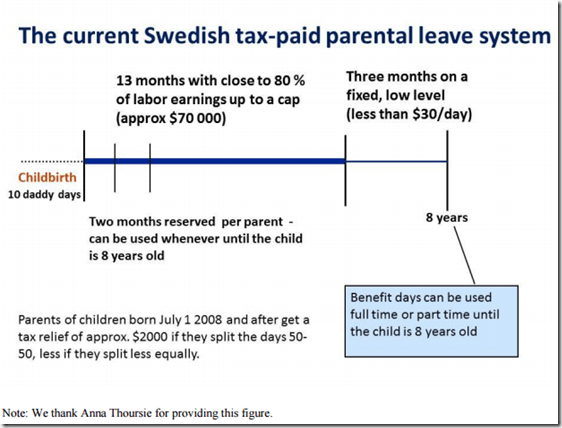
via New volume on gender convergence in the labour market | IZA Newsroom.
12 May 2015
by Jim Rose
in discrimination, gender, human capital, labour economics, politics - New Zealand, unions
Tags: employer discrimination, gender wage gap, gender wage gap discrimination, government discrimination, New Zealand Greens, sex discrimination
The unions representing public servants and the Green Party are very excited about the gender wage gap this week. So much so that the public service union presented the Treasury with an invoice for that wage gap in the public sector of 14.1%.
Oddly enough, despite their concerns with the gender wage gap in the public service, the public service unions are stridently against both privatisation and contracting out.
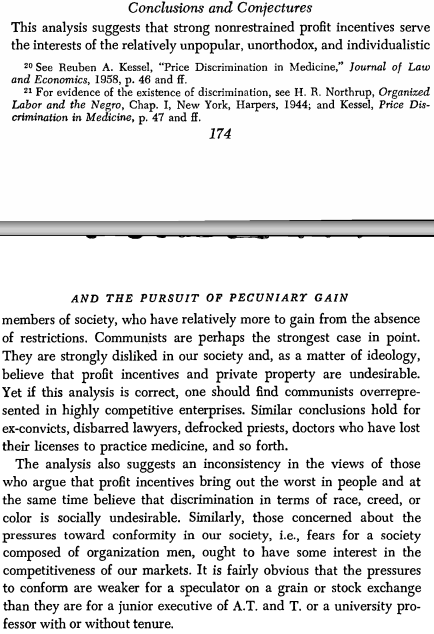
It is almost trite to note is that one of the earliest analytical results in the labour economics of discrimination was that profit maximising employers are much less likely to discriminate than firms that are not subject to a profit and loss constraint and the discipline of bankruptcy.
A prejudiced employer pays a wage above the competitive wage to attract the particular recruits he or she is prejudiced in favour of and does not hire enough workers because he must pay higher wages. This results in lower output and profits than without discrimination.
Bureaucrats can indulge their prejudices without putting the survival of their business in jeopardy. Entrepreneurs who don’t hire on merit risk running out of going out of business because their costs are hire and their businesses less productive.
…market mechanisms impose inescapable penalties on profits whenever for-profit enterprises discriminate against individuals on any basis other than productivity. Though bigoted managers may hold sway for a time, in the long run the profit penalty makes profit-seeking enterprises tenacious champions of fair treatment.
Early examples of the greater propensity for discrimination in the public sector and non-profit organisations are by Armen Alchian and Ruben Kessel in Competition, Monopoly, and the Pursuit of Money in 1962 and Gary Becker’s pioneering The Economics of Discrimination in 1957.

11 May 2015
by Jim Rose
in discrimination, gender, labour economics, labour supply, occupational choice, politics - USA, population economics
Tags: gender wage gap
1. Today’s working women (henceforth described as “daughters”) have higher wages than their mothers – but do not have higher wages than their fathers. Men have higher wages than both their fathers and their mothers.
2. The poorest women are doing best. 80% of daughters raised in the bottom quintile have higher wages than their fathers did. (h/t Scott Winship)
3. “Men’s wages remain more important to increasing couples’ family income,” despite “women’s significant generational gains” …
4. Women who grew up in households where their mother did not work actually have the highest family incomes today—but not because they themselves earn more. Daughters’ individual incomes do not vary significantly by mother’s work status, but family income does—suggesting that daughters whose mothers didn’t work have higher earning husbands. (Catherine Rampell discovered this by asking Pew to split out their analyses by mothers’ labor choices.) Perhaps those raised in more traditional settings are more likely to replicate a traditional division of labor?

via via Women and Social Mobility: Six Key Facts | Brookings Institution.
Previous Older Entries Next Newer Entries



Recent Comments