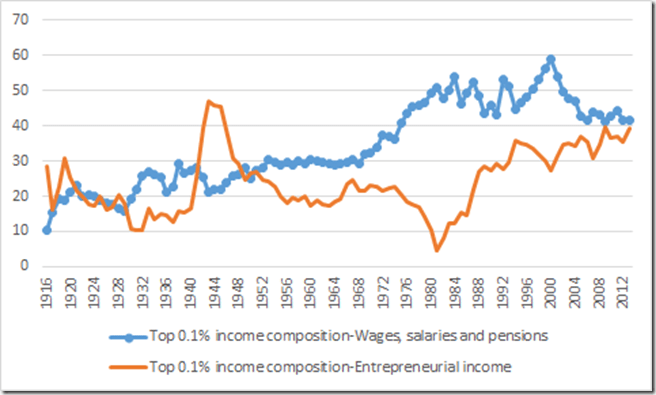
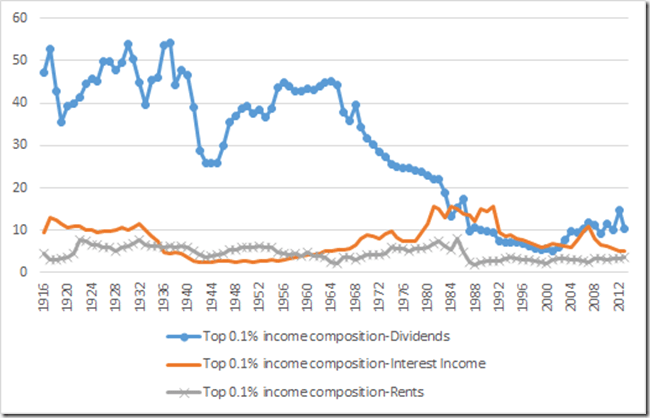
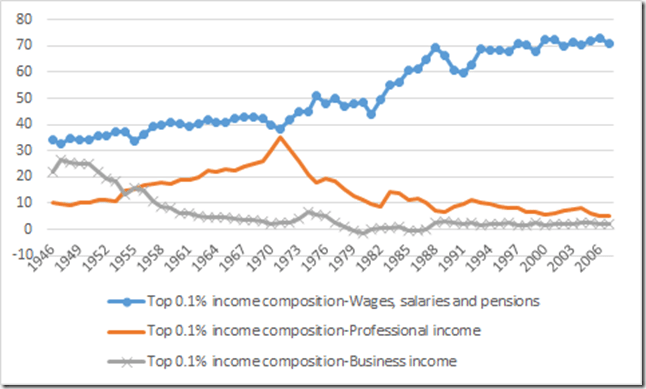
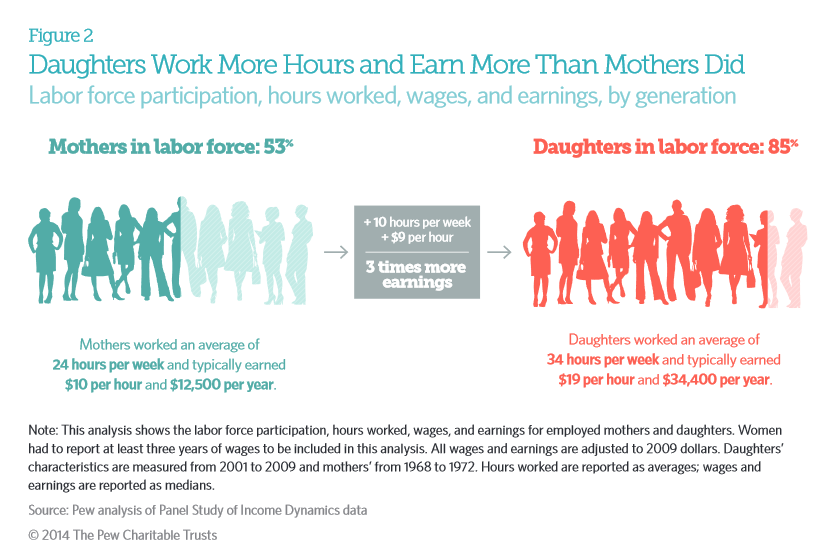
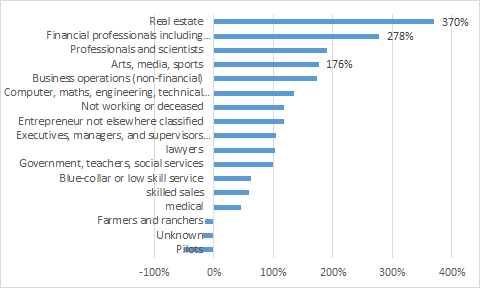
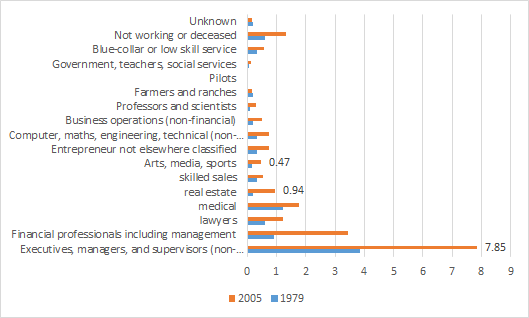
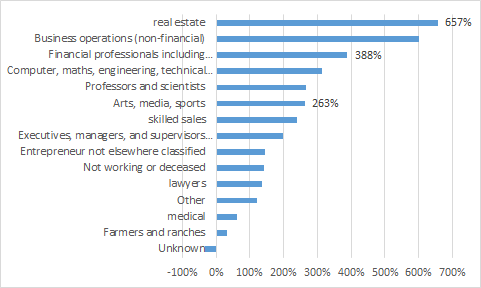
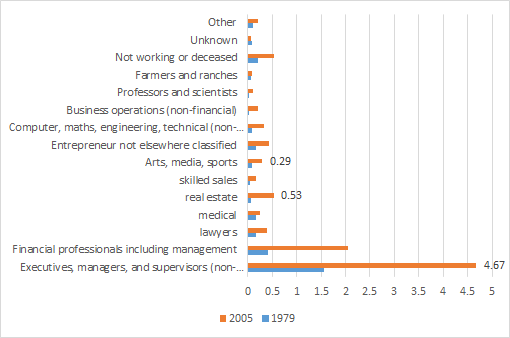
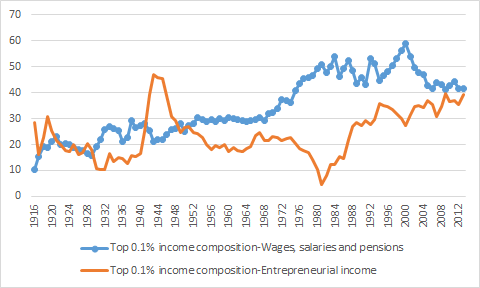
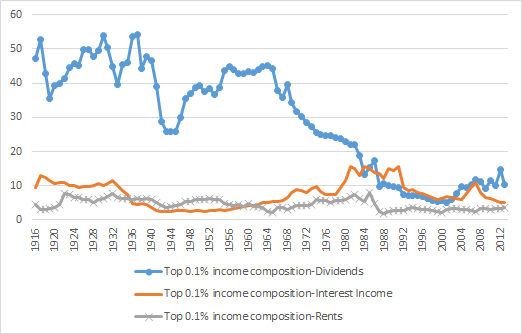
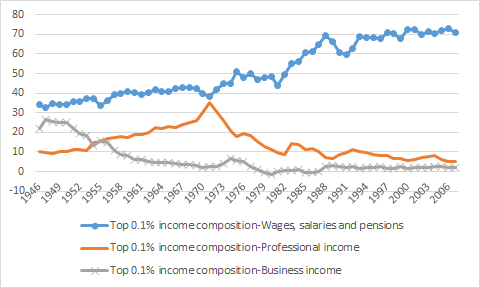
#Dailychart: Sex and money: How women's equality increases wealth inequality. econ.st/1kCYG1R http://t.co/dfrYJs4vBs—
The Economist (@ECONdailycharts) February 13, 2014
What is assortative mating?
02 May 2015 Leave a comment
in discrimination, economics of education, economics of love and marriage, gender, human capital, labour economics, labour supply, law and economics, occupational choice Tags: assortative mating
The gender wage gap reverses at below 40 hours a week
30 Apr 2015 Leave a comment
in discrimination, gender, human capital, labour economics, labour supply Tags: gender wage gap
New Zealand does an excellent job in attracting skilled migrants
29 Apr 2015 Leave a comment
in human capital, labour economics, labour supply, politics - Australia, politics - New Zealand, politics - USA Tags: economics of immigration
Migrants (esp. new ones) to UK more likely to have tertiary education than migrants to Australia [OECD[ http://t.co/xfOSQmiCxd—
Jonathan Portes (@jdportes) March 05, 2015
Why is the rapid closing of the gender wage gap in New Zealand not celebrated more?
27 Apr 2015 1 Comment
in discrimination, gender, human capital, labour economics, labour supply, occupational choice, politics - New Zealand Tags: activists, do gooders, gender wage gap, Left-wing hypocrisy, Leftover Left
With the rapid closure in the raw female male wage gap in New Zealand over the last 15 or so years, the lack of celebration of this achievement among equal pay activists is puzzling.
Source: Statistics New Zealand, New Zealand Social indicators, Median hourly earnings.
The economic and educational psychology case against making Te reo Māori compulsory in NZ schools
23 Apr 2015 1 Comment
in discrimination, economics of education, human capital, labour economics, politics - USA, poverty and inequality Tags: do gooders, economics of languages, Maori economic development, network economics, Te reo Māori
The Race Relations Commissioner Dame Susan Davoy has called for Te Reo Māori to be compulsory in New Zealand schools. She said being bilingual would be “a real added advantage” to young Kiwis and more people knowing Te reo Māori would help race relations.
Learning another language is not a priority for the Pākehā children or Māori mokupuna when you consider the poor literacy rates among Māori, Pasifika and Pākehā. The priority for children in an English speaking country is to master English. Too many children leave school with inadequate reading and writing skills.
Figure 1: Prose literacy by ethnicity, 2011
Source: Literacy skills of young adult New Zealanders | Education Counts.
Lower levels of literacy and numerously are much higher among Māori and Pasifika children. Pākehā consistently having a larger proportion in the higher levels of prose literacy.
Figure 2: Prose literacy rates by ethnicity, 1996 and 2006
Source: Indicator 9: Literacy rates — Office of the Auditor-General New Zealand.
60%of Pākehā are above the minimum level of competence to meet the prose literacy requirements of a knowledge society. This contrasts with the majority of Māori and Pasifika who are below the minimum level of competence.
Furthermore, requiring children who do not have an aptitude for language or school in general to learn a language will reinforce in those who are not doing well that they are not very smart. This will give them more reasons to hate school and leave as soon as possible and never go back.
The key to helping children who do not have an aptitude to succeed greatly at school is to find the subjects where they do do well so they can get a good start to life. If students are not good at academic subjects, requiring them to do more academic studies such as study language is fool-hardy.
Taking resources, and more importantly, students learning time away from basic literacy skills will do little for a Māori economic development and race relations. This is because this taking resources and student learning time away from literacy and basic education will slow the closing of income gaps between Māori and others.
Language is a network good. It pays to join the largest network so you can communicate and do business with more people. The wage premium for immigrants learning English in English-speaking’s countries is about 15%.
Learning Te reo Māori will not help children in their other subjects. The psychology of the transfer of learning was founded 100 years ago to explore the hypothesis that learning Latin gave the student muscle to learn other subjects, both other languages and generally learn faster.
Educational psychologists found that Latin does not help much in studying other languages and other subjects. No significant differences were found in deductive and inductive reasoning or text comprehension among students with 4 years of Latin, 2 years of Latin or no Latin at all.
The reversed college gender gap
23 Apr 2015 Leave a comment
in discrimination, economics of education, gender, human capital, labour economics, labour supply, occupational choice Tags: gender wage gap reversed gender gap
CHART: The Huge College Degree Gender Gap: Since 1982, Women Have Earned ~10M MORE US College Degrees Than Men! http://t.co/83JhRfwCLE—
Mark J. Perry (@Mark_J_Perry) March 11, 2015
How people with different incomes spend money
22 Apr 2015 Leave a comment
in human capital, labour economics, labour supply, poverty and inequality Tags: labour demographics
How people with different incomes spend money trib.al/PMtRkSy via @TheAtlantic http://t.co/JeemS9s7oJ—
(@CityLab) April 08, 2015
The social cost of high company tax rates is just too high
22 Apr 2015 Leave a comment
in economic growth, fiscal policy, human capital, income redistribution, labour economics, macroeconomics, Public Choice Tags: company tax rate, entrepreneurial alertness, tax reform
Should everybody go to college? Could everybody go to college?
22 Apr 2015 Leave a comment
in economics of education, human capital, labour economics, labour supply, occupational choice Tags: College premium, economics of personality traits, education premium, IQ
But why would girls want to sit in a corner playing chess?
20 Apr 2015 Leave a comment
in economics of education, human capital, labour economics, occupational choice Tags: chess, economics of personality traits, lost boys, reversing gender gap
For a logical thinker, chess grandmaster Nigel Short missed the obvious move. Teenage girls have better things to do with their talents and in particular their superior reading skills than gaze over a chess board.
The 30 point advantage that 15-year-old girls have in reading scores in the PISA test – see the chart below – is equal to an extra six months schooling. Six months extra schooling explains many a gender and ethnic wage gap.

Having being a member of a few chess clubs, and run chess clubs and large chess tournaments, there are an unusual number of oddballs, eccentrics and mentally ill people who play chess.

The systematic evidence of a greater incidence of learning disorders, Asperger’s syndrome as well is bipolar disorders among teenage boys all encourage teenage boys to focus on chess if only to give an outlet to their obsessive behaviours.

It is for the same reason that socially awkward teenage boys may be attracted to computer programming if they have various obsessional disorders.
Who-d a-Thunk It? The new OECD Report on 15-Year Olds in 60+ Countries Finds Significant Gender Differences? http://t.co/X2rGVygPwF—
Mark J. Perry (@Mark_J_Perry) March 11, 2015
Post-School human capital investments come in many forms
20 Apr 2015 Leave a comment
in economics of education, human capital, industrial organisation, labour economics, labour supply, minimum wage, occupational choice, personnel economics Tags: on-the-job human capital, on-the-job training
A long-standing anomaly about racial discrimination in the labour market
19 Apr 2015 Leave a comment
in discrimination, human capital, labour economics, labour supply, occupational choice Tags: co-worker discrimination, customer discrimination, employer discrimination, labour market discrimination, racial discrimination
CHART: Asians Make 15% More Than Whites, Is That Because of 'Asian Privilege' or Discrimination Against Whites? http://t.co/9YnkDDrcbO—
Mark J. Perry (@Mark_J_Perry) March 19, 2015
50% more R&D since the 60s, but still no growth dividend?
18 Apr 2015 1 Comment
in applied price theory, economic growth, economics of education, entrepreneurship, history of economic thought, human capital, industrial organisation, macroeconomics, occupational choice, survivor principle Tags: Ben Jones, Chad Jones, creative destruction, endogenous growth theory, innovation, R&D
Spending on intellectual property products has risen in the USA from 1% in 1950 to 5% now. Public R&D spending in the USA has been pretty static for 60 years. Intellectual property products in the chart below includes traditional research and development, spending on computer software, and spending on entertainment such as movies, TV shows, books, and music. Spending on software and entertainment was only recently measured in the US national accounts. This inclusion of intangible capital investments will radically change the story of economic growth and the business cycle in the 20th century.
Source: Chad Jones (2015).
The growth rate in the USA hasn’t changed much despite this massive increase in intellectual property property product production. Is innovation getting harder? R&D is supposed to boost the growth rate, if you are to believe politicians bearing subsidies for it wherever they find it.
Source: Chad Jones (2015).
Ben Jones in The Burden of Knowledge and the Death of the Renaissance Man: Is Innovation Getting Harder? found that as knowledge accumulates as technology advances, successive generations of innovators may face an increasing educational burden. Innovators can compensate through lengthening their time in education and narrowing expertise, but these responses come at the cost of reducing individual innovative capacities. This has implications for the organization of innovative activity – a greater reliance on teamwork – and has negative implications for economic growth.
This longer period of education and initial study is not compensated by inventors innovating for longer spans of their lifestyle. This rising burden of knowledge is cutting into their best years of their lives. Jones found a broad and dramatic declines in early life-cycle productivity among great minds and ordinary inventors, and a close relationship of these trends with increased training duration.
Jones found that the age at first invention, specialisation, and teamwork increased over time in a large micro-data set of inventors. Upward trends in academic collaboration and lengthening doctorates can also be explained in his framework of innovation getting harder because of a rising burden of knowledge. Co-authorship in academic literature has increased, including physics, biology, chemistry, mathematics, psychology, and economics. This measure of teamwork has increased 17% per decade.
Using data on Nobel Prize winners, Jones found that the mean age at which the innovations are produced to win the Prize has increased by 6 years over the 20th Century.
- Before 1901, two-thirds of the Nobel laureates did their prize-winning work before the age of 40 and 20 per cent did it before age of 30.
- By 2000, however, great achievements seldom occurred before the age of 40.
It’s now taking longer for scientists to get their basic training and start their careers. There is simply more to learn because knowledge in all fields has grown by quantum leaps in the past century. Nobels are being handed out for different types of work than a century ago.
- There has been a trend away from awarding prizes for abstract, theoretical ideas.
- Now more honours are being bestowed on people who have made discoveries through painstaking lab work and experimentation – which takes a lot of time to do.
Jones’ theory provides an explanation for why productivity growth rates did not accelerate through the 20th century despite an enormous expansion in collective research effort and levels of education and many more graduates. Innovation is getting harder?
There are big differences in educational attainment across Europe
16 Apr 2015 Leave a comment
in economics of education, human capital, labour economics, occupational choice Tags: educational attainment, Eurosclerosis
Ireland has the highest share of highly qualified 30-34 year olds in the EU http://t.co/LhZMvYcgj5—
Guardian Data (@GuardianData) September 26, 2014


Recent Comments