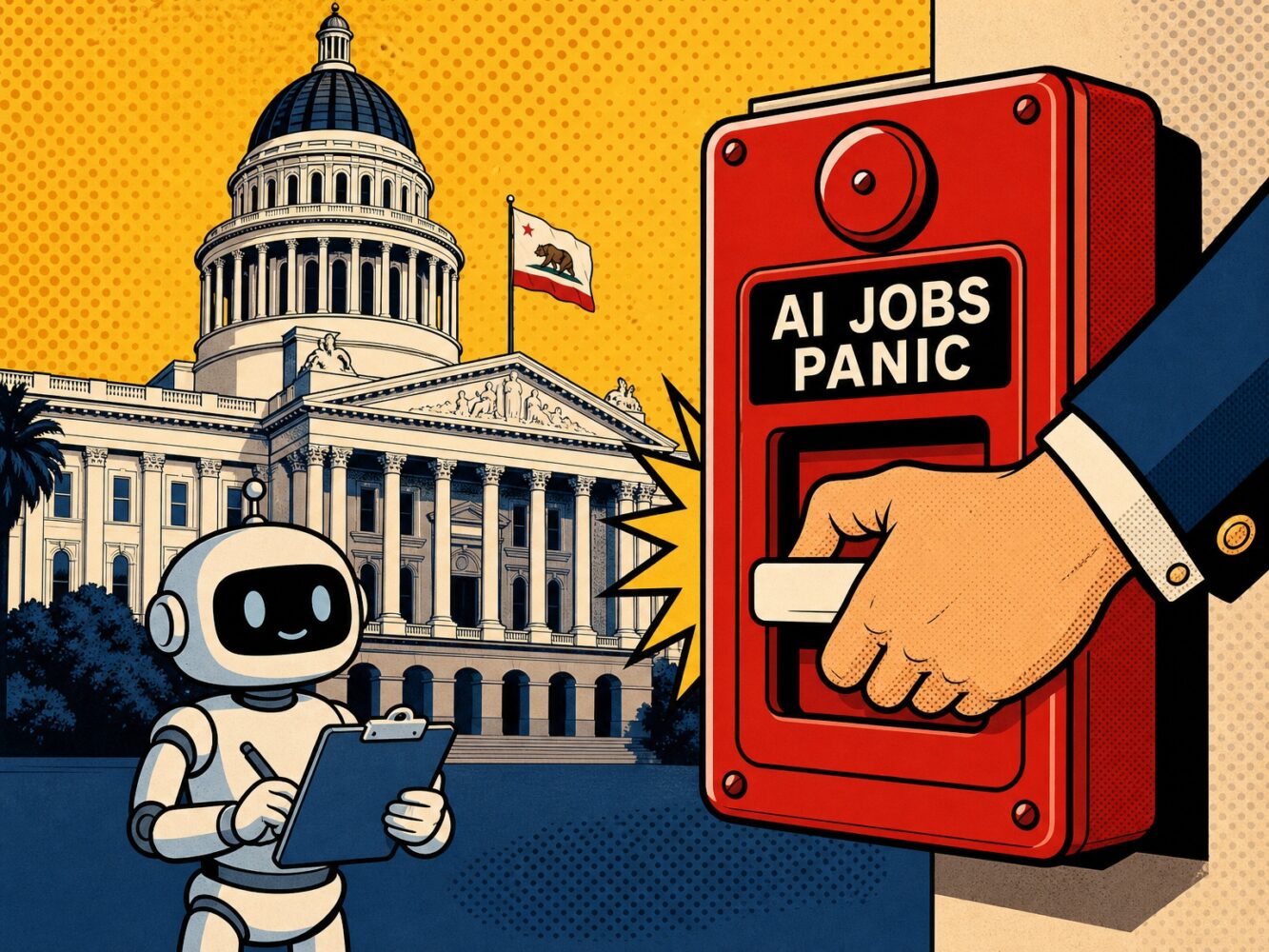
California has seen the future of work, and Sacramento’s first instinct is to convene 14 task forces about it. Gov. Gavin Newsom signed Executive Order N-6-26 today, setting California’s workforce agencies in motion on directives involving research reviews, revisions to the state’s Worker Adjustment and Retraining Notification (WARN) Act, studies of new safety-net programs, a…
We do not know whether technological unemployment swept across England in the wake of the British Industrial Revolution. In this paper, I propose an approach to quantify jobs lost to, and created by, creative destruction in the 19th century. Using over 170 million individual records from the full-count British census (1851–1911), I generate sub-industry “task”…
Tim Sablik of the Richmond Fed interviews “Ellen McGrattan: On measuring what businesses do, developing effective tax policy, and searching for answers beyond the lamppost” (Econ Focus: Federal Reserve Bank of Richmond, First/Second Quarter 2026). Here are a few of the comments that caught my eye: How did McGrattan become interested in business cycles? In…
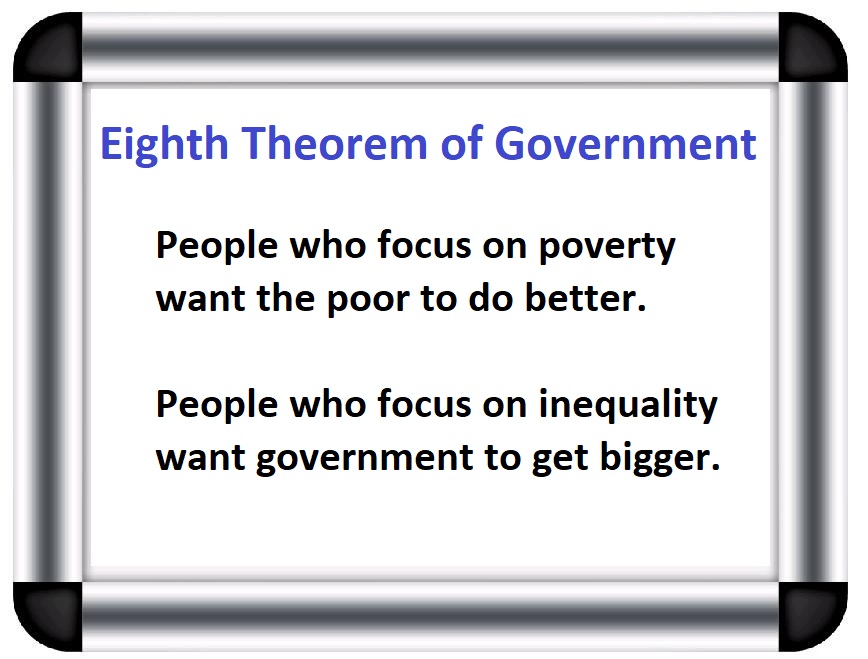
I created the 8th Theorem of Government because it’s important to distinguish between people who want to help the poor and people who want to punish the rich. The former group has good motives while the latter group has ignoble motivations. Envy (common among the leftist intelligentsia) Public choice (common among leftist politicians) Zero-sum illiteracy […]
Bob Edlin writes – The Green Party has brought its promotion of diversity into question by deciding not to select a former sex worker as a candidate. It denies the decision has nothing to do with her background but has not explained why she did not pass muster with the party big-wigs who make these […]
See He Earns $1,000 a Job—and He’s a Car Dealer’s Worst Nightmare: With car prices soaring, one man deploys dealer speak to talk down the sticker price on behalf of buyers by Imani Moise of The WSJ.What if you don’t like haggling over the price of a car? Would you hire someone to do the haggling…
After Claudia Goldin became the first woman to win a solo Nobel in economics in 2023, she received hundreds of invitations and requests. She accepted just three. One of them was advising the WNBA players union as the women prepared to negotiate a new labor deal with the league. When Goldin replied via email to Terri Carmichael Jackson,…
Susan Hornsby-Geluk writes: Among the most controversial aspects of the recently enacted Employment Relations Amendment Act 2026 is the introduction of a high-income threshold for personal grievance claims. Under the new provisions, employees earning $200,000 or more in annual remuneration will lose the right to bring a personal grievance for unjustified dismissal, or an unjustified…
The Medical Council has proposed a statement on cultural competence that is basically a political litmus test. It is outrageous overreach, and an example of why Parliament needs to rein in all these regulatory bodies. No one would object to a statement that doctors must be respectful of all cultures and beliefs, while undertaking their…
In 2017, I analyzed the Uber Tipping Equilibrium: What is the effect of tipping on the take-home pay of Uber drivers? Economic theory offers a clear answer. Tipping has no effect on take home pay. The supply of Uber driver-hours is very elastic. Drivers can easily work more hours when the payment per ride increases…
In the United States, much of the gap in earnings between men and women is due to the persistent gap for high wage earners. This paper explores changes in the gender wage gap for MBAs graduating from a large public university over 30 years. We document large gender wage gaps on average, which grow in…
In Japan, you see native-born East Asians doing menial jobs everywhere you look. You see Japanese janitors, Japanese street-sweepers, Japanese convenience store workers, Japanese crossing guards, Japanese taxi drivers, and Japanese laborers on construction sites. 904 more words
Nine years ago, I critically analyzed the Cohen-Friedman debate on means-testing Social Security. Only recently, though, did I find the original footage from 1971. As far as I know, this is the first time that any prominent social scientist made the “A program only for the poor will always be a poor program” argument that…
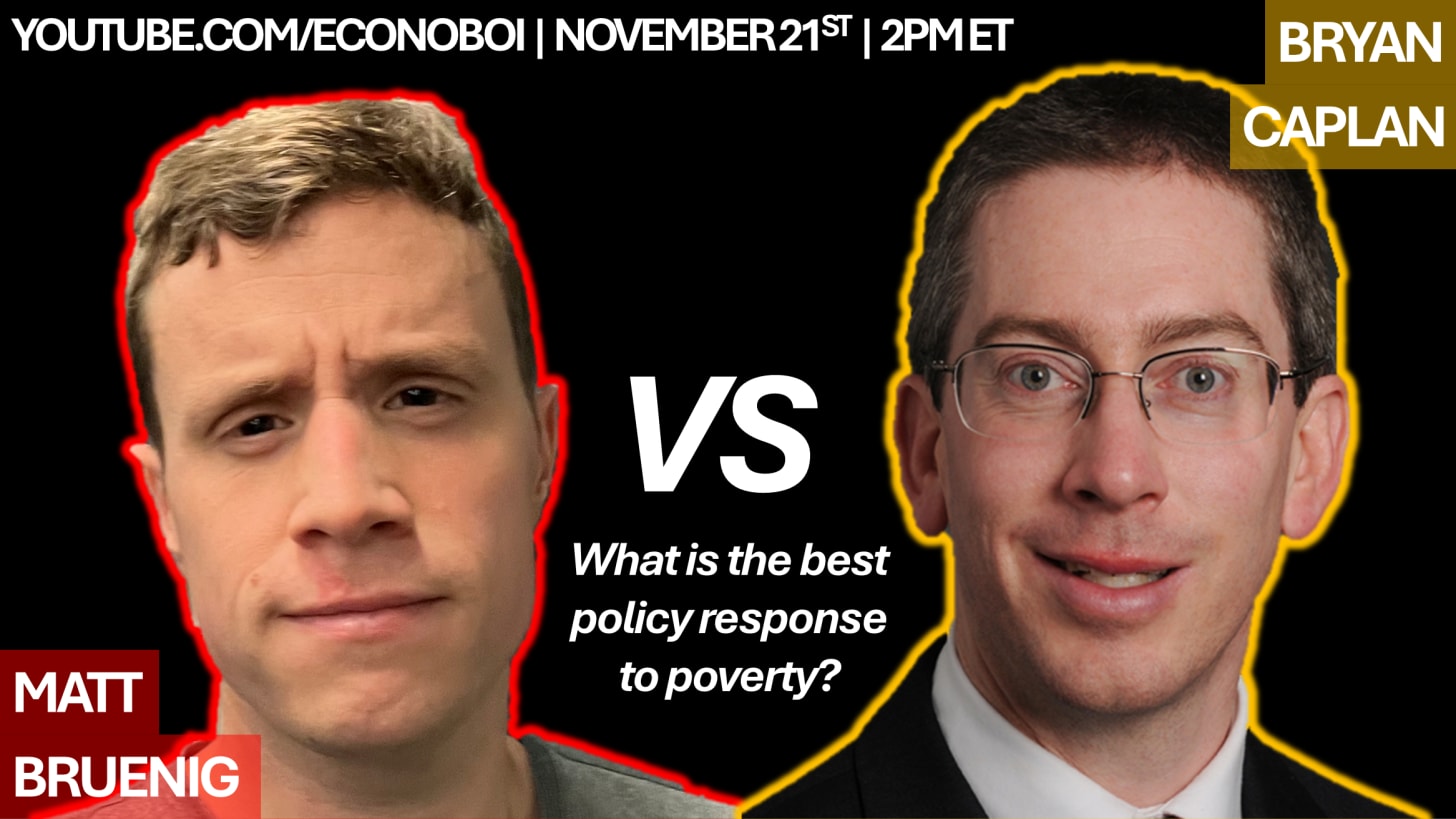
Tomorrow at 2 PM ET, I’ll be debating “What is the best policy response to poverty?” versus Matt Bruenig. Venue: Econoboi channel P.S. You might recall that… 9 more words
The Supreme Court has ruled that four Uber drivers are employees of Uber, despite written agreements they are contractors, not employees. The practical effect of this decision is terrible. Uber has been great for passengers. Not only can we hold drivers to account through ratings, we save a lot of money. An Uber to the…
Why Evolution is True is a blog written by Jerry Coyne, centered on evolution and biology but also dealing with diverse topics like politics, culture, and cats.
In Hume’s spirit, I will attempt to serve as an ambassador from my world of economics, and help in “finding topics of conversation fit for the entertainment of rational creatures.”



Recent Comments