Chris Trotter writes – What does India want from New Zealand? Not our dairy products, that’s for sure, it’s got plenty of those. Indeed 45 percent of the Indian population are small-scale farmers, most of them running a few head of cattle – not to eat, you understand – but to milk. If it once […]
What does India want – and what is New Zealand willing to give?
What does India want – and what is New Zealand willing to give?
25 Mar 2025 Leave a comment
in applied price theory, comparative institutional analysis, development economics, economic history, economics of education, growth disasters, growth miracles, human capital, income redistribution, industrial organisation, international economic law, international economics, labour economics, labour supply, occupational choice, politics - New Zealand, poverty and inequality, Public Choice, rentseeking, survivor principle Tags: India, preferential trade agreements
The curse of knowledge
25 Mar 2025 1 Comment
in economics of education, health and safety, human capital, occupational choice Tags: cognitive psychology, educational psychology
The curse of knowledge is a cognitive bias that occurs when someone, possessing knowledge or expertise on a particular topic, struggles to imagine or communicate with others who lack the same understanding or information. Essentially, once we know something, it’s very hard to imagine what it’s like not to know it. How it manifests: Why it happens: […]
The curse of knowledge
Book Nook Reading Notes on *Selfish Reasons to Have More Kids*
22 Mar 2025 Leave a comment
in economics of crime, economics of education, human capital, labour economics, labour supply, law and economics, occupational choice, poverty and inequality Tags: College premium, signaling
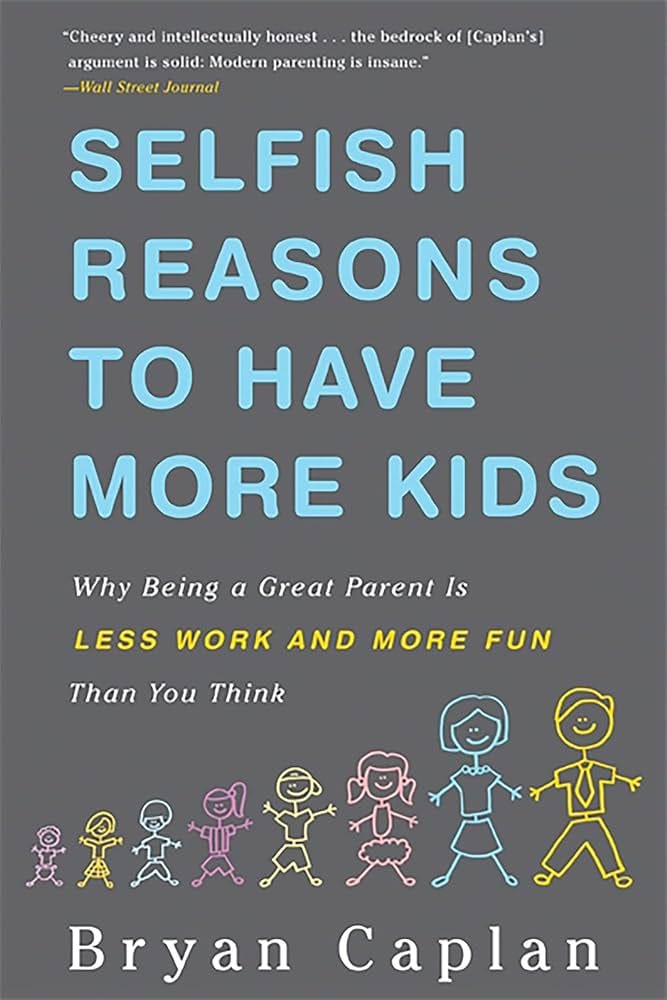
Bet On It reader Dan Barrett wrote these notes for his Book Nook book club on my Selfish Reasons to Have More Kids: Why Being a Great Parent Is Less Work and More Fun Than You Think. Dan’s idea:I’m organizing reading groups packaged as the Book Nook to help colleagues (1) guide their own learning…
Book Nook Reading Notes on *Selfish Reasons to Have More Kids*
University of Chicago updates equal-opportunity statement for job ads
20 Mar 2025 Leave a comment
in discrimination, economics of education, gender, human capital, labour economics, labour supply, occupational choice, politics - USA Tags: 2024 presidential election, affirmative action, free speech, political correctness, racial discrimination, regressive left, sex discrimination
This announcement came from our Provost’s office, but apparently hasn’t been sent to all parts of the University. Nevertheless, it surely applies to all job ads for the University of Chicago. What it shows is that the University has updated its Equal Employment Opportunity statement, a statement that must be included in all ads for […]
University of Chicago updates equal-opportunity statement for job ads
Greens think prisoners are the victims!
19 Mar 2025 Leave a comment
in economics of crime, labour economics, law and economics, occupational choice, politics - New Zealand Tags: crime and punishment, criminal deterrence, law and order, regressive left
David Farrar writes – The Herald reported: The Greens’ Tamatha Paul has expressed “regret” about a claim she made on social media that the “vast majority” of people in prison are there for non-violent offences that they’ve “had to do as a response to poverty”. Police and Corrections Minister Mark Mitchell has described comments in her video as “total nonsense” and an […]
Greens think prisoners are the victims!
My Former Economics MPhil and DPhil Class-Mate for many hard years, Mark Carney, becomes PM of Canada.
10 Mar 2025 Leave a comment
in business cycles, economic history, economics of bureaucracy, economics of education, history of economic thought, human capital, inflation targeting, labour economics, labour supply, macroeconomics, monetary economics, occupational choice, politics - New Zealand, Public Choice Tags: Canada, monetary policy
Congratulations Mark Carney. When I went to the UK to study economics, we started off doing a degree called Master of Philosophy in…
My Former Economics MPhil and DPhil Class-Mate for many hard years, Mark Carney, becomes PM of Canada.
The Licensing Racket
08 Mar 2025 Leave a comment
in applied price theory, economics of bureaucracy, entrepreneurship, human capital, income redistribution, industrial organisation, labour economics, labour supply, law and economics, occupational choice, occupational regulation, property rights, Public Choice, rentseeking
I review a very good new book on occupational licensing, The Licensing Racket by Rebecca Haw Allensworth in the WSJ. Most people will concede that licensing for hair braiders and interior decorators is excessive while licensing for doctors, nurses and lawyers is essential. Hair braiders pose little to no threat to public safety, but subpar […]
The Licensing Racket
Can Enhanced Street Lighting Improve Public Safety at Scale?
28 Feb 2025 Leave a comment
in applied price theory, econometerics, economics of crime, labour economics, law and economics, occupational choice Tags: crime and punishment, criminal deterrence, law and order
Street lighting is often believed to influence street crime, but most prior studies have examined small-scale interventions in limited areas. The effect of large-scale lighting enhancements on public safety remains uncertain. This study evaluates the impact of Philadelphia’s citywide rollout of enhanced street lighting, which began in August 2023. Over 10 months, 34,374 streetlights were […]
Can Enhanced Street Lighting Improve Public Safety at Scale?
Mandated Board Diversity Reduces Firm Value
27 Feb 2025 Leave a comment
in applied price theory, discrimination, econometerics, economics of regulation, financial economics, gender, industrial organisation, labour economics, occupational choice, politics - USA Tags: efficient markets hypothesis, sex discrimination
Jon Klick finds that when courts in CA surprisingly invalidated a set of DEI laws, the market value of firms subject to those laws increased: California mandated that firms headquartered in the state include women (SB 826) and underrepresented minorities (AB 979) on their corporate boards. These laws, passed in 2018 and 2020 respectively, were […]
Mandated Board Diversity Reduces Firm Value
Gender gap
25 Feb 2025 Leave a comment
in applied price theory, discrimination, gender, health and safety, human capital, labour economics, labour supply, occupational choice, poverty and inequality Tags: gender wage gap
Selfishly Speaking, Who Should Skip College?
20 Feb 2025 Leave a comment
in applied price theory, economics of education, economics of information, human capital, James Buchanan, labour economics, labour supply, occupational choice Tags: adverse selection, asymmetric information, College premium, signaling

The central thesis of my The Case Against Education is that actually-existing education is a terrible waste of taxpayer money. Since signaling, not building human capital, is the main function of education, the main effect of government subsidies is credential inflation. In economic jargon, my claim is that education has a low (indeed, negative) social…
Selfishly Speaking, Who Should Skip College?
Future unemployment will be (mostly) voluntary unemployment
14 Feb 2025 Leave a comment
in economics of education, human capital, labour economics, labour supply, occupational choice, politics - Australia, unemployment
A shortage of electricians means that those willing to endure long shifts and live on remote sites can potentially earn up to A$200,000 (US$124,000) a year — double the national average salary and not far off the average MP salary. “It’s a cup half full/half empty life. You do 12-hour shifts, there’s the heat, the […]
Future unemployment will be (mostly) voluntary unemployment
A negative productivity shock from working from home
08 Feb 2025 Leave a comment
in applied price theory, experimental economics, industrial organisation, labour economics, labour supply, managerial economics, occupational choice, organisational economics, personnel economics Tags: economics of pandemics
Identity-based hiring goes wild in New Zealand
05 Feb 2025 Leave a comment
in discrimination, economic history, economics of education, human capital, labour economics, labour supply, law and economics, liberalism, Marxist economics, occupational choice, politics - New Zealand, property rights, Public Choice, public economics, rentseeking Tags: affirmative action, Age of Enlightenment, constitutional law, free speech, political correctness, racial discrimination, regressive left

Just to show you how, in the hiring process, New Zealand gives much more weight to identity than to merit, I enclose part of the job description for the position of Chief Operating Officer of Wellington Water, the water utility for the Greater Wellington region (Wellington, a lovely city, is the capital of New Zealand). […]
Identity-based hiring goes wild in New Zealand
The Child Penalty: An International View
03 Feb 2025 Leave a comment
in applied price theory, discrimination, econometerics, economics of education, gender, human capital, labour economics, labour supply, occupational choice Tags: economics of fertility, gender wage gap, marriage and divorce

It’s well-known that when a couple has a child, the average woman experiences a “child penalty” in labor market outcomes, while outcomes for the man are largely unchanged. For a discussion of this pattern using US data, here’s an article by Jane Waldfogel from back in 1998 in the Journal of Economic Perspectives. As that…
The Child Penalty: An International View


Recent Comments