In India, government jobs pay far more than equivalent jobs in the private sector–so much so that the entire labor market and educational system have become grossly distorted by rent seeking to obtain these jobs. Teachers in the public sector, for example, are paid at least five times more than in the private sector. It’s […]
Massive Rent-Seeking in India’s Government Job Examination System
Massive Rent-Seeking in India’s Government Job Examination System
03 Jul 2025 1 Comment
in applied price theory, development economics, economics of bureaucracy, economics of education, growth disasters, growth miracles, labour economics, occupational choice, personnel economics, Public Choice Tags: India
“An Evolving Economic Force,” A Conversation with Claudia Goldin
03 Jul 2025 Leave a comment
in applied price theory, discrimination, econometerics, economic history, gender, health and safety, human capital, labour economics, labour supply, occupational choice, poverty and inequality Tags: gender wage gap, sex discrimination
The gender wage gap uses bogus statistics | FACTUAL FEMINIST
02 Jul 2025 Leave a comment
in applied price theory, discrimination, econometerics, economics of regulation, gender, health and safety, human capital, income redistribution, labour economics, labour supply, occupational choice, politics - USA, Public Choice Tags: gender wage gap, sex discrimination
What Explains Growing Gender and Racial Education Gaps?
16 Jun 2025 Leave a comment
in applied price theory, discrimination, econometerics, economic history, economics of love and marriage, gender, human capital, labour economics, labour supply, law and economics, occupational choice, poverty and inequality Tags: gender wage gap, racial discrimination, sex discrimination
In the 1960 cohort, American men and women graduated from college at similar rates, and this was true for Whites, Blacks and Hispanics. But in more recent cohorts, women graduate at much higher rates than men. Gaps between race/ethnic groups have also widened. To understand these patterns, we develop a model of individual and family […]
What Explains Growing Gender and Racial Education Gaps?
Counting the Cost
01 Jun 2025 Leave a comment
in applied price theory, discrimination, gender, human capital, income redistribution, labour economics, labour supply, occupational choice, politics - New Zealand, poverty and inequality, Public Choice, rentseeking Tags: constitutional law, gender wage gap, sex discrimination
For all the gravitas which Dame Marilyn’s involvement has conferred upon PSCPE, it is important not to lose sight of the fact that it represents a deliberate attempt to morally overpower what is now the law of the land. Chris Trotter writes – The People’s Select Committee on Pay Equity (PSCPE) is looking for evidence. […]
Counting the Cost
Why the U.S. Produces More Unicorns Than China and the EU
01 Jun 2025 1 Comment
in applied price theory, comparative institutional analysis, development economics, economic history, economics of regulation, entrepreneurship, human capital, industrial organisation, labour economics, occupational choice, poverty and inequality, survivor principle Tags: creative destruction
The United States has produced about twice as many unicorns (private startups valued at $1B+) as China and more than four times as many as the European Union. These numbers reflect deep institutional and cultural advantages in the U.S. startup ecosystem. Table: Number of Unicorns Created Since ~1990 Region Cumulative Unicorns United States ~1,950 China…
Why the U.S. Produces More Unicorns Than China and the EU
The cost of Labour’s botched pay equity scheme
23 May 2025 1 Comment
in discrimination, gender, human capital, labour economics, labour supply, occupational choice, politics - New Zealand, poverty and inequality Tags: gender wage gap, sex discrimination
The Herald reports: During her Budget presentation, Willis said that pay equity costs in 2020 were initially expected to reach $3.7b but there had since been a “blowout” with costs rising steeply, especially due to Labour’s 2022 decision to fund claims in the “funded sector”. The exact figure isn’t known, but as they have announced […]
The cost of Labour’s botched pay equity scheme
Willis responds to Vance celling her a c**t
12 May 2025 Leave a comment
in discrimination, gender, health and safety, human capital, labour economics, labour supply, occupational choice, politics - New Zealand, poverty and inequality Tags: gender wage gap, sex discrimination
Nicola Willis writes: Having the C-word directed at me by a journalist in a mainstream publication wasn’t on my bingo-list for Mother’s Day 2025. Nor was being accused of “girl-math”. But there you have it, that’s what was thrown at me and my female colleagues in a recent newspaper column as hopelessly devoid of facts as it […]
Willis responds to Vance celling her a c**t
The Mainstream World Is Not Free-Market
10 May 2025 Leave a comment
in applied price theory, applied welfare economics, Austrian economics, comparative institutional analysis, constitutional political economy, economic history, economics of education, economics of regulation, history of economic thought, human capital, labour economics, occupational choice
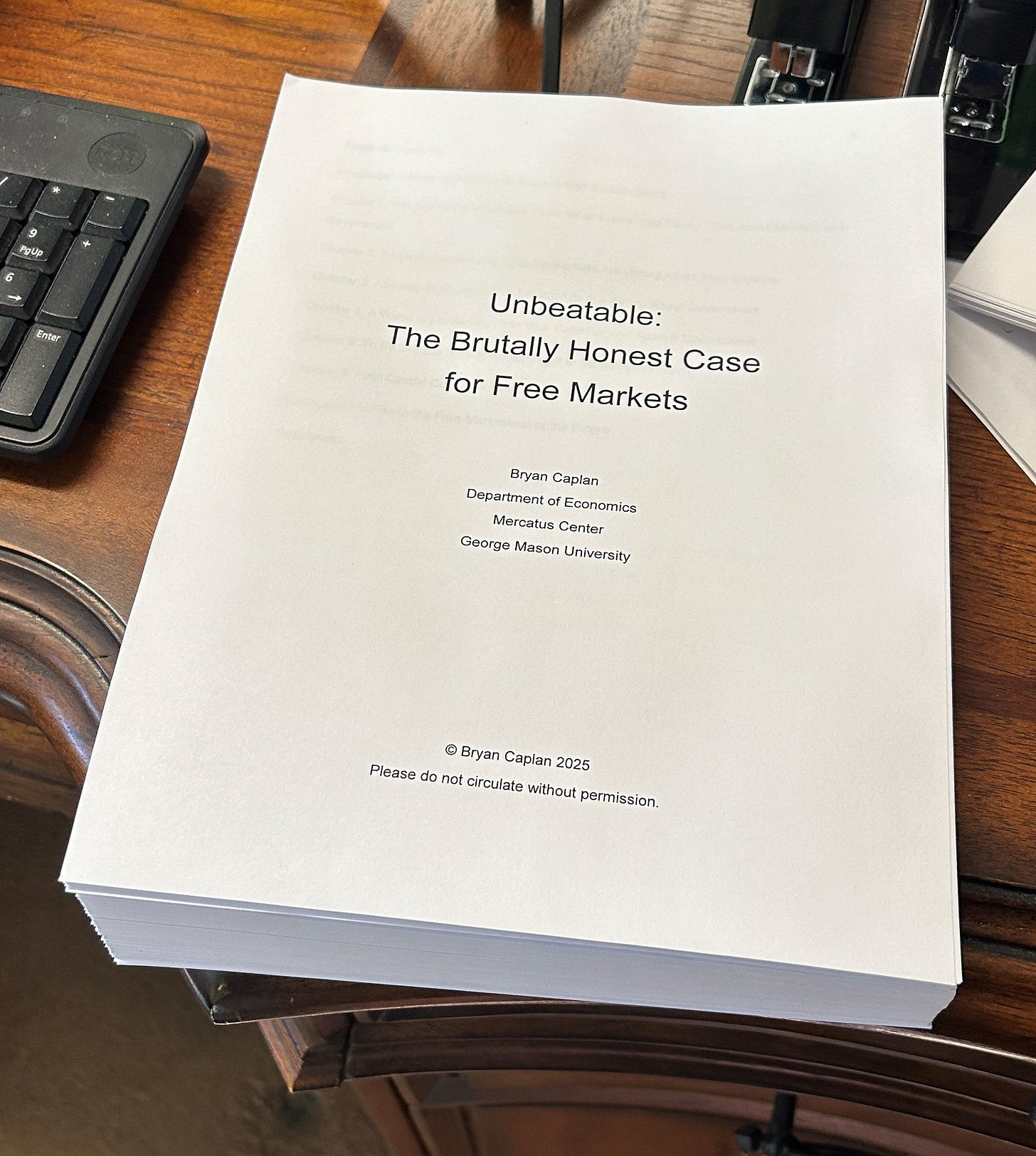
An excerpt from Chapter 1 of *Unbeatable*
The Mainstream World Is Not Free-Market
Does he know what a woman is now?
07 May 2025 Leave a comment
in applied price theory, discrimination, economics of education, gender, health and safety, human capital, labour economics, labour supply, occupational choice, politics - New Zealand, poverty and inequality, Public Choice, rentseeking Tags: gender wage gap, sex discrimination
Labour leader Chris Hipkins has joined the chorus of those opposing changes to pay equity legislation. Does this mean he knows what a woman is now? It is easy for opposition parties and their allies to criticise proposed changes but Heather du Plessis-Allan points out the problem with existing legislation: . . . Those pay […]
Does he know what a woman is now?
Some weak evidence in favour of an information intervention in economics to close the gender gap
05 May 2025 Leave a comment
in applied price theory, discrimination, econometerics, economics of education, experimental economics, gender, labour economics, labour supply, occupational choice Tags: gender gap, sex discrimination
I’ve written a couple of times about information interventions designed to attract more female students to study economics (see here and here). The results have generally been disappointing. That shouldn’t be too much of a surprise. If it was really simple to get people to change their behaviour with information, then advertising would be far…
Some weak evidence in favour of an information intervention in economics to close the gender gap
Minimal gender wage gap in NZ!
30 Mar 2025 Leave a comment
in discrimination, econometerics, economics of education, gender, human capital, labour economics, labour supply, occupational choice, politics - New Zealand, poverty and inequality Tags: gender wage gap, sex discrimination
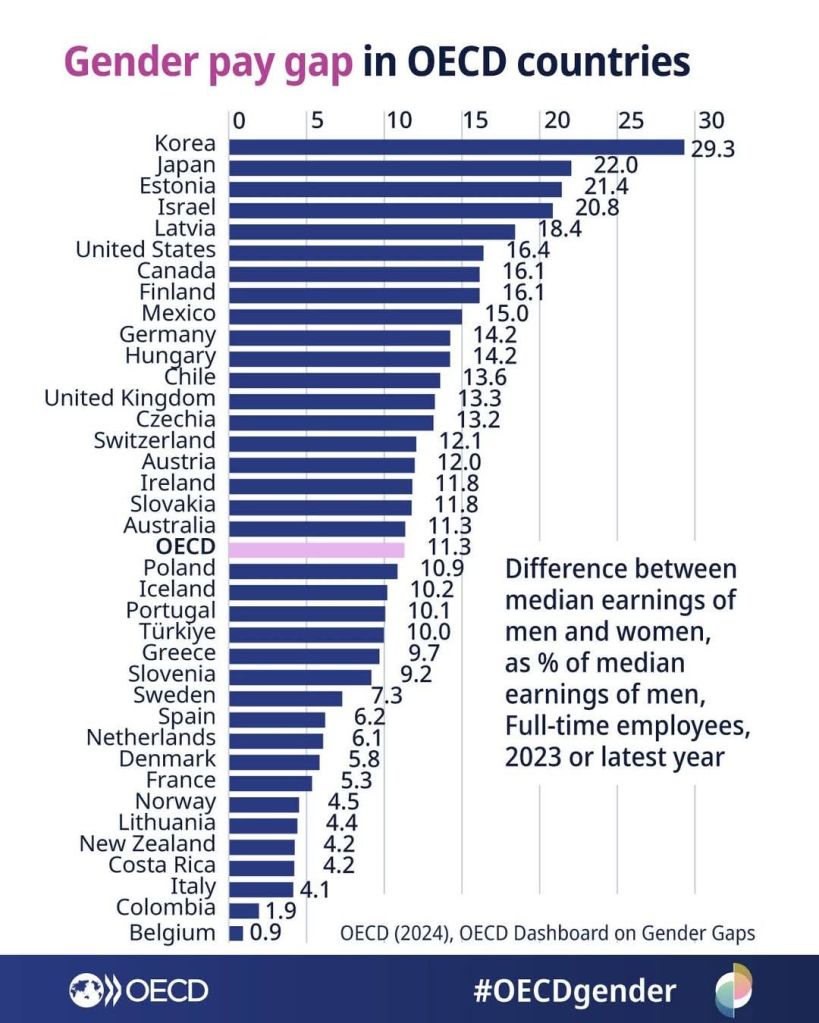
Personality traits and gender gaps
30 Mar 2025 Leave a comment
in applied price theory, discrimination, econometerics, economics of education, gender, human capital, labour economics, labour supply, occupational choice Tags: gender wage gap
This paper examines the effects of the Big Five personality traits on labor market outcomes and gender wage gaps using a job search and bargaining model with parameters that vary at the individual level. The analysis, based on German panel data, reveals that both cognitive and noncognitive traits significantly influence wages and employment outcomes. Higher […]
Personality traits and gender gaps
There seems to be a pattern
27 Mar 2025 Leave a comment
in economics of crime, law and economics, occupational choice, politics - New Zealand Tags: crime and punishment, criminal deterrence, law and order, political correctness, regressive left
This is of course all the work of the Green Party Police and Corrections Spokesperson, Tamatha Paul. I think it is fair to conclude that there is a pattern.
There seems to be a pattern
Facial surgeons wanted in New Zealand, must be intimately familiar with all things Māori
26 Mar 2025 1 Comment
in discrimination, economics of education, health economics, human capital, labour economics, labour supply, occupational choice, politics - New Zealand Tags: political correctness. affirmative action, racial discrimination, regressive left

Here’s an archived link to an ad for a consultant oral maxillofacial surgeon at Dunedin Hospital. The curious thing—well, not so curious given that it’s New Zealand,—is the list of required qualifications. Click to read (a New Zealand dollar is worth about 57¢ in U.S. currency): Some of the details: About the role In this […]
Facial surgeons wanted in New Zealand, must be intimately familiar with all things Māori


Recent Comments