By David J. Deming, Christopher Ong, and Lawrence H. Summers. From NPR’s Planet Money. Summers was Secretary of the Treasury from 1999 to 2001, director of the National Economic Council from 2009 to 2010 and president of Harvard University from 2001 to 2006.”Obviously, there is a big fear right now that artificial intelligence will kill…
Technological Disruption in the Labor Market
Technological Disruption in the Labor Market
02 Feb 2025 Leave a comment
in econometerics, economic history, human capital, industrial organisation, labour economics, labour supply, occupational choice, poverty and inequality, unemployment Tags: creative destruction
No Tech Workers or No Tech Jobs?
19 Jan 2025 1 Comment
in economics of education, entrepreneurship, human capital, industrial organisation, labour economics, labour supply, occupational choice

Several recent tweets(xeets) about tech talent re-ignited the conversation about native-born STEM workers and American policy. For the Very Online, Christmas 2024 was about the H-1B Elon tweets. Elon Musk implies that “elite” engineering talent cannot be found among Americans. Do Americans need to import talent? What would it take to home grow elite engineering […]
No Tech Workers or No Tech Jobs?
The Acemoglu arguments against high-skilled immigration
13 Jan 2025 Leave a comment
in applied price theory, economics of education, entrepreneurship, human capital, international economics, labour economics, labour supply, occupational choice, politics - USA, poverty and inequality Tags: economics of immigration
Here is Daron Acemoglu’s Project Syndicate piece, mostly critical on high-skilled immigration. Here is the first argument from Acemoglu: …one would expect corporate America’s growing need for skilled STEM workers to translate into advocacy for, and investments in, STEM education. But an overreliance on the H-1B program may have broken this link and made American […]
The Acemoglu arguments against high-skilled immigration
Evolving Returns to Personality
12 Jan 2025 Leave a comment
in applied price theory, econometerics, health economics, human capital, labour supply, occupational choice
Weanalyze trends in labor-market returns to psychological traits using data from half a million Finnish men from 2001 to 2015. Cognitive skills’ value declined, while noncognitive skills’ value increased. Our novel findings show that extraversion drives this rise, while conscientiousness remains stable. Extraversion’s rising returns are most pronounced for lower earners and those on the […]
Evolving Returns to Personality
Quotation of the Day…
07 Jan 2025 Leave a comment
in applied price theory, entrepreneurship, human capital, income redistribution, labour economics, labour supply, occupational choice, poverty and inequality, Public Choice, Thomas Sowell
Tweet… is from page 496 of the 2011 revised and enlarged edition of Thomas Sowell’s 2009 book Intellectuals and Society (original emphasis): Another common tactic and flaw in the arguments of the intelligentsia is eternalizing the transient. Thus statistical trends in the share of the nation’s income going to “the rich” (however defined) and “the…
Quotation of the Day…
Top MR Posts of 2024!
30 Dec 2024 Leave a comment
in applied price theory, discrimination, gender, health and safety, human capital, international economics, labour economics, labour supply, occupational choice, politics - USA, poverty and inequality Tags: economics of immigration, gender wage gap, Internet, political correctness, regressive left
The number one post this year was Tyler’s The changes in vibes — why did they happen? A prescient post and worth a re-read. Lots of quotable content that has become conventional wisdom after the election: The ongoing feminization of society has driven more and more men, including black and Latino men, into the Republican […]
Top MR Posts of 2024!
More Police, Fewer Prisons, and Other Ways to Reduce Crime
29 Dec 2024 Leave a comment
in applied price theory, economics of crime, human capital, labour economics, labour supply, law and economics, occupational choice, politics - USA Tags: crime and punishment, criminal deterrence, law and order
What does the existing research evidence say about how to reduce crime? Jennifer Doleac offers and over overview in “Why Crime Matters, and What to Do About It.” It appear as an essay in a book published by the Aspen Economic Strategy Group, Strengthening America’s Economic Dynamism, edited by Melissa Kearney and Luke Pardue. You…
More Police, Fewer Prisons, and Other Ways to Reduce Crime
Two examples of wages rising for one occupation leading workers to move into it from other occupations
29 Dec 2024 Leave a comment
in applied price theory, economic history, human capital, labour economics, labour supply, minimum wage, occupational choice, poverty and inequality
See $500,000 Pay, Predictable Hours: How Dermatology Became the ‘It’ Job in Medicine: Americans’ newfound obsession with skin care has medical students flocking to this specialty by Te-Ping Chen of The WSJ. Excerpts:”Four-day workweeks, double the salary of some colleagues and no emails at night. If those perks sound like they belong to a few vaunted…
Two examples of wages rising for one occupation leading workers to move into it from other occupations
The Changing US Labor Market
28 Dec 2024 Leave a comment
in applied price theory, economic history, history of economic thought, human capital, labour economics, labour supply, occupational choice, poverty and inequality, unemployment Tags: creative destruction

There is a widespread belief that the US labor market has been undergoing a period of unprecedented chance in the last decade or two. On one hand, David Deming, Christopher Ong, and Lawrence H. Summers case doubt on this historical claim in their essay, ” Technological Disruption in the US Labor Market”–that is, they argue…
The Changing US Labor Market
Technological Disruption in the US Labor Market
27 Dec 2024 Leave a comment
in applied price theory, economic history, human capital, labour economics, labour supply, occupational choice, poverty and inequality Tags: creative destruction
Deming, Ong and Summers have a good overview of long-run and very recent changes in the US labor market. Using a measure of occupational titles the authors find: The years spanning 1990-2017 were the most stable period in the history of the US labor market, going back nearly 150 years. It’s a bit too early […]
Technological Disruption in the US Labor Market
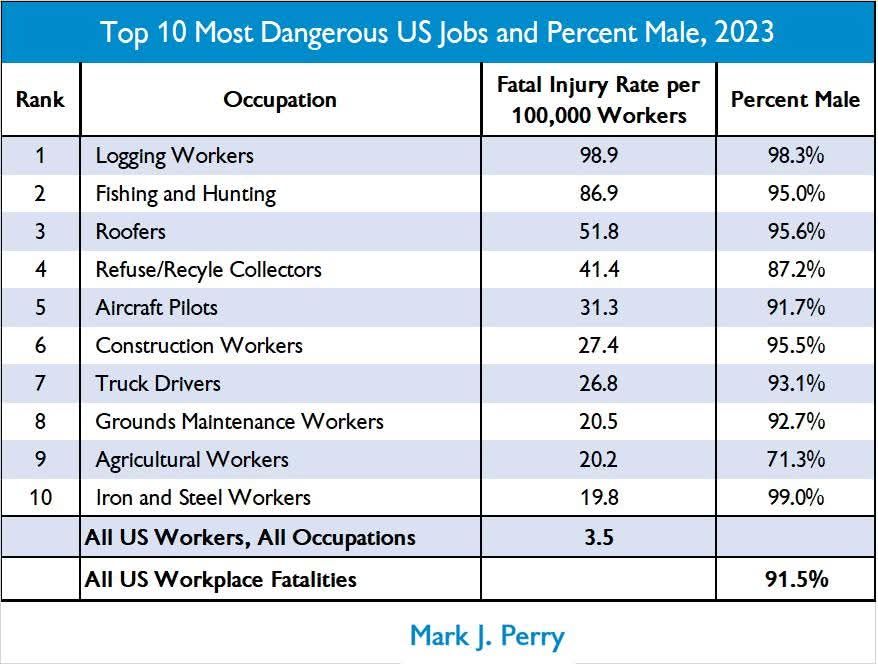
Another gender gap
25 Dec 2024 Leave a comment
in discrimination, gender, health and safety, labour economics, occupational choice Tags: gender wage gap, sex discrimination
Mexican Cartels Lure Chemistry Students to Make Fentanyl
10 Dec 2024 Leave a comment
in development economics, economics of crime, growth disasters, human capital, industrial organisation, labour economics, labour supply, law and economics, occupational choice Tags: Mexico
Criminals turn college campuses into recruitment hubs, recruiting chemistry students in Mexico with big paydays.By Natalie Kitroeff and Paulina Villegas of The NY Times. Excerpts:”In their quest to build fentanyl empires, Mexican criminal groups are turning to an unusual talent pool: not hit men or corrupt police officers, but chemistry students studying at Mexican universities.People…
Mexican Cartels Lure Chemistry Students to Make Fentanyl
NZ Nursing Council Raises A Middle Finger To Health Minister Shane Reti And The Coalition Government.
08 Dec 2024 1 Comment
in discrimination, economics of bureaucracy, economics of education, economics of regulation, health economics, human capital, labour economics, labour supply, liberalism, Marxist economics, occupational choice, occupational regulation, politics - New Zealand, Public Choice Tags: free speech, political correctness, regressive left
What follows are Scope of Practice requirements for Enrolled and Registered Nurses from 25 January 2025. There are some small differences in requirements but the points I am highlighting are the same and what follows is for Enrolled Nurses. Scope of Practice Enrolled Nurses Enrolled nurses in Aotearoa New Zealand reflect knowledge, concepts and worldviews of both tangata whenua and tangata […]
NZ Nursing Council Raises A Middle Finger To Health Minister Shane Reti And The Coalition Government.
Why are no trillion dollar companies being created in Europe?
07 Dec 2024 1 Comment
in applied price theory, comparative institutional analysis, economics of regulation, entrepreneurship, human capital, industrial organisation, labour economics, labour supply, law and economics, occupational choice, poverty and inequality Tags: employment law
That is the theme of a new Substack by Pieter Garicano, here is one excerpt: These answers, according to a recent paper by Olivier Coste and Yann Coatanlem, two French investors, miss the point: the reason more capital doesn’t flow towards high-leverage ideas in Europe is because the price of failure is too high. Coste estimates that, […]
Why are no trillion dollar companies being created in Europe?
The Missing Myths
04 Dec 2024 Leave a comment
in applied price theory, comparative institutional analysis, constitutional political economy, discrimination, economic history, economics of climate change, economics of information, economics of media and culture, economics of regulation, energy economics, entrepreneurship, environmental economics, environmentalism, financial economics, gender, global warming, health economics, human capital, income redistribution, labour economics, labour supply, law and economics, liberalism, libertarianism, Marxist economics, occupational choice, politics - USA, poverty and inequality, property rights, Public Choice, rentseeking Tags: Age of Enlightenment, crime and punishment, criminal deterrence, free speech, gender wage gap, law and order, political correctness, racial discrimination, regressive left, sex discrimination
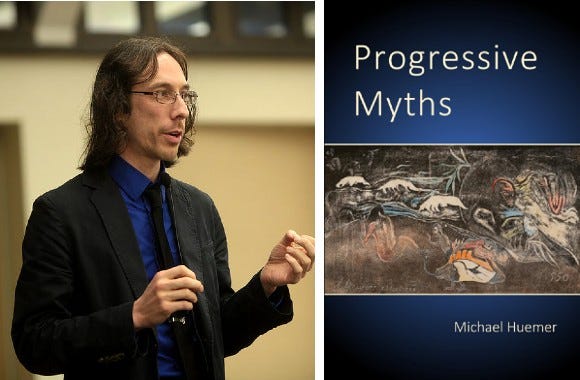
Michael Huemer’s Progressive Myths is the best book on wokeness. One of its many strengths is its focus on basic facts. As the author explains:I have selected beliefs that can be debunked fairly quickly and forcefully. Many other progressive beliefs require long argumentation and subjective judgment calls to assess. About these more difficult issues, I…
The Missing Myths


Recent Comments