Milton Friedman on the essence of the Age of the Worker
13 Jun 2015 Leave a comment
in applied price theory, applied welfare economics, economic growth, economic history, health and safety, income redistribution, industrial organisation, labour economics, labour supply, macroeconomics, Milton Friedman, occupational choice, politics - Australia, politics - New Zealand, politics - USA, Public Choice, rentseeking, unions Tags: competition and monopoly, The Great Enrichment, union power, union wage premium
What are the Anglo-Saxon gender wage gaps for the bottom, median and top deciles?
12 Jun 2015 Leave a comment
in discrimination, gender, human capital, labour economics, labour supply, occupational choice, politics - Australia, politics - New Zealand, politics - USA Tags: Australia, British economy, Canada, gender wage gap, Ireland
If there is an inherent inequality of bargaining power between workers and employers, as we are so frequently lectured by those in the self appointed know, why is the gender wage gap so small at the bottom of the earnings distribution?
Figure 1: % Gender gap in full-time earnings at the bottom decile of earnings distribution, 2012

Source: OECD family database
Figure 2: % Gender gap in full-time earnings at the median decile of earnings distribution, 2012

Source: OECD family database
Figure 3: % Gender gap in full-time earnings at the top decile of earnings distribution, 2012

Source: OECD family database
The gender gaps are unadjusted, and are calculated as the difference between the earnings of men and women for their respective earnings percentile.
How the average day of American mums and dads has changed since 1965
12 Jun 2015 Leave a comment
in discrimination, economics of love and marriage, gender, labour economics, labour supply, law and economics, occupational choice Tags: economics of the family, home production, household division of labour, marriage and divorce
#Dailychart: How the average day of American mums and dads has changed since 1965 econ.st/1Hi43yt http://t.co/tY5DSpdVKN—
The Economist (@EconBizFin) June 08, 2015
Prison incarceration rates by race and education
12 Jun 2015 1 Comment
in discrimination, economics of crime, economics of education, human capital, labour economics, labour supply, law and economics, occupational choice, politics - USA Tags: compensating differentials, crime and punishment, criminal deterrence, law and order, racial discrimination, racism
Male African American high school dropouts facing a nearly 70% cumulative risk of imprisonment by their early 30s. However, the increase in incarceration rates among high school graduates appeared to be much the same for both blacks and whites.
This hints that racism is not as good explanatory of high rates of African-American male incarceration. Police do not know whether the people they arrest have high school diplomas or not but most of the people they arrest are high school dropouts. This suggests that the opportunity cost and rewards of crime over lawful occupational pursuits is a driver of the supply of crime.
What are the Anglo-Saxon gender wage gaps?
11 Jun 2015 Leave a comment
in discrimination, gender, human capital, labour economics, labour supply, occupational choice, politics - Australia, politics - New Zealand, politics - USA Tags: Australia, British economy, Canada, gender wage gap, Ireland
Figure 1: % gender gap in median earnings of full-time employees, 2012

Source: OECD family database
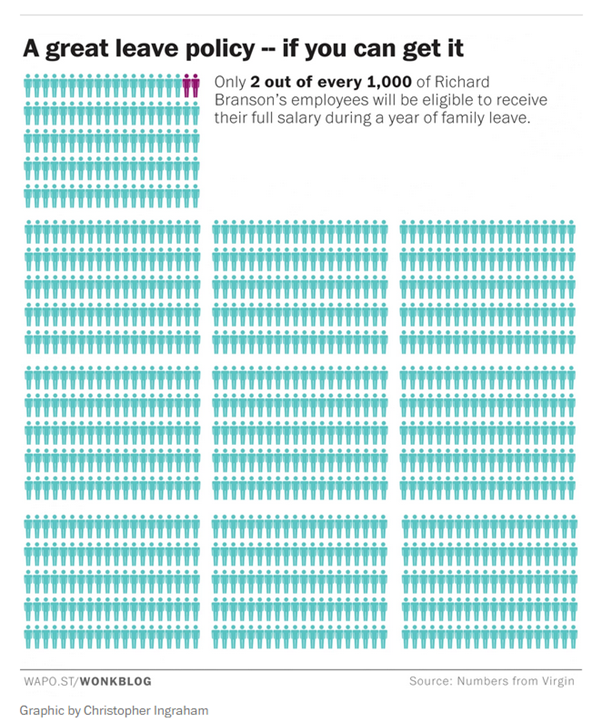
Richard Branson has announced a great paid leave policy for .2 percent of his workers
11 Jun 2015 Leave a comment
in discrimination, entrepreneurship, gender, labour economics, labour supply, occupational choice, politics - Australia, politics - New Zealand, politics - USA Tags: entrepreneurial alertness, maternity leave, paternity leave, Richard Branson
Trends in what drives single motherhood
11 Jun 2015 Leave a comment
Divorce used to be biggest engine of single parenthood in America. No more. It's nonmarital childbearing cc@davidfrum http://t.co/J5yZtUukNW—
W Bradford Wilcox (@WilcoxNMP) June 10, 2015
Why no (top 1% driven) middle class wage stagnation in (non-unionised) technologically progressive industries?
11 Jun 2015 Leave a comment
.@CEAChair: Higher productivity needed for increases in income on.wsj.com/1E4jGDQ @MarkMuro1 Agreed. Proof here http://t.co/oZ76aeQdiq—
Jonathan T. Rothwell (@jtrothwell) March 11, 2015
Wages & productivity are growing together in high R&D-STEM industries brook.gs/1D5Pqxc @CEAChair @MarkMuro1 http://t.co/fe5MDomJqE—
Jonathan T. Rothwell (@jtrothwell) March 11, 2015
The reversing gender gap in one chart
11 Jun 2015 Leave a comment
in discrimination, economics of education, gender, human capital, labour economics, labour supply, occupational choice, poverty and inequality Tags: gender wage gap, lost boys, reversing gender gap
Gender gap in bachelor's is 6 percentage points. Men now where women were a decade ago.
nces.ed.gov/programs/diges… http://t.co/u9rAsIcfY0—
S Dynarski (@dynarski) June 01, 2015
New Zealand primary school teachers have experienced rapid wages growth by international standards
10 Jun 2015 Leave a comment
in economics of education, human capital, labour economics, labour supply, occupational choice, politics - Australia, politics - New Zealand, politics - USA Tags: teachers pay
Parental time usage, 1965 and now
09 Jun 2015 Leave a comment
in gender, labour economics, labour supply, occupational choice Tags: family demographics, household division of labour
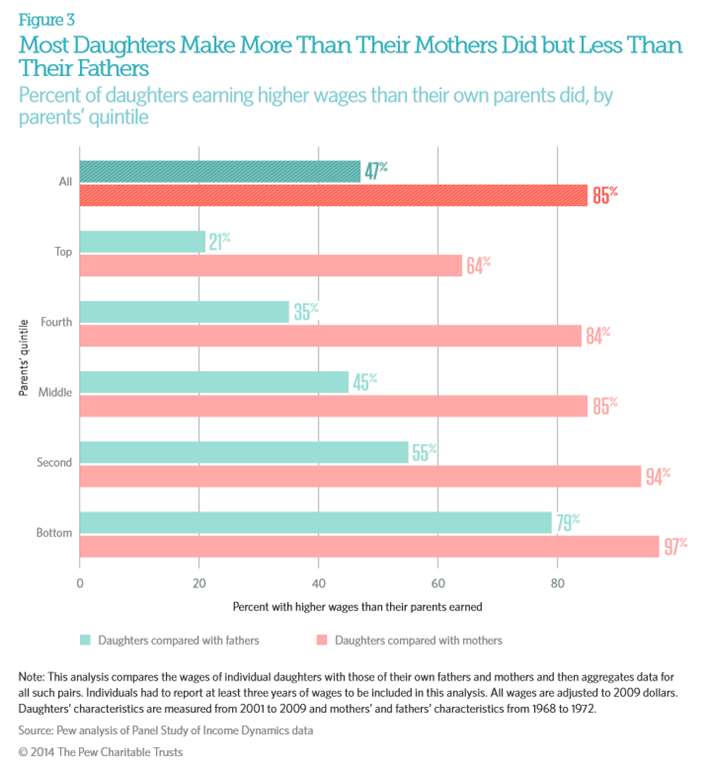
Almost 8 in 10 daughters raised by the lowest- earning men make more money per hour than their fathers did
08 Jun 2015 Leave a comment
in discrimination, economics of education, gender, human capital, labour economics, labour supply, occupational choice, poverty and inequality Tags: economic mobility, gender wage gap, reversing gender gap
Today’s daughters earn much more than their mothers
07 Jun 2015 Leave a comment
in discrimination, gender, human capital, labour economics, labour supply, occupational choice Tags: compensating differences, gender wage gap
In the late 1960s and early 1970s, slightly more than half of all mothers were in the labour force. These women worked, on average, 24 hours per week for a little more than $10 per hour.
Today, 85 percent of all daughters are employed, and they work 10 additional hours per week and earn $9 more per hour.
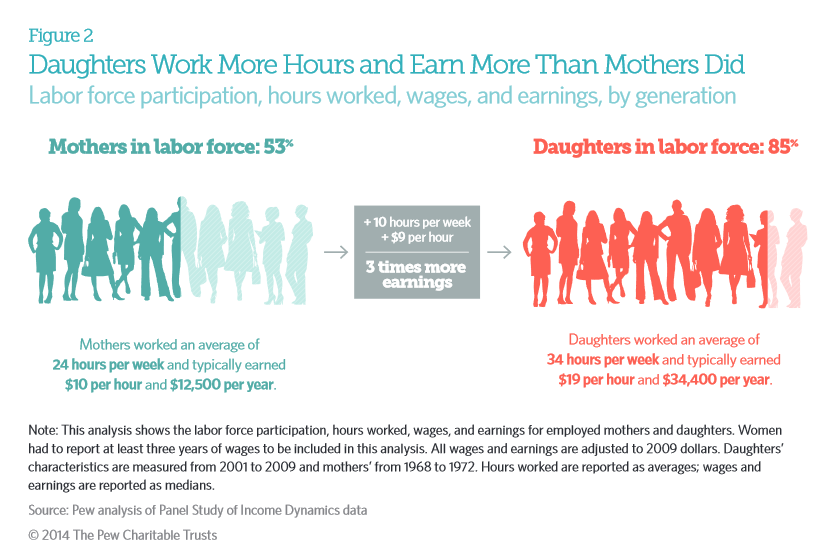
via Women’s Work: The Economic Mobility of Women Across a Generation.
Supply-side economics and the migration of inventors
07 Jun 2015 Leave a comment
in applied price theory, entrepreneurship, fiscal policy, human capital, labour economics, labour supply, occupational choice, politics - Australia, politics - New Zealand, politics - USA Tags: economics of migration, taxation and the labour supply
#Braindrain is real, even quantifiable — as per NBER paper 21024. Geniuses don't tolerate extra taxes easily. http://t.co/HVP8uEFAfz—
Amity Shlaes (@AmityShlaes) June 07, 2015


Recent Comments