Women graduates increasingly put their partner’s career first after they graduate | Daily Mail Online

R1412G_E

R1412G_F

Women are increasingly putting their husband’s career before their own, a controversial new study of Harvard Business School graduates has found.

It canvassed over 25,000 male and female students, and found 40 percent of Gen X and boomer women said their spouses’ careers took priority over theirs.

The researchers also said only about 20 percent of them had planned on their careers taking a back seat when they graduated.

This gender gap  found by Robin Ely, Colleen Ammerman and Pamela Stone can be better explained by the marriage market combined with assortative mating.

1. Harvard business graduates are likely to marry each other and form power couples.

2. There tends to be an age gap between men and women in long-term relationships and marriages of say two years.

This two year age gap means that the husband as two additional years of work experience and career advancement. This is highly likely to translate into higher pay and more immediate promotional prospects.

Maximising household income would imply that the member of the household with a higher income, and greater immediate promotional prospects stay in the workforce.

It is entirely possible that women to anticipate this situation both in their subject choices and career ambitions.

Claudia Goldin found that the wage gap between male and female Harvard graduates disappears in the presence of one confounding factor.

That confounding factor is obvious: the male in the relationship earns less. When this is so, Goldin found that the female in the relationship earns pretty much as do similar male Harvard graduates, except for the fact that they work less hours per week:

We identify three proximate factors that can explain the large and rising gender gap in earnings: a modest male advantage in training prior to MBA graduation combined with rising labour market returns to such training with post-MBA experience; gender differences in career interruptions combined with large earnings losses associated with any career interruption (of six or more months); and growing gender differences in weekly hours worked with years since MBA.

Differential changes by sex in labour market activity in the period surrounding a first birth play a key role in this process. The presence of children is associated with less accumulated job experience, more career interruptions, shorter work hours, and substantial earnings declines for female but not for male MBAs.

The one exception is that an adverse impact of children on employment and earnings is not found for female MBAs with lower-earning husbands.

This sociological evidence reported in the Daily Mail is entirely consistent with the choice hypothesis and equalising differentials as the explanation for the gender wage gap. As Solomon Polachek explains:

At least in the past, getting married and having children meant one thing for men and another thing for women. Because women typically bear the brunt of child-rearing, married men with children work more over their lives than married women.

This division of labour is exacerbated by the extent to which married women are, on average, younger and less educated than their husbands.

This pattern of earnings behaviour and human capital and career investment will persist  until women start pairing off with men who are the same age or younger than them.

via Women graduates increasingly put their partner’s career first after they graduate | Daily Mail Online.

Two waiters serve two steel workers lunch on a girder above New York City, 1930

Image

Richard Posner on behavioural economics and its real-world applications


The impact of the burglar resistant locks and windows on burglary rates

The Dutch government mandated the use of burglar-resistant locks and window and door frames in all new residential construction as of January 1, 1999. The regulation has now affected close to a million homes. The security was built-in and did not require any change in behaviour.

Figure 1:. Victimisation of burglary by year of construction of the home, the Netherlands

When comparing homes built just before and just after the change in the regulation, Vollaard and Van Ours (2011) found that homes with the built-in security to have a 26% lower rate of burglary.

HT: voxeu.org/reducing-invitation-crime

What if We’re Looking at Inequality the Wrong Way? – NYTimes.com

Fig. 5


via What if We’re Looking at Inequality the Wrong Way? – NYTimes.com.

The labour economics of Woody Allen

Image

Milton Friedman on bargaining power in the labour market

Image

Here’s what’s not sustainable: organic farming » AEI

Organic farming might work well for certain local environments on a small scale, but its farms produce far less food per unit of land and water than conventional ones.

The low yields of organic agriculture—typically 20%-50% less than conventional agriculture—impose various stresses on farmland and especially on water consumption.

A British meta-analysis published in the Journal of Environmental Management (2012) found that “ammonia emissions, nitrogen leaching and nitrous oxide emissions per product unit were higher from organic systems” than conventional farming systems, as were “land use, eutrophication potential and acidification potential per product unit.”

via Here’s what’s not sustainable: organic farming » AEI.

The link between paid parental leave generosity and a larger gender pay gap-updated

FT_gender1223

But it also turns out that some countries that offer more liberal parental leave policies have higher pay gaps among men and women ages 30 to 34, according to analyses of 16 countries conducted by the Organization for Economic Cooperation and Development.

OECD theorizes that this link may be  driven by the fact that women are more likely than men to actually use their parental leave, and that time out of the workforce is associated with lower wages.

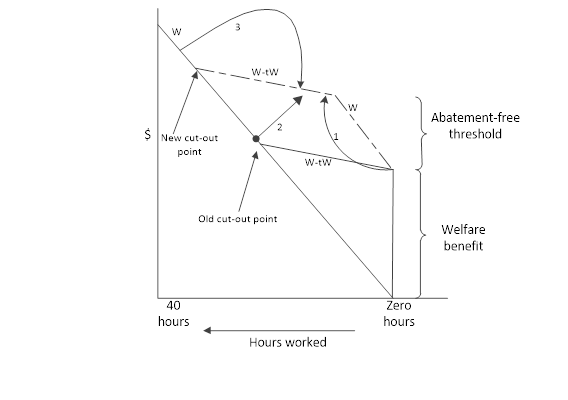
It is rather obvious if you pay women not to work, they will accumulate less job experience and miss out on promotional and other career advancement opportunities in their prime of their career.

FT_13.12.17_WageGap

As this OECD paper in 2012 found with regard to paid parental leave and gender gaps in employment and earnings:

…the provision and gradual lengthening of paid leave have contributed to a widening in the gender pay gap of full-time employees.

This may reflect the fact that women experience slower career and earnings progression on returning from leave to full-time employment than men, much fewer of whom take leave.

In sum, the development of parental leave policies in most countries appears to have had a positive, albeit marginal, role in the rise of female employment, although women pay a price in the form of reduced earnings progression.

Claudia Golden found that in some high-powered professions, any career interruption at all, can greatly reduce lifetime earnings.

via The link between parental leave and the gender pay gap | Pew Research Center.

The reversing gender gap: why women choose not to be scientists, engineers and IT professionals

Concerns about the lack of women undertaking careers in science and engineering are based on one simple false premise: that science and engineering are the most prestigious choices available to women with great ability in maths and science at high school.

If relatively more prestigious career options are open to women who also happen to qualify for science and engineering, women will be underrepresented in science and engineering simply because they have better career options than the men who become scientists and engineers.

In New Zealand, just as many women as men qualify for science and engineering and the IT degrees. Not as many women who have qualified take up this option simply because they also qualify for medicine and law in greater numbers than the men who happen to qualify for science, engineering and IT degrees.

In the United States, the Association for Psychological Science found that:

Women may be less likely to pursue careers in science and math because they have more career choices, not because they have less ability, according to a new study published in Psychological Science.

Although the gender gap in mathematics has narrowed in recent decades, with more females enrolling and performing well in math classes, females are still less likely to pursue careers in science, technology, engineering, and mathematics (STEM) than their male peers.

Researchers tend to agree that differences in math ability can’t account for the underrepresentation of women in STEM fields. So what does?

Developmental psychologist Ming-Te Wang and his colleagues at the University of Pittsburgh and University of Michigan wondered whether differences in overall patterns of math and verbal ability might play a role.

The researchers examined data from 1490 college-bound US students drawn from a national longitudinal study. The students were surveyed in 12th grade and again when they were 33 years old. The survey included data on several factors, including participants’ SAT scores, various aspects of their motivational beliefs and values, and their occupations at age 33.

Looking at students who showed high math abilities, Wang and colleagues found that those students who also had high verbal abilities — a group that contained more women than men — were less likely to have chosen a STEM occupation than those who had moderate verbal abilities.

This outcome is no surprise for those familiar with the gap between men and women in verbal and reading abilities – a gap that is strongly in favour of women

The OECD PISA tests at the age of 15 find that teenage boys have a slight advantage in maths  – a few percentage points – teenage girls have a serious advantage in reading.

The OECD PISA tests at the age of 15 find that this superior verbal and reading abilities of teenage girls the equivalent of six months extra schooling. One half year’s education goes a long way towards explaining many wage gaps by gender,ethnicity in race. This six-month edge in schooling is a serious advantage when qualifying for university.

Young women choose to not pursue science, engineering and IT careers because there are other career options that allow them to use their superior verbal and reading abilities – other careers is that allow them to be more successful in life than being a scientist, an engineer or an IT geek. As the Association for Psychological Science explains in the same press release cited above:

Our study shows that it’s not lack of ability or differences in ability that orients females to pursue non-STEM careers, it’s the greater likelihood that females with high math ability also have high verbal ability,” notes Wang. “Because they’re good at both, they can consider a wide range of occupations.

To put it bluntly, science, engineering and IT degrees are for young people who lack the verbal and reading abilities to get into medicine and law. Science, engineering and IT good degrees are for those who can’t get into medicine and law. They could have been contenders if they were more articulate and well-read.

There is a gender disparity in science, engineering and IT because teenage girls find these degrees to be inferior choices – inferior choices given the set of abilities they have when considering their career options.

HT: Mark J. Perry

The day that sex discrimination died – Solomon Polachek on the gender wage gap

Solomon Polachek was minding his own business back in 1975 looking for evidence to show occupational crowding and that women were pushed into low paid occupations by sex discrimination, and in particular, employer discrimination. About 60 per cent of women still work in just 10 occupations. the occupations which are female-dominated are often relatively poorly paid jobs

By chance, Polachek departed from the usual empirical strategy for estimating the male-female wage gap at that time.

Rather than include a dummy variable to estimate discrimination after various factors have been taken into account, he introduced dummy variables that took account of both gender and marital status. His results were startling.

He previously was able to explain about 35% of the wage gap using the data at hand and variables he was using.

This 35% gap dropped to 18% for single never married males and females, but his ability to explain the gender wage gap increased dramatically to over 60% for married spouse present males and females.

What more, the presence of children exacerbated the gender wage gap. Each child of less than 12 years old widened the female male pay disparity by 10%. Furthermore, large spacing intervals between children widened this gender wage disparity even further.

Subsequent research showed that marital status had the same effects on gender wage gaps in Germany, the UK, Austria, Switzerland, Sweden, Norway and Australia. Factors associated with dropping out of the labour market to care for children could explain up to 93% of the gender wage gap.

These findings are devastating to the notion that there is some sort of discrimination against women on the demand side of the labour market. As Polachek explains:

The gender wage gap for never marrieds is a mere 2.8%, compared with over 20% for marrieds. The gender wage gap for young workers is less than 5%, but about 25% for 55–64-year-old men and women.

If gender discrimination were the issue, one would need to explain why businesses pay single men and single women comparable salaries. The same applies to young men and young women.

One would need to explain why businesses discriminate against older women, but not against younger women. If corporations discriminate by gender, why are these employers paying any groups of men and women roughly equal pay?

Why is there no discrimination against young single women, but large amounts of discrimination against older married women?

… Each type of possible discrimination is inconsistent with negligible wage differences among single and younger employees compared with the large gap among married men and women (especially those with children, and even more so for those who space children widely apart).

The main drivers of the gender wage gap is simply unknown to employers such as whether the would-be recruit or employer is married, their partner is present, how many children they have, how many of these children are under 12, and how many years are there between the births of their children. These are the main drivers of the gender wage gap – all of which are factors totally unknown to employers and of no relevance to them in making a profit.

The drivers of the gender wage gap on the supply side of the labour market regarding the choices women make about having children, when they have children, and how this influences their investment in human capital, and in particular, in human capital that does not depreciate by that much because of intermittent labour force participation due to motherhood.

Occupational crowding hypotheses of the gender wage gap have the drawback of being an invisible hand explanation of social outcomes. Each individual, acting only to best secure her own rights and interests, act in such a way that the unintended outcome of a complex social interaction.

The specific unintended outcome that must arise from millions of choices of people acting in their own interest  throughout their lives is occupational segregation.

The market process of the invisible hand has both a filter and  and equilibrating mechanism. The filter is profits and loss to exclude through insolvency and bankruptcy those entrepreneurial choices that do not further consumer’s interests. The equilibrating mechanism – the mechanism that tells people which choices they should make – is price signals. Price signals guide individual choices towards the unintended outcome.

Those that argue that women are socialised to make particular choices such as mother were not paying attention to the 20th century and the radical social change over the course of that century, in particular in the role of women. As Gary Becker explains:

… major economic and technological changes frequently trump culture in the sense that they induce enormous changes not only in behaviour but also in beliefs.

A clear illustration of this is the huge effects of technological change and economic development on behaviour and beliefs regarding many aspects of the family.

Attitudes and behaviour regarding family size, marriage and divorce, care of elderly parents, premarital sex, men and women living together and having children without being married, and gays and lesbians have all undergone profound changes during the past 50 years.

Invariably, when countries with very different cultures experienced significant economic growth, women’s education increased greatly, and the number of children in a typical family plummeted from three or more to often much less than two.


Claudia Goldin on the main cause of the gender wage gap

Image

Progressive Feminism Exposed

Pop Stars Actually Do Die Too Young – The Atlantic

via Pop Stars Actually Do Die Too Young – The Atlantic.

Why the Gender Pay Gap is a Myth

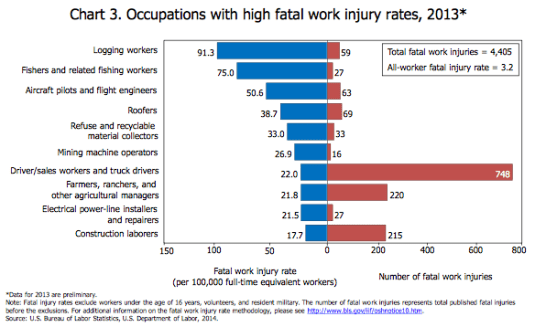
Men are far more likely to choose careers that are more dangerous, so they naturally pay more under the principle of compensating differences. Top 10 most dangerous jobs: Fishers, loggers, aircraft pilots, farmers and ranchers, roofers, iron and steel workers, refuse and recyclable material collectors, industrial machinery installation and repair, truck drivers, construction labourers. They are male-dominated jobs.

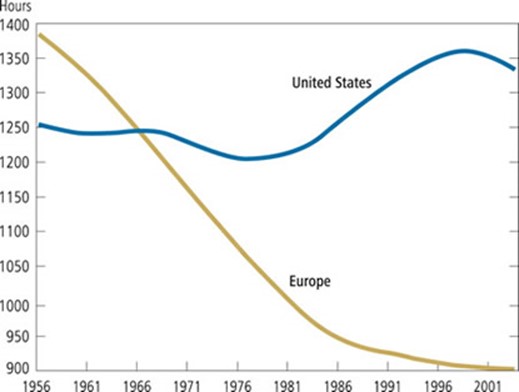
Men are far more likely to enter higher-paying fields and occupations (by choice). Men are far more likely to take work in uncomfortable, isolated, and undesirable locations that pay more. Men work longer hours than women do. The average fulltime working man works 6 hours per week or 15 percent longer than the average fulltime working woman.

Accounting for the 21 Cent Gender Wage Gap 2000

Women tend to work in fields dominated by women because these fields best satisfy women’s’ dual careers as workers and household managers. This can include less stressful work environments (noise, strenuous activity, etc.), more flexible policies regarding time off, and a number of other factors.

Men work longer hours than women do. The average fulltime working man works 6 hours per week or 15 percent longer than the average fulltime working woman. Even within the same career category, men are more likely to pursue high-stress and higher-paid areas of specialisation.


Despite all of the above, unmarried women who’ve never had a child actually earn more than unmarried men. In 2008, single, childless women between ages 22 and 30 were earning more than their male counterparts in most U.S. cities, with incomes that were 8% greater on average.

Women business owners make less than half of what male business owners make, which, since they have no boss, means it’s independent of discrimination. The reason for the disparity is money is the primary motivator for 76% of men versus only 29% of women. Women place a higher premium on shorter work weeks, proximity to home, fulfillment, autonomy, and safety.

Women lean toward jobs with fewer risks, more comfortable conditions, regular hours, more personal fulfillment and greater flexibility. Many women are willing to trade higher pay for other desirable job characteristics.

Men often take on jobs that involve physical labour, outdoor work, overnight shifts and dangerous conditions (which is why men suffer the overwhelming majority of injuries and deaths at the workplace). They choose to put up with unpleasant factors because they can earn more.

An Analysis of Reasons for the Disparity in Wages Between Men and Women for the U.S. Department of Labor in 2009 concluded that:

This study leads to the unambiguous conclusion that the differences in the compensation of men and women are the result of a multitude of factors and that the raw wage gap should not be used as the basis to justify corrective action.

Indeed, there may be nothing to correct. The differences in raw wages may be almost entirely the result of the individual choices being made by both male and female workers.

Previous Older Entries Next Newer Entries

Bassett, Brash & Hide

Celebrating humanity's flourishing through the spread of capitalism and the rule of law

Truth on the Market

Scholarly commentary on law, economics, and more

The Undercover Historian

Beatrice Cherrier's blog

Matua Kahurangi

Celebrating humanity's flourishing through the spread of capitalism and the rule of law

Temple of Sociology

Celebrating humanity's flourishing through the spread of capitalism and the rule of law

Velvet Glove, Iron Fist

Celebrating humanity's flourishing through the spread of capitalism and the rule of law

Why Evolution Is True

Why Evolution is True is a blog written by Jerry Coyne, centered on evolution and biology but also dealing with diverse topics like politics, culture, and cats.

Down to Earth Kiwi

Celebrating humanity's flourishing through the spread of capitalism and the rule of law

NoTricksZone

Celebrating humanity's flourishing through the spread of capitalism and the rule of law

Homepaddock

A rural perspective with a blue tint by Ele Ludemann

Kiwiblog

DPF's Kiwiblog - Fomenting Happy Mischief since 2003

The Dangerous Economist

Celebrating humanity's flourishing through the spread of capitalism and the rule of law

Watts Up With That?

The world's most viewed site on global warming and climate change

The Logical Place

Tim Harding's writings on rationality, informal logic and skepticism

Doc's Books

A window into Doc Freiberger's library

The Risk-Monger

Let's examine hard decisions!

Uneasy Money

Commentary on monetary policy in the spirit of R. G. Hawtrey

Barrie Saunders

Thoughts on public policy and the media

Liberty Scott

Celebrating humanity's flourishing through the spread of capitalism and the rule of law

Point of Order

Politics and the economy

James Bowden's Blog

A blog (primarily) on Canadian and Commonwealth political history and institutions

Science Matters

Reading between the lines, and underneath the hype.

Peter Winsley

Economics, and such stuff as dreams are made on

A Venerable Puzzle

"The British constitution has always been puzzling, and always will be." --Queen Elizabeth II

The Antiplanner

Celebrating humanity's flourishing through the spread of capitalism and the rule of law

Bet On It

Celebrating humanity's flourishing through the spread of capitalism and the rule of law

History of Sorts

WORLD WAR II, MUSIC, HISTORY, HOLOCAUST

Roger Pielke Jr.

Undisciplined scholar, recovering academic

Offsetting Behaviour

Celebrating humanity's flourishing through the spread of capitalism and the rule of law

JONATHAN TURLEY

Res ipsa loquitur - The thing itself speaks

Conversable Economist

In Hume’s spirit, I will attempt to serve as an ambassador from my world of economics, and help in “finding topics of conversation fit for the entertainment of rational creatures.”

The Victorian Commons

Researching the House of Commons, 1832-1868

The History of Parliament

Articles and research from the History of Parliament Trust

Books & Boots

Reflections on books and art

Legal History Miscellany

Posts on the History of Law, Crime, and Justice

Sex, Drugs and Economics

Celebrating humanity's flourishing through the spread of capitalism and the rule of law

European Royal History

Exploring the Monarchs of Europe

Tallbloke's Talkshop

Cutting edge science you can dice with

Marginal REVOLUTION

Small Steps Toward A Much Better World

NOT A LOT OF PEOPLE KNOW THAT

“We do not believe any group of men adequate enough or wise enough to operate without scrutiny or without criticism. We know that the only way to avoid error is to detect it, that the only way to detect it is to be free to inquire. We know that in secrecy error undetected will flourish and subvert”. - J Robert Oppenheimer.

STOP THESE THINGS

The truth about the great wind power fraud - we're not here to debate the wind industry, we're here to destroy it.

Lindsay Mitchell

Celebrating humanity's flourishing through the spread of capitalism and the rule of law

Alt-M

Celebrating humanity's flourishing through the spread of capitalism and the rule of law

croaking cassandra

Economics, public policy, monetary policy, financial regulation, with a New Zealand perspective

The Grumpy Economist

Celebrating humanity's flourishing through the spread of capitalism and the rule of law

International Liberty

Restraining Government in America and Around the World