Homer Simpson: An economic analysis
19 Sep 2017 Leave a comment
in labour economics, labour supply, occupational choice, television Tags: Simpsons
Was 75% of Piketty’s class war a measurement error?
18 Sep 2017 Leave a comment
in applied welfare economics, politics - USA, poverty and inequality

Source: “Using Tax Data to Measure Long-Term Trends in U.S. Income Inequality.”
David Splinter and
Gerald Auten. Working paper for the 2017 Annual Meeting of the American Economics Association, 2016.
The Tradeoff Between Fun and Wages: No Such Thing as a Free Lunch
16 Sep 2017 Leave a comment
in applied price theory, labour economics, labour supply, occupational choice Tags: compensated differentials
What Does Research Tell Us About Minimum Wage?
16 Sep 2017 Leave a comment
in applied price theory, applied welfare economics, economics of regulation, labour economics, minimum wage Tags: unintended consequences
Why boxing headguards may be making the sport more dangerous
14 Sep 2017 Leave a comment
in health and safety, health economics, labour economics, occupational choice, sports economics Tags: offsetting behaviour
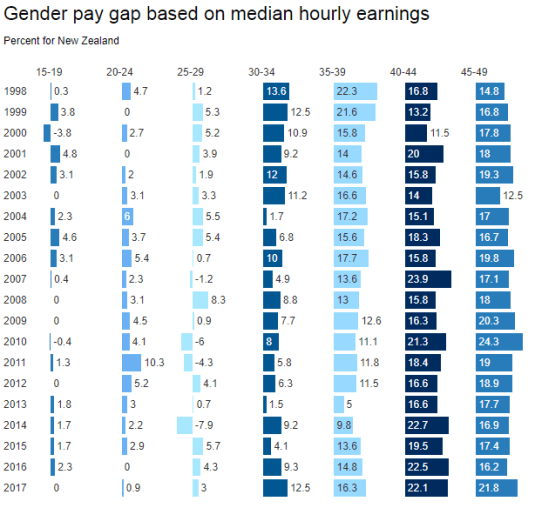
Why no gender pay gap or a reverse gender pay gap if twenty something?
08 Sep 2017 Leave a comment
in discrimination, gender, labour economics
Will @jacindaardern @nzlabour never lie about poverty and inequality trends?
06 Sep 2017 Leave a comment
in discrimination, economic history, gender, labour economics, politics - New Zealand
Labour cannot claim that incomes are falling if since the end of the recession in the early 1990s, there has been rapid income growth including for Maori and Pacifika, at least 50%.
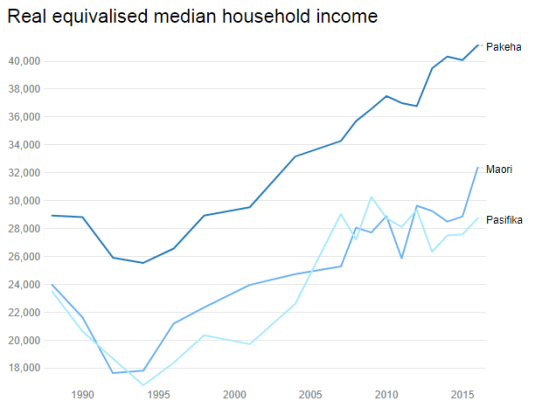
Source: Bryan Perry, Household incomes in New Zealand: Trends in indicators of inequality and hardship 1982 to 2016. Ministry of Social Development (2017).
Income equality has been stable for several decades and consumption inequality is declining. Another area where Labour is unable to lie from now on.
Child poverty has been fairly stable for 20 years so to say it is getting worse and worse is a lie.
Real wages started growing again after the passage of the Employment Contract Act in 1993 as documented by impeccable left sources. Another area where Labour must not lie.
Our take on the latest Household Incomes in NZ report closertogether.org.nz/no-quick-escap… @MaxRashbrooke #inequality #poverty http://t.co/c1L9QHs3fi—
Closer Together (@CloserTogether) July 09, 2014
Of course, the increase in real wages and real household incomes is larger than in the measured statistics because of their well-known bias measuring new goods and better quality goods.
Goes about saying that the OECD estimates New Zealand to have the smallest gender wage gap of any of its members.
Why Don’t Feminists Fight for Muslim Women?
04 Sep 2017 Leave a comment
in discrimination, gender, liberalism Tags: Age of Enlightenment, political correctness
The myth of studying Latin to build mental muscles – Bryan Caplan
02 Sep 2017 Leave a comment
in economics of education, human capital
2nd draft of NZ Herald op-ed was much better
31 Aug 2017 Leave a comment
in discrimination, gender, labour economics
The gender pay gap is about 18% at the big end of town. The gender pay gap for the top 10% has been stubbornly high for coming on 20 years (see graphic). For the bottom end of the labour market, the gender wage gap is barely 2%; it is 6% in the middle.
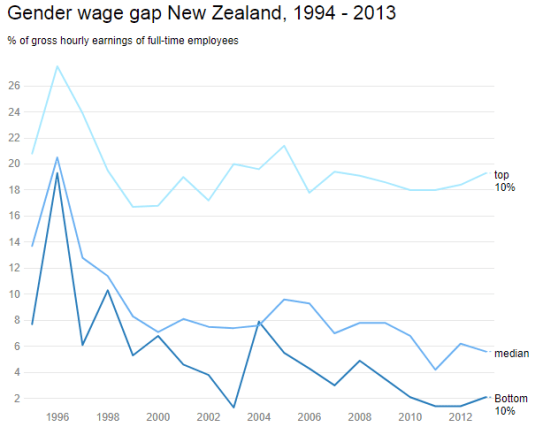
Source: OECD employment database from New Zealand Department of Labour estimates https://datawrapper.dwcdn.net/puwr7/1/
For those that blame the gender wage gap on an inherent inequality of bargaining power, that story does not add up when you consider that the workers with the most options, educated professionals and managers, experience the largest gender pay gap and a stubborn wage gap at that.
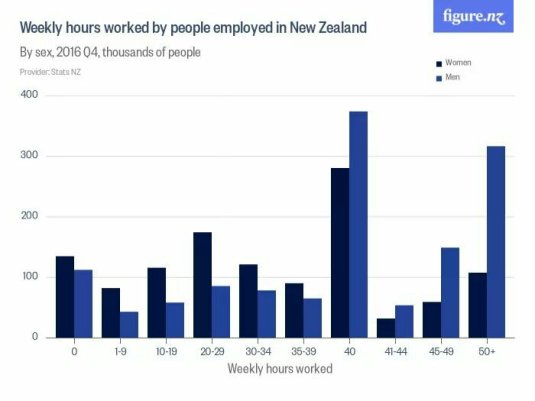
On the other hand, those workers at the bottom and in the middle of the labour market have gender pay gaps that could easily be explained by a small degree of trading off more agreeable hours of work for less pay. The gender gap always reduces considerably for workers that are 9-to-5, not in unpleasant, disagreeable or risky jobs, and a reasonable commuting distance.
But that does not explain the stubbornly huge pay gap for professionals. Part of it certainly could be explained by professional women making the most of their ability to trade off a comfortable income to have both a career and family.
There is more to the story. Quantifying the causes of the gender pay gap is never easy. Top American labour economist Claudia Goldin found that some careers severely penalise any time at all out of the workforce such as for motherhood or working less than punishingly long or rigid hours. Some of the best paid jobs simply offer little or no work-life balance.
But Goldin also found that the gender wage gap amongst the MBA professionals she studied disappears if hubby earns less! Female MBAs who have a partner who earn less than them earn as much as men do on an hourly basis but work fewer hours per week. She only discovered this vital result because Harvard MBA alumni filled out detailed surveys about themselves and their partners.
This is more important than you might think. Most couples have an age difference. Unless the researcher knows which is older and further up their career track, decisive information is missing on which is prioritising career or family. None of that information is available in New Zealand data.
Early work on the gender wage gap in the 1970s found that the number and spacing of children’s births was a major driver of the pay gap. But none of this is known to sexist employers so that they discriminate more against mothers with more children or who have children widely spaced apart. Key drivers of the gender pay gap are factors on the supply side relating to women’s choices.
Do not jump in too quick to say more maternity leave is a solution to the gender wage gap at the top end of town. I always remember Simon Chapple, New Zealand’s leading social economist, telling me that when maternity leave exceeds about 5 months or so, it starts increasing the gender wage gap. The career interruption is too great, key promotions are missed and education and skills depreciate.
Imagine if you were a 30-year-old male worker, about the average age professional women have children now, would it be a good career move to take a couple of years leave. You would come back reporting to the people you recruited and some of your skills would be rather out of date.
An example of this is that sexist hellhole which is Sweden. They have several years maternity leave, high tax rates and stubbornly high gender wage gaps. Their gender wage gaps at the bottom and the middle of the labour market are 3 to 4 times that of New Zealand. If your objective is a zero-gender wage gap, you should rethink your position about supporting more maternity leave.
If your position is equal opportunities for men and women, a zero-gender wage gap may not be your objective. Your objective is women should be free to choose. Maternity leave certainly expands women’s options, gives more choices, but it does not necessarily close the gender wage gap.
The graphic not published in my @NZHerald op-ed this morning
31 Aug 2017 Leave a comment
in discrimination, gender
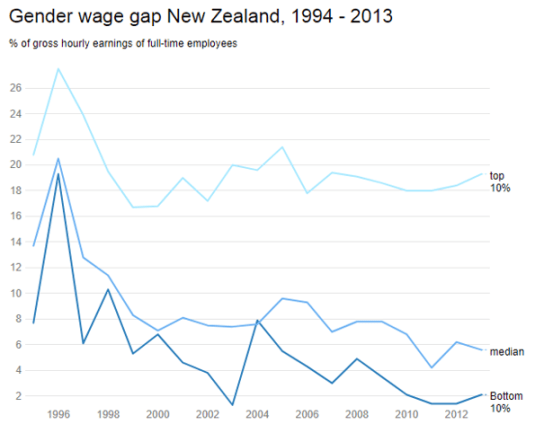
Source: OECD employment database using NZ Department of Labour estimates




Recent Comments