How To Not Be Poor
01 Jul 2017 Leave a comment
in applied price theory, labour economics, poverty and inequality Tags: child poverty, economics of fertility, family poverty, marriage and divorce
How WWI Got Women to Start Wearing Bras
26 Jun 2017 Leave a comment
in economic history, gender Tags: fashion
The National Living Wage: Jeopardising 60,000 Jobs
25 Jun 2017 Leave a comment
in applied price theory, labour economics, minimum wage Tags: British economy, British politics, living wage
Monty Python on the economics of begging and do-gooders
24 Jun 2017 Leave a comment
in applied price theory, labour economics, movies, occupational choice, poverty and inequality Tags: begging, do gooders, Monty Python, offsetting behaviour, unintended consequences
Faces of $15: Seattle Subway Slashes Staff
22 Jun 2017 Leave a comment
in applied price theory, applied welfare economics, economics of regulation, labour economics, minimum wage Tags: offsetting behaviour
If inequality drives crime, why are crime rates falling so rapidly in the US?
18 Jun 2017 Leave a comment
in applied welfare economics, economic history, economics of crime, politics - USA, poverty and inequality

Price Floors: The Minimum Wage
17 Jun 2017 Leave a comment
in applied price theory, applied welfare economics, economics of regulation, labour economics, minimum wage Tags: price controls
How much market power do employers have and over whom?
10 Jun 2017 Leave a comment
in labour economics, labour supply
The only labour markets with any significant evidence of a power of employers to keep wages down by the more than even a few percentage points are professional sports and professors (Boal and Ransom 1997, 2002; Ashenfelter, Farber and Ransom 2010; Hirsch 2008; Hirsch and Schumacher 2005). These professionals have few alternatives for their specialised skills. They invest up-front in skills demanded by one sport or one or two universities per city. It is in higher skilled markets where employers might take advantage of the more limited mobility of specialised human capital.

By contrast, the low-paid search in thick job markets because they can apply for most any unskilled vacancy in any industry that is albeit within their commuting radius (Hutt 1973; Alchian and Allen 1967, 1983; Manning and Petrongolo 2011). The higher skilled search in markets much thinner in near-by vacancies that open regularly which are well-matched to their idiosyncratic backgrounds (Lazear 2009; Fishback 1998; Manning 2006, 2011). The main hiring criteria for low-skilled vacancies is that the successful recruits be friendly and reliable (Osterman 2001). Little of their human capital is specialised and whose value depends on staying with one employer for a length of time.
Activists do not give employers their due for seeing entrepreneurial gain in tying their own hands to prevent opportunistic behaviour towards employees of all pay grades. Employers and the employee to accumulate specialised skills or experience have an incentive to share the costs and returns of that human capital to bind themselves to each other (Oi 1962, 1983a; Becker 1993). The employer pays for part of costs of specific human capital while the worker’s trainee wage pays for the rest. Employers then pay a premium over the wages the up-skilled worker could earn elsewhere to induce them to stay long enough to recoup their joint training investment (Leuven 2005; Becker 1993).
Many contractual and other arrangements emerge to reduce mischief in long-term relationships where one party depends on the other to stay in the relationship long enough for their specialised investment to be recouped (Alchian and Woodward 1987, 1988). Without long-term safeguards against opportunism after specialised assets have been sunk, many valuable relationships rich in specialised human capital might not be formed (Klein 1984, 1998; Klein, Crawford and Alchian 1978).
There is evidence that workers with similar skills in similarly attractive jobs, occupations and locations earn similar pay (Hirsch 2008). There can be unexpected shifts in the supply or demand for skills but these imbalances even themselves out once people have time to learn, update their expectations and adapt to the new market conditions (Ryoo and Rosen 2004; Bettinger 2010; Zafar 2011; Arcidiacono, Hotz and Kang 2012; Webbink and Hartog 2004). Skills supply and student enrolments can be ‘remarkably sensitive’ to changing career prospects (Ryoo and Rosen 2004).
Activists underrate the hand that the low-paid play. Employers are more likely to have power over the wages of higher skilled workers because of the more limited mobility of their human capital.
Despite these concerns about employer power over the wages of the more skilled, there is good evidence that the demand and supply of human capital responds to wage changes. Over- or under-supplied human capital leaves and enters in response to changes in wages until the returns from education and training even out with time (Ryoo and Rosen 2004; Arcidiacono, Hotz and Kang 2012; Ehrenberg 2004). As evidence of this equalisation of the returns on human capital across labour markets, the returns to post-school investments in human capital are similar – 9 to 10 percent – across alternative occupations, and in occupations requiring low and high levels of training, low and high aptitude and for workers with more and less education (Freeman and Hirsch 2001, 2008). Activists are proposing a living wage increase far larger than any upper-hand employers might play.
Swimming Pools Vs. Guns
09 Jun 2017 Leave a comment
in applied price theory, economics of crime, economics of information, economics of regulation, health and safety
PRECARIOUS WORK AS THE FLIP SIDE OF EFFICIENCY WAGES
02 Jun 2017 Leave a comment
in labour economics, labour supply, Marxist economics, minimum wage, poverty and inequality, unemployment Tags: living wage
Efficiency wages were put forward as a cause of what is now called precarious work. The efficiency wage hypothesis breathed considerable new life into the old theory of dual labour markets (Katz 1986; Dickens and Lang 1985).

The notion of a segmented labour market, of a primary and a secondary labour market, each with distinctly different wage setting mechanisms, was very much a fringe idea prior to the 1980s:
Efficiency wage theory provides a rare common meeting ground for mainstream and radical economists, because the far left in U.S. economics has taken the lead in developing theories of dual labor markets and for setting-out policy proposals for higher minimum wages based on the assumed validity of the efficiency wage approach (Gordon 1990, p. 1157).
The workers privileged enough to hired by firms paying an efficiency wage would enjoy job security, low job quit rates, good working conditions, career advancement, training and higher pay (Akerlof 1982, 1984; Bulow and Summers 1986; Dickens and Lang 1993). The remaining equally productive workers who were unlucky enough to be priced out of these good jobs by the job rationing implicit in an efficiency wage must fend for themselves in a secondary labour market; in precarious work with high quit rates, harsh workplace discipline, few promotions, little training and poor pay (Akerlof 1982, 1984; Katz 1986; Dickens and Lang 1985). Efficiency wages do not motivate greater employee effort unless the prospect of precarious work in this secondary labour market looms large in the back of their minds as their main alternative source of employment for those lucky enough to be employed in the good jobs in the primary labour market (Katz 1986; Bulow and Summers 1986).
Those workers crowded into these bad jobs in the secondary labour market find it to be a slow and difficult process to break into these better paying good jobs in the primary labour market. There are queues for the good jobs because they are paying above-market wages; many of those crowded into the bad jobs are women and minorities (Bulow and Summers 1986; Dickens and Lang 1985, 1993).
Akerlof, in his Nobel Prize lecture on behavioural macroeconomics, contended that the good and bad jobs caused by paying efficiency wages is central to explaining involuntary mass unemployment:
The existence of good jobs and bad jobs makes the concept of involuntary unemployment meaningful: unemployed workers are willing to accept, but cannot obtain, jobs identical to those currently held by workers with identical ability. At the same time, involuntarily unemployed workers may eschew the lower-paying or lower-skilled jobs that are available. The definition of involuntary unemployment implicit in efficiency wage theory accords with the facts and agrees with commonly held perceptions. A meaningful concept of involuntary unemployment constitutes an important first step forward in rebuilding the foundations of Keynesian economics (Akerlof 2002, p. 415).
Living wage activists already doubt that the market can provide steady wages growth and stable employment. Efficiency wages are a leading New Keynesian macroeconomic explanation for that. The living wage movement cannot pick and choose from what the efficiency wage hypothesis says about how well the labour market functions for those who are and are not in efficiency wage jobs.
Living wage activists are unwittingly following a course of action that leads to more job rationing, more precarious work and more unemployment. Those priced out of council jobs by a living wage such as the 17 parking wardens are left to take their chances in the rest of the local labour market. These workers must take bad jobs while queueing for the good jobs in the primary labour market. Instead of being sources of opportunity in their communities, councils through a living wage policy risk becoming drivers of labour market segmentation and the fostering of a precariat.
The fair-wage effort hypothesis is a theory of mass low-skilled unemployment
01 Jun 2017 Leave a comment
in business cycles, labour economics, labour supply, macroeconomics, personnel economics, unemployment Tags: efficiency wage, involuntary unemployment, living wage, mass unemployment, moral hazard
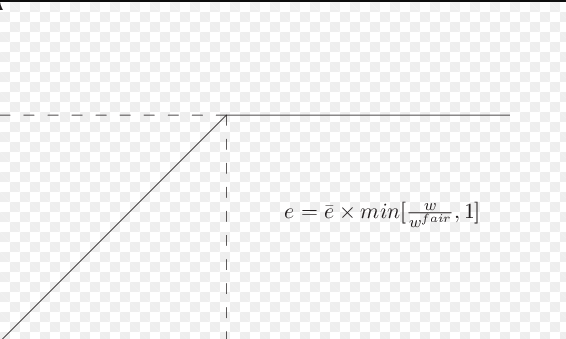
Living wage advocates make much of the demoralising effects of pay inequality on workplace productivity. In common with the efficiency wage hypothesis, this is another example of what Nozick (1974) called normative sociology; the study of what the causes of social problems ought to be. Again, living wage activists misconstrue what the fair-wage effort hypothesis was seeking to explain.
The fair-wage effort hypothesis aimed to fill gaps in the efficiency wage hypothesis by explaining why unemployment is so much higher among the lower skilled (Akerlof and Yellen 1988, 1990). Under the fair-wage effort hypothesis, workers slack off if paid less than they think they deserve:
The motivation for the fair wage-effort hypothesis is a simple observation concerning human behavior: when people do not get what they deserve, they try to get even (Akerlof and Yellen 1990, p. 256).
Lazear (1989, 1991) contends that employers too may want greater pay equity to temper over-competitiveness in teams. If pay and promotions in a team are linked to the relative performance of its members, large pay differentials may undermine co-operation and might encourage sabotage:
Very large pay spreads induce high effort, but they also create a work environment in the firm that is not very pleasant… individuals who are competing with one another can either seek to outperform others, or they can contribute to the failure of others. Such incentives can result in collusion (Dye, 1984) or in sabotage (Lazear, 1989). Thus, pay structure must strike a balance between providing incentives for effort and reducing the adverse consequences associated with this kind of industrial politics (Lazear and Shaw 2007, p. 95).
Lazear’s (1989, 1991) theory about the industrial politics arising from pay inequality stressed how sizable rewards to individual members of a team could lead to a lack of team play and lower team output. If the prizes were smaller for superior relative performance, the pay rise after a promotion or the annual performance bonus, there may be more teamwork (Lazear 1989, 1991). Akerlof and Yellen (1990) were correct in their insight that their hypothesis about fair-wage effort applies more to workers on lower wages with fewer chances of moving up promotion ladders and pay scales.
The fair-wage effort hypothesis is but another Keynesian macroeconomic theory of unemployment:
The hypothesis explains the existence of unemployment. Unemployment occurs when the fair wage w* exceeds the market-clearing wage. With natural specifications of the determination of w*, this hypothesis may explain why skill and unemployment are negatively correlated. In addition, it potentially explains wage differentials and labor market segmentation (Akerlof and Yellen 1990, p. 256).
The fair-wage effort hypothesis was developed as a descendant of the efficiency wage hypothesis because the latter cannot explain why wages are high for everyone working in high-paid industries:
All workers in better-paid industries tend to receive positive wage premia. That is, the wages of secretaries and engineers are highly correlated across industries. Ease of supervision and the magnitude of turnover costs might well be correlated across industries for a given occupation explaining, for example, why, say, skilled machinery operators receive positive wage premia in most industries. But there is no obvious reason why, say, secretaries, should be harder to supervise in the chemical industry where pay is high, than in the apparel industry where pay is low (Akerlof and Yellen 1988, p. 44).
The efficiency wage hypothesis also offered “no natural explanation” for why unemployment rates [JC1] are much higher among the lower-skilled (Akerlof and Yellen 1990). Skilled workers are probably more difficult to monitor than the unskilled so their unemployment rates should be higher than for the low-skilled as a worker discipline device but the contrary is the case (Akerlof and Yellen 1990).
The fair-wage effort hypothesis aimed to fill gaps in the efficiency wage theory of unemployment by explaining why low skilled unemployment is much higher both in recessions and in better times. Living wage activists must accept that their demands for workplace pay equity increase low-skilled unemployment under a Keynesian theory which they embrace with considerable enthusiasm.
If high wages are paid to the more skilled to attract the best applicants, demands for pay equity by their less skilled co-workers could price some of them out of the market leading to unemployment (Akerlof and Yellen 1988, 1990). In addition, pay equity norms are unlikely to respond quickly enough to fluctuations in aggregate demand so wages can be too high in recessions causing mass unemployment of the low skilled (Akerlof and Yellen 1988, 1990; Summers 1988). The unemployed cannot successfully offer to work for less than existing workers do in a recession because they cannot make a credible commitment to eschew fairness considerations once hired (Akerlof 2002).
An important premise of New Keynesian macroeconomics is demands for pay equity come at a price. At a price that is high enough for the efficiency wage and fair-wage effort hypotheses to be put as a comprehensive New Keynesian explanations of involuntary mass unemployment (Gordon 1990).
Both the efficiency wage hypothesis and the fair-wage effort hypothesis are attempts to flesh out a theory of extensive labour market dysfunction leading to mass unemployment. Living wage activists are using Keynesian theories of why wages are too high to argue for even higher wages.
Average Income of Top 10% in 2010
31 May 2017 Leave a comment
in financial economics, human capital, labour economics, labour supply, occupational choice Tags: superstars, top 1%
An efficiency wage is a theory of persistent mass unemployment
31 May 2017 Leave a comment
in business cycles, labour economics, macroeconomics, personnel economics, unemployment Tags: efficiency wage, involuntary unemployment, living wage, moral hazard
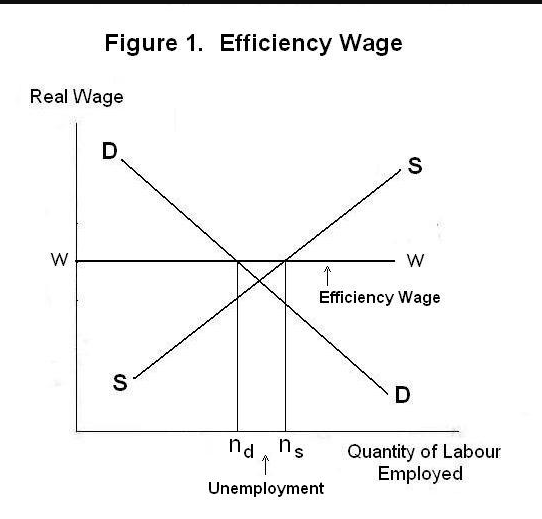
Shapiro and Stiglitz (1984) first put forward their theory of an efficiency wage to explain large-scale involuntary unemployment. It was the very real threat of a prolonged spell of unemployment (rather than a morale boosting pay rise) that motivated employees to put in more effort to keep their jobs:
To induce the worker not too shirk, the firm attempts to pay more the “going rate”; then, if the worker is caught shirking and is fired, he will pay a penalty. If it pays one firm to raise its wage, it pays all firms to raise their wages. When they all raise their wages, the incentive to shirk again disappears. But as all firms raise their wages, the demand for labour decreases, and unemployment results. With unemployment, even if all firms pay the same wage, a worker has an incentive not to shirk. For, if he is fired, an individual will not immediately obtain another job. The equilibrium unemployment rate must be sufficiently large that it pays the workers to work rather than take the risk of being caught shirking (Shapiro and Stiglitz 1984, p. 435).
The unemployed offer to work for less pay than existing employees but they are not hired because their labour productivity is not assured at this lower pay (Akerlof 1982, 1984; Katz 1986, 1988; Yellen 1984). There is involuntary mass unemployment because of the prevalence of efficiency wages:
If there is involuntary unemployment in an equilibrium situation, it must be that firms, for some reason or other, wish to pay more than the market-clearing wage. And that is the heart of any efficiency-wage theory (Akerlof 1984, p. 79).
Direct parallels were quickly drawn between the efficiency wage hypothesis as a worker discipline device eliciting greater effort and the old Marxist concept of the reserve army of the unemployed:
… it pays each firm to increase its wage to eliminate shirking. When all firms do this, the average wage rises and employment is reduced. In equilibrium, all firms pay a wage above the market clearing level, creating unemployment. Since jobs are scarce and rationed, the loss of a job can involve a lengthy spell of unemployment. The reserve army of the unemployed acts as a discipline device making shirking costly (Katz 1986, pp. 240-41).
It is misconceived for living wage activists to use a theory of lengthy unemployment to justify a large living wage rise but argue that there will be little unemployment because of the efficiency wage effects. This is the exact opposite of what the efficiency wage hypothesis is about. The leading Keynesian macroeconomists of their generation were striving to explain mass unemployment:
… the economists who developed the theory of efficiency wages (including Shapiro and Stiglitz, Akerlof and Yellen and Yellen) had no illusions that they were helping business firms to discover a new way to increase profits. The economists who developed efficiency wage theory were trying to explain persistent unemployment. Hence the title of Janet Yellen’s famous survey, Efficiency Wage Models of Unemployment.
The question that motivated efficiency wage theory was not why firms should raise wages but why firms don’t cut wages when they should. The answer they gave was that firms don’t cut wages despite unemployment because they fear that workers will respond to lower wages with reduced productivity …
In the original efficiency wage literature, there is no wishful thinking–no idea that we can have more of everything that we want without trade-offs. Instead of being desirable, the efficiency wage is a problem because lower wages would reduce unemployment and be better for the economy … the efficiency wage theorists took it for granted that to the extent that firms can increase profits by raising wages they have already done so (hence the persistent unemployment) (Tabarrok 2015).
Gordon was blunt about why efficiency wage arguments were popular and with whom
If any development in the microeconomics of labor markets could be called the “rage of the 80s,” it is efficiency wage theory, based on the hypothesis that worker productivity depends on the level of the real wage. When there is such a link between the wage rate and worker efficiency, firms may rationally pay a real wage rate that exceeds the market-clearing level. Firms may refuse to reduce the wage to hire members of a pool of unemployed workers who may be available at a lower wage, fearful that a reduction in real wages for existing workers may reduce productivity by more than the gain in lower wages (Gordon 1990, p. 1157).
Living wage activists have it the wrong way around about the social benefits of paying an efficiency wage. The efficiency wage hypothesis is a theory of why wages are too high and employment is too low (Akerlof 1982, 1984, 2002; Yellen 1984; Katz 1986, 1988; Stiglitz 2002). Living wage activists are using a well-respected theory of why wages are too high to argue that wages are too low.


Recent Comments