30 Apr 2017
by Jim Rose
in discrimination, economics of love and marriage, gender, labour economics, labour supply
Tags: gender gap, gender wage gap, household production, housework, leisure time, marriage and divorce
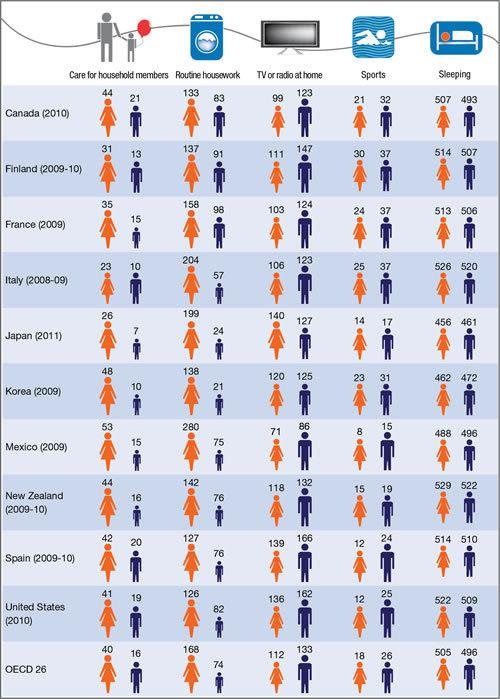
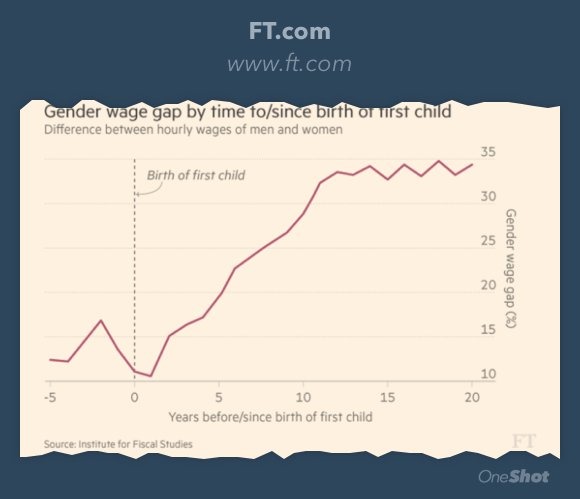
A major factor driving the gendered division of labour and household effort is technology. Tiny differences in comparative advantage such as in child rearing immediately after birth can lead to large differences in specialisation in the market work and in market-related human capital and home production related work and household human capital (Becker 1985, 1993).
These specialisations are reinforced by learning by doing where large differences in market and household human capital emerge despite tiny differences at the outset (Becker 1985, 1993). This gendered division of labour and household effort is hard to change because large payments must be made to influence choices about care giving by highly specialised people with large but different accumulations of market and household human capital.
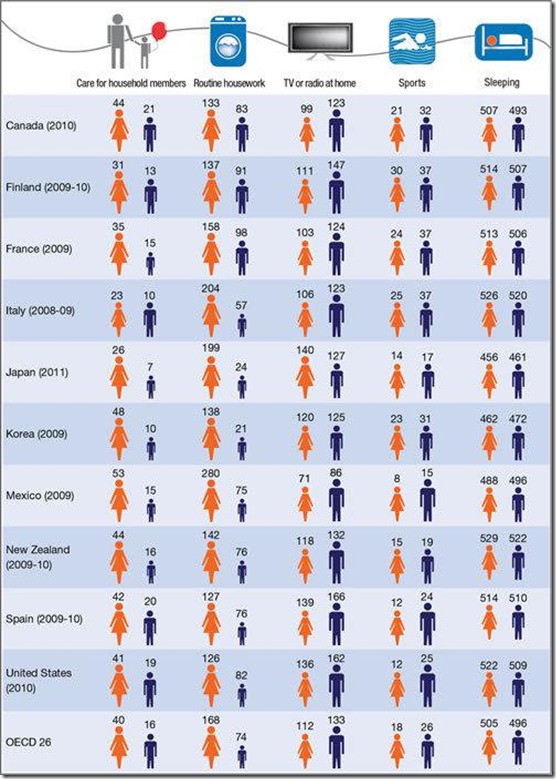
From a luck egalitarian perspective, many of the differences in earnings and occupations flow accidents of birth in deciding gender and who parents might be. Social inequalities that flow from brute bad luck call for interventions to put them right, if they work.
Many laws already make up for brute bad luck such as job protections while on maternity leave, and government funded parental leave pay and child care subsidies. Employers can do little to redress these accidents of birth nor do they have sufficient resources to put them right. For this reason, for example, parental leave pay is usually taxpayer funded rather than employer funded.
…
28 Apr 2017
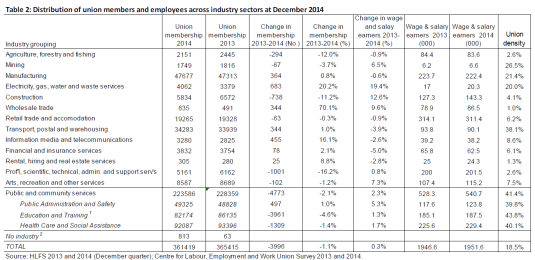
Source: The state of New Zealand Union membership in 2014, Sue Ryall and Stephen Blumenfeld.
Image
by Jim Rose
28 Apr 2017
by Jim Rose
in discrimination, economics of education, gender, human capital, labour economics, labour supply, occupational choice
Tags: college major, College premium, gender wage gap, graduate premium, reversing gender gap
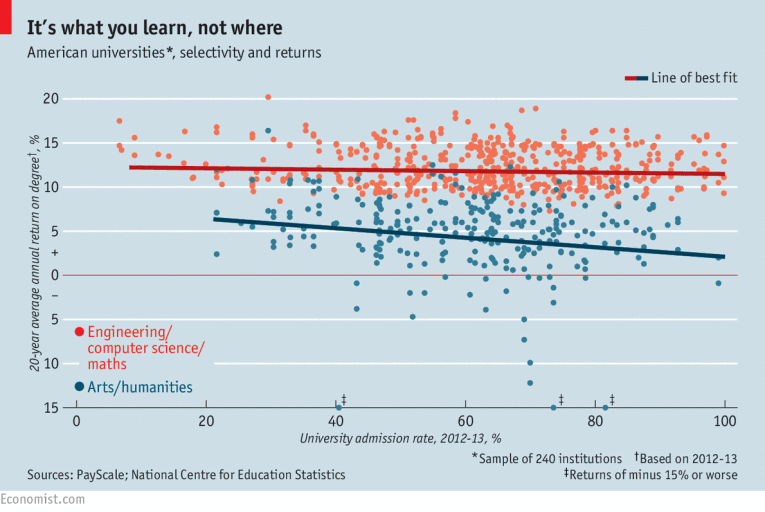
Rosen (2004) suggests that the engineering market responds strongly to economic forces. The demand for engineers responds to the price of engineering services and demand shocks such as recessions and defence cuts. Supply and enrolment decisions are remarkably sensitive to career prospects in engineering. Students also appear to use some forward-looking elements to forecast demand for engineers. Many students also change their majors in light on more information on whether the like their current choices and other news (Bettinger 2010).
This evidence of students use forward-looking elements to forecasting the occupational demand for human capital suggests that better information may improve these choices. The government has made a distributional judgment to expand the choices open to women. The growing evidence of relatively accurate forward looking decisions making by students suggests that they will respond to additional information on prospects in different careers.
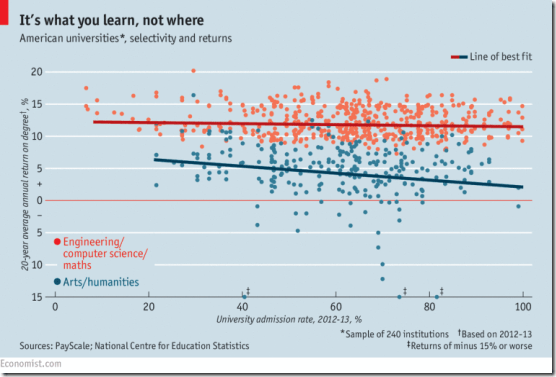
In addition, earnings from some occupations are also more uncertain than others. The STEM occupations are an example where shortages and, in particular, surpluses are more common because durable goods industries bear the bulk of business cycle risk. There is also the political unpredictability of defence and R&D spending. Women seem to prefer jobs that are more secure. Some occupations have higher risks of injury than others. Fewer parents, and both single fathers and single mothers, in particular, enter these more injury prone occupations.
These gender-based preferences about hazards and uncertainties will lead to fewer women entering occupations that are more injury prone or more at risk to recessions and industry-specific downturns. Occupational segregation will still persist in the labour market in the relative absence of either discrimination or a gendered division of labour and household effort.
27 Apr 2017
by Jim Rose
in discrimination, gender, labour economics, labour supply
Tags: compensating differentials, female labour force participation, female labour supply, gender wage gap, part-time work, worklife balance
The growing number of women in the workforce and the domination of women of the graduate labour supply will increase the incentive of employers to make the workplace more family-friendly. Those that do not will lose access to the majority of graduate and other talent.
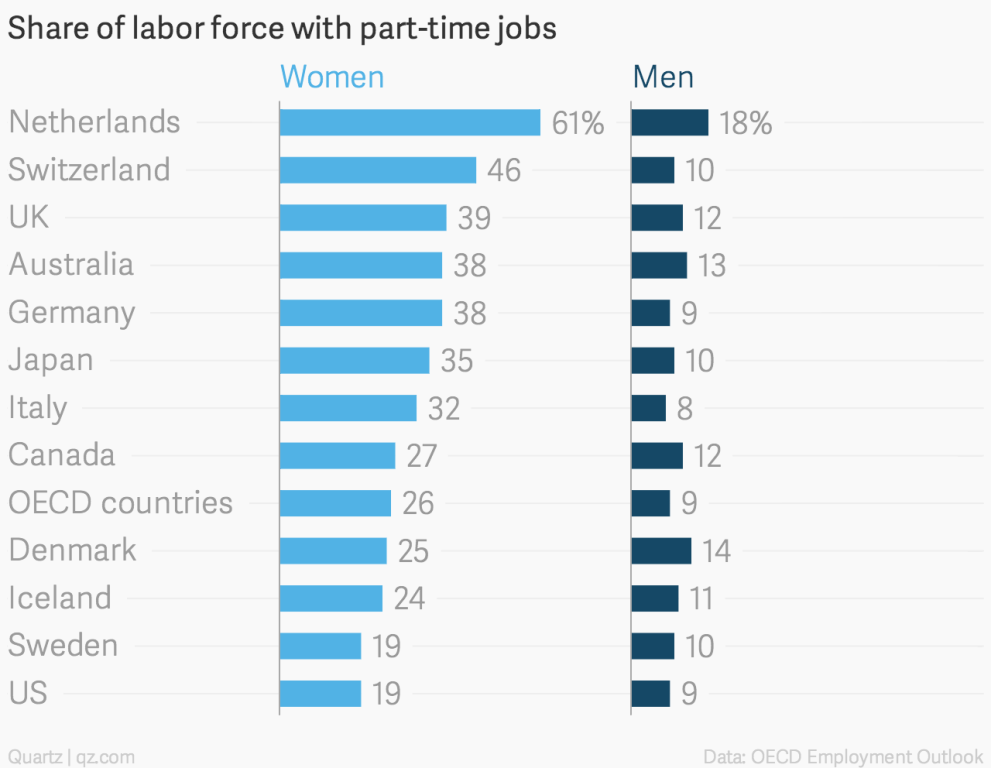
Various work place amenities can be traded-off in salary packages. In industries and occupations where this is cheap to do, the wage offset will be least. These industries and occupations will attract a large number of women because the net returns to them in cash wages plus amenities is higher than for men who value the greater work life balance less.
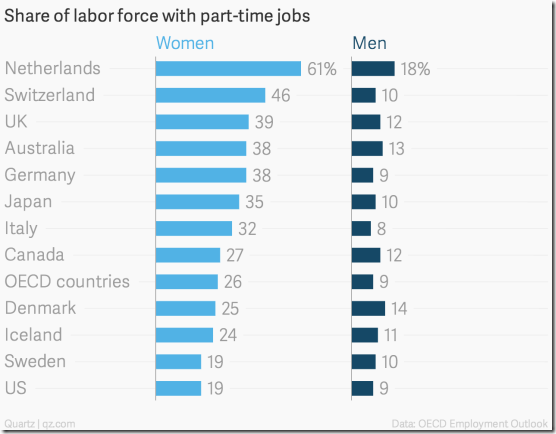
Occupational segregation around the clock illustrates the delicate trade-off between cash wages and the costs of flexible hours. Men and women work in much the same occupations between 8 and 6. There are big gaps if you are an early starter or work over dinner time.
Changing the production processes of these industries to induce more women to work unsocial hours would require large reduction in production and pay. Fewer women will not enter occupations with more unsocial hours unless they are paid more than in other jobs where it is cheaper to provide work-life balance and still pay higher cash wages.
Occupations and industries where family friendliness is more costly will be male dominated because women qualified enough to enter these occupations will go elsewhere where the cash wages sacrifice is less for work-life balance. Influxes of women will occur in industries where technological trends lower the cost of work-life amenities and the growing number of female skilled workers forces employers’ hands. They must adapt or lose out in competition for talent. The large influx of women into male dominated higher skilled occupations and professions suggests that some occupations can provide work-life balance at a lower cost than others.
26 Apr 2017
by Jim Rose
in discrimination, economic history, economics of education, gender, human capital, labour economics, labour supply, occupational choice
Tags: College premium, gender, reversing gender gap
There are important drivers of occupational segregation that are not related to either discrimination or a gendered division of labour. These newer drivers are strong enough to explain most of the gender differences in tertiary education attainment. These gender differences in tertiary attainment and the drivers behind them will be important determinates of the future occupational segregation and entry into male dominated professions.
An important driver of occupational segregation is modern technological trends ranging from ICT to the emergence of a larger service sectors that have worked to the comparative advantage of women. Many more service jobs and fewer jobs based on brawn have increased the returns to women of working more in the market. In addition, a range of personality traits and skills work to the advantage of women in some occupations more than others.
Another driver of occupational segregation is women have more occupation choices than men because of different personality traits and superior verbal and readings skills. The superior verbal and reading skills of teenage girls are the equivalent of ½ a year’s extra schooling (OECD 2012). Teenage girls also score higher on personality traits such as persistence. Teenage boys have many more behavioural problems. Boys do especially poorly in broken families (Bertrand and Pan 2013).
Jacob (2002) found that higher non-cognitive skills and larger college premiums for women accounted for 90 percent of the gender gap in higher education. Becker, Hubbard and Murphy (2010) found that differences in the costs of college for women and men are primarily due to differences in the distributions of non-cognitive skills and explain most of the world-wide overtaking of men by women in higher education.
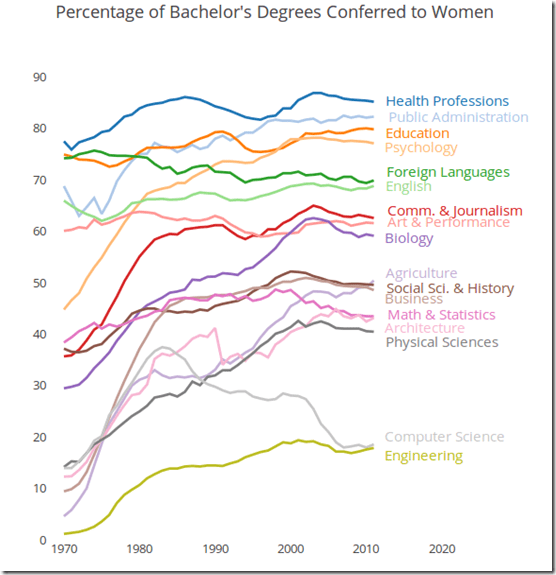
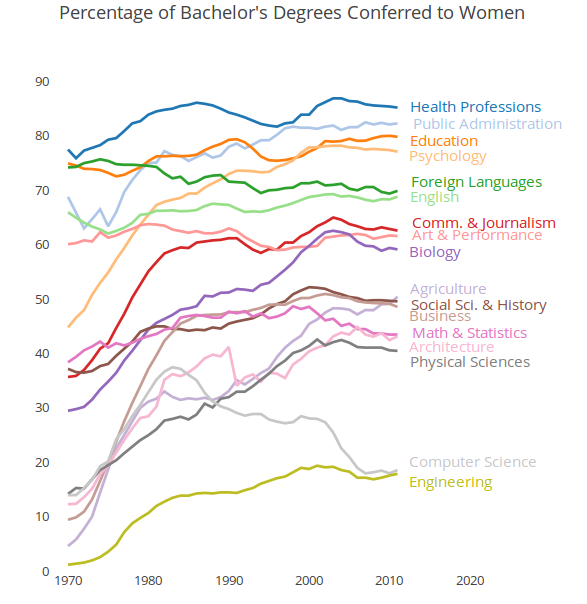
About 64% of recent New Zealand graduates were women but they have personality traits and verbal and reading skills that will be rewarded more in interactive professions and occupations. Women are pursuing these comparative advantages and maximising the rewards on their skills and natural talents. These differences in skills and talents will lead to different occupational and sub-occupational distributions and mixes as compared to men despite any differences arising from the gendered division of labour and effort and costs of care giving.
There are fewer women in STEM occupations because they have better options elsewhere to reward both their mathematical and scientific talents and their superior verbal and reading skills.
The wage premium for STEM occupations for women is much smaller because they have options elsewhere that reward all of their skills, not just their STEM related talents. Young women and well as young men do equally will in the STEM prerequisites. Women have more options is other higher power occupations that make full use of their more diverse talents.
Occupational segregation in the future in part will be driven the same factors behind much higher female tertiary educational attainment. Superior verbal and readings skills and greater persistence and self-organisation among women will make some occupations more rewarding for them as compared to males who have, on average, fewer of these innate talents.
23 Apr 2017
by Jim Rose
in discrimination, gender, human capital, labour economics, labour supply, occupational choice
Tags: economics of fertility, female labour force participation, female labour supply, gender wage gap, marriage and divorce, occupational segregation
The main drivers of female occupational choice are supply-side (Chiswick 2006, 2007). This self-selection of females into occupations with more durable human capital, and into more general educations and more mobile training that allows women to change jobs more often and move in and out of the workforce at less cost to earning power and skills sets.
Chiswick (2006) and Becker (1985, 1993) then suggest that these supply side choices about education and careers are made against a background of a gendered division of labour and effort in the home, and in particular, in housework and the raising of children. These choices in turn reflect how individual preferences and social roles are formed and evolve in society.
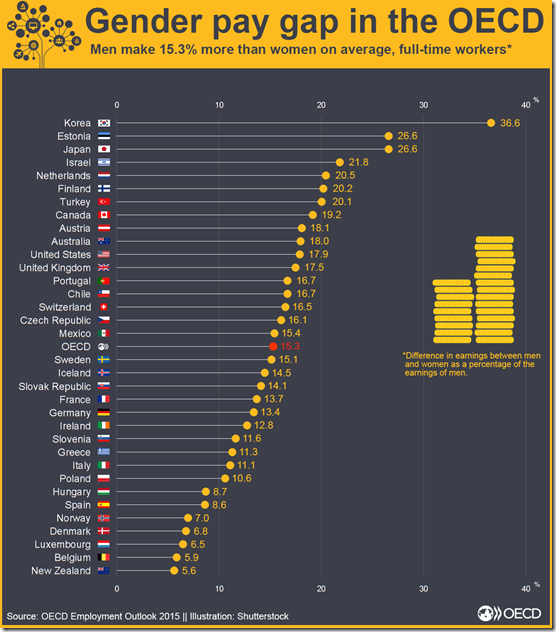
These adaptations of women to the operation of the labour market, in turn, reflect a gendered division of labour and household effort in raising families and the accidents of birth as to who has these roles (Chiswick 2006, 2007; Becker 1981, 1985, 1993).
The market is operating fairly well in terms of rewarding what skills and talents people bring to it in light of a gendered division of labour and household effort and the accidents of birth. The issue is one of distributive justice about how these skills and family commitments are allocated and should be allocated outside the market between men and women when raising children. As in related areas such as racial and ethnic wage and employment gaps, these gaps are driven by differences in the skills and talents that people acquired prior to entering the labour market. …
22 Apr 2017
by Jim Rose
in discrimination, gender, human capital, labour economics, labour supply, occupational choice
Tags: female labour supply, gender wage gap, occupational segregation, worklife balance
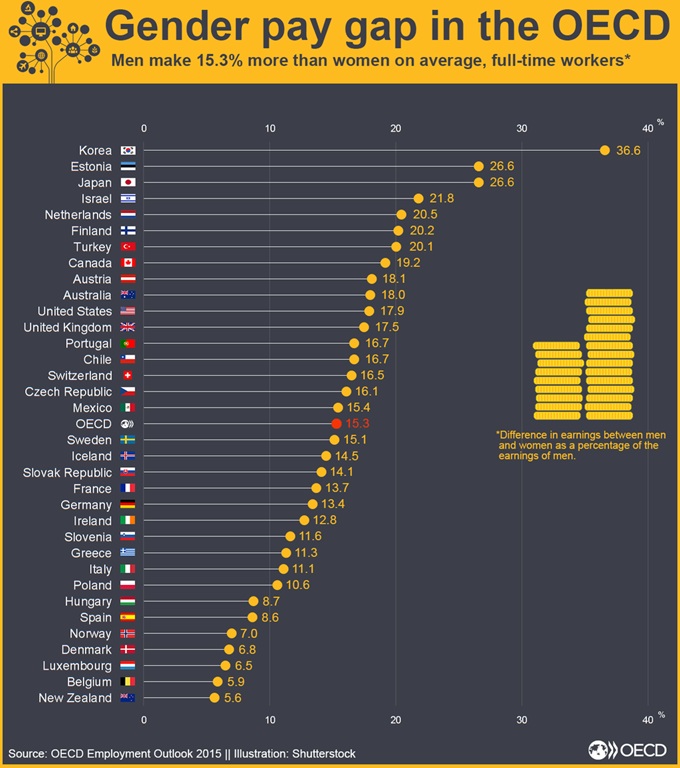
Developments in recent decades greatly increased the options for women to combine careers and family. The unadjusted gender wage gap is narrow while the gender education gap has reversed. The progress with closing the gender gaps in employment and education in recent decades makes the crafting of further gender-based policy interventions more challenging.
The remaining gender gaps reflect much more thorny issues such as work-life balance rather than mid and late 20th century concerns such as large gender differences in education participation and attainment, sex discrimination and full-time motherhood raising much larger families.
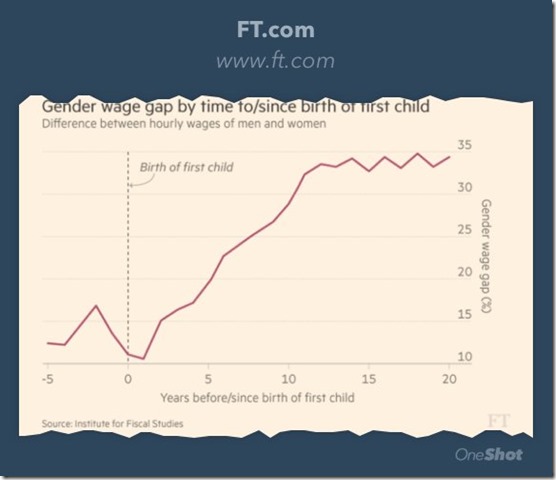
Parental leave, early childhood education and child care subsidies have increased in New Zealand in recent years. Early childhood education spending is high in New Zealand by international standards but spending on child care subsidies is less generous (OECD 2012).
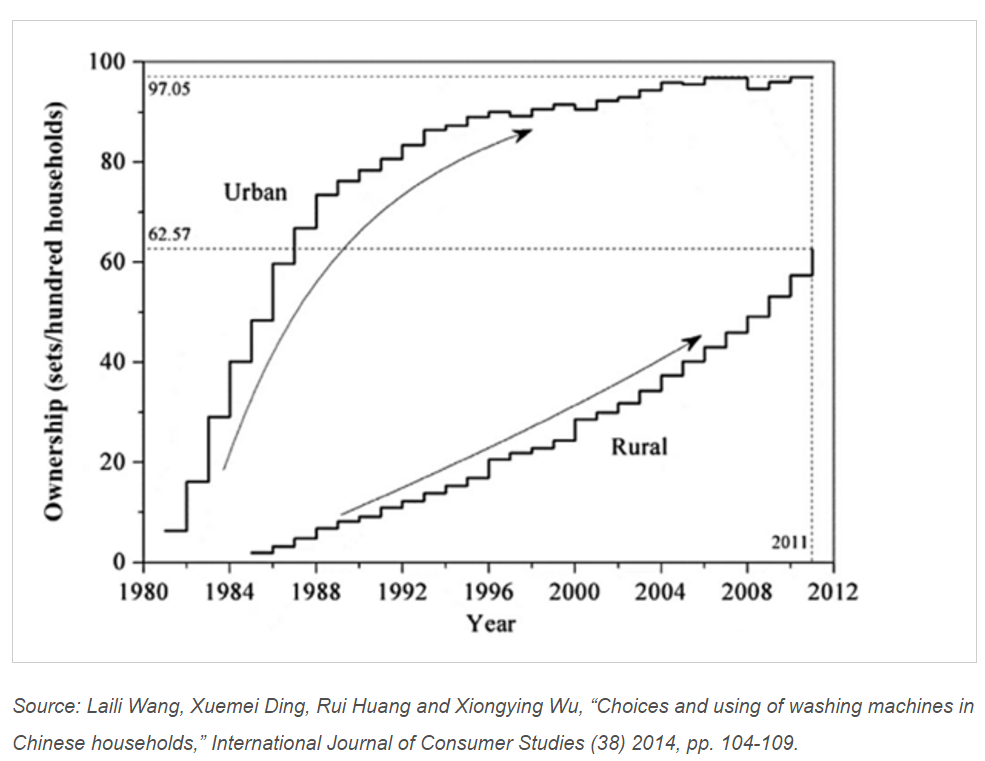
The main drivers of greater female labour force participation and greater investment in long-duration professional educations were access to reliable contraception, the rise of service sector and other jobs that depend on brains instead of brawn, the automation of housework with white goods, and rising incomes increasing the opportunity cost of having a large number of children.
This is a first in a series of blogs on occupational segregation and gender.
21 Apr 2017
by Jim Rose
in discrimination, gender, health and safety, labour economics, labour supply, occupational choice, politics - New Zealand
Tags: and gender gap, compensating differentials, gender wage gap, value of life, workplace injuries
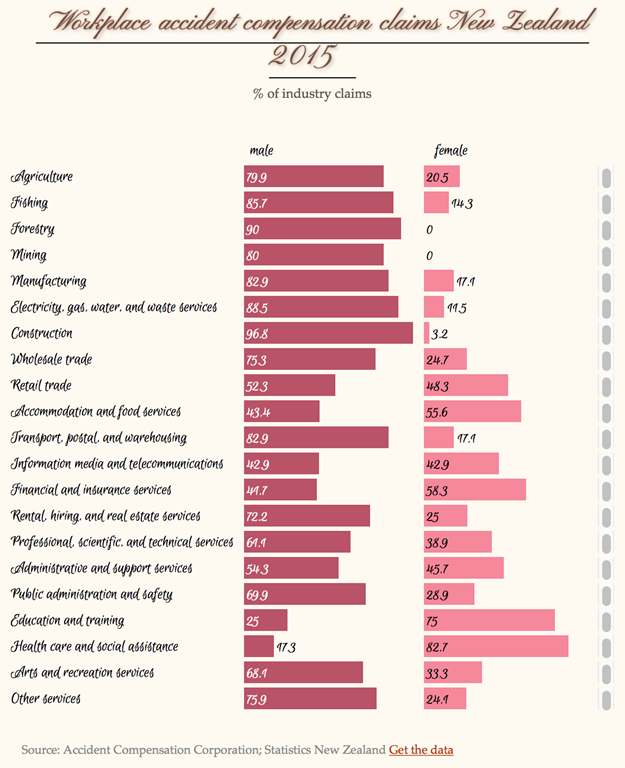
Gender gaps in injuries and fatalities go beyond those industries demanding physical.strength.
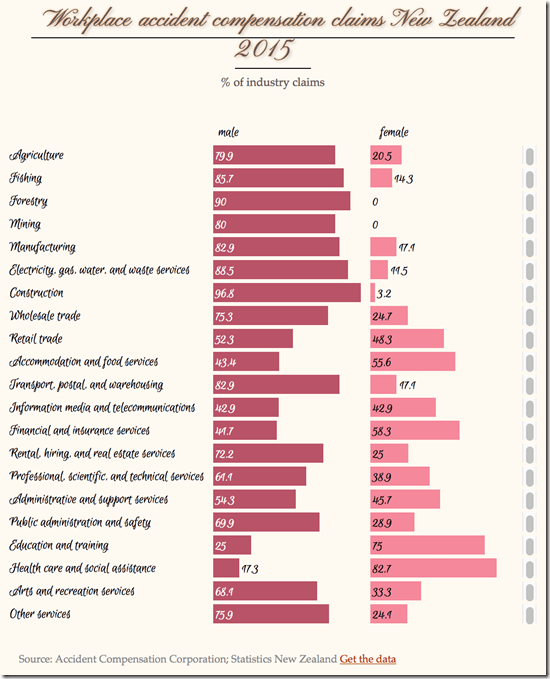
There are noticeable differences in the occupational choices of single people, parents, and single parents. Women choose safer jobs than men; single moms or dads are most averse to fatal risk because they have the most to lose. About one quarter of occupational differences between men and women can be attributed to the risks of injury and death.
All but 3 of the fatal workplace accidents in New Zealand in 2015 were men.
![image_thumb[1]](https://utopiayouarestandinginit.com/wp-content/uploads/2017/04/image_thumb1_thumb.png?w=556&h=338 "image_thumb[1]")
Source: Accident Compensation Corporation, Statistics New Zealand.
This gender gap in the risk of injury and death can lead to a significant gender wage gap because of the wage premium associated with these risks and in particular the risk of death as Viscusi explained.
The bottom line is that market forces have a powerful influence on job safety. The $120 billion in annual wage premiums referred to earlier is in addition to the value of workers’ compensation. Workers on moderately risky blue-collar jobs, whose annual risk of getting killed is 1 in 10,000, earn a premium of $300 to $500 per year.
The imputed compensation per “statistical death” (10,000 times $300 to $500) is therefore $3 million to $5 million. Even workers who are not strongly averse to risk and who have voluntarily chosen extremely risky jobs, such as coal miners and firemen, receive compensation on the order of $600,000 per statistical death…
Other evidence that the safety market works comes from the decrease in the riskiness of jobs throughout the century. One would predict that as workers become wealthier they will be less desperate to earn money and will therefore demand more safety.
A German study was able to reduce a raw gender wage gap of 20% to 1% after accounting for differences between gender in the risk of injury and death in addition to the usual factors. This 2007 study found that they were the 2nd study ever to make this adjustment.
Previous Older Entries Next Newer Entries


![image_thumb[1]](https://utopiayouarestandinginit.com/wp-content/uploads/2017/04/image_thumb13.png "image_thumb[1]")


Recent Comments