Gary Becker – The Challenge of Immigration: A Radical Solution
17 Feb 2017 Leave a comment
in Gary Becker, human capital, labour economics, labour supply Tags: economics of immigration
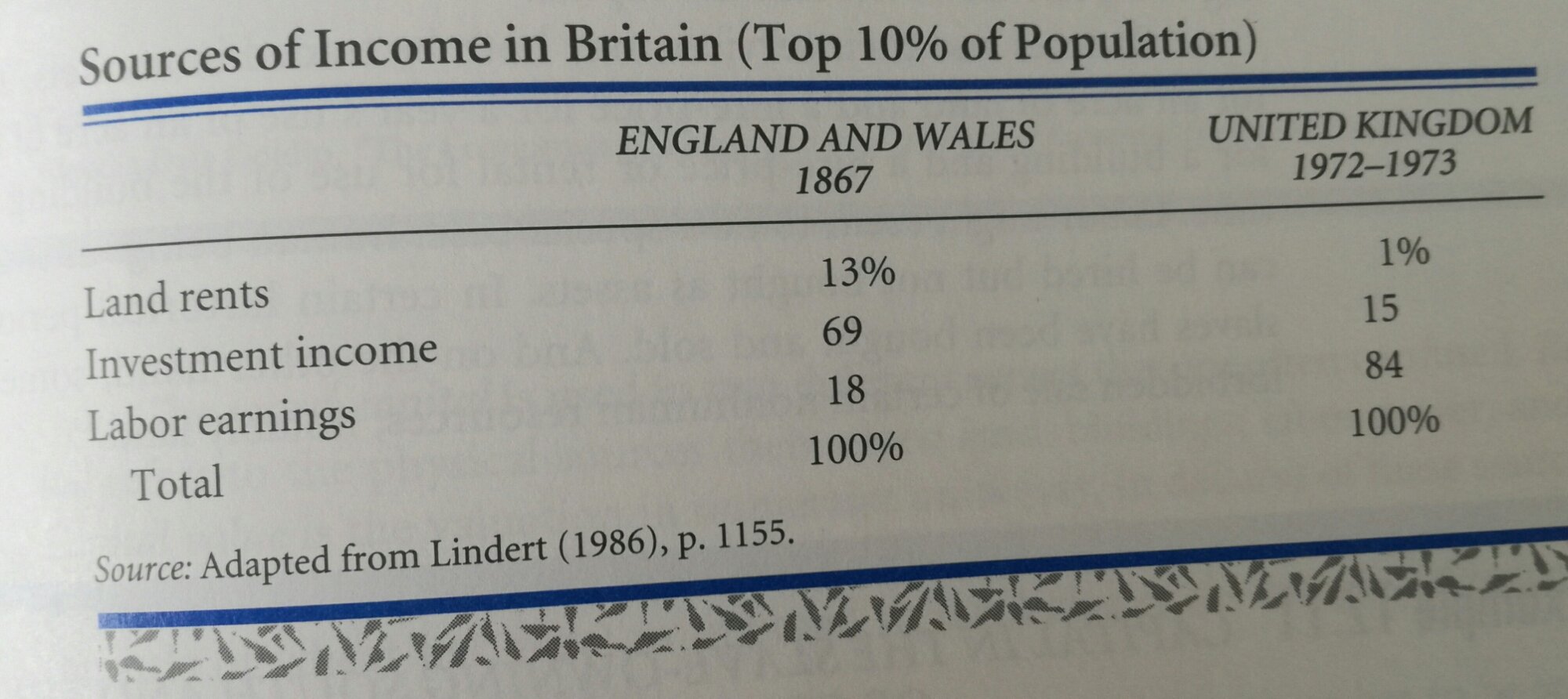
Unmanned air force drones beset by labour shortage
16 Feb 2017 Leave a comment
in defence economics, labour economics, labour supply
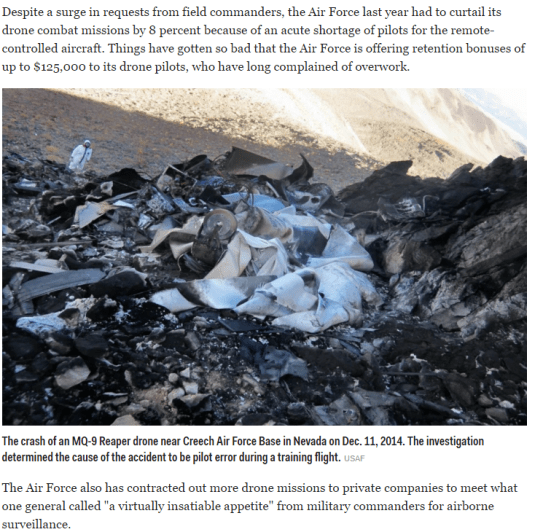
It takes up to 300 people to keep an unmanned drone in the sky verses about 100 for an air force fighter jet.
The tractors are coming, the tractors are coming for all the horses
16 Feb 2017 Leave a comment
in economic history, industrial organisation, labour economics, labour supply Tags: agricultural economics, creative destruction, technological unemployment, technology diffusion
Many new technologies display long adoption lags, and this is often interpeted as evidence of frictions inconsistent with the standard neoclassical model. We study the diffusion of the tractor in American agriculture between 1910 and 1960 — a well known case of slow diffusion — and show that the speed of adoption was consistent with the predictions of a simple neoclassical growth model.
The reason for the slow rate of diffusion was that tractor quality kept improving over this period and, more importantly, that only when wages increased did it become relatively unprofitable to operate the alternative, labor-intensive, horse technology
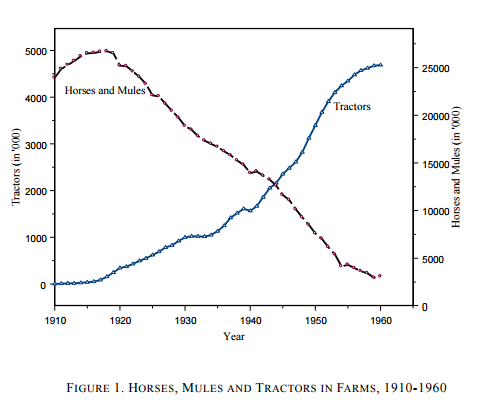
Source: Frictionless Technology Diffusion: The Case of Tractors By RODOLFO E. MANUELLI AND ANANTH SESHADRI
Deirdre McCloskey on the Unsavory History of the Minimum Wage – Cafe Hayek
14 Feb 2017 Leave a comment
in applied price theory, economic history, history of economic thought, labour economics, minimum wage
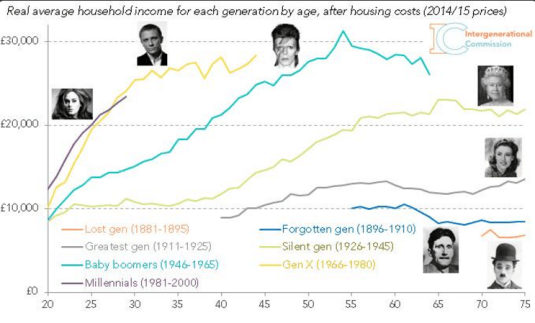
Wondering which generation you’re in, choose your icon
13 Feb 2017 Leave a comment
in applied price theory, economic history, poverty and inequality, urban economics

Bryan Caplan on “The Economics of Immigration”
11 Feb 2017 Leave a comment
in applied price theory, applied welfare economics, economic history, human capital, labour economics, labour supply Tags: economics of immigration
What’s wrong with the American economy? John Cochrane
09 Feb 2017 Leave a comment
in applied price theory, applied welfare economics, economic growth, economic history, labour economics, macroeconomics
More on who is winning the battle of the sexes
09 Feb 2017 Leave a comment
in discrimination, economics of education, gender, human capital, labour economics Tags: behavioural genetics, educational psychology, gender gap, gender wage gap, reversing gender gap

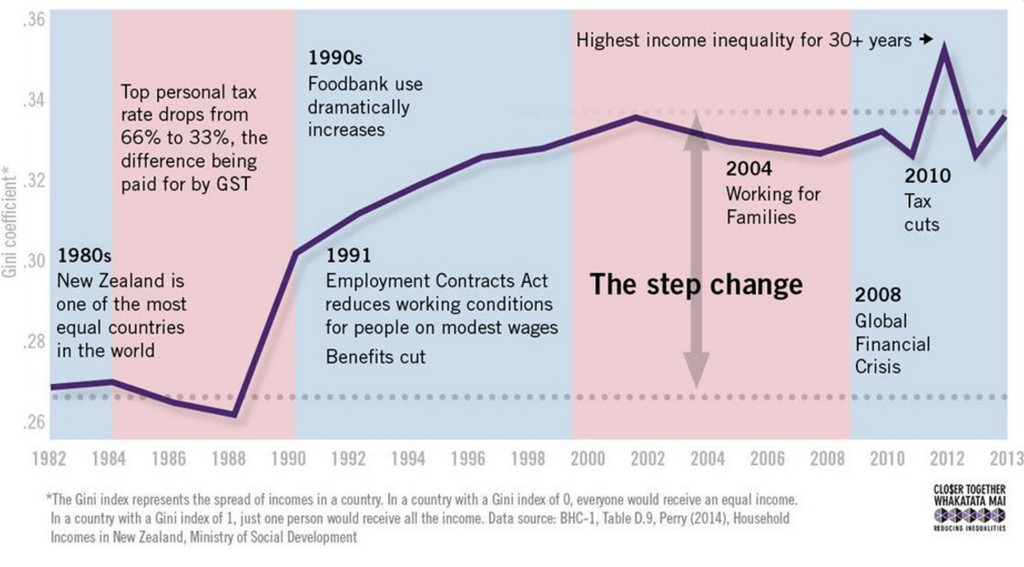
Just what are the scars of 170 years of colonialization?
07 Feb 2017 Leave a comment
in applied price theory, constitutional political economy, discrimination, human capital, labour economics, politics - New Zealand

The weekend newspaper here in Wellington profiled a refugee from each of the 7 countries currently subject to Donald Trump’s travel ban. Each of the 7 found paradise in New Zealand.
These 7 refugees were relatively young and grew up in a chaotic war-torn home country. They spent considerable time in refugee camps under dire conditions. All they needed to make good was to move to a free country.
https://twitter.com/faisalhalabi/status/828071014697361409
An old mate of mine at University was a son of the Ukrainian war refugee. His dad was rounded up by the Nazis during the Second World War to be a factory slave. He came to Australia because that was the first country that would accept him and his Dutch wife.
My old mate’s dad did not want to go back to the Ukraine because it was now Russian rather than Polish territory. All his sons graduated in economics. His daughter is a senator. He worked in a factory in Bernie.
Through the Canberra chess club, I got to know a few Second World War refugees. They all found paradise in Australia.
People recover surprisingly quickly from setbacks if they are in a free country. The story of refugees confirms that again and again.
My great grandparents fled the Irish potato famine. I do not feel that is holding me back in the 21st century. Likewise, my dad was raised to Protestants and a Catholic- Protestant marriage was not so popular back then.


Recent Comments