David Henderson reminded me of the superb discussion by Milton Friedman in Capitalism and Freedom of the way in which the marketplace erodes prejudice.
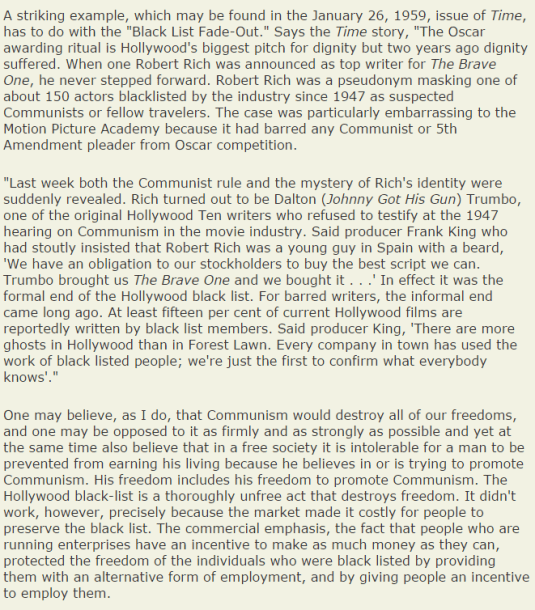
Source: Milton Friedman on Trumbo, David Henderson | EconLog | Library of Economics and Liberty.
Celebrating humanity's flourishing through the spread of capitalism and the rule of law
16 Feb 2016 Leave a comment
in applied price theory, discrimination, economics of media and culture, entrepreneurship, labour economics, law and economics, liberalism, politics - USA
David Henderson reminded me of the superb discussion by Milton Friedman in Capitalism and Freedom of the way in which the marketplace erodes prejudice.
Source: Milton Friedman on Trumbo, David Henderson | EconLog | Library of Economics and Liberty.
15 Feb 2016 Leave a comment
in applied welfare economics, economic growth, energy economics, environmental economics, environmentalism, labour economics, macroeconomics, politics - New Zealand Tags: expressive voting, Greenpeace, Leftover Left, New Zealand Greens, rational irrationality, Twitter left
15 Feb 2016 Leave a comment
in applied price theory, economics of regulation, entrepreneurship, labour economics, politics - USA
15 Feb 2016 Leave a comment
in applied welfare economics, politics - USA, welfare reform
The 1996 federal welfare reforms were supposed to condemn the poor to homelessness and no money to buy food. Deep poverty did not get worse as a result of those reforms. That alone refutes its critics.

Source: Take 2: Another Look at Bernie Sanders, Welfare Reform, and Deep Poverty | Mother Jones.
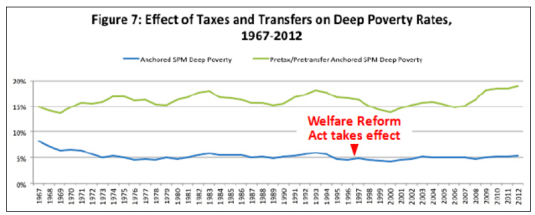
Source: New Study Says Poverty Rate Hasn’t Budged For 40 Years | Mother Jones.

Source: Weekend Follow-Up #1: Welfare Reform and Deep Poverty | Mother Jones.
15 Feb 2016 Leave a comment
in applied price theory, development economics, economic history, entrepreneurship, growth miracles, human capital, industrial organisation, labour economics Tags: billionaires, China, entrepreneurial alertness, superstars, top 1%
14 Feb 2016 Leave a comment
in applied price theory, applied welfare economics, human capital, politics - New Zealand, poverty and inequality Tags: distributive justice, expressive politics, free tuition, rational irrationality, social justice, top 1%
14 Feb 2016 1 Comment
in applied price theory, applied welfare economics, economics of regulation, fiscal policy, health and safety, health economics, politics - New Zealand
Do-gooding curmudgeon Gareth Morgan takes great pride in his positions on public policy and health and safety such as a sugar tax are evidence-based.
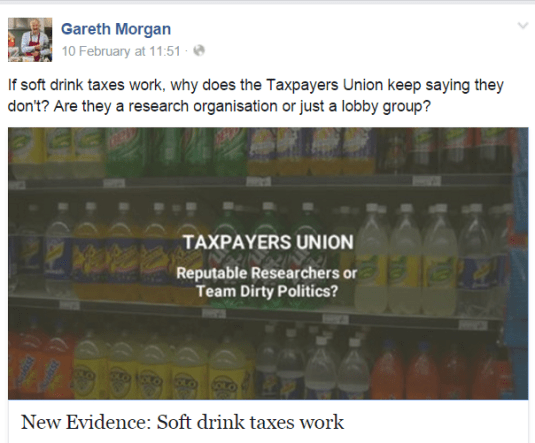
He is quick to suggest that those that disagree with them are ignorant or steeped in moral turpitude, preferably both. His offsider has even suggested that I am too dogmatic to bother arguing with. Me!
It will be a slow train coming before Gareth Morgan takes an evidence-based health and safety approach to bikes and swimming. They are dangerous activities that should be banned if he is to be consistent. Morgan is a keen motorcyclist and recently asked for exclusive access to a seaside batch.
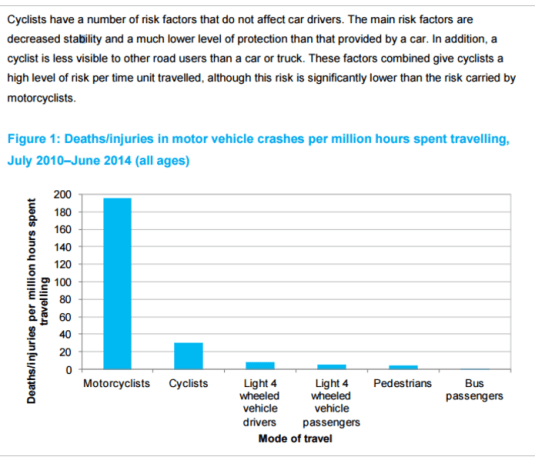
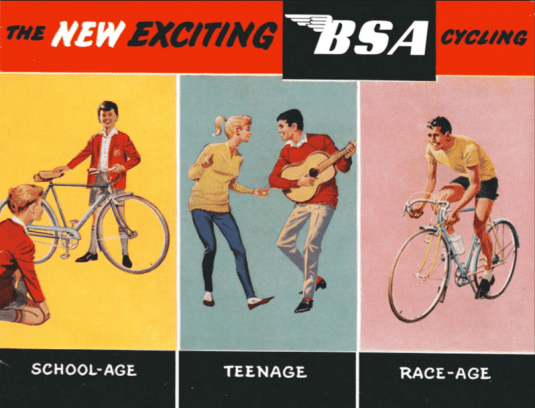
As I have previously argued, all the evidence suggests that riding a bike is dangerous. Both motorcycles and bicycles are way more dangerous than travelling by car.
Riding a motorbike and a bike should both be banned to protect motorcyclists and bicyclists from themselves. Like people who drink sugary drinks, they just do not understand the risks.
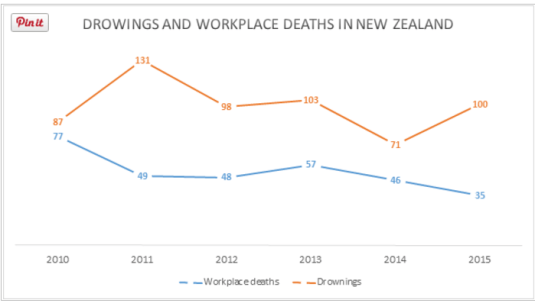
Swimming is an even more dangerous activity with multiple fatalities of a weekend common in summer. Again, people do not understand the risks of swimming both in the city and in rivers. They must be protected from themselves.
The argument that Gareth Morgan and his entourage will make in response to a demand for bans is the exact same one made against the food police.
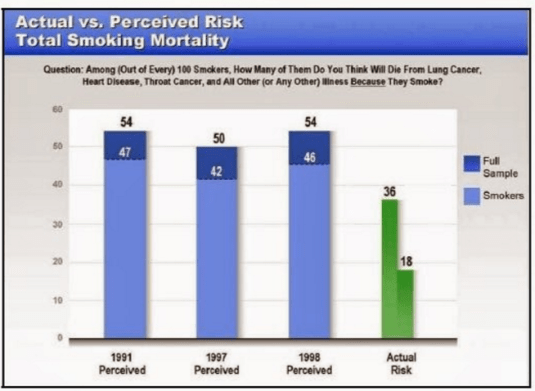
I am sure Morgan will point out that people know that riding a bike or swimming is dangerous. Even those living in a cave also know that drinking sugary drinks and having a smoke is also dangerous. Indeed, the evidence is people overestimate the risks of these socially disapproved activities rather than underestimate them.
 The argument that Morgan and his entourage would use against banning bikes, motorbikes and swimming is voluntary assumption of risk.
We live in a free society. If people want to lead a risky life, they are free to do so as long as they do not harm others.

Morgan is quick to point out the cost of the public health system of sugary drinks and other targets of the food police and the safety Nazis.

Last time I looked, bicycle and motorbike accidents resulting trips to emergency wards and other expenses to the taxpayer.
You cannot have it both ways. Arguing that the fiscal cost of sugary drinks and other roads is a rationale for regulating their consumption. That argument applies just as strongly to the case for – updated banning motorbikes, bicycles and swimming.
Until Gareth Morgan’s do-gooding extends to calling for the banning of a passion of his life, which is motorcycling, his evidence-based crusades do not have much standing.
You cannot reject voluntary assumption of risk on a selective basis especially when you engage in one of those risky activities yourself.
UPDATE: Morgan has in the past called for the insurance levy on motorbikes to reflect risk better than is the case now.
…research we’ve done at the Motorcycle Safety Advisory Council indicates that the risk of serious and expensive injury on a motorcycle is around 45 times higher per person-kilometre travelled as it is for occupants of other vehicles.
And we have a lot more bumps, scrapes and bruises per person-kilometre as well.
It gets worse. We also found that up to 31 per cent of our injuries arise from incidents involving no other vehicles. In other words we do this to ourselves because we can’t handle the road conditions.
Now of course we can blame the road as some of us are wont to do, but the reality is in most cases it’s pure incompetence or lack of self-management.
Any charging regime that gives riders an incentive to ride within their level of competence, to self-manage risk by wearing better protective clothing for example, or even lifting competency levels has to be a win-win doesn’t it?
This is not a call for a ban. Moreover, this is just a calm discussion of actuarial risk and the rampant cross-subsidies in the New Zealand universal, no fault accident compensation scheme.
Buried in at all these remarks by Morgan is people have the right to take risks and ride a bike if they want. No similar courtesy to people who like sugary drinks and those who support their right to drink and eat what they please. No similar courtesy to honest disagreement over whether a sugar tax is worth the trouble and strife.
What I must also add is the Morgan Foundation is a famous advocate of sugar taxes but a little-known advocate of actuarially fair insurance levies on motorbike. If the notoriety was the other way around, this debate would have more credibility. That is why I missed it in the first draft of this post.
 I am still waiting for Gareth Morgan to call for bans on advertising of motorbikes and bicycles to children and on children’s television because they are impressionable. Why are motorbike and bicycle ads safe for children but cigarette and junk food ads not?
Milton Friedman argued that people agree on most social objectives, but they differ often on the predicted outcomes of different policies and institutions. This leads us to Robert and Zeckhauser’s taxonomy of disagreement
Positive disagreements can be over questions of:
1. Scope: what elements of the world one is trying to understand?
2. Model: what mechanisms explain the behaviour of the world?
3. Estimate: what estimates of the model’s parameters are thought to obtain in particular contexts?
Values disagreements can be over questions of:
1. Standing: who counts?
2. Criteria: what counts?
3. Weights: how much different individuals and criteria count?
Any positive analysis tends to include elements of scope, model, and estimation, though often these elements intertwine; they frequently feature in debates in an implicit or undifferentiated manner. Likewise, normative analysis will also include elements of standing, criteria, and weights, whether or not these distinctions are recognised.
Obesity by Occupation: In US police, firefighters, & security lead the pack. #dataviz
Source: wsj.com/articles/memo-… http://t.co/fPyQGKIUMk—
Randy Olson (@randal_olson) December 18, 2014
The origin of political disagreement is a broad church in a liberal democracy. Those you disagree with are not evil, they just disagree with you. As Karl Popper observed:
There are many difficulties impeding the rapid spread of reasonableness. One of the main difficulties is that it always takes two to make a discussion reasonable. Each of the parties must be ready to learn from the other.
Feel-good policies attacking sugar in drinks will do nothing but provoke opposition and delay the day when people confront the fact that they are going to the fatter than their parents and their grandparents because they are richer.
https://twitter.com/DKThomp/status/599218426620485633
I lost 18kg after I was diagnosed with type II diabetes. Giving up sugary drinks and biscuits contributed maybe 2 kg to that weight reduction. Central to that weight production was I was well motivated.
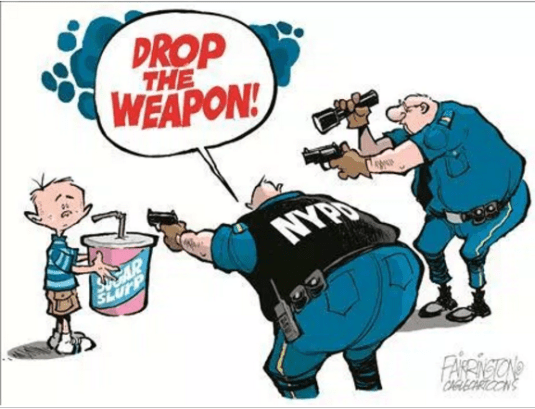
A rise in the price of a sugary drink and the political fight over that turns friends into enemies and is a distraction from the larger cause.
https://twitter.com/DKThomp/status/698174875630989316
Greg Mankiw was on point when he said that do we really think that meddling at this micro level of sugary drinks serves any purpose and can government be trusted to micromanage our lives with pushes rather than nudges:
To what extent should we use the power of the state to protect us from ourselves? If we go down that route, where do we stop?
Taxing soda may encourage better nutrition and benefit our future selves. But so could taxing candy, ice cream and fried foods. Subsidizing broccoli, gym memberships and dental floss comes next. Taxing mindless television shows and subsidizing serious literature cannot be far behind.
Even as adults, we sometimes wish for parents to be looking over our shoulders and guiding us to the right decisions. The question is, do you trust the government enough to appoint it your guardian?
14 Feb 2016 Leave a comment
in applied welfare economics, entrepreneurship, labour economics, poverty and inequality Tags: entrepreneurial alertness, inherited wealth, superstar wages, superstars, top 1%
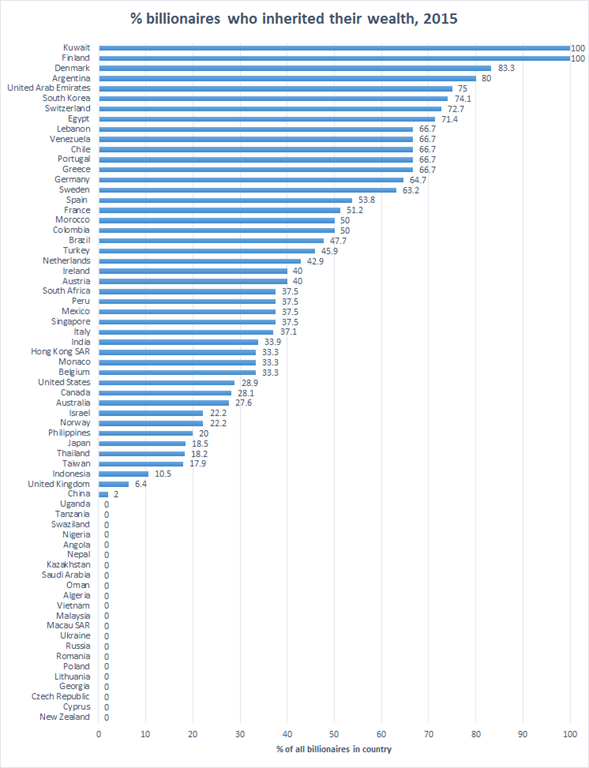
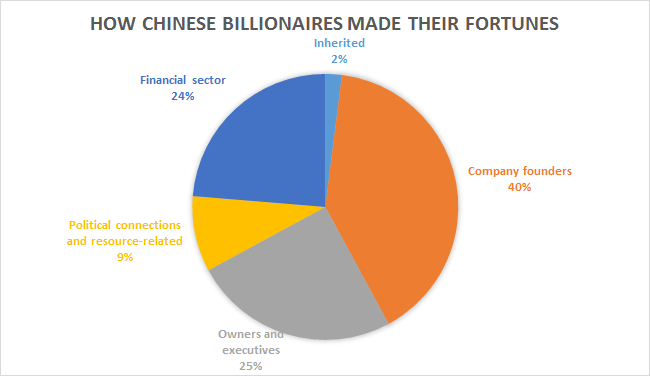
China has been capitalist for long enough for a billionaire to actually inherit his wealth.
13 Feb 2016 Leave a comment
in human capital, labour economics, labour supply, population economics
13 Feb 2016 Leave a comment
in economics of bureaucracy, economics of regulation, energy economics, entrepreneurship, industrial organisation, poverty and inequality, privatisation, rentseeking, resource economics
The 1826 Billionaires in the Forbes 2015 list are classified as rich through political connections if they made their money through past political positions, close relatives or friends in government, or questionable licenses, privatisations or resource extraction industries.
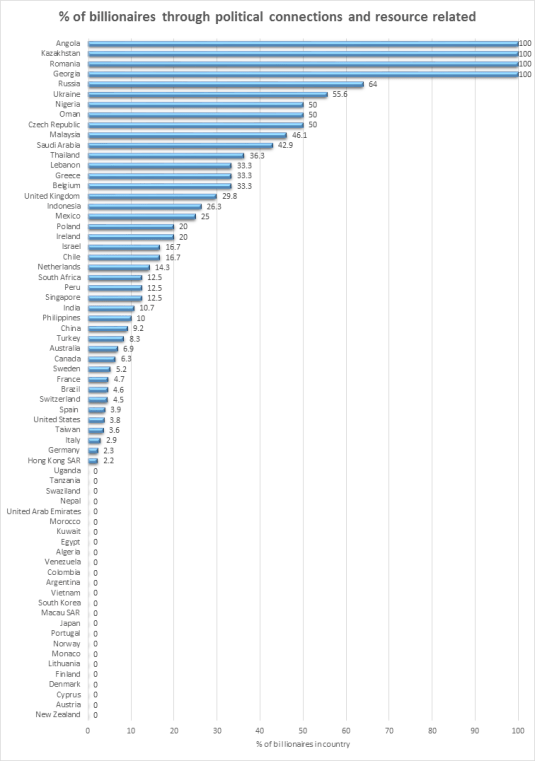
All privatizations were included in the politically-connected/resource-related category despite my data source acknowledging the possibility that the new owners may have transformed the company. Resource billionaires were all deemed to be lucky or cronies by my data source rather than diligent as some most certainly were. This is something of a slur by my data source given the industriousness of some resource billionaires some of whom were even geologists.
Political cronyism is a path to billionaire wealth mainly in the developing countries. Less than 10% of Chinese billionaires made their money through political connections, which is surprising.
13 Feb 2016 Leave a comment
in discrimination, economic history, gender, human capital, labour economics, labour supply Tags: gender wage gap
13 Feb 2016 Leave a comment
in labour economics, labour supply Tags: hours worked
13 Feb 2016 2 Comments
in applied welfare economics, economics of regulation, labour economics, occupational regulation, politics - USA
Some American states regulate twice as many occupations as others. This diversity in federalism strains any public interest explanation of occupational regulation.
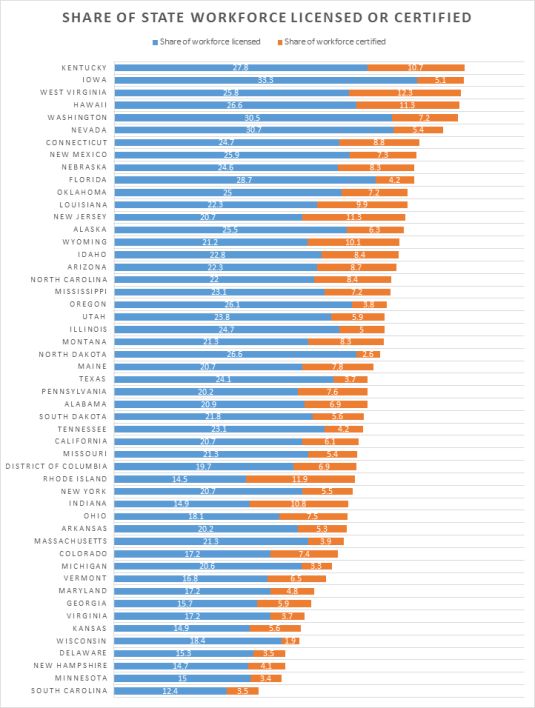
Source: Reforming Occupational Licensing Policies | The Hamilton Project – Kleiner and Vorotnikov (2015), based on an analysis of data from a Harris poll of 9,850 individuals conducted in the first half of 2013 (Harris Poll Interactive 2013).
The purpose of occupational regulation is to protect buyers from quacks and lemons – to overcome asymmetric information about the quality of the provider of the service.
Adverse selection occurs when the seller knows more than the buyer about the true quality of the product or service on offer. This can make it difficult for the two people to do business together. Buyers cannot tell the good from the bad products on offer so many they do not buy to all and withdraw from the market.
Any entrepreneur who finds ways of providing credible assurances of the quality of this service or work stands to profit handsomely. Brand names and warranties are examples of market generated institutions that overcome these information gaps through screening and signalling.
Screening is the less informed party’s effort, usually the buyer, to learn the information that the more informed party has. Successful screens have the characteristic that it is unprofitable for bad types of sellers to mimic the behaviour of good types. Signalling is an informed party’s effort, usually the seller, to communicate information to the less informed party.
The main issue with quacks in the labour market is whether there is a large cost of less than average quality service, and is there a sub-market who will buy less than average quality products in the presence of competing sellers competing on the basis of quality assurance. This demand for assurance creates opportunities for entrepreneurs to profit by providing assurance.
Mostly disciplinary investigations and deregistrations under the auspices of occupational regulation are for gross misconduct and criminal convictions rather than the shading of quality.
13 Feb 2016 Leave a comment
in economic growth, labour economics, labour supply, macroeconomics Tags: labour productivity
12 Feb 2016 Leave a comment
in applied welfare economics, economic history, labour economics, labour supply, politics - USA, welfare reform
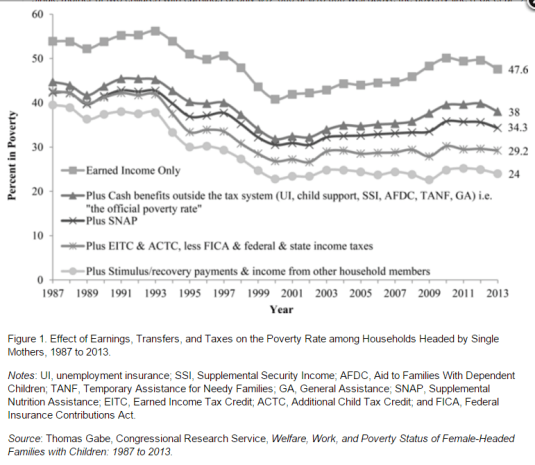
Despite the dire predictions, there has been a permanent reduction in child poverty of 25%, a 35% increase in the employment rates of never married mothers and a 16% increase in the employment rates of single mothers.
Minorities benefited the most from the 1996 US federal welfare reforms in terms of higher employment rates and lower child poverty rates.
As part of the 1996 reforms, Medicaid eligibility was not lost when going off welfare and single parents by getting a job qualified for the Earned Income Tax Credit.
Celebrating humanity's flourishing through the spread of capitalism and the rule of law
Celebrating humanity's flourishing through the spread of capitalism and the rule of law
Celebrating humanity's flourishing through the spread of capitalism and the rule of law
Celebrating humanity's flourishing through the spread of capitalism and the rule of law
Celebrating humanity's flourishing through the spread of capitalism and the rule of law
A History of the Alt-Right
Econ Prof at George Mason University, Economic Historian, Québécois
Celebrating humanity's flourishing through the spread of capitalism and the rule of law
Scholarly commentary on law, economics, and more
Beatrice Cherrier's blog
Celebrating humanity's flourishing through the spread of capitalism and the rule of law
Celebrating humanity's flourishing through the spread of capitalism and the rule of law
Celebrating humanity's flourishing through the spread of capitalism and the rule of law
Why Evolution is True is a blog written by Jerry Coyne, centered on evolution and biology but also dealing with diverse topics like politics, culture, and cats.
Celebrating humanity's flourishing through the spread of capitalism and the rule of law
A rural perspective with a blue tint by Ele Ludemann
DPF's Kiwiblog - Fomenting Happy Mischief since 2003
Celebrating humanity's flourishing through the spread of capitalism and the rule of law
The world's most viewed site on global warming and climate change
Tim Harding's writings on rationality, informal logic and skepticism
A window into Doc Freiberger's library
Let's examine hard decisions!
Commentary on monetary policy in the spirit of R. G. Hawtrey
Thoughts on public policy and the media
Celebrating humanity's flourishing through the spread of capitalism and the rule of law
Politics and the economy
A blog (primarily) on Canadian and Commonwealth political history and institutions
Reading between the lines, and underneath the hype.
Economics, and such stuff as dreams are made on
"The British constitution has always been puzzling, and always will be." --Queen Elizabeth II
Celebrating humanity's flourishing through the spread of capitalism and the rule of law
Celebrating humanity's flourishing through the spread of capitalism and the rule of law
WORLD WAR II, MUSIC, HISTORY, HOLOCAUST
Undisciplined scholar, recovering academic
Celebrating humanity's flourishing through the spread of capitalism and the rule of law
Res ipsa loquitur - The thing itself speaks
In Hume’s spirit, I will attempt to serve as an ambassador from my world of economics, and help in “finding topics of conversation fit for the entertainment of rational creatures.”
Researching the House of Commons, 1832-1868
Articles and research from the History of Parliament Trust
Reflections on books and art
Posts on the History of Law, Crime, and Justice
Celebrating humanity's flourishing through the spread of capitalism and the rule of law
Exploring the Monarchs of Europe
Cutting edge science you can dice with
Small Steps Toward A Much Better World
“We do not believe any group of men adequate enough or wise enough to operate without scrutiny or without criticism. We know that the only way to avoid error is to detect it, that the only way to detect it is to be free to inquire. We know that in secrecy error undetected will flourish and subvert”. - J Robert Oppenheimer.


Recent Comments