Dr Oliver Hartwich writes – Last week, an Uber driver surprised me in a conversation about the recent Court of Appeal decision classifying four Uber drivers as employees rather than contractors. My driver was blunt. He has no desire to be an employee. He values his flexibility to take breaks and drive when and where […]
Uber ruling – driving in the wrong direction
Uber ruling – driving in the wrong direction
09 Sep 2024 Leave a comment
in applied price theory, economics of regulation, labour economics, labour supply, law and economics, occupational choice, occupational regulation, property rights, Public Choice, rentseeking, transport economics, urban economics Tags: employment law, Uber
Employers are reluctant to admit workers work because they are paid wages
09 Sep 2024 Leave a comment
in applied price theory, labour economics, labour supply, managerial economics, organisational economics, personnel economics

https://www.facebook.com/groups/774813624767808/permalink/829599789289191/?ref=share&mibextid=NSMWBT
Recovering from New Zealand’s worst ever economic decision: The cancellation of the Kirk Government’s superannuation scheme
08 Sep 2024 1 Comment
in economic growth, economic history, fiscal policy, income redistribution, labour economics, labour supply, macroeconomics, politics - New Zealand, poverty and inequality, Public Choice, public economics
EEconomists wonder about the “New Zealand paradox”, which is that New Zealand under-performs economically given its policies, institutions, natural resources, educated people, and compliance with trade and other multi-lateral agreements. Our economic reforms from the mid-1980s and on were textbook economic theory and yet the real-world results disappointed. However, New Zealand has different policy settings […]
Recovering from New Zealand’s worst ever economic decision: The cancellation of the Kirk Government’s superannuation scheme
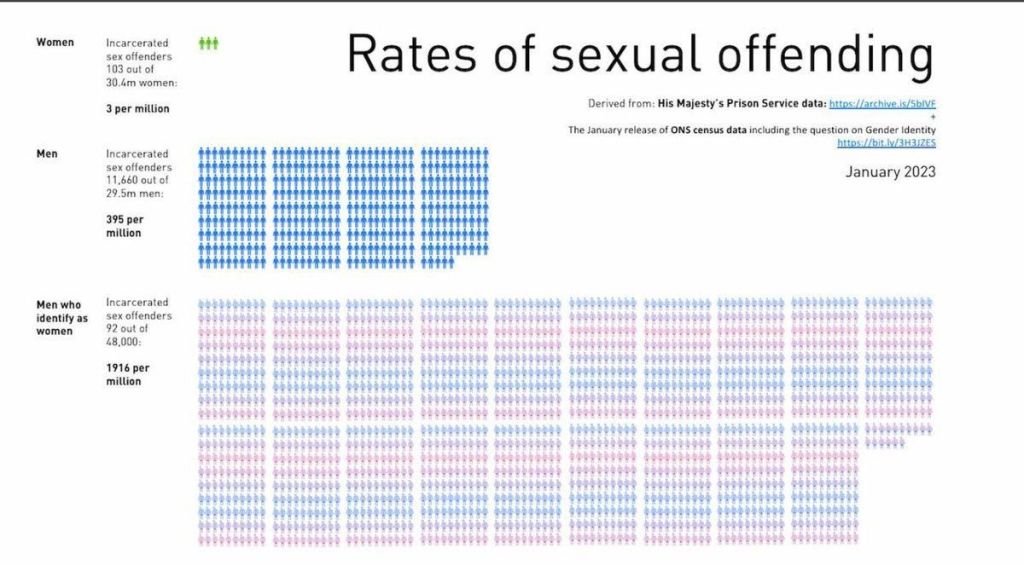
Transwomen and sex offending
06 Sep 2024 Leave a comment
in economics of crime, gender, law and economics Tags: crime and punishment, free speech, law and order, political correctness, regressive left
Friedman vs Stiglitz: Estonia and Poland vs. Argentina and Venezuela
06 Sep 2024 Leave a comment
in applied price theory, comparative institutional analysis, development economics, economic history, economics of bureaucracy, entrepreneurship, growth disasters, growth miracles, history of economic thought, income redistribution, industrial organisation, international economics, labour economics, law and economics, liberalism, Marxist economics, poverty and inequality, property rights, Public Choice, rentseeking, survivor principle Tags: Argentina, Chile, Poland, regressive left, Venezuela
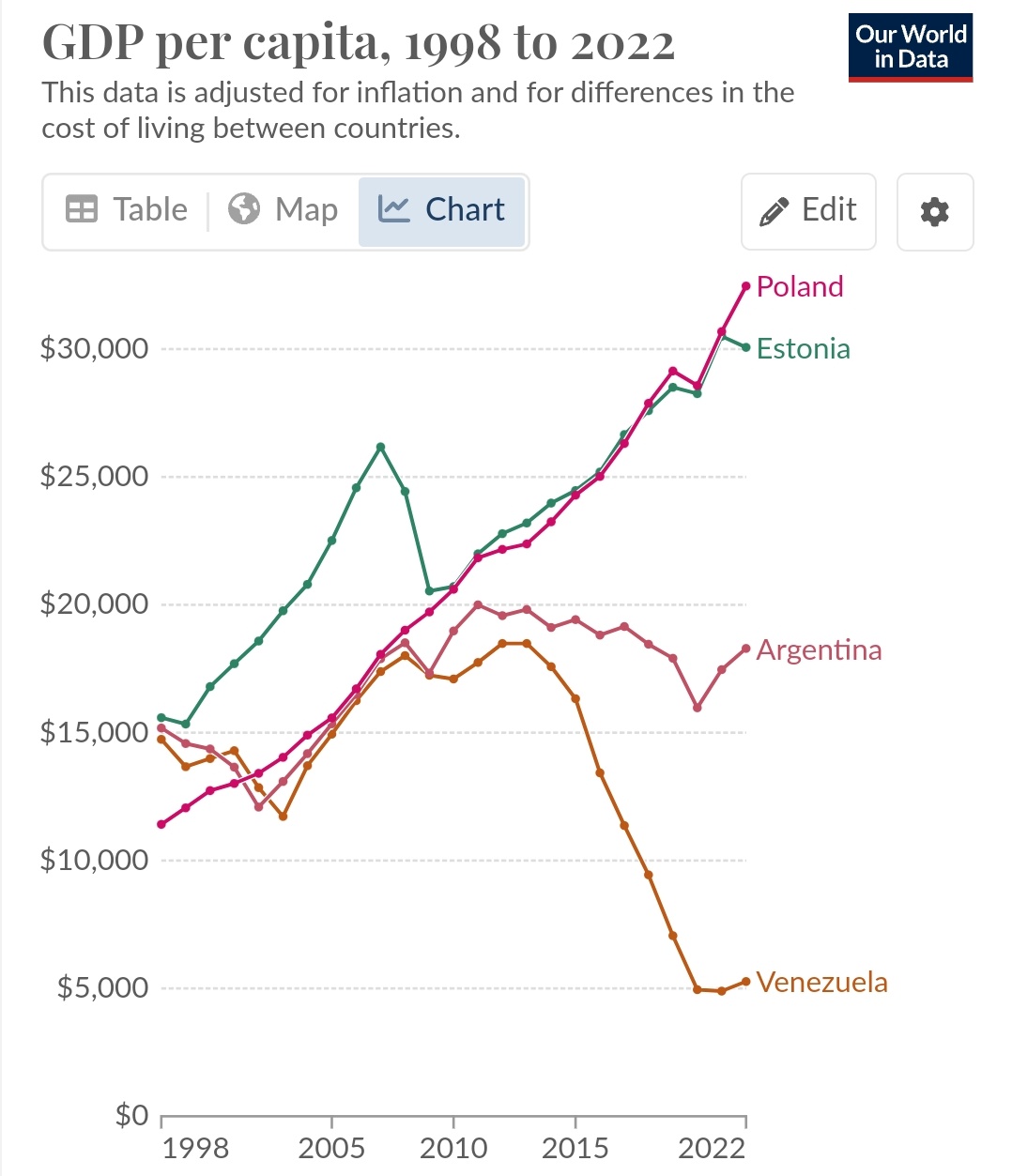
About 10 days ago, i showed that Milton Friedman was a much better economist than Joseph Stiglitz by comparing Chile (which followed Friedman’s ideas) and Venezuela (which followed Stiglitz’s ideas). It was a slam-dunk win for Friedman. Chile started poor and has become relatively prosperous. The opposite happened in Venezuela, which started relatively prosperous and […]
Friedman vs Stiglitz: Estonia and Poland vs. Argentina and Venezuela
Jim Crow and Black Economic Progress After Slavery
05 Sep 2024 Leave a comment
in applied price theory, discrimination, economic history, economics of education, human capital, labour economics, labour supply, politics - USA, poverty and inequality Tags: economics of slavery, racial discrimination
This paper studies the long-run effects of slavery and restrictive Jim Crow institutions on Black Americans’ economic outcomes. We track individual-level census records of each Black family from 1850 to 1940, and extend our analysis to neighborhood-level outcomes in 2000 and surname-based outcomes in 2023. We show that Black families whose ancestors were enslaved until […]
Jim Crow and Black Economic Progress After Slavery
Interview with Greg Mankiw: New Keynesian Macro, Growth, and Economic Policy
04 Sep 2024 Leave a comment
in applied price theory, budget deficits, business cycles, development economics, econometerics, economic growth, economic history, Edward Prescott, fiscal policy, great depression, history of economic thought, labour economics, law and economics, macroeconomics, Milton Friedman, monetarism, monetary economics, politics - USA, Public Choice, Robert E. Lucas, unemployment
Jon Hartley interviews Greg Mankiw on topics including New Keynesian macroeconomics, growth, and economic policy more broadly at his Capitalism and Freedom website (August 20, 2024, video and transcript available). Here are a few of the comments that caught my eye. On big models and small models in studying the macroeconomy: [O]n the issue of…
Interview with Greg Mankiw: New Keynesian Macro, Growth, and Economic Policy
Marx explained
01 Sep 2024 Leave a comment
in applied price theory, Austrian economics, entrepreneurship, history of economic thought, human capital, income redistribution, labour economics, labour supply, law and economics, liberalism, Marxist economics, occupational choice, poverty and inequality, property rights, Public Choice

Why the @NZGreens are beside the point
31 Aug 2024 Leave a comment
in applied welfare economics, Austrian economics, comparative institutional analysis, constitutional political economy, development economics, economic growth, economic history, entrepreneurship, growth miracles, history of economic thought, human capital, income redistribution, industrial organisation, labour economics, labour supply, law and economics, liberalism, macroeconomics, Marxist economics, politics - New Zealand, poverty and inequality, property rights, Public Choice, rentseeking, technological progress Tags: child poverty, family poverty, The Great Enrichment
European Policies = European Stagnation
31 Aug 2024 Leave a comment
in applied price theory, applied welfare economics, Austrian economics, comparative institutional analysis, constitutional political economy, economic growth, economic history, economics of bureaucracy, entrepreneurship, human capital, income redistribution, labour economics, labour supply, liberalism, macroeconomics, Marxist economics, politics - USA, poverty and inequality, Public Choice, public economics, rentseeking, welfare reform Tags: Europe, social insurance
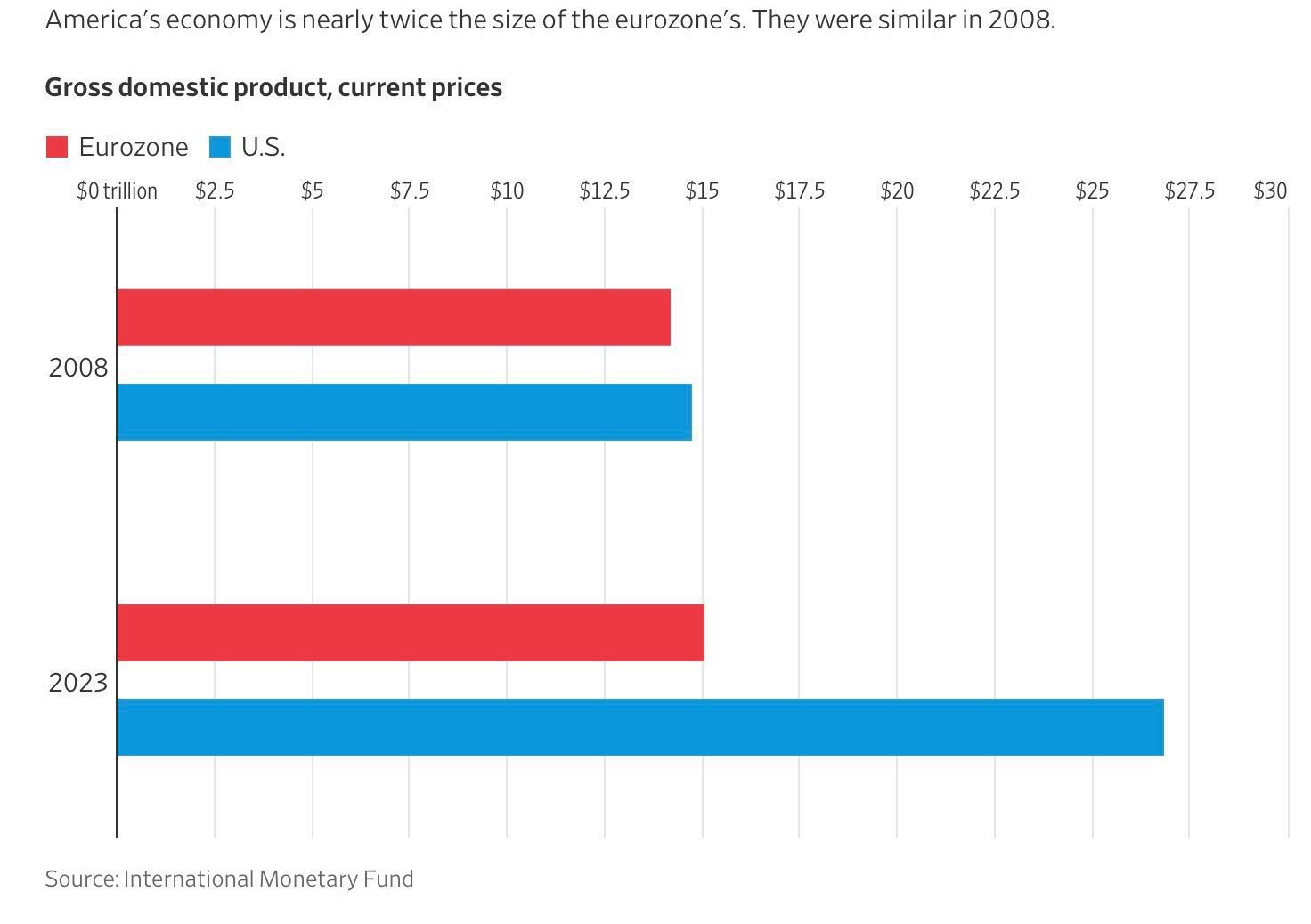
I’ve written many times about how Americans are much richer than Europeans. And I’ve also written many times that the U.S. economy has been growing faster (which shouldn’t happen according to convergence theory). There’s a simple reason for America’s superior performance. The U.S. is burdened by a medium-sized welfare state and a bad tax system […]
European Policies = European Stagnation
The child poverty conundrum
30 Aug 2024 Leave a comment
in income redistribution, kittens, labour economics, politics - New Zealand, poverty and inequality, Public Choice, welfare reform Tags: child poverty, family poverty

Lindsay Mitchell writes – The Child Poverty Report 2024 has just been published. It’s an overview and selected findings, as opposed to a full report which is due in 2025. Poverty can be measured in various ways.
The child poverty conundrum
The Obstacles for Escape
25 Aug 2024 Leave a comment
in defence economics, economics of crime, Economics of international refugee law, labour economics, labour supply, law and economics, war and peace Tags: Nazi Germany, The Holocaust, World War II

I often hear the argument, “Why did the Jews not simply leave Germany when Hitler got to power?” It was just not as simple as that. Many German and Austrian Jews saw themselves as German or Austrian first, and they considered themselves to be part of society. Why would they leave their homes and their […]
The Obstacles for Escape
Rowling Reportedly Sued by Olympic Boxer Over Gender Criticism
24 Aug 2024 Leave a comment
in discrimination, economics of crime, economics of education, economics of media and culture, gender, law and economics, liberalism, Marxist economics, politics - Australia, politics - New Zealand, politics - USA, property rights Tags: Age of Enlightenment, British politics, free speech, political correctness, regressive left

We have previously discussed the cancel campaigns targeting JK Rowling, the author of the Harry Potter series. Rowling was not only the greatest selling author of all time but a wildly popular writer until she publicly opposed certain transgender policies as inimical to the advances in feminism. Now, she is the target of a lawsuit […]
Rowling Reportedly Sued by Olympic Boxer Over Gender Criticism
Women lose again
24 Aug 2024 Leave a comment
in discrimination, economics of crime, gender, law and economics, politics - Australia, property rights Tags: free speech, political correctness, regressive left, sex discrimination
Giggle for Girls and its owner Sall Grover have lost the case in which they were accused of discrimination. Transgender woman Roxanne Tickle has won a novel gender identity case brought against a women’s-only social media app and its owner after she was excluded her from the platform. Federal Court Justice Robert Bromwich found Giggle for Girls and […]
Women lose again
Why Top CEOs Earn Big Paychecks
22 Aug 2024 Leave a comment
in applied price theory, economic history, economics of education, entrepreneurship, human capital, industrial organisation, labour economics, labour supply, liberalism, managerial economics, market efficiency, occupational choice, organisational economics, personnel economics, politics - USA, poverty and inequality, survivor principle Tags: CEO pay, superstar wages

CEO compensation at large firms is high, especially in comparison to average worker wages, sparking debates over income inequality. Critics argue that such pay packages are unfair and disproportionate to actual company performance. Proponents contend that high pay reflects productivity and is necessary to attract scarce top talent to large firms. Let’s go to the […]
Why Top CEOs Earn Big Paychecks


Recent Comments