What happened to the US labor market after the Emergency Unemployment Compensation Act expired after the Great Recession?By Tyler Smith of The AEA. “In December 2013, when Congress failed to reauthorize the Emergency Unemployment Compensation Act, many prominent economists predicted a substantial decline in employment and labor force participation. In a paper in the American Economic Journal:…
The effects of unemployment benefit duration
Quotation of the Day…
03 Dec 2025 Leave a comment
in applied price theory, history of economic thought, labour economics, labour supply, poverty and inequality
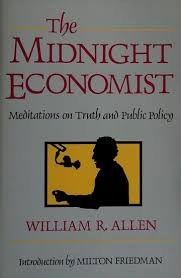
Tweet… is from page 181 of the late UCLA economist William Allen’s superb 1989 collection of the transcripts of his radio addresses, The Midnight Economist; specifically, it’s from Allen’s April 1985 address “Employment and Wages, Competition and Fairness”: The more valuable the worker, the higher the bid for his services. The high wage offer reflects…
Quotation of the Day…
US Poverty and Policy
01 Dec 2025 Leave a comment
in applied price theory, labour economics, politics - USA, poverty and inequality, welfare reform Tags: child poverty, family poverty

The US economy is the largest in the world, and at least among the large-population countries of the world (setting aside smaller economies strongly influenced by international capital flows like Monaco, Cayman Islands, and Ireland or by oil resources), it also has the highest per capita GDP. But at the same time, according to the…
US Poverty and Policy
The terrible Supreme Court decision on Uber
28 Nov 2025 Leave a comment
in applied price theory, economics of regulation, industrial organisation, labour economics, labour supply, occupational choice, politics - New Zealand, transport economics, urban economics Tags: employment law
The Supreme Court has ruled that four Uber drivers are employees of Uber, despite written agreements they are contractors, not employees. The practical effect of this decision is terrible. Uber has been great for passengers. Not only can we hold drivers to account through ratings, we save a lot of money. An Uber to the…
The terrible Supreme Court decision on Uber
The Flaw at the Core of the Supreme Court’s Uber Decision
25 Nov 2025 Leave a comment
in economics of regulation, industrial organisation, labour economics, labour supply, law and economics, occupational choice, politics - New Zealand, Public Choice, rentseeking, transport economics, urban economics Tags: creative destruction, employment law
Roger Partridge writes – The Supreme Court’s Uber judgment (Rasier Operations BV v E Tū Inc [2025] NZSC 162) has delivered clarity of a sort. The Court dismissed Uber’s appeal, upholding the finding that the drivers involved in the proceedings are employees when logged into the Uber app. Yet the decision is deeply flawed. The Court […]
The Flaw at the Core of the Supreme Court’s Uber Decision
The Milei Miracle, Part III
25 Nov 2025 Leave a comment
in applied price theory, comparative institutional analysis, development economics, economic growth, economics of regulation, fiscal policy, growth disasters, labour economics, labour supply, liberalism, libertarianism, macroeconomics, Marxist economics, unemployment Tags: Argentina

I’m still riding high after Javier Milei’s political party won a landslide in last month’s mid-term elections in Argentina. And I’m very much hoping and expecting that gives him enough legislative support to enact big reforms next year to further liberate the Argentinian economy (tax reform, free trade, and labor market liberalization). But let’s take […]
The Milei Miracle, Part III
The Adverse Consequences of High-Tax Welfare States
22 Nov 2025 Leave a comment
in economic growth, fiscal policy, labour economics, labour supply, macroeconomics, welfare reform

Honest leftists (the “Okunites“) generally acknowledge that laissez-faire policies deliver more growth, but they nonetheless favor high taxes and redistribution because they argue that social equality matters a lot. However, according to this chart, there’s a negative relationship between bigger government and social welfare indicators such as health, education, unemployment, and exclusion. Looking specifically at […]
The Adverse Consequences of High-Tax Welfare States
Puberty blockers BANNED
22 Nov 2025 Leave a comment
in discrimination, gender, health economics Tags: sex discrimination
The lobotomy of our time is over: NZ bans puberty blockers for kids Ani O’Brien writes – The government has officially announced that puberty blockers will no longer be prescribed to children for the purposes of gender transition. It’s one of the most significant and overdue reversals of reckless policy New Zealand has ever seen.
Puberty blockers BANNED
If this is employment law, the law needs to change
22 Nov 2025 Leave a comment
in economics of regulation, industrial organisation, labour economics, labour supply, law and economics, managerial economics, occupational choice, organisational economics, personnel economics, politics - New Zealand, property rights, Public Choice, transport economics, urban economics Tags: employment law
Eric Crampton writes – Yesterday [November 17], the Supreme Court ruled that Uber did not merely facilitate connections between four drivers and their various passengers – as Uber has maintained. And that the four drivers were not contractors for Uber either. Instead, those drivers were Uber employees while logged into the app.
If this is employment law, the law needs to change
Dishwashers and the 24/7 Time Constraint
22 Nov 2025 Leave a comment
in applied price theory, economic history, history of economic thought, labour economics, labour supply
In my own family, the reverence that we have for the dishwasher (and other time-saving devices) is such that we have a cat named “Josephine” after the Josephine Cochrane–the inventor of the first commercially viable dishwasher. (Also named because, as a kitten, she liked to forage in the back of the dishwasher.) Erin Braid provides…
Dishwashers and the 24/7 Time Constraint
Triggernometry debates sex with Neil deGrasse Tyson
18 Nov 2025 Leave a comment
in discrimination, economics of crime, economics of education, gender, law and economics, politics - USA, property rights Tags: free speech, gender gap, political correctness, regressive left, sex discrimination
Here we have the Triggernometry duo (Konstantin Kisin and Francis Foster) questioning astrophysicist Neil deGrasse Tyson about his views on gender (the full interview is here). Tyson seems quite agitated, loud, and even patronizing, but largely misses the points that gender-critical people are making. For example, he begins with his infamous argument that sex (or gender; he…
Triggernometry debates sex with Neil deGrasse Tyson
*The Science of Second Chances*
15 Nov 2025 Leave a comment
in applied price theory, economics of crime, economics of education, human capital, labour economics, labour supply, law and economics, occupational choice Tags: criminal deterrence
The author is economist Jennifer Doleac, and the subtitle is A Revolution in Criminal Justice. Excerpt: We found that adding anyone charged with a felony to the law enforcement DNA database in Denmark reduced future criminal convictions by over 40 percent. Again, people responded to the higher probability of getting caught by committing fewer cimres. …
*The Science of Second Chances*
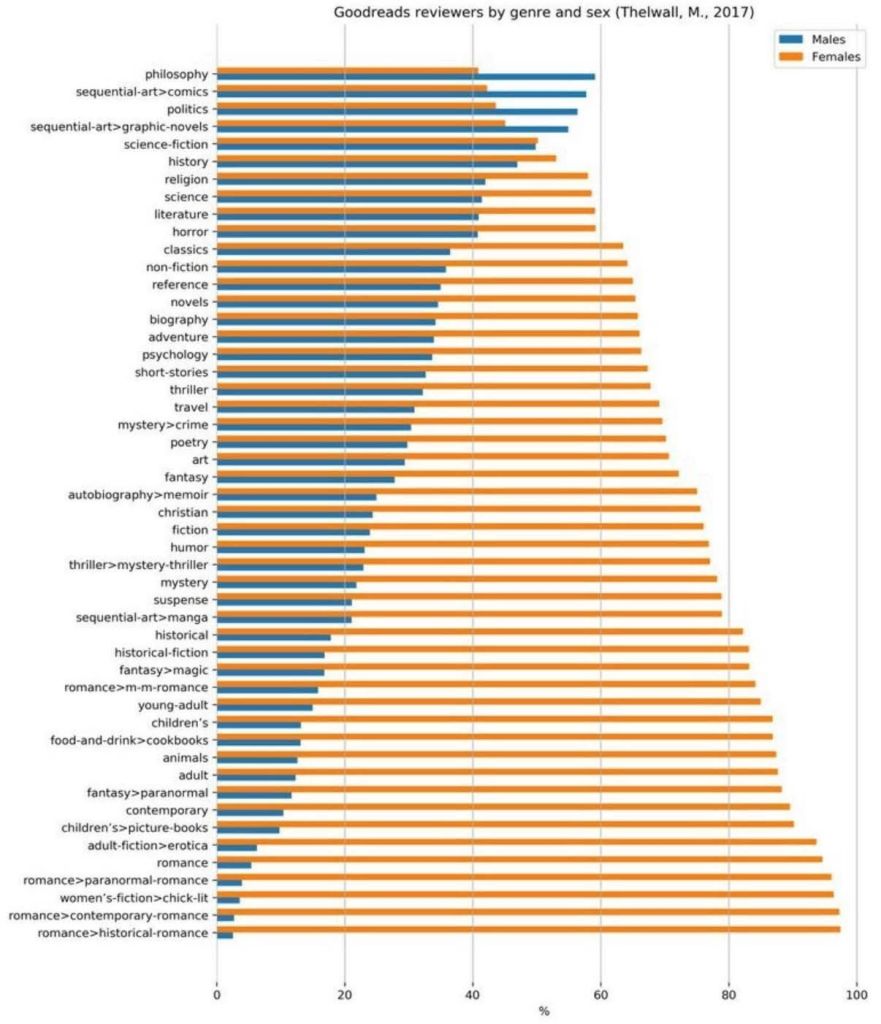
Another gender gap
15 Nov 2025 Leave a comment
in discrimination, economics of education, gender, human capital Tags: gender gap
COP30 Dispute Erupts over the Legal Definition of a Woman
14 Nov 2025 1 Comment
in discrimination, economics of climate change, economics of natural disasters, energy economics, environmental economics, environmentalism, gender, global warming, law and economics, liberalism, Marxist economics, property rights
One of the goals of the COP30 climate conference is helping women allegedly affected by climate change.
COP30 Dispute Erupts over the Legal Definition of a Woman
BBC Finds Presenter in Violation of Network Standards in Correcting “Pregnant People” Reference on Air
09 Nov 2025 Leave a comment
in discrimination, economics of education, gender, television Tags: free speech, media bias, political correctness, regressive left, sex discrimination

There is a controversy at the BBC over a correction made by presenter Martine Croxall on air when she changed a reference to “pregnant people” to “women.” The network later received 20 complaints and agreed that Croxall had violated network policies. (For full disclosure, I previously worked as the legal analyst for BBC).
BBC Finds Presenter in Violation of Network Standards in Correcting “Pregnant People” Reference on Air
 Utopia, you are standing in it!
Recent Comments