In our textbook, Modern Principles, Tyler and I write: Imagine how difficult it would be to get a date if every date required marriage? In the same way, it’s more difficult to find a job when every job requires a long-term commitment from the employer. In two new excellent pieces, Brian Albrecht and Pieter Garicano…
The Hidden Cost of Hard-to-Fire Labor Laws: Why European Firms Don’t Take Risks
The Hidden Cost of Hard-to-Fire Labor Laws: Why European Firms Don’t Take Risks
08 Mar 2026 Leave a comment
in applied price theory, economics of bureaucracy, economics of regulation, entrepreneurship, labour economics, law and economics, managerial economics, organisational economics, personnel economics, property rights, Public Choice, theory of the firm, unemployment Tags: creative destruction, employment law, European Union, Germany
Celebrating Two Years of Libertarian Success in Argentina
27 Dec 2025 Leave a comment
in applied price theory, Austrian economics, budget deficits, comparative institutional analysis, constitutional political economy, development economics, economic growth, economics of bureaucracy, economics of regulation, fiscal policy, growth disasters, history of economic thought, income redistribution, industrial organisation, labour economics, liberalism, libertarianism, macroeconomics, Public Choice, rentseeking, unemployment Tags: Argentina
As explained in my four-part series (here, here, here, and here) and in this clip from a recent interview, Javier Milei’s first two years have been amazingly successful. There are two points in the interview that deserve emphasis. First, Javier Milei’s libertarian policies already have been extremely beneficial for the Argentine economy. Inflation has dramatically […]
Celebrating Two Years of Libertarian Success in Argentina
The Great Means-Testing Debate
05 Dec 2025 Leave a comment
in Milton Friedman, labour economics, human capital, occupational choice, welfare reform, history of economic thought, applied price theory, labour supply, unemployment, poverty and inequality
Nine years ago, I critically analyzed the Cohen-Friedman debate on means-testing Social Security. Only recently, though, did I find the original footage from 1971. As far as I know, this is the first time that any prominent social scientist made the “A program only for the poor will always be a poor program” argument that…
The Great Means-Testing Debate
The Milei Miracle, Part III
25 Nov 2025 Leave a comment
in applied price theory, comparative institutional analysis, development economics, economic growth, economics of regulation, fiscal policy, growth disasters, labour economics, labour supply, liberalism, libertarianism, macroeconomics, Marxist economics, unemployment Tags: Argentina

I’m still riding high after Javier Milei’s political party won a landslide in last month’s mid-term elections in Argentina. And I’m very much hoping and expecting that gives him enough legislative support to enact big reforms next year to further liberate the Argentinian economy (tax reform, free trade, and labor market liberalization). But let’s take […]
The Milei Miracle, Part III
The Most Important Election(s) of 2025
28 Aug 2025 Leave a comment
in applied price theory, Austrian economics, development economics, economic growth, economics of regulation, fiscal policy, growth disasters, labour economics, labour supply, law and economics, liberalism, libertarianism, macroeconomics, monetary economics, Public Choice, unemployment Tags: Argentina

Javier Milei has generated amazingly good results in just 20 months. But more reform is needed to undo the damage of 80 years of Peronism, which is why I explain that Argentina’s mid-term elections will be very important. Milei wants to turn Argentina into the world’s freest economy. That won’t be possible so long as […]
The Most Important Election(s) of 2025
Milei’s Achievements…and Challenges
17 Aug 2025 1 Comment
in development economics, economic growth, economics of bureaucracy, economics of regulation, fiscal policy, growth disasters, income redistribution, industrial organisation, labour economics, law and economics, liberalism, libertarianism, macroeconomics, Marxist economics, monetary economics, property rights, Public Choice, public economics, rentseeking, unemployment Tags: Argentina

I’m back in Argentina, the South American country with the world’s best leader. What Javier Milei has accomplished is amazing. And the economic effects have been wonderful. One of my meetings earlier this week was with Marcelo Elizondo, the head of the International Chamber of Commerce for Argentina. He shared a presentation with me that […]
Milei’s Achievements…and Challenges
CA min wage goes up ==> CA employment declines
29 Jul 2025 Leave a comment
in applied price theory, income redistribution, labour economics, labour supply, minimum wage, politics - USA, Public Choice, rentseeking, unemployment Tags: California
The classic book, Economics in One Lesson reduces all of economics to a similar lesson:The art of economics consists in looking not merely at the immediate but at the longer effects of any act or policy; it consists in tracing the consequences of that policy not merely for one group but for all groups.The lesson of Chapter…
CA min wage goes up ==> CA employment declines
How New Zealand invented inflation targeting
13 Jun 2025 1 Comment
in business cycles, history of economic thought, inflation targeting, labour economics, macroeconomics, monetary economics, politics - New Zealand, unemployment Tags: monetary policy
…the very next day, [Roger] Douglas appeared on TV declaring his intention to reduce inflation to ‘around 0 or 0 to 1 percent’ over the next couple of years, and then went on to make several similar comments in the following days. Douglas would soften his stance on specific timelines but ask the Reserve Bank and […]
How New Zealand invented inflation targeting
May Monetary Policy Statement
30 May 2025 Leave a comment
in budget deficits, business cycles, economic growth, fiscal policy, inflation targeting, labour economics, macroeconomics, monetary economics, politics - New Zealand, public economics, unemployment Tags: monetary policy
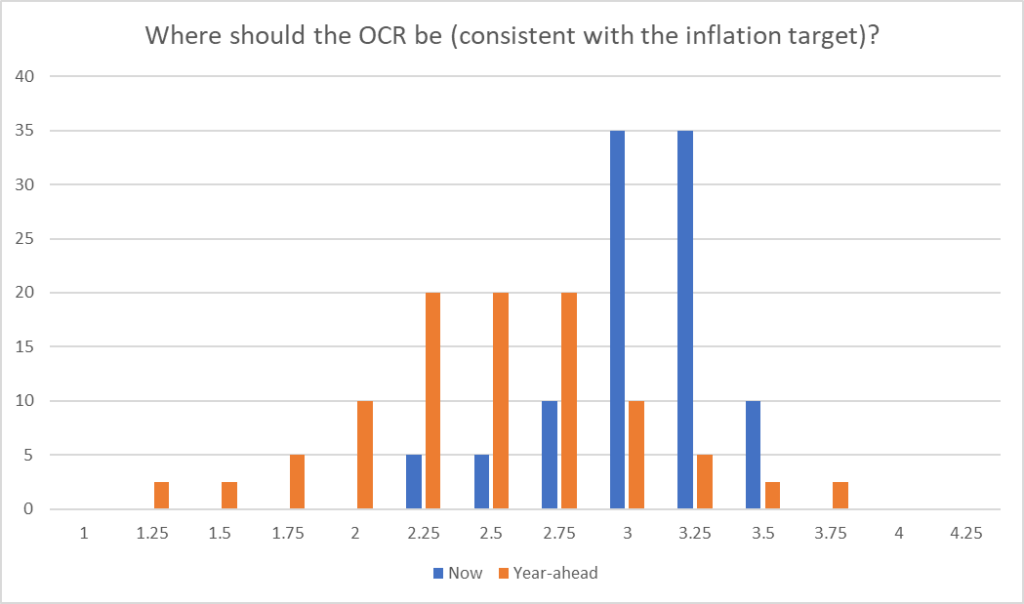
Michael Reddell writes – Procrastinating this morning, I asked Grok to write a post in my style on yesterday’s Monetary Policy Statement. Suffice to say, I think I’ll stick to thinking and writing for myself for the time being. Among the many oddities of Grok’s product was the conviction that Adrian Orr was still Governor. Mercifully […]
May Monetary Policy Statement
New Rule: The Not-Working Class | Real Time with Bill Maher (HBO)
13 May 2025 Leave a comment
in labour economics, labour supply, politics - USA, television, TV shows, unemployment
Long-Run Effects of Trade Wars
24 Apr 2025 Leave a comment
in applied price theory, applied welfare economics, comparative institutional analysis, development economics, econometerics, history of economic thought, industrial organisation, labour economics, labour supply, politics - USA, unemployment Tags: 2024 presidential election, free trade, tariffs, unintended consequences
This short note shows that accounting for capital adjustment is critical when analyzing the long-run effects of trade wars on real wages and consumption. The reason is that trade wars increase the relative price between investment goods and labor by taxing imported investment goods and their inputs. This price shift depresses capital demand, shrinks the […]
Long-Run Effects of Trade Wars
My debate with Dani Rodrik about tariffs and free trade
22 Apr 2025 Leave a comment
in applied price theory, applied welfare economics, comparative institutional analysis, development economics, economic history, history of economic thought, industrial organisation, international economic law, international economics, labour economics, politics - USA, unemployment Tags: 2024 presidential election, free trade, tariffs
This occurred in Knoxville, you can watch it here. Lots of fun, and p.s. I am more of a free trader than he is. We did have some disagreements.
My debate with Dani Rodrik about tariffs and free trade
Not much parliamentary scrutiny
01 Apr 2025 Leave a comment
in business cycles, econometerics, economic history, economics of bureaucracy, inflation targeting, labour economics, labour supply, macroeconomics, monetary economics, politics - New Zealand, Public Choice, unemployment Tags: economics of pandemics, monetary policy

This was the post I was planning to write this morning to mark Orr’s final day. That said, if the underlying events – deliberate attempts to mislead Parliament – were Orr’s doing, the post is more about the apparent uselessness of Parliament (specifically the Finance and Expenditure Committee) in holding him and the rest of […]
Not much parliamentary scrutiny
Bosses Don’t Need a ‘What Did You Do’ Email. They’re Already Tracking You. (and how this might be related to Keynes’ theory of sticky wages)
27 Mar 2025 Leave a comment
in applied price theory, human capital, labour economics, labour supply, law and economics, macroeconomics, managerial economics, monetary economics, organisational economics, personnel economics, property rights, unemployment Tags: efficiency wage, wage rigidity
Elon Musk’s email to federal employees prompted angst, but lots of employers use technology for continuous feedback on worker performanceBy Natasha Khan and Ray A. Smith. Excerpts:”What did you do last week?The question that Elon Musk lobbed to federal workers in an email set off anger and angst from unions and employees. It also prompted…
Bosses Don’t Need a ‘What Did You Do’ Email. They’re Already Tracking You. (and how this might be related to Keynes’ theory of sticky wages)
 Utopia, you are standing in it!
Recent Comments