Former chairman of the Federal Reserve Board of Governors (and FOMC), Ben Bernanke, was yesterday the first of two keynote speakers at the Reserve Bank’s conference to mark 35 years of inflation targeting, which first became a formalised thing here in New Zealand. He indicated that he’d be speaking about inflation targeting in general and […]
Adrian Orr has resigned as Reserve Bank Governor. I normally try to highlight the good as well as the bad when someone resigns, but I have to admit in this case I struggle. I welcomed his appointment in 2017. I noted the currency rose on his appointment and that he had a very good legacy […]
That’s the title of a 2024 book by a couple of Australian academic economists, Steven Hamilton (based in US) and Richard Holden (a professor at the University of New South Wales). The subtitle of the book is “How we crushed the curve but lost the race”. It is easy to get off on the wrong […]
TweetHere’s a letter to the New York Times. Editor: Encountering, in David Leonhardt’s report, a summary of Peter Navarro’s attempted justifications of Trump’s tariffs makes the head spin (“A Disagreement on Tariffs,” February 18). Navarro’s arguments are so illogical, self-contradictory, and economically ignorant that they’d be merely laughable were he not an advisor to the…
In yesterday’s post, I made reference to this 2021 article by Jeffrey Clemens (University of California at San Diego), published in the Journal of Economic Perspectives (open access). Clemens puts forward an interesting perspective on the debate about the observed employment impacts of the minimum wage (or lack thereof):…I contend that controversies over the economics of minimum wages…
A shortage of electricians means that those willing to endure long shifts and live on remote sites can potentially earn up to A$200,000 (US$124,000) a year — double the national average salary and not far off the average MP salary. “It’s a cup half full/half empty life. You do 12-hour shifts, there’s the heat, the […]
By David J. Deming, Christopher Ong, and Lawrence H. Summers. From NPR’s Planet Money. Summers was Secretary of the Treasury from 1999 to 2001, director of the National Economic Council from 2009 to 2010 and president of Harvard University from 2001 to 2006.”Obviously, there is a big fear right now that artificial intelligence will kill…
It would be fair to say that 2024 Nobel Prize winner Daron Acemoglu has been a bit of a sceptic about the impacts of generative AI (for example, see here). This scepticism is exemplified in a new paper forthcoming in the journal Economic Policy (ungated earlier version here). Acemoglu first notes that:Some experts believe that truly…
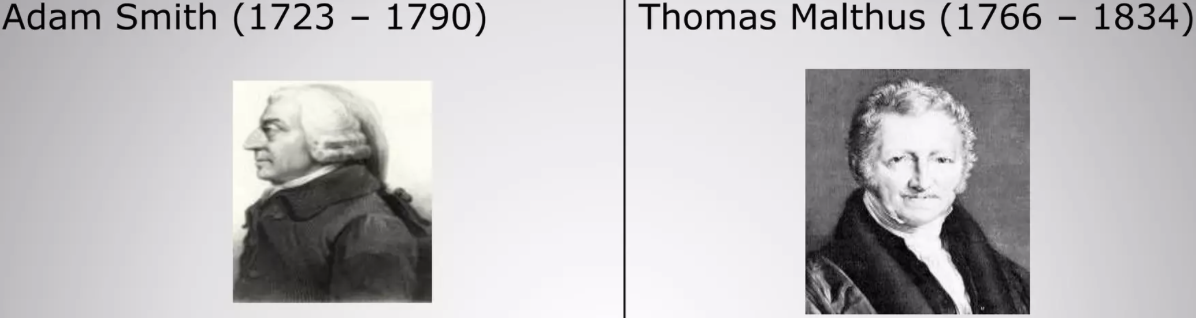
Tweet… is from page 53 of the late, great Harold Demsetz’s excellent 2008 book, From Economic Man to Economic System: Adam Smith and Thomas Malthus differed in their forecasts of mankind’s future. Smith (1776), in his Wealth of Nations, offered an optimistic view, basing this on his understanding of the new economic system that began…
When Jacinda Ardern became Prime Minister, she was determined to increase income for children in welfare-dependent families – her magic bullet for solving child poverty. The Welfare Expert Advisory Group, led by Cindy Kiro, was convened to make the desired recommendations. A number of evidence briefs were provided to the group, one concerned the “likely…
TweetGMU Econ alum Holly Jean Soto busts the myth of “greedflation.” Scott Lincicome identifies an interesting contrast between the facts and opinion about China. George Will decries the spinelessness of the modern U.S. Congress. A slice: The incoming president will be able, on a whim, to unilaterally discombobulate international commerce — and the domestic economy…
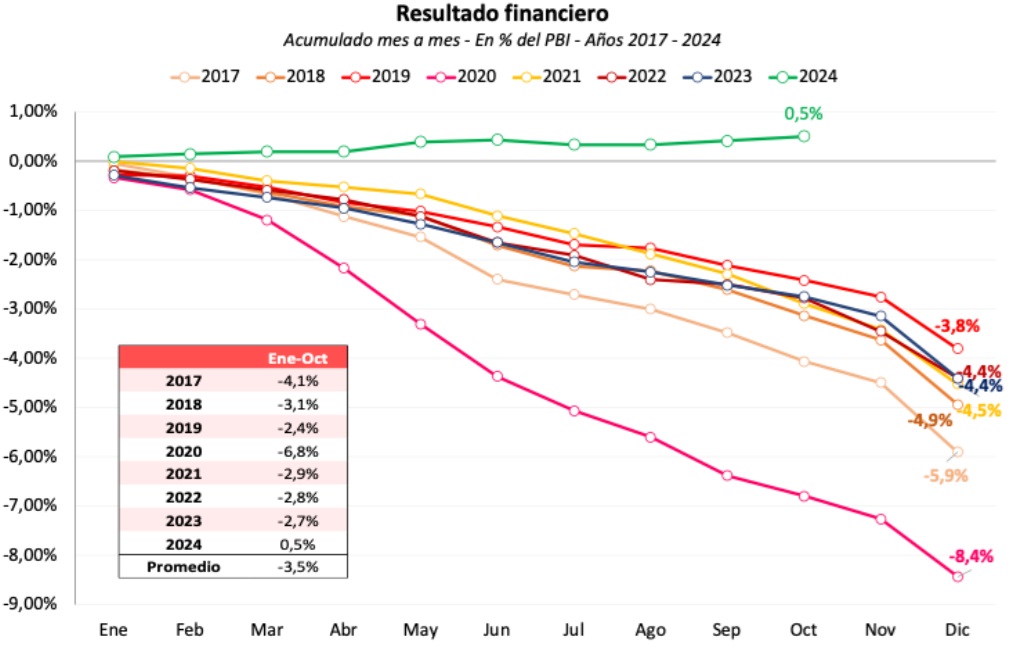
It’s easy to mock economists. Consider the supposedly prestigious left-leaning academics who asserted in 2021 that Biden’s agenda was not inflationary. At the risk of understatement, they wound up with egg on their faces.* Today, we’re going to look at another example of leftist economists making fools of themselves. It involves Argentina, where President Javier […]
Argentina’s bonds have already rallied dramatically. One gauge of the nation’s hard-currency debt, the ICE BofA US Dollar Argentina Sovereign Index, has generated a total return of about 90% this year. Meanwhile, the S&P Merval Index has risen more than 160% this year through Monday, far outpacing stock benchmarks in developed, emerging and frontier markets […]
There is a widespread belief that the US labor market has been undergoing a period of unprecedented chance in the last decade or two. On one hand, David Deming, Christopher Ong, and Lawrence H. Summers case doubt on this historical claim in their essay, ” Technological Disruption in the US Labor Market”–that is, they argue…
A group of economists have written to Nicola Willis complaining about the modest fiscal restraint imposed on the public sector. Grant Robertson grew government expenditure by $76 billion/year or a massive 7.6% of GDP, leaving NZ with a structural deficit. Many were champions of his policies or worked for him, and now they complain his […]
Why Evolution is True is a blog written by Jerry Coyne, centered on evolution and biology but also dealing with diverse topics like politics, culture, and cats.
“We do not believe any group of men adequate enough or wise enough to operate without scrutiny or without criticism. We know that the only way to avoid error is to detect it, that the only way to detect it is to be free to inquire. We know that in secrecy error undetected will flourish and subvert”. - J Robert Oppenheimer.



 Utopia, you are standing in it!
Recent Comments