Charles Murray — Human Diversity book release
17 Feb 2020 Leave a comment
in economics of education, economics of love and marriage, health economics, human capital, labour economics, labour supply, law and economics, occupational choice, politics - USA, poverty and inequality, unemployment, welfare reform Tags: child poverty, economics of fertility, family poverty, marriage and divorce
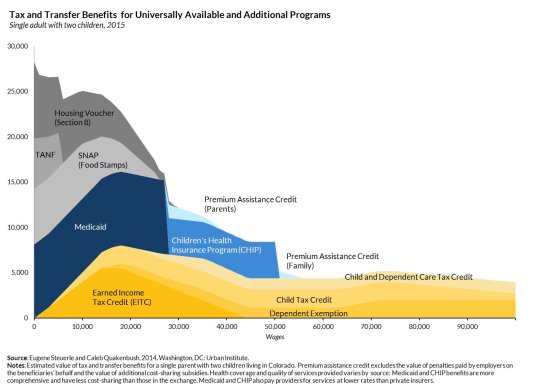
Family assistance and poverty traps in America
29 Jan 2020 Leave a comment
in income redistribution, labour economics, labour supply, politics - USA, Public Choice, public economics, welfare reform Tags: child poverty, family poverty, social insurance
Charles Murray on Coming Apart
23 Jan 2020 Leave a comment
in economic history, economics of education, economics of information, economics of media and culture, economics of natural disasters, economics of religion, human capital, labour economics, labour supply, Marxist economics, occupational choice, politics - USA, poverty and inequality, Public Choice, public economics, transport economics, unemployment, urban economics, welfare reform
Bad news for @AOC @berniesanders @SenWarren
02 Jan 2020 Leave a comment
in applied welfare economics, economic history, labour economics, poverty and inequality, welfare reform Tags: 2020 presidential election, child poverty, family poverty
Walter E. Williams: Government, The Market, and Minorities
16 Dec 2019 Leave a comment
in applied price theory, applied welfare economics, Austrian economics, comparative institutional analysis, constitutional political economy, discrimination, economic history, economics of education, entrepreneurship, health economics, human capital, industrial organisation, labour economics, labour supply, occupational choice, poverty and inequality, privatisation, survivor principle, unemployment, welfare reform Tags: racial discrimination
The vision of the anointed — with Thomas Sowell (1995) | THINK TANK @AEI
11 Dec 2019 Leave a comment
in applied price theory, applied welfare economics, discrimination, economic history, economics of crime, economics of information, human capital, labour economics, labour supply, law and economics, minimum wage, occupational choice, poverty and inequality, Thomas Sowell, unemployment, welfare reform Tags: The fatal conceit
Escaping poverty
09 Dec 2019 Leave a comment
in economics of education, gender, human capital, income redistribution, labour economics, labour supply, occupational choice, poverty and inequality, Public Choice, unemployment, welfare reform Tags: child poverty, family poverty, social insurance



Recent Comments