Jonathan Rosen writes: Thirty-seven years ago, Ayatollah Ruhollah Khomeini, Supreme Leader and founder of the Islamic Republic of Iran, sentenced Salman Rushdieto death on Valentine’s Day for writing a novel. It is hard to write that sentence without feeling it is a parody of the opening line of Franz Kafka’s The Trial: “Someone must have slandered Josef K.,…
The Rushdie fatwa
The Rushdie fatwa
30 Mar 2026 Leave a comment
in defence economics, economics of crime, economics of education, economics of religion, law and economics, liberalism Tags: free speech
Believe women – except Jewish ones
29 Mar 2026 Leave a comment
in defence economics, discrimination, economics of crime, gender, law and economics, laws of war, politics - Australia, war and peace Tags: Gaza Strip, Israel, Middle-East politics, regressive left, war against terror
Grace Tame was the 2021 Australian of the Year for her work as an advocate of survivors of sexual abuse. Sadly, but not surprisingly, she is only an advocate for rape and sexual abuse victims if they are not Jewish. News.com.au reports: Child safety campaigner Grace Tame has come under fire for suggesting rapes and…
Believe women – except Jewish ones
A worthwhile trade off
25 Mar 2026 Leave a comment
in applied price theory, economics of regulation, human capital, labour economics, labour supply, law and economics, occupational choice, politics - New Zealand, property rights Tags: employment law, offsetting behavior, unintended consequences
Susan Hornsby-Geluk writes: Among the most controversial aspects of the recently enacted Employment Relations Amendment Act 2026 is the introduction of a high-income threshold for personal grievance claims. Under the new provisions, employees earning $200,000 or more in annual remuneration will lose the right to bring a personal grievance for unjustified dismissal, or an unjustified…
A worthwhile trade off
What power would allow Ministers to close down a community?
22 Mar 2026 Leave a comment
in economics of crime, economics of religion, law and economics, libertarianism, politics - New Zealand
The Herald reports: Senior Government minister Louise Upston visited Gloriavale in late January, months after refusing to rule out closing the religious community following allegations of child abuse in the community. Newstalk ZB has confirmed Upston visited the sect on January 30, alongside officials from the Ministry of Social Development. This story is puzzling. As…
What power would allow Ministers to close down a community?
Corrupt pardons
21 Mar 2026 Leave a comment
in economics of crime, law and economics, politics - USA
Most US Presidents have done dubious pardons – Clinton re Marc Rich and Joe Biden re Hunter Biden etc. But as the libertarian Cato Institute point out, Trump’s pardons are in a different league: Biden’s pardons eliminated roughly $680,000 in financial penalties (fines, restitution, and forfeitures) owed to victims or the government. In contrast, Liz Oyer,…
Corrupt pardons
The True Story of the Great Escape
21 Mar 2026 Leave a comment
in defence economics, economics of crime, International law, law and economics, laws of war, movies, war and peace Tags: Nazi Germany, World War II

During World War II, one of the most daring and ambitious prisoner-of-war (POW) escapes in history took place in the German POW camp Stalag Luft III. Known as “The Great Escape,” Allied airmen executed this remarkable event, which demonstrated extraordinary resilience, ingenuity, and bravery in their pursuit of freedom. While the escape itself was a […]
The True Story of the Great Escape
An outrageous legal complaint decision overturned
19 Mar 2026 Leave a comment
in discrimination, gender, law and economics, liberalism, Marxist economics, politics - New Zealand Tags: free speech, political correctness, regressive left, sex discrimination
An Area Standards Committee of the Law Society fined Stephen Franks and Franks Ogilvy for, well being lawyers. They sent a letter on behalf of their client to health professionals involved in “gender affirming care”. The ASC found that they had “used a legal process for an improper purpose”, censured them and fined them. I…
An outrageous legal complaint decision overturned
The 1943 German law that denies justice to be done.
19 Mar 2026 Leave a comment
in defence economics, economics of crime, International law, law and economics, laws of war, war and peace Tags: extradition, Nazi Germany, World War II

In 1943 a law was passed in Germany which gave all foreign Waffen SS members the German nationality by default. This law still prevents extradition of WWII War criminals to be extradited to their native countries, because these men have the German nationality , and Germany does not extradite it’s own citizens. These are just […]
The 1943 German law that denies justice to be done.
From Compromise to Closure: The House of Lords (Hereditary Peers) Bill
18 Mar 2026 Leave a comment
in constitutional political economy, law and economics Tags: British constitutional law, British politics
The House of Lords (Hereditary Peers) Bill has now completed its journey through Parliament. Although peers made several amendments to the bill, the Commons rejected most of them. In the end, the Lords chose not to insist on the rejected amendments by a voice vote, paving the way for Royal Assent. Once that happens, the […]
From Compromise to Closure: The House of Lords (Hereditary Peers) Bill
COMESA, WhatsApp Business, and Antitrust in Search of a Theory
17 Mar 2026 Leave a comment
in applied price theory, economics of regulation, industrial organisation, law and economics, property rights Tags: competition law

Meta’s decision to limit third-party AI access to WhatsApp Business has quickly drawn antitrust scrutiny across multiple jurisdictions. The Common Market for Eastern and Southern Africa (COMESA) Competition and Consumer Commission (CCCC) is the latest authority to open an investigation. But before the case can answer whether Meta’s conduct harms competition, a more basic question…
COMESA, WhatsApp Business, and Antitrust in Search of a Theory
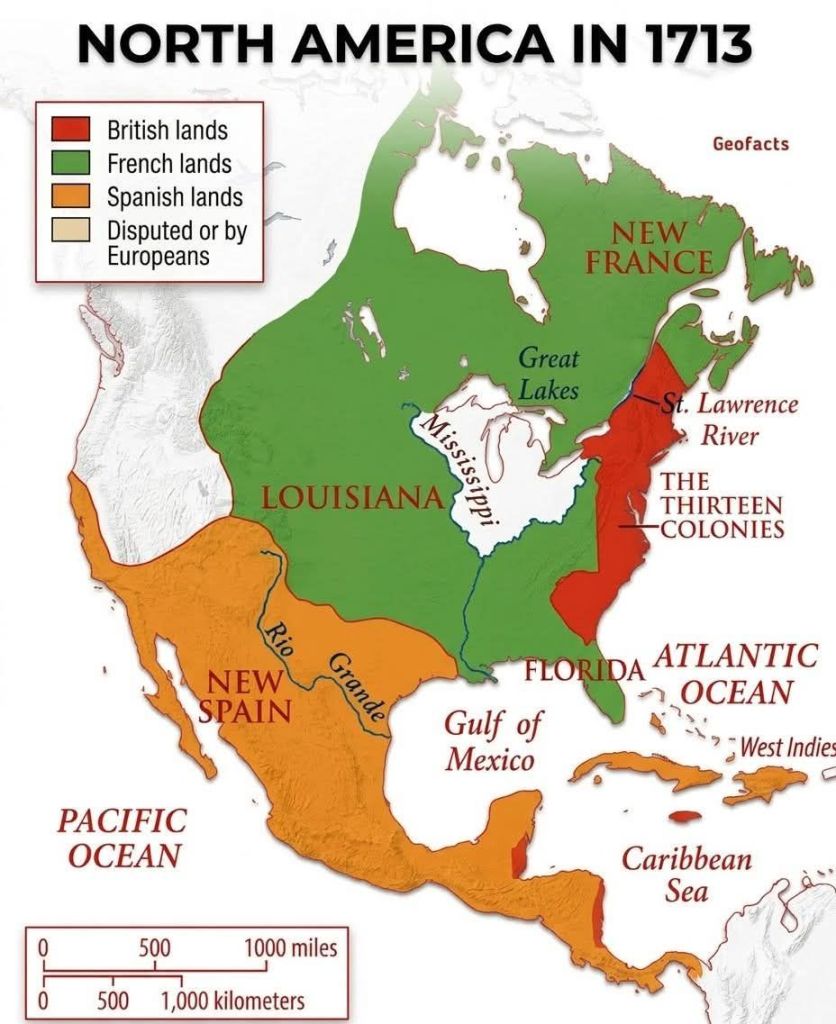
I like maps
15 Mar 2026 Leave a comment
in economic history, international economics, International law, law and economics Tags: economics of borders, maps
Te Pāti Māori get slaughtered by the High Court
10 Mar 2026 Leave a comment
in law and economics, politics - New Zealand
Justice Radich has just made the following rulings: It is very rare for the judiciary to make rulings such as this, but the way TPM went about their decision making was so flawed, that the Judge felt he had to. This is a humiliating loss for Tamihere and his deputy co-leaders, especially the explicit instruction…
Te Pāti Māori get slaughtered by the High Court
Selective Outrage and the Erosion of Genocide Meaning
08 Mar 2026 1 Comment
in defence economics, economics of crime, law and economics, laws of war, liberalism, Marxist economics, war and peace
There is something profoundly wrong with a moral culture that shouts genocide at Israel’s war against Hamas while averting its gaze from an actual genocide unfolding in Sudan. Words matter, especially words that name humanity’s gravest crimes. When they are deployed selectively—loudly against one conflict, quietly or not at all against another—they cease to illuminate injustice and instead reveal hypocrisy. […]
Selective Outrage and the Erosion of Genocide Meaning
The Hidden Cost of Hard-to-Fire Labor Laws: Why European Firms Don’t Take Risks
08 Mar 2026 Leave a comment
in applied price theory, economics of bureaucracy, economics of regulation, entrepreneurship, labour economics, law and economics, managerial economics, organisational economics, personnel economics, property rights, Public Choice, theory of the firm, unemployment Tags: creative destruction, employment law, European Union, Germany
In our textbook, Modern Principles, Tyler and I write: Imagine how difficult it would be to get a date if every date required marriage? In the same way, it’s more difficult to find a job when every job requires a long-term commitment from the employer. In two new excellent pieces, Brian Albrecht and Pieter Garicano…
The Hidden Cost of Hard-to-Fire Labor Laws: Why European Firms Don’t Take Risks
The Vietnam War and racial integration
07 Mar 2026 Leave a comment
in defence economics, discrimination, economics of love and marriage, politics - USA, war and peace Tags: marriage and divorce, racial discrimination, Vietnam war
The Vietnam draft conscripted hundreds of thousands of young Americans into an integrated military. I combine near-random draft lottery variation with administrative voter data to study the long-run racial integration effects of coerced national service. Black and Native American veterans became more likely to marry white spouses, identify as Republicans, and live in more-integrated neighborhoods.…
The Vietnam War and racial integration
 Utopia, you are standing in it!
Recent Comments