See how are women doing in the US when it comes to political & business leadership positions? http://t.co/B2TFiaKfaI pic.twitter.com/n6DXFWRzvI
— Pew Research Center (@pewresearch) February 21, 2015
How are women doing in the US when it comes to political & business leadership positions
23 Feb 2015 Leave a comment
in discrimination, economic history, economics of marriage, gender, labour economics, law and economics, occupational choice, politics - USA Tags: engines of liberation, gender wage gap
How a Death with Dignity Bill will pass in New Zealand
22 Feb 2015 2 Comments
in economics of crime, Gary Becker, law and economics, liberalism, Richard Posner
The right to die with dignity has long had substantial public support in New Zealand. Opinion polls show that about 60% of the population support it and these opinion polls date back 20 years.
Members of Parliament won’t touch it. Late last year, a backbench Labour MP withdrew from plans to put a Death with Dignity Bill in the ballot for private members’ bills. This was done because of pressure from Labour Party colleagues not wishing euthanasia to be a distraction in the forthcoming general election.
The two previous attempts at passing a Death with Dignity Bill failed despite widespread public support:
- In 1995, Michael Laws introduced a Death with Dignity Bill. It failed by 61 votes against and 29 for the Bill. His Bill could only become law after a binding nationwide referendum to be held at the 1996 General Election.
- Peter Brown, a list MP for New Zealand First, introduced a Death with Dignity Bill in 2003 that was defeated by 59 votes to 58 votes.
In each of these cases, the MP concerned had a compelling personal narrative about the loss of family member or friend after a long fight with cancer as their motive.
Any future attempt to introduce such a bill will also require the MP concerned to have such a personal narrative. It is also not unimportant that both MPs that introduced the previous bills were little-known and their particular activities had nothing to do with whether they got re-elected or not.
Peter Brown was a list MP whose presence in Parliament solely depended on the popularity of Winston Peters. New Zealand First is a one-man party. Michael Laws had quit the National Party and was sitting as an independent.
The law has long acted to prevent, by force if necessary, suicide – including suicide by refusing to take appropriate measures necessary to preserve one’s life after the point at which life become unbearable. Justice Scalia argued that:
I believe in liberal democracy, which is a democracy that worries about the tyranny of the majority, but it is the majority itself that must draw the lines.
Whether the patient’s wishes to be honoured in this area is left to elected representatives to legislate. Justice Scalia asks
Are there, then, no reasonable and humane limits that ought not to be exceeded in requiring an individual to preserve his own life? There obviously are, but they are not set forth in the Due Process Clause.
What assures us that those limits will not be exceeded is the same constitutional guarantee that is the source of most of our protection – what protects us, for example, from being assessed a tax of 100% of our income above the subsistence level, from being forbidden to drive cars, or from being required to send our children to school for 10 hours a day, none of which horribles is categorically prohibited by the Constitution.
Our salvation is the Equal Protection Clause, which requires the democratic majority to accept for themselves and their loved ones what they impose on you and me.
Many who support euthanasia in principle have serious reservations about the ability to craft a Bill that prevents abuses. Parliaments have an interest in protecting vulnerable groups–including the poor, the elderly, and disabled persons–from abuse, neglect, and mistakes.

The democratic process must strike a proper balance between the interests of terminally ill, mentally competent individuals who would seek to end their suffering and the State’s interests in protecting those who might seek to end life mistakenly or under pressure.
The pros and cons of euthanasia as a practical matter is ably summarised by Richard Posner:
Countries and states that authorize physician-assisted suicide impose strict requirements that minimize the danger of involuntary euthanasia—too strict, some believe (such as the requirement in Dutch law that the patient’s suffering be “unbearable” before he can invoke physician assistance to end his life).
These requirements (which further reduce the stigma of physician-assisted suicide by confining the practice to cases of genuine desperation) are not airtight, or uniformly observed. Any system will be abused. The question is whether the incidence of abuses, combined with the other costs of the system, outweigh the benefits.
Gary Becker has written frequently on the issue of euthanasia and suicide. Indeed, he wrote the Economic Theory of Suicide, not long after his wife took her own life in the early 1970s. He argues well about people’s ability to weigh the considerations:
Rational forward–looking persons with good information about their future circumstances would commit suicide only when convinced that they would be worse off by continuing to live.
David Hume said (in his Essays on Suicide and the Immortality of the Soul) “That suicide may often be consistent with interest and with our duty to ourselves no one can question, who allows that age, sickness, or misfortune may render life a burden, and make it worse than annihilation.”
Schopenhauer was also confident about the rationality of suicide, “It will generally be found that, as soon as the terrors of life outweigh the terrors of death, a man will put an end to his life” (Parerga and Paralipomena).
Becker also wrote insightfully of the terrors of death:
Hume adds “I believe no man ever threw away life, while it was worth keeping. For such is our natural horror of death”, and Schopenhauer makes the same observation “But the terrors of death offer considerable resistance…”
The reason why Death with Dignity Bills fail in Parliament is those in the community who are against it are passionately against that it and will change their vote if it passed. Those that are for it are not swinging or single issue voters.
Whoever moves the Bill will be a less well known MP with a personal narrative as to why they did it. What will be in that Bill? Scalia again:
Leaving this matter to the political process is not only legally correct, it is pragmatically so. That alone… can produce compromises satisfying a sufficient mass of the electorate that this deeply felt issue will cease distorting the remainder of our democratic process.


The sanctity of marriage and the law, historically contemplated
20 Feb 2015 Leave a comment
in economics of love and marriage, law and economics, liberalism Tags: marriage and divorce
Morning People Are Less Ethical at Night – HBR
20 Feb 2015 Leave a comment
in economics of crime, law and economics, managerial economics, organisational economics, personnel economics Tags: economics of personality traits

Voter demographics alert: the politics of road rage
19 Feb 2015 Leave a comment
in economics of crime, Public Choice, transport economics Tags: road rage, voter demographics
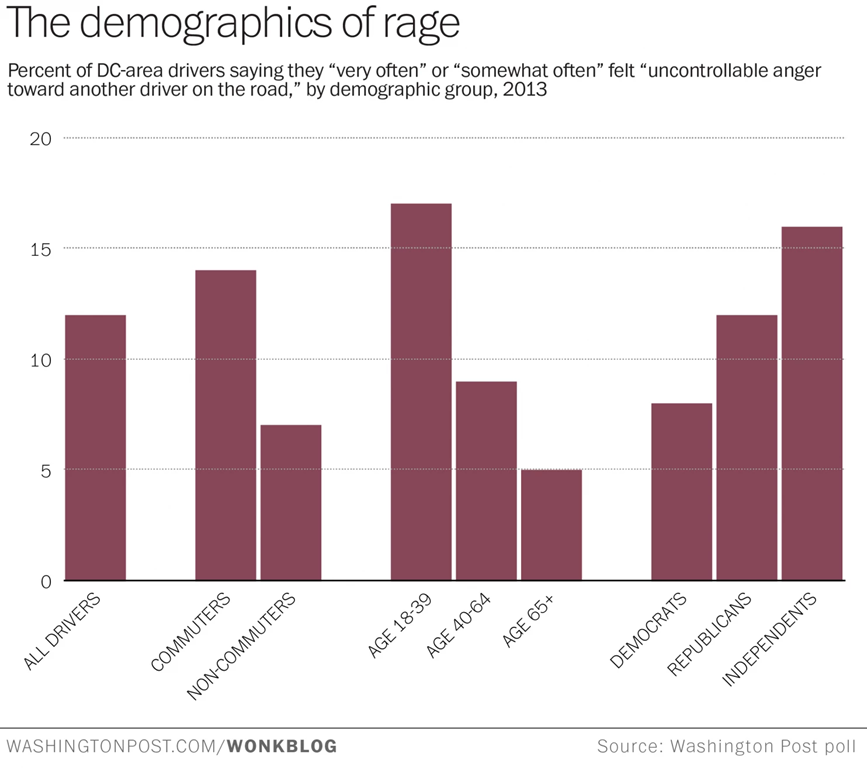
.
Cigarette smuggling in the United States on a state-by-state basis
18 Feb 2015 Leave a comment
in applied price theory, applied welfare economics, economics of crime, law and economics, macroeconomics, politics - Australia, politics - New Zealand, public economics, taxation Tags: smuggling, tax avoidance, tobacco regulation, tobacco taxation

Is it treason to advocate for a republic?
16 Feb 2015 Leave a comment
in constitutional political economy, law and economics Tags: British constitutional law, British justice, British politics, republicanism, treason
Under the Treason Felony Act (1848), it is treason felony to “compass, imagine, invent, devise, or intend”:
- to deprive the Queen of her crown,
- to levy war against the Queen, or
- to “move or stir” any foreigner to invade the United Kingdom or any other country belonging to the Queen.
The act was passed in 1848, a year of revolutionary fervour across Europe. Its express purpose was to punish those who called for the establishment of a republic in Britain.

The act makes it a criminal offence, punishable by life imprisonment, to advocate abolition of the monarchy even by peaceful means. In 2013, the Ministry of Justice said:
Section 3 of the Treason Felony Act 1848 has not been repealed.
The last reported prosecution under the Act in the United Kingdom was in 1883, although the Act was used in Australia in 1916 to prosecute the “Sydney Twelve“.
In 2001, the Guardian initiated a legal challenge against the antique statute on the grounds that it prevented freedom of expression as guaranteed by the Human Rights Act 1998.
The law lords dismissed the newspaper’s case on the grounds that it was unnecessary. Lord Steyn explained:
“The part of section 3 of the 1848 Act which appears to criminalise the advocacy of republicanism is a relic of a bygone age, and does not fit into the fabric of our modern legal system. The idea that s3 could survive scrutiny under the Human Rights Act is unreal.” But, he added, courts should not be used as “an instrument … [to] chivvy parliament into spring-cleaning the statute book”.
The Guardian then noted that 327 other obscure offences had been subsequently spring cleaned from the British statute books including being an incorrigible rogue under the Vagrancy Act of 1824.

Her Majesty’s Attorney General for England and Wales made no submission on his prosecution policy to the House of Lords when the legal challenge was heard. But the Law Lords said if he had:
It could only have been to accept that, at least since October 2 2000 when the Human Rights Act 1998 came into force, no one who advocates the abolition of the monarchy by peaceful and constitutional means has been at any risk of prosecution (other than a private prosecution) or of conviction.
Lord Hutton said:
It is not the function of the courts to decide hypothetical questions which do not impact on the parties before them,
Lord Scott of Foscote said:
No one who advocates the peaceful abolition of the monarchy and its replacement by a republican form of government is at any risk of prosecution. No attorney general or director of public prosecutions would or could authorise a prosecution for such advocacy without becoming a laughing stock. To do so would be an unlawful act under s6 (1) of the 1998 Act.
Lord Walker of Gestingthorpe said:
It is most undesirable that obsolete statutes should remain unrepealed. Quaint language and interesting historical associations are no justification for preserving obsolete statutes in a mummified state. But … it is still the role of the legislature, rather than that of the courts, to decide whether to repeal or retain legislation.
Lord Styen also said
…counsel for the Attorney General accepted that the 1848 Act must be construed as an always speaking statute in a modern democracy. In this context it may well be that the strong operative words “deprive or depose” import the idea of changing our form of government by unlawful force. If this interpretation is correct, the reason for the present litigation collapses at the threshold.
His Lordship added that the passage of the Human Rights Act in 1998 had significant relevance to the interpretation of prior legislation:
Freedom of political speech is a core value of our legal system. Without it the rule of law cannot be maintained. Whatever may have been the position before the Human Rights Act came into operation, it is difficult to think of any rational argument justifying the criminalisation of the conduct of citizens who wish to argue for a different form of government… The idea that section 3 could survive scrutiny under the Human Rights Act is unreal. The fears of the editor of The Guardian were more than a trifle alarmist. In my view the courts ought not to be troubled further with this unnecessary litigation.
The only risk under the Treason Felony Act 1848 is a rogue prosecution. The director of public prosecutions would take over such a prosecution immediately and offer no evidence. He has an absolute right to take over private prosecutions. As Lord Rogers said:
Nor is the threat of a rogue private prosecution any more substantial, since the reality is that, having regard to the public interest, the Director of Public Prosecutions would take it over and discontinue it or the Attorney-General would enter a nolle prosequi.
Court-siding as The Sting reborn?
16 Feb 2015 Leave a comment
in economics of crime, movies, sports economics
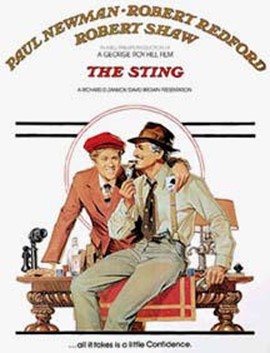 Court-siding in the Cricket World Cup yesterday reminded me of the 1973 classic movie The Sting with Paul Newman and Robert Redford. This movie is still worth watching today – a great Robert Redford, Paul Newman movie told with great wit.
Both court-siding and The Sting were both sharp practices by gamblers based on the delay in broadcasting sports results.
In court siding, the six or seven second delay in cricket broadcasts allow spectators with mobile phones to tip off gambling confederates in other parts of the world to place last second bets.
Court siding carries a 10 year prison term in the Australian State of Victoria. It is not illegal elsewhere and some have suggested that gambling syndicates turned to court siding because it’s easier to accomplish than match fixing.
Dozens of people are ejected from cricket games every year for court siding. They are easy to spot. They take no interest in the game, don’t cheer or clap and spend all their time on a mobile phone or laptop.
In The Sting, a bunch of grifters conned a gangster by pretending they could manipulate the distribution of horseracing results by the local telegraph office in the 1920s. The confederate delays the distribution of the racing results for several minutes, so the race is run and the result known before the bets are placed with the unsuspecting betting shop, relying on Telegraph racing results.
Central to the con, which is called the Wire is setting up a betting shop filled with grifters in on the con placing false bets. The only gambler who places a real bet is the mark.
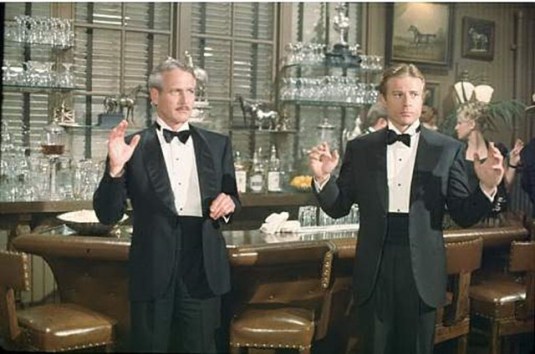
The wire was most popular in the early 20th century, when horse and dog race results were sent to betting parlours via the telegraph. As with court-siding, the con is time and personnel intensive requiring a large gang to be involved.
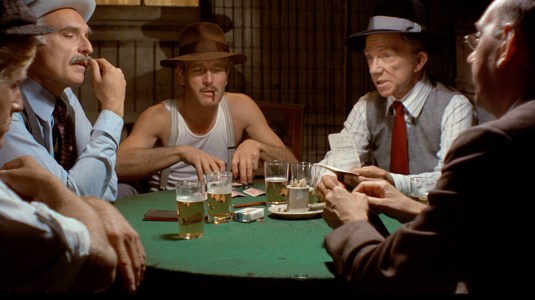
As with most cons, the Wire is based on manipulating the greed and deep pockets of the mark, including a willingness to act illegally to profit from gambling or other business ventures.
In the case of The Wire, there is corruption involved because a confederate of the telegraph office is supposed to be on the take. The confederate in the Telegraph office delays distribution of the race results, while the tips of his co-conspirators giving them enough time to place a bet.
In the case of court siding, this practice seems to me to be simply entrepreneurial alertness or arbitrage.
Betting in sport is often on spreads such as when a no ball is bowled, who is the first change bowler, who bowled a no ball or got out before a milestone such as 50 or 100 runs.
Court siding cannot be stopped by closing the betting shop 10 seconds early because they are not events that happen to a timetable such as closing the betting before the race starts.
It is up to bookmakers to solve this problem because it is an ordinary business problem. There is no corruption, bribery or any form of conspiracy between the employees of the bookmaker and the gamblers or between the gamblers and the players of the particular sport. The police should not be wasting their time with court siding.
Bookmakers could stop the practice of court-siding dead if they introduced a 10 second delay between lodging a bet online and when the bet is accepted. This 10 second delay is longer than the broadcasting delay that makes court siding possible and profitable.
Buzz Aldrin punches Moon landing conspiracy theorist stalker after being harassed by him
15 Feb 2015 1 Comment
in economics of crime, economics of media and culture, health economics, law and economics, property rights Tags: Buzz Aldrin, conspiracy theorists, moon landing hoax, privacy, self-defence, stalking
HT: Liar_tuck


 Utopia, you are standing in it!
Recent Comments