Roger Partridge writes – The Greens’ coronation of Chlöe Swarbrick at last weekend’s AGM delivered a manifesto for economic transformation that would make Soviet economists nostalgic for their glory days.
The Greens’ weekend gift to the government
The Greens’ weekend gift to the government
19 Aug 2025 Leave a comment
in economic growth, entrepreneurship, fiscal policy, income redistribution, labour economics, labour supply, macroeconomics, Marxist economics, politics - New Zealand, poverty and inequality, Public Choice, public economics Tags: taxation and entrepreneurship, wealth tax
Milei’s Achievements…and Challenges
17 Aug 2025 1 Comment
in development economics, economic growth, economics of bureaucracy, economics of regulation, fiscal policy, growth disasters, income redistribution, industrial organisation, labour economics, law and economics, liberalism, libertarianism, macroeconomics, Marxist economics, monetary economics, property rights, Public Choice, public economics, rentseeking, unemployment Tags: Argentina

I’m back in Argentina, the South American country with the world’s best leader. What Javier Milei has accomplished is amazing. And the economic effects have been wonderful. One of my meetings earlier this week was with Marcelo Elizondo, the head of the International Chamber of Commerce for Argentina. He shared a presentation with me that […]
Milei’s Achievements…and Challenges
Partisan Bias in Professional Macroeconomic Forecasts
27 Jul 2025 Leave a comment
in business cycles, economic growth, macroeconomics, politics - USA Tags: forecasting errors
Here is a recent paper by Benjamin S. Kay, Aeimit Lakdawala, and Jane Ryngaert: Using a novel dataset linking professional forecasters in the Wall Street Journal Economic Forecasting Survey to their political affiliations, we document a partisan bias in GDP growth forecasts. Republican-affiliated forecasters project 0.3-0.4 percentage points higher growth when Republicans hold the presidency, […]
Partisan Bias in Professional Macroeconomic Forecasts
The Milei Miracle, Part II
23 Jul 2025 Leave a comment
in applied price theory, budget deficits, comparative institutional analysis, constitutional political economy, development economics, economic growth, fiscal policy, growth disasters, growth miracles, law and economics, liberalism, libertarianism, macroeconomics, property rights Tags: Argentina

I almost feel sorry for the 108 leftist economists who predicted back in 2023 that Argentina would suffer if Javier Milei won the presidential election. Not only were they disappointed when he enjoyed a landslide victory, but the subsequent events in Argentina have shown that they were wildly wrong (all of which is discussed in […]
The Milei Miracle, Part II
The Cross of Gold: Brazilian Treasure and the Decline of Portugal (due to the resource curse)
18 Jul 2025 Leave a comment
in applied price theory, comparative institutional analysis, constitutional political economy, development economics, economic growth, economic history, growth disasters, international economics, law and economics, macroeconomics, property rights, Public Choice, rentseeking, resource economics Tags: Portugal, resources curse
By Davis Kedrosky and Nuno Palma. Published in The Journal of Economic History.In the book The Economics of Macro Issues which I used as a supplemental text, they mention that Russia has many resources but its per capita income is less than that of Luxembourg which has few resources. The book suggests that the economic…
The Cross of Gold: Brazilian Treasure and the Decline of Portugal (due to the resource curse)
The Weird and Lovely Surge of US Productivity Growth
04 Jul 2025 Leave a comment
in applied price theory, econometerics, economic growth, economic history, industrial organisation, labour economics, labour supply, macroeconomics, politics - USA

In the long run, a rising standard of living is always and everywhere based on productivity growth. Thus, Austan Goolsbee notedin a keynote address at the “Summit” conference held at the Stanford Institute of Economic Policy Research (SIEPR) in February (“Remarks on Productivity Growth and Monetary Policy,” February 28, 2025): As Goolsbee notes, annual productivity…
The Weird and Lovely Surge of US Productivity Growth
Greg Mankiw on Modern Monetary Theory
30 Jun 2025 Leave a comment
in applied price theory, budget deficits, business cycles, economic growth, economics of education, fiscal policy, macroeconomics, monetary economics Tags: cranks, monetary policy
Modern Monetary Theory (MMT) had a real moment in the spotlight in the late 2010s, with political support in the US from Presidential hopefuls Bernie Sanders and Alexandria Ocasio-Cortez. However, mainstream economists mostly didn’t understand it, or ridiculed it, or both. I mostly ignored the detail of it, only picking up what I knew about it from…
Greg Mankiw on Modern Monetary Theory
Slowly Strangling the Death Tax
23 Jun 2025 Leave a comment
in applied price theory, Austrian economics, economic growth, macroeconomics, politics - USA, Public Choice, public economics Tags: death taxes, taxation and entrepreneurship, taxation and investment, taxation and savings
Back in 2013, I debated Joe Biden’s top economist on the death tax. Everything I said then (and wrote four years before then) is still true today. In the interview, I mentioned nations that have abolished their death taxes, including Australia. I should have mentioned Sweden as well. As a general rule, I don’t want […]
Slowly Strangling the Death Tax
Markets are forward-looking
18 Jun 2025 1 Comment
in applied price theory, defence economics, econometerics, economic growth, economic history, financial economics, macroeconomics, market efficiency, politics - USA, war and peace Tags: efficient markets hypothesis, World War II
LPL Financial analyzed 25 major geopolitical episodes, dating back to Japan’s 1941 attack on Pearl Harbor. “Total drawdowns around these events have been fairly limited,” Jeff Buchbinder, LPL’s chief equity strategist, wrote in a research note on Monday. (Full recoveries often “take only a few weeks to a couple of months,” he added.) Deutsche Bank analysts […]
Markets are forward-looking
An American Enterprise Institute Discussion of “The Triumph of Economic Freedom”
05 Jun 2025 Leave a comment
in applied price theory, comparative institutional analysis, constitutional political economy, development economics, economic growth, economic history, growth disasters, growth miracles, history of economic thought, macroeconomics Tags: anticapitalist mentality, capitalism and freedom
Tweet The post An American Enterprise Institute Discussion of “The Triumph of Economic Freedom” appeared first on Cafe Hayek.
An American Enterprise Institute Discussion of “The Triumph of Economic Freedom”
Productivity growth languishing
05 Jun 2025 Leave a comment
in economic growth, macroeconomics, politics - New Zealand

I hadn’t had a look for a while at the OECD labour productivity (real GDP per hour worked) data, but the release of the latest OECD Economic Outlook the other day prompted me to spend some time in the (less user-friendly than it was) OECD database. It takes a while for all the data to […]
Productivity growth languishing
MPC members speaking
31 May 2025 Leave a comment
in budget deficits, business cycles, economic growth, economics of bureaucracy, macroeconomics, monetary economics, politics - New Zealand, Public Choice Tags: monetary policy

In both The Post and the Herald this morning there are reports of interviews with executive members of the Reserve Bank’s Monetary Policy Committee: the Bank’s chief economist Paul Conway in The Post and his boss, and the deputy chief executive responsible for monetary policy and macroeconomics, Karen Silk in the Herald. In a high-performing […]
MPC members speaking
May Monetary Policy Statement
30 May 2025 Leave a comment
in budget deficits, business cycles, economic growth, fiscal policy, inflation targeting, labour economics, macroeconomics, monetary economics, politics - New Zealand, public economics, unemployment Tags: monetary policy
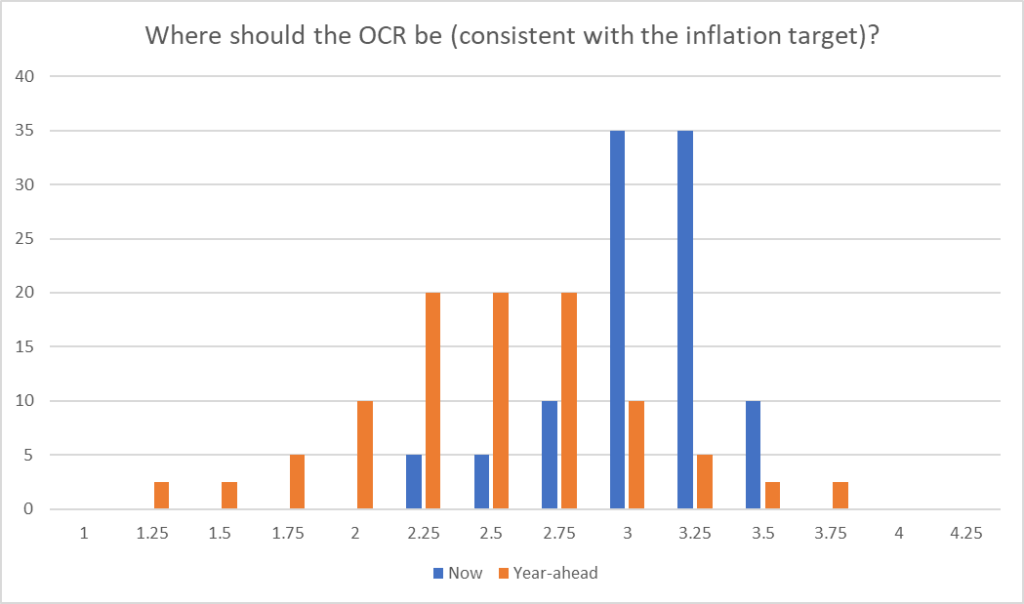
Michael Reddell writes – Procrastinating this morning, I asked Grok to write a post in my style on yesterday’s Monetary Policy Statement. Suffice to say, I think I’ll stick to thinking and writing for myself for the time being. Among the many oddities of Grok’s product was the conviction that Adrian Orr was still Governor. Mercifully […]
May Monetary Policy Statement
One last post on Investment Boost
27 May 2025 Leave a comment
in applied price theory, economic growth, fiscal policy, macroeconomics, politics - New Zealand, public economics Tags: taxation and investment

After the discussion in my post yesterday on the Investment Boost subsidy scheme announced in the Budget I thought a bit more about who was likely to benefit the most from it. The general answer of course is the purchasers of the longest-lived assets. Why? Because if you have an asset which IRD estimates to […]
One last post on Investment Boost
Some more post-Budget thoughts
27 May 2025 Leave a comment
in budget deficits, business cycles, economic growth, fiscal policy, macroeconomics, politics - New Zealand, Public Choice, public economics Tags: taxation and investment

On two separate themes; aggregate fiscal policy, and the Investment Boost initiative. Aggregate fiscal policy Over the weekend for some reason I was prompted to look up the Budget Responsibility Rules that Labour and the Greens committed to in early 2017 (my commentary on them here). At the time, the intention seemed to be to […]
Some more post-Budget thoughts
 Utopia, you are standing in it!
Recent Comments