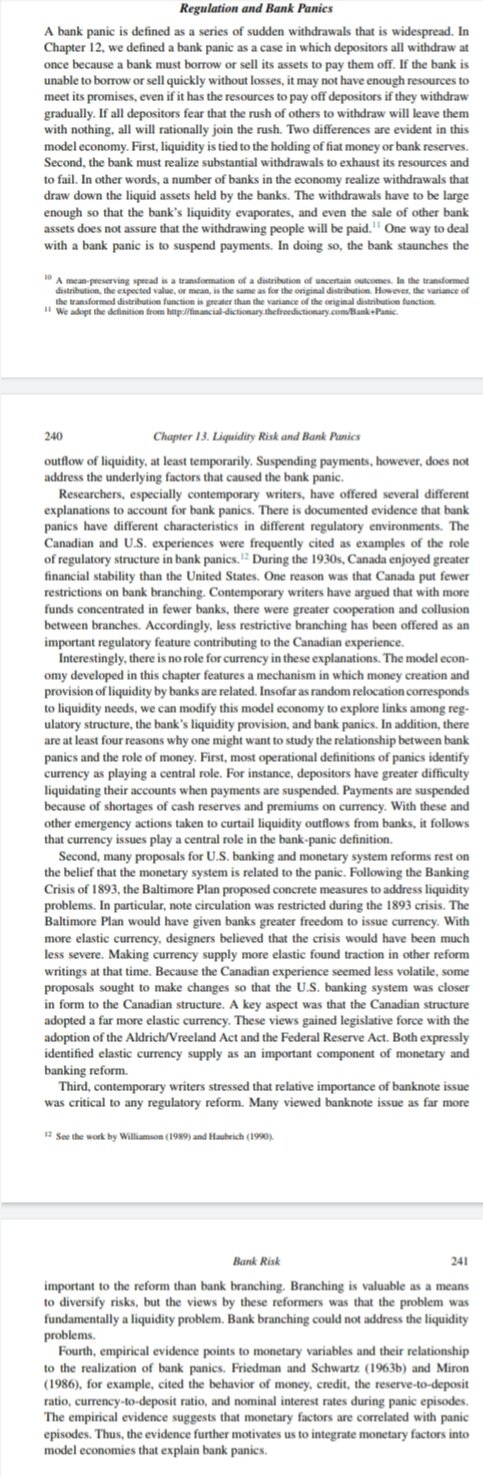
Champ and Freeman on bank capital reserves
05 Dec 2019 Leave a comment
in applied price theory, applied welfare economics, business cycles, economic history, economics of information, economics of regulation, financial economics, global financial crisis (GFC), great depression, great recession, industrial organisation, macroeconomics, monetary economics, politics - New Zealand, Public Choice, survivor principle Tags: adverse selection, agent principal problem, deposit insurance, economics of central banking, monetary policy, moral hazard, prudential regulation
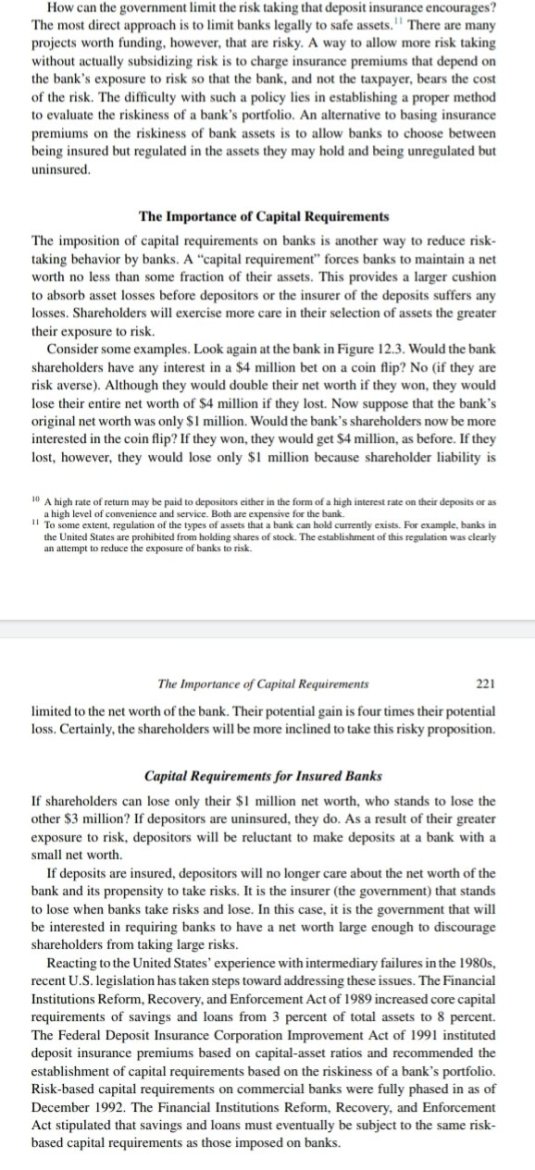
More on @paulkrugman forgetting the literature on self-fulfilling financial crises and speculative attacks
01 Dec 2019 Leave a comment
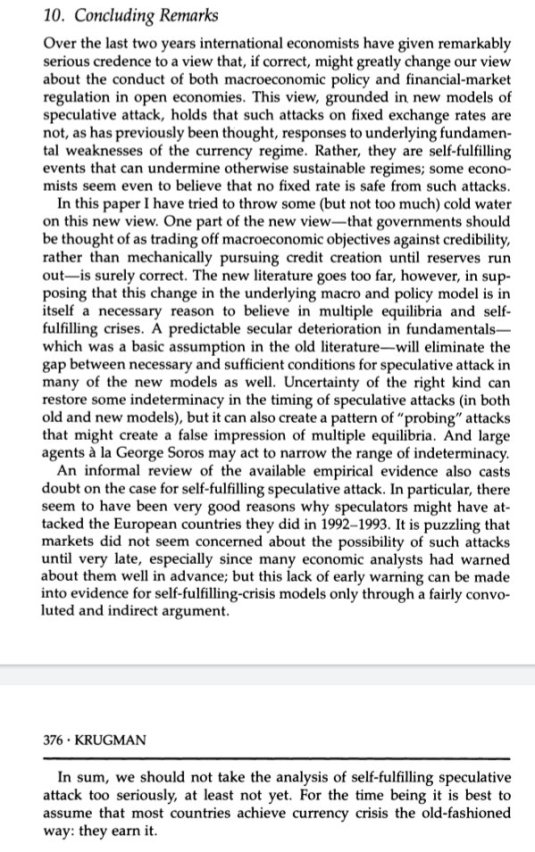
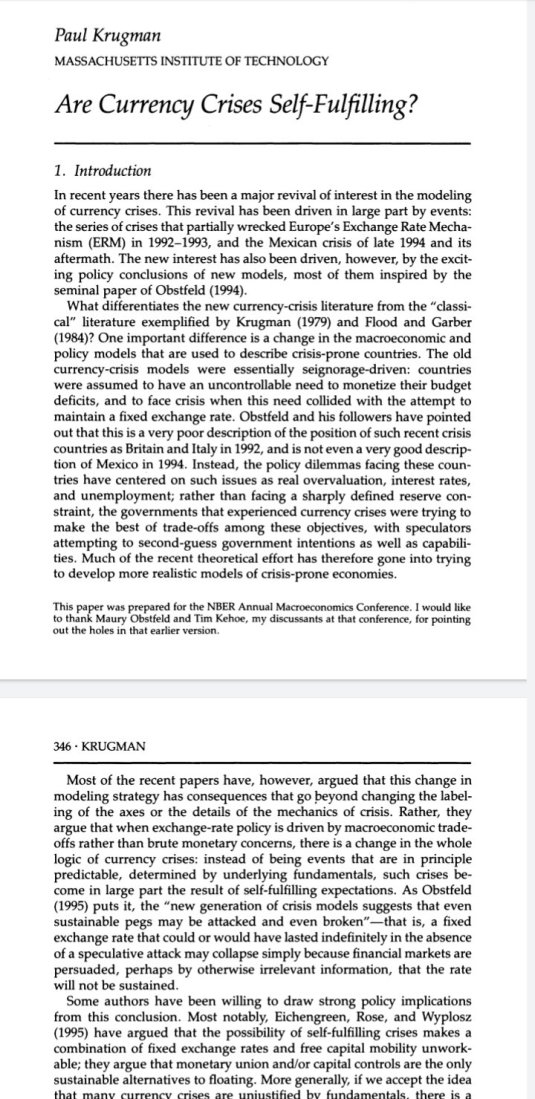
The day Minsky macroeconomics died! Instability can’t be fixed so easily?
23 Nov 2019 Leave a comment
in budget deficits, business cycles, economic history, Euro crisis, financial economics, global financial crisis (GFC), great depression, great recession, macroeconomics, monetarism, monetary economics, Public Choice Tags: asymmetric information, bank runs, banking panics, deposit insurance, economics of central banking, Keynesian macroeconomics, moral hazard, Post-Keynesian macroeconomics
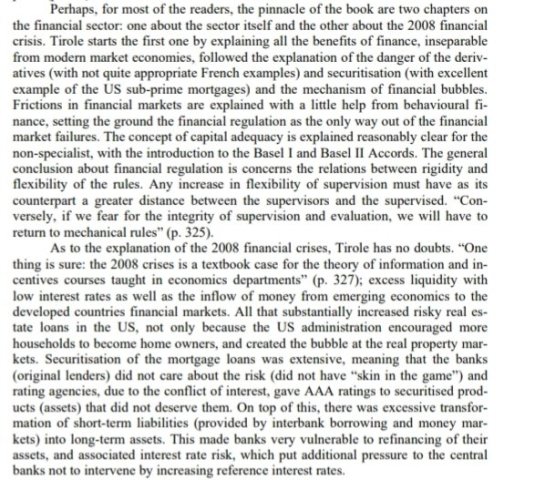
Tirole on the economics of crises
05 Nov 2019 Leave a comment
in applied price theory, budget deficits, business cycles, currency unions, development economics, economics of information, entrepreneurship, Euro crisis, global financial crisis (GFC), industrial organisation, international economics, macroeconomics, market efficiency, monetary economics, Public Choice, rentseeking Tags: bank panics
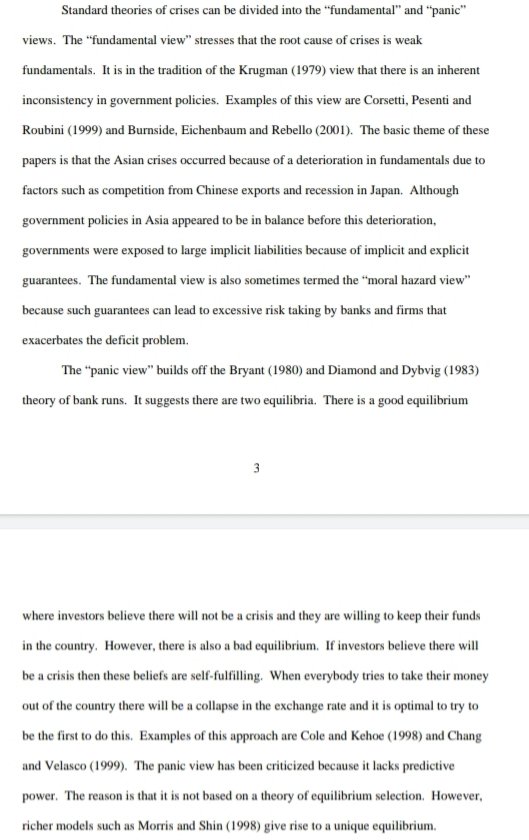
Only rational expectations macroeconomics can explain self-fulfilling crises
01 Nov 2019 Leave a comment
in applied price theory, budget deficits, business cycles, currency unions, economic growth, economic history, economics of bureaucracy, economics of information, Euro crisis, fiscal policy, global financial crisis (GFC), great depression, great recession, macroeconomics, monetary economics, Public Choice Tags: Euroland, rational expectations, sovereign defaults
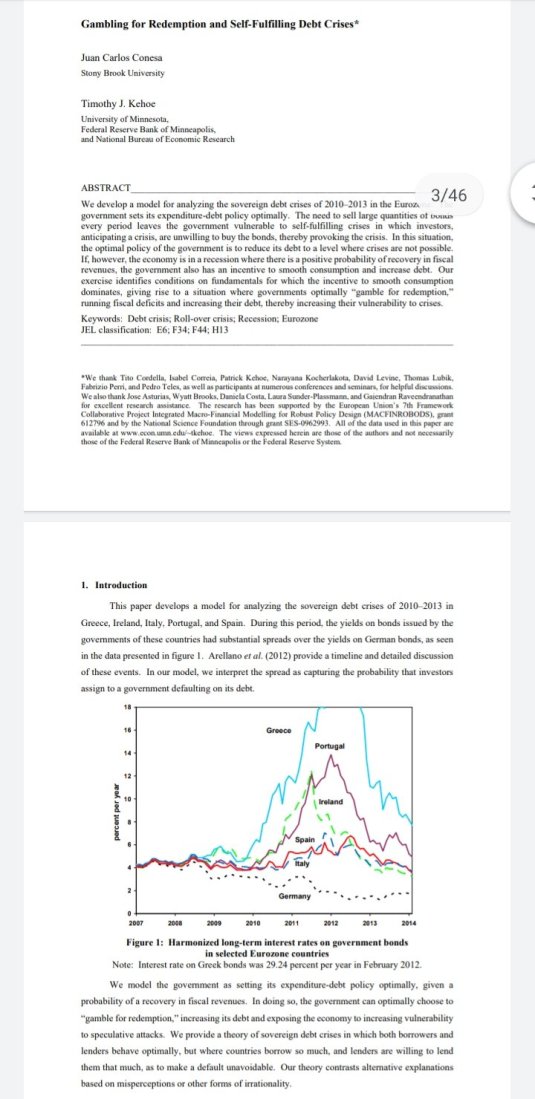
35 years later: Diamond-Dybvig model of bank runs
16 Oct 2019 Leave a comment
in applied price theory, applied welfare economics, business cycles, comparative institutional analysis, economic growth, economic history, global financial crisis (GFC), great depression, great recession, income redistribution, industrial organisation, law and economics, macroeconomics, monetary economics, property rights, Public Choice, rentseeking, survivor principle Tags: bank panics, bank runs, deposit insurance
“I vividly remember traders screaming, ‘The market’s broken! I can’t get a price, any price! Said @JARRODWKERR IN @THESPINOFFTV?
15 Oct 2019 Leave a comment
in economic history, financial economics, global financial crisis (GFC), macroeconomics, monetary economics

Figures 7A and 7B display data for the interest rate on commercial paper with a maturity of 90 days for financial and non-nancial corporations2 . These figures show that, during the financial crisis, this interest rate has risen for financial institutions and has barely budged for non-financial institutions with a AA rating. It has risen fairly dramatically for non-financial corporations with an A2/P2 rating. Note that, even though the interest rate for financial institutions has risen recently, it is still well below the levels that prevailed from the beginning of 2006 to the middle of 2007. These figures show that the financial crisis has not led commercial paper rates to rise to levels well beyond historical levels. Taken together, Figures 6A through 7B show that the third claim is false, at least as of October 15.
Did interbank lending dry up at onset of the #GFC as claimed by @JarrodWKerr in @TheSpinoffTV?
15 Oct 2019 1 Comment
in economic history, financial economics, global financial crisis (GFC), macroeconomics, monetary economics
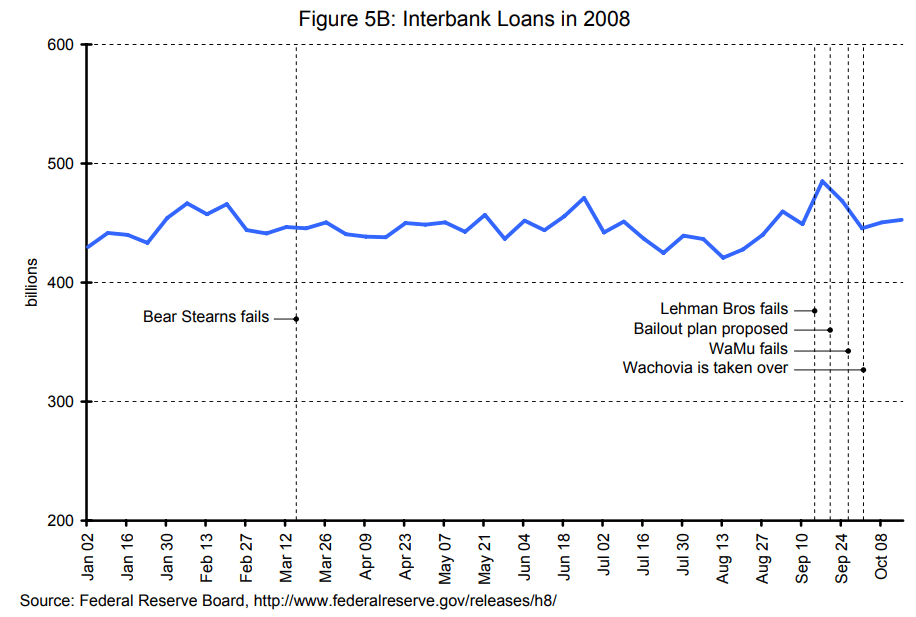
“We knew we were witnessing history, but at the same time, we were haemorrhaging,” he wrote in a piece for The Spinoff marking the crash’s 10th anniversary. “I vividly remember traders screaming, ‘The market’s broken! I can’t get a price, any price!’… The fear of contagion crippled financial markets, and each bank was asking the same question of the other: ‘what dodgy exposure do you have?'”
From https://thespinoff.co.nz/business/sme/15-10-2019/the-economist-who-forgot-everything-he-learned/
BTW, what Kerr really said:
We knew we were witnessing history, but at the same time, we were haemorrhaging. I vividly remember traders screaming, ‘The market’s broken, the market’s broken! I can’t get a price, any price!’. Screens and keyboards were smashed, and millions were lost. I still to this day struggle to believe the so-called ‘major banks’ refused to deal with each other. The fear of contagion crippled financial markets, and each bank was asking the same question of the other: ‘What dodgy exposure do you have?’ The market for bank bills, the short-term pieces of paper (IOUs) that banks buy off each other and which account for a large part of their funding, froze. An interest rate that was ‘always’ 7bps (percentage points) above the cash rate (OCR) sudden became 180bps above cash. That’s banker talk for ‘bloody hell, the cost of everything we do has just blown out’. Credit, the availability of money to do stuff like buy a home, is the oil in the economic engine and when it dries up the engine seizes. What we had was a recession, and it was a bad one. Bailouts came in a number of forms but many feared it wasn’t enough. (emphasis by this blog)
BTW, one basis point (BP) is one hundredth of one percentage point, not a whole percentage point as the editor of his article suggested.
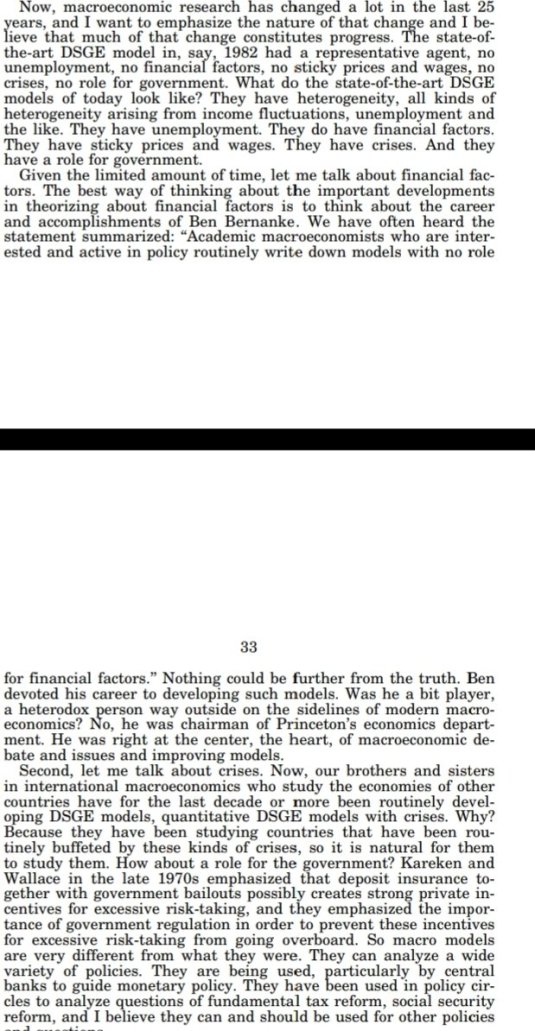
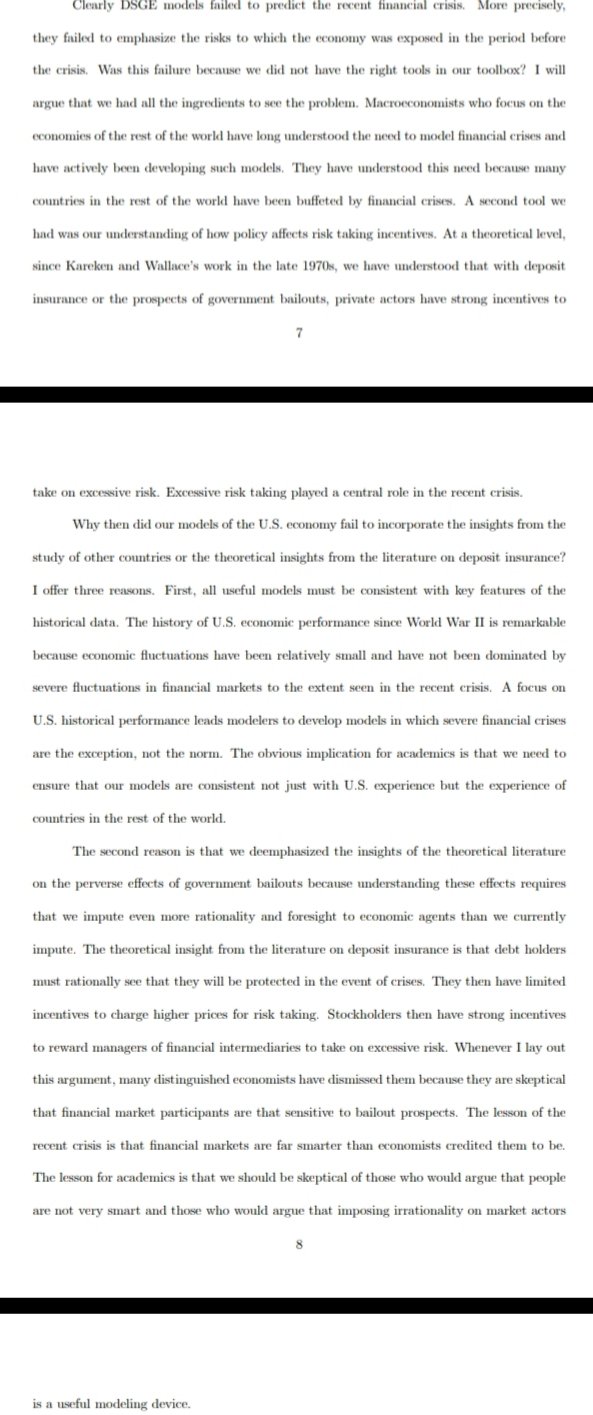
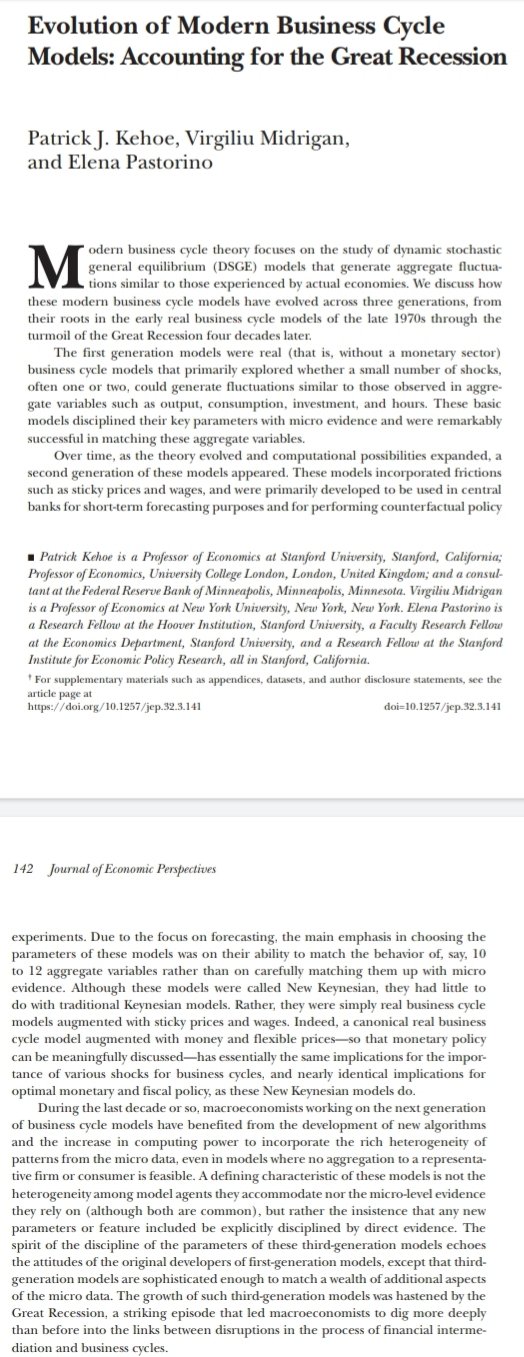
V.V. Chari testifies on modern macroeconomics and information prerequisites to predicting the GFC
09 Oct 2019 Leave a comment
Richard Posner: Fiscal Irresponsibility Clouds the Future
23 Sep 2019 Leave a comment
in economic history, economics of bureaucracy, financial economics, fiscal policy, global financial crisis (GFC), great recession, industrial organisation, law and economics, macroeconomics, monetary economics, Public Choice, Richard Posner Tags: bank panics
 Utopia, you are standing in it!
Recent Comments