Between 2004 and 2021, before Russia’s invasion of Ukraine, the industrial price of energy tripled in nominal terms, or doubled relative to consumer prices. With almost identical population sizes, the UK has under 30 million homes, while France has around 37 million. 800,000 British families have second homes compared to 3.4 million French families. Per capita electricity generation in the UK […]
Facts about Britain
Facts about Britain
22 Sep 2024 Leave a comment
in applied price theory, economic growth, economics of bureaucracy, economics of regulation, energy economics, environmental economics, industrial organisation, labour economics, law and economics, macroeconomics, Public Choice, resource economics, transport economics, urban economics Tags: British politics
Equality Act 2010
18 Sep 2024 Leave a comment
in applied price theory, comparative institutional analysis, economic history, history of economic thought, human capital, job search and matching, labour economics, labour supply, law and economics, occupational choice, poverty and inequality Tags: British politics, compensating differences, pay equity

The UK’s Orwellian sounding Equality Act 2010 is strikingly Marxist. It demands equal pay for work of equal value where these are defined as follows: A’s work is equal to that of B if it is like B’s work, rated as equivalent to B’s work, or of equal value to B’s work. A’s work is […]
Equality Act 2010
The Economic Consequences of the French Wealth Tax
17 Sep 2024 Leave a comment
in applied price theory, econometerics, economic history, entrepreneurship, fiscal policy, human capital, income redistribution, labour economics, labour supply, macroeconomics, occupational choice, poverty and inequality, Public Choice, public economics Tags: taxation and entrepreneurship, taxation and investment, taxation and labour supply
By Eric Pichet, here is the abstract: Despite attempts to ‘unwind’ the Impôt de Solidarité sur la Fortune (‘Solidarity Wealth Tax,’ the French wealth tax) during the last legislature (2002-2007), ISF yields had soared by 2006, jumping from €2.5 billion in 2002 to €3.6 billion. Analysis of the economic consequences of this ISF wealth tax […]
The Economic Consequences of the French Wealth Tax
Tax-Motivated Domestic Migration
17 Sep 2024 Leave a comment
in applied price theory, economic growth, entrepreneurship, Federalism, fiscal policy, human capital, income redistribution, labour economics, labour supply, macroeconomics, occupational choice, politics - USA, poverty and inequality, Public Choice, public economics Tags: capital gains tax, taxation and investment taxation and entrepreneurship, taxation and labour supply
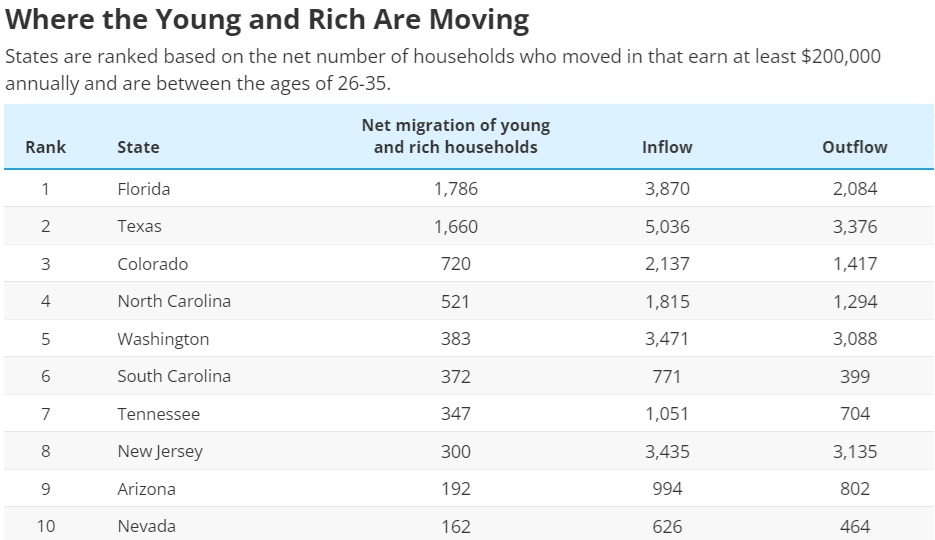
I’m a big fan of tax competition. I cheer when jobs, investment, and people (or even booze) move from high-tax jurisdictions to low-tax jurisdictions. This increases the rewards for good policy and also increases the punishment for bad policy. Given my interest in the topic, I obviously can’t resist sharing this chart, which shows the […]
Tax-Motivated Domestic Migration
It Happened Again! The New York Times Writes about Venezuela’s Collapse and Fails to Mention Socialism
16 Sep 2024 Leave a comment
in development economics, economic growth, economic history, growth disasters, history of economic thought, income redistribution, liberalism, macroeconomics, Marxist economics, politics - USA, Public Choice Tags: regressive left, useful idiot, Venezuela
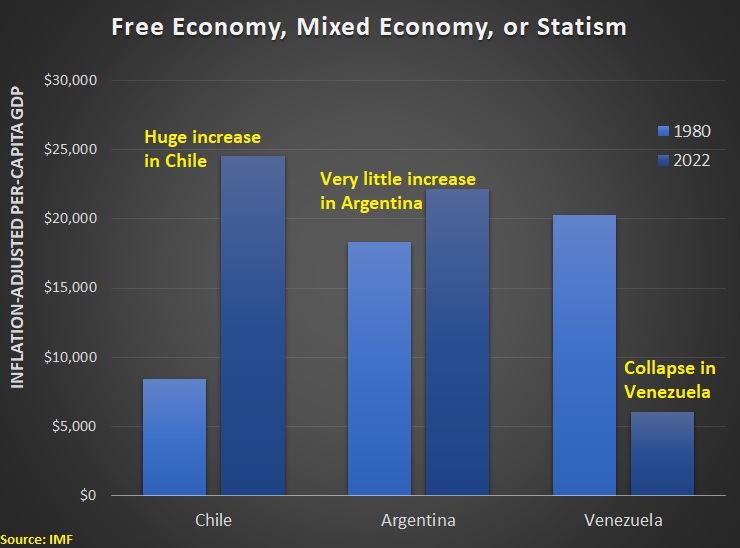
I sometimes make the theoretical case against socialism. Usually, this means exposing the flaws of the core components of the socialist ideology. Government ownership of the means of production is a recipe for resource misallocation. Central planning has a miserable track record of failure because consumer preferences are ignored. Price controls distort incentives to make […]
It Happened Again! The New York Times Writes about Venezuela’s Collapse and Fails to Mention Socialism
The Santa Claus Election
15 Sep 2024 Leave a comment
in applied price theory, comparative institutional analysis, economic growth, economics of education, entrepreneurship, fiscal policy, health and safety, income redistribution, industrial organisation, labour economics, labour supply, macroeconomics, politics - USA, Public Choice, public economics, unions Tags: 2024 presidential election, taxation and entrepreneurship, taxation and investment, taxation and labour supply

For libertarians, this is a very depressing election (a feeling we tend to have every four years, so a familiar experience). What basically happens is that two politicians try to bribe us with our own money. This year, we have Kamala Harris, who was even worse than Bernie Sanders in the big-spender contest. And we […]
The Santa Claus Election
Failing Banks
11 Sep 2024 Leave a comment
in business cycles, economic history, financial economics, global financial crisis (GFC), great depression, great recession, macroeconomics, monetary economics, politics - USA Tags: bank panics, bank runs
From Sergio Correia, Stephan Luck, and Emil Verner: Why do banks fail? We create a panel covering most commercial banks from 1865 through 2023 to study the history of failing banks in the United States. Failing banks are characterized by rising asset losses, deteriorating solvency, and an increasing reliance on expensive non-core funding. Commonalities across…
Failing Banks
Recovering from New Zealand’s worst ever economic decision: The cancellation of the Kirk Government’s superannuation scheme
08 Sep 2024 1 Comment
in economic growth, economic history, fiscal policy, income redistribution, labour economics, labour supply, macroeconomics, politics - New Zealand, poverty and inequality, Public Choice, public economics
EEconomists wonder about the “New Zealand paradox”, which is that New Zealand under-performs economically given its policies, institutions, natural resources, educated people, and compliance with trade and other multi-lateral agreements. Our economic reforms from the mid-1980s and on were textbook economic theory and yet the real-world results disappointed. However, New Zealand has different policy settings […]
Recovering from New Zealand’s worst ever economic decision: The cancellation of the Kirk Government’s superannuation scheme
Interview with Greg Mankiw: New Keynesian Macro, Growth, and Economic Policy
04 Sep 2024 Leave a comment
in applied price theory, budget deficits, business cycles, development economics, econometerics, economic growth, economic history, Edward Prescott, fiscal policy, great depression, history of economic thought, labour economics, law and economics, macroeconomics, Milton Friedman, monetarism, monetary economics, politics - USA, Public Choice, Robert E. Lucas, unemployment
Jon Hartley interviews Greg Mankiw on topics including New Keynesian macroeconomics, growth, and economic policy more broadly at his Capitalism and Freedom website (August 20, 2024, video and transcript available). Here are a few of the comments that caught my eye. On big models and small models in studying the macroeconomy: [O]n the issue of…
Interview with Greg Mankiw: New Keynesian Macro, Growth, and Economic Policy
Why the @NZGreens are beside the point
31 Aug 2024 Leave a comment
in applied welfare economics, Austrian economics, comparative institutional analysis, constitutional political economy, development economics, economic growth, economic history, entrepreneurship, growth miracles, history of economic thought, human capital, income redistribution, industrial organisation, labour economics, labour supply, law and economics, liberalism, macroeconomics, Marxist economics, politics - New Zealand, poverty and inequality, property rights, Public Choice, rentseeking, technological progress Tags: child poverty, family poverty, The Great Enrichment
European Policies = European Stagnation
31 Aug 2024 Leave a comment
in applied price theory, applied welfare economics, Austrian economics, comparative institutional analysis, constitutional political economy, economic growth, economic history, economics of bureaucracy, entrepreneurship, human capital, income redistribution, labour economics, labour supply, liberalism, macroeconomics, Marxist economics, politics - USA, poverty and inequality, Public Choice, public economics, rentseeking, welfare reform Tags: Europe, social insurance
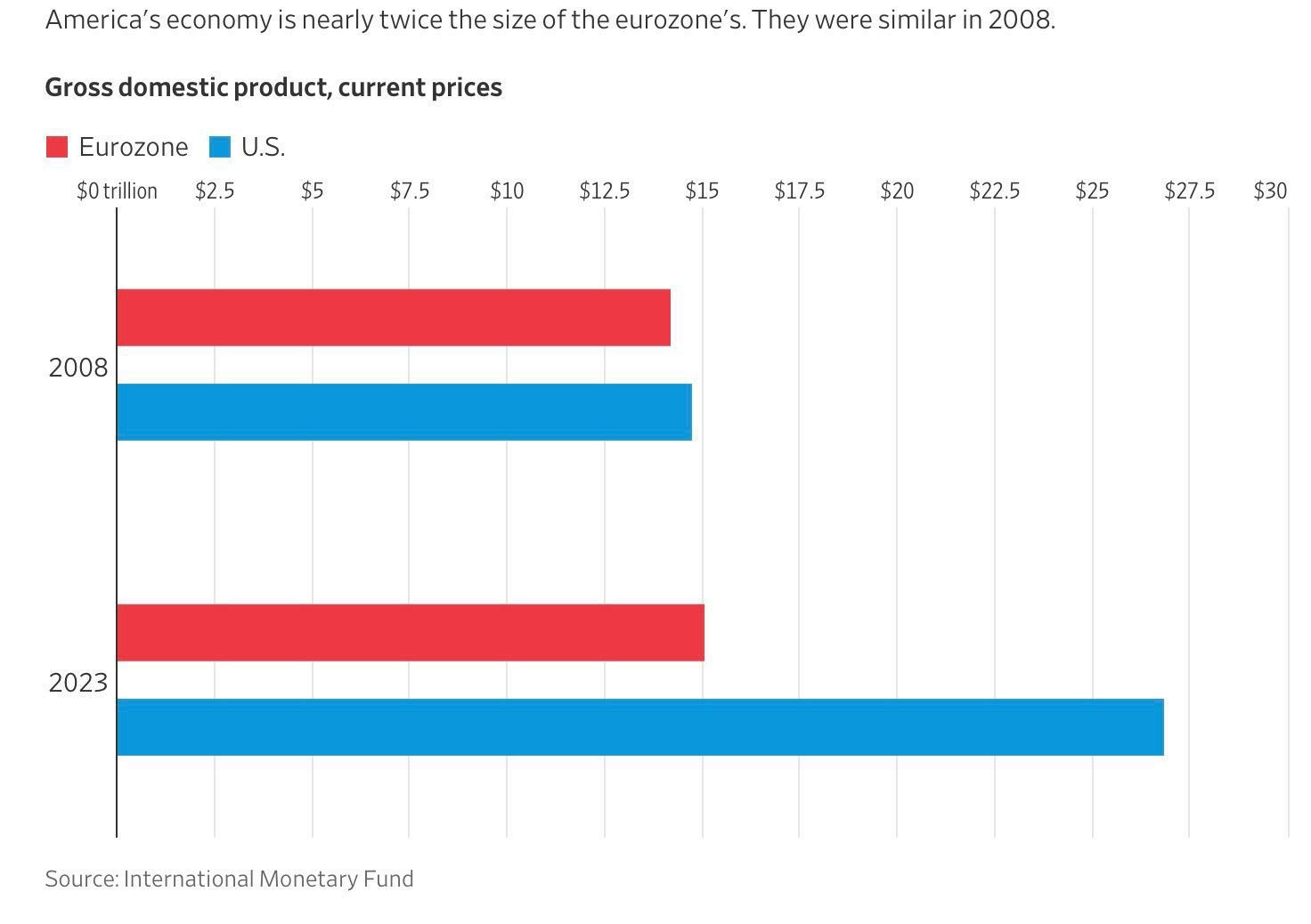
I’ve written many times about how Americans are much richer than Europeans. And I’ve also written many times that the U.S. economy has been growing faster (which shouldn’t happen according to convergence theory). There’s a simple reason for America’s superior performance. The U.S. is burdened by a medium-sized welfare state and a bad tax system […]
European Policies = European Stagnation
Fiscal and monetary policy
27 Aug 2024 Leave a comment
in budget deficits, business cycles, econometerics, economic growth, economic history, financial economics, fiscal policy, history of economic thought, inflation targeting, macroeconomics, monetary economics, politics - New Zealand Tags: monetary policy

Over the last few years, The Treasury seems to have been toying with bidding for a more significant role for fiscal policy as a countercyclical stabilisation tool It seemed to start when Covid hubris still held sway – didn’t we do well? – and the first we saw of it in public was at a […]
Fiscal and monetary policy
Telephone Operators: The Elimination of a Job
20 Aug 2024 Leave a comment
in economic growth, economic history, gender, history of economic thought, industrial organisation, labour economics, labour supply, macroeconomics, market efficiency, occupational choice, survivor principle, unemployment Tags: creative destruction
My tradition on this blog is to take a break (mostly!) from current events in the later part of August. Instead, I pre-schedule daily posts based on things I read during the previous year about three of my preoccupations: economics, editing/writing, and academia. With the posts pre-scheduled, I can then relax more deeply when floating…
Telephone Operators: The Elimination of a Job
Election Rule #1: Don’t Support Your Opponent
19 Aug 2024 Leave a comment
in economic history, industrial organisation, macroeconomics, monetary economics, politics - USA Tags: 2024 presidential election, inflation, monetary policy

Who is advising this woman? In what universe do they think she can say this and at the same time fool enough voters that she hasn’t been part of the Biden Administration that has had these price hikes happen on their watch, on her watch. Did they not think that Trump’s campaign would run with […]
Election Rule #1: Don’t Support Your Opponent
Friedman vs Stiglitz, Chile vs Venezuela
16 Aug 2024 Leave a comment
in development economics, economic growth, economic history, economics of regulation, entrepreneurship, growth disasters, growth miracles, history of economic thought, income redistribution, labour economics, law and economics, liberalism, macroeconomics, Marxist economics, Milton Friedman, politics - USA, poverty and inequality, property rights, Public Choice, public economics, rentseeking Tags: Chile, free speech, political correctness, regressive left, The Great Enrichment, Venezuela
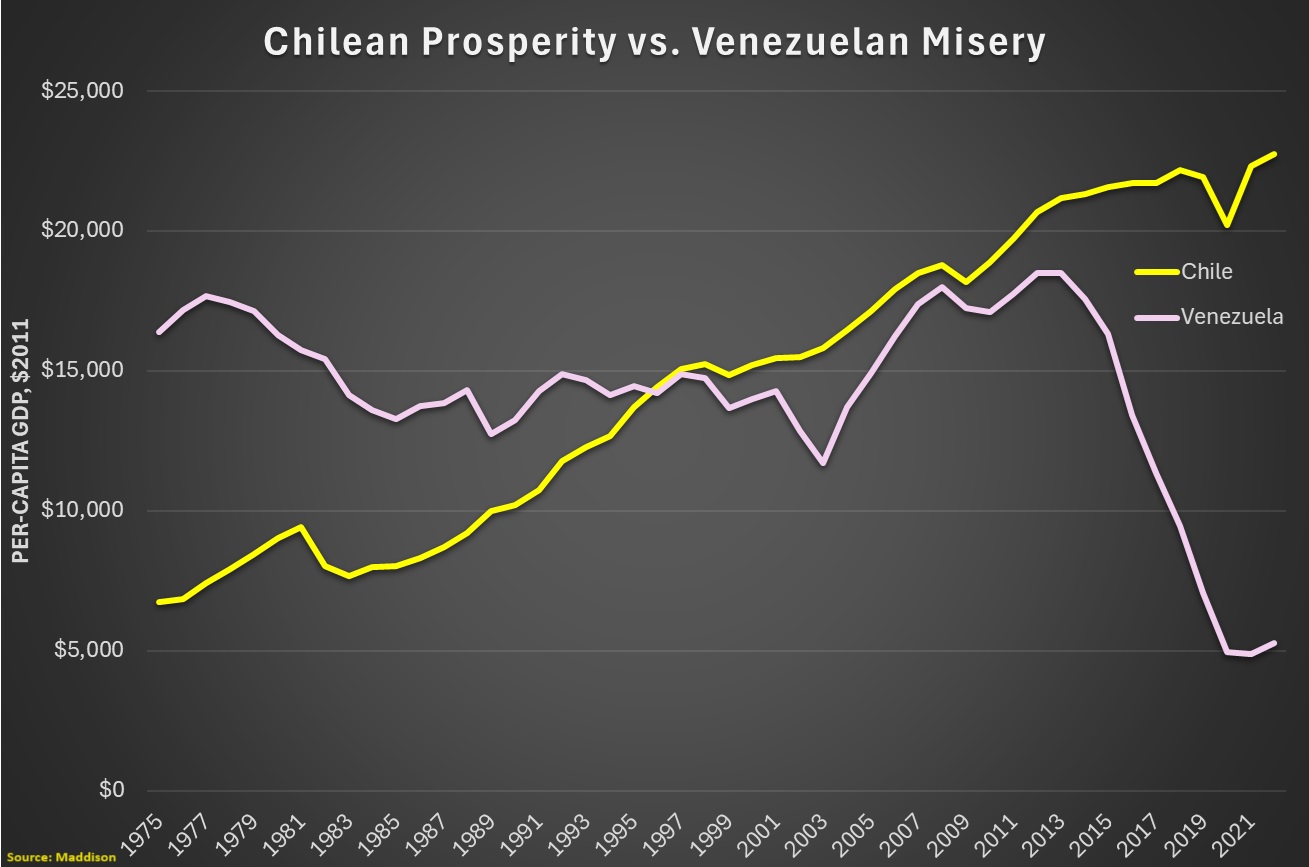
I’ve repeatedly praised Chile’s pro-market reforms (see here, here, and here) and I’ve repeatedly condemned Venezuela’s shift to socialism (see here, here, and here). But if you don’t have time to read all those columns, this chart from the Maddison database tells you everything you need to know. Simply stated, Chile’s reforms have delivered huge […]
Friedman vs Stiglitz, Chile vs Venezuela
 Utopia, you are standing in it!
Recent Comments