Ideas and Growth Lecture with Nobel Laureate Robert E. Lucas Jr
31 Oct 2018 Leave a comment
in economic growth, economic history, economics of education, human capital, labour economics, macroeconomics, occupational choice, Robert E. Lucas
@ProfSteveKeen Rory Robertson 40% Australian housing crash bet
29 Oct 2018 Leave a comment
in macroeconomics, politics - New Zealand
Steve Keen lost a bet in 2010 with Rory Robertson about a 40% crash in Australian housing prices. The loser of the bet, which was Steve Keen, had to walk from Sydney to Mount Kosciusko, a mere 200 km, wearing the T-shirt as shown below saying “I was hopelessly wrong on home prices! Ask me how”.

The temptation — and perils — of inconsistent policy: Finn Kydland at TEDxCibeles
29 Oct 2018 Leave a comment
in applied price theory, budget deficits, business cycles, comparative institutional analysis, currency unions, economic growth, macroeconomics
Could deflation be salvation? George Selgin | Adam Smith Institute
27 Oct 2018 Leave a comment
in Austrian economics, business cycles, economic history, history of economic thought, macroeconomics, monetary economics Tags: Austrian business cycle theory
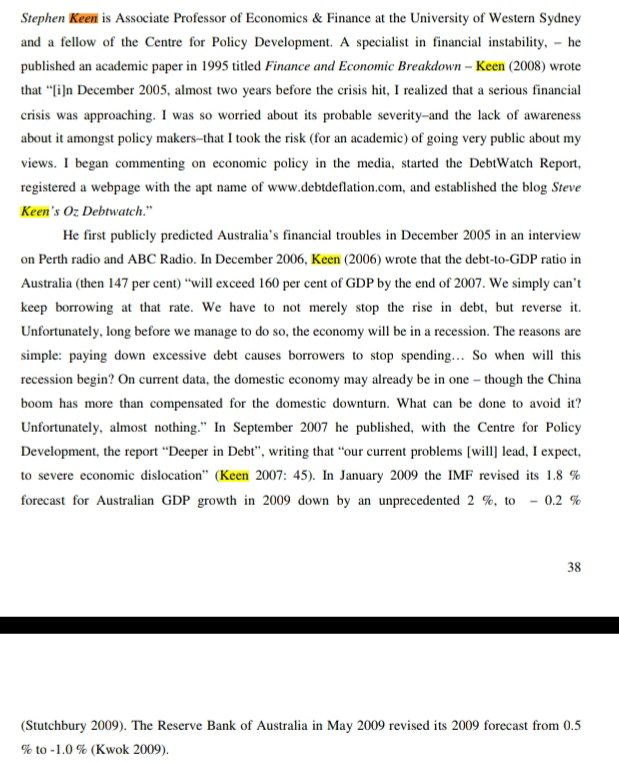
@ProfSteveKeen cites Bezemer when claiming he predicted #GFC (by predicting recession in Oz in radio interviews)
27 Oct 2018 Leave a comment
in business cycles, financial economics, macroeconomics, monetary economics Tags: cranks, forecasting, Post-Keynesian macroeconomics
The current state of the economy Edward Prescott 2012
26 Oct 2018 Leave a comment
in business cycles, Edward Prescott, fiscal policy, global financial crisis (GFC), great recession, macroeconomics Tags: real business cycle theory
The Current Financial Crisis and the Great Depressions of the 20th Century” by Prof. Timothy J. Kehoe
23 Oct 2018 Leave a comment
in applied price theory, business cycles, great depression, labour economics, labour supply, macroeconomics
@ProfSteveKeen never predicted GFC
22 Oct 2018 Leave a comment
in financial economics, macroeconomics
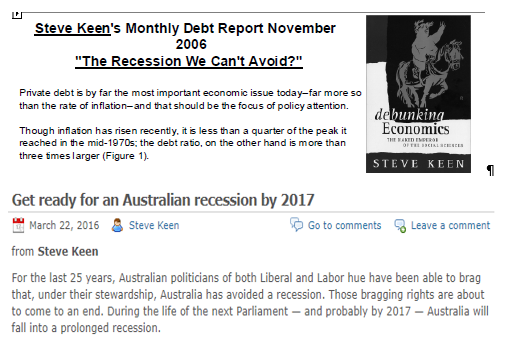
Post-Keynesian macroeconomists believe business cycle theory starts and finishes with recurrent private debt bubbles that lead to inevitable financial crashes because private investors repeatedly borrow more than they can pay back and never learn.

Bold, risky science in the finest tradition of Karl Popper. Keen strictly forbids a recession not following a build up of private debt. His theory is too bareboned to have a protective belt of auxiliary hypotheses that save him from refutation.
Post-Keynesians identified a great business opportunity shorting these recurrent debt bubbles but must crowd source further development of the Minsky Software that successfully predicted the GFC.
Top hedge fund managers earn at least $400 million a year so they could easily spare a few million dollars over lunch on the off chance that there is something in Post-Keynesian macroeconomics and the Minsky software.
Money For Nothing: Inside the Federal Reserve – Trailer
21 Oct 2018 Leave a comment
in business cycles, economic growth, economics of bureaucracy, global financial crisis (GFC), great recession, inflation targeting, macroeconomics, monetary economics, politics - USA, Public Choice Tags: economics of central banking
Missing Growth from Creative Destruction Philippe Aghion
21 Oct 2018 Leave a comment
in applied price theory, economic growth, macroeconomics Tags: creative destruction
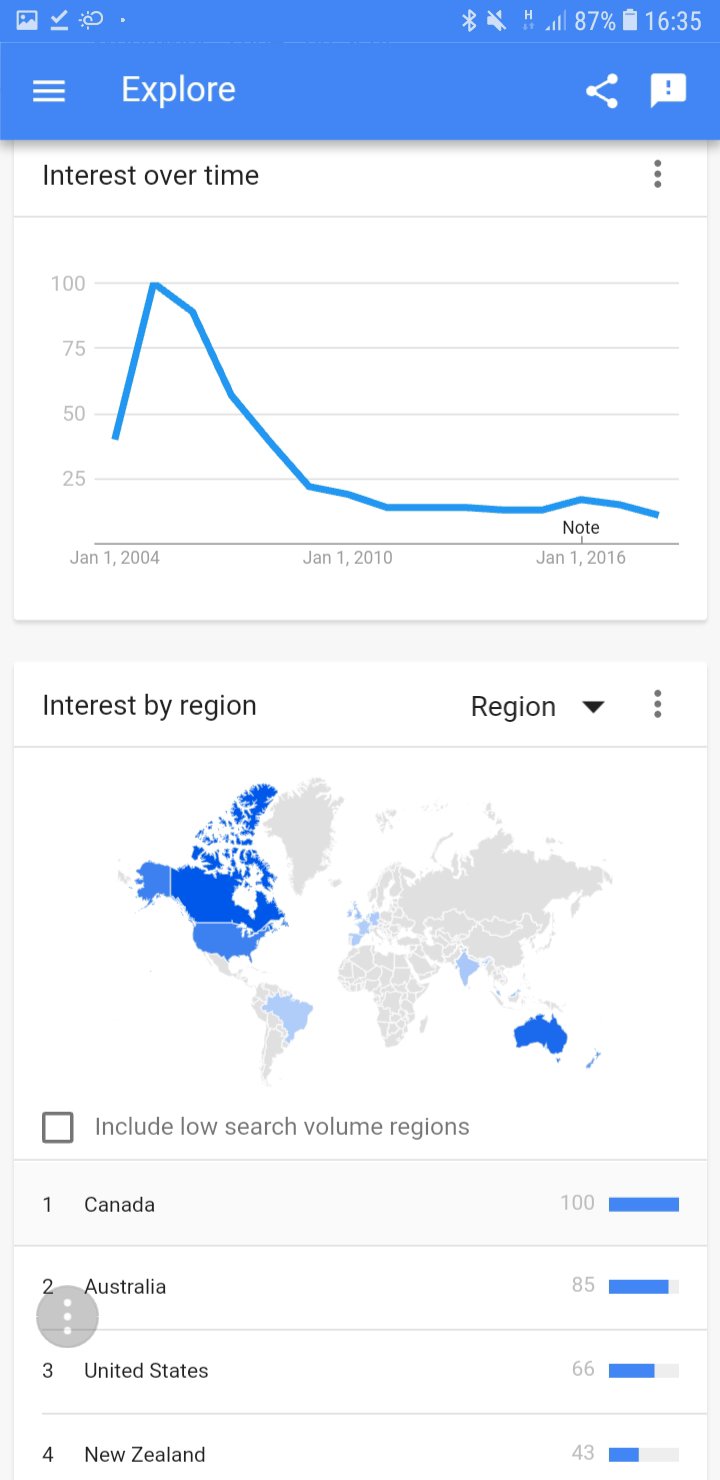
Why were Canadians googling housing bubble most when the #GFC later passed them and their financial system by?
21 Oct 2018 Leave a comment
in business cycles, global financial crisis (GFC), great recession, macroeconomics
Lee Ohanian: The Economic Crisis: A Comparison Across Time and Across Countries
21 Oct 2018 Leave a comment
in budget deficits, business cycles, economic growth, global financial crisis (GFC), great depression, great recession, macroeconomics, monetary economics
 Utopia, you are standing in it!
Recent Comments